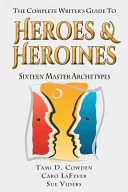
The Complete Writer's Guide to Heroes and Heroines
 73
73

The Complete Writer's Guide to Heroes and Heroines
Cowden, LaFever, and Viders’ work, The Complete Writer’s Guide to Heroes and Heroines, initially published in 2000, provides a structured approach to character creation that, while thorough, occasionally leans into prescriptive advice. The section on creating believable antagonists offers a particularly sharp analysis of how to generate genuine stakes by understanding a villain’s worldview, moving beyond simple ‘evil for evil’s sake.’ However, the book sometimes treats character archetypes as more rigidly defined than they might be in practice, potentially limiting experimentation for writers who prefer a more organic discovery process. Despite this, its practical exercises and clear explanations of narrative function make it a valuable, if somewhat conventional, addition to a writer’s toolkit. It's a solid reference for grounding fictional beings in relatable human psychology.
📝 Description
73
Published in 2000, The Complete Writer's Guide to Heroes and Heroines is a practical manual for character creation.
This guide, written by Tami D. Cowden, Caro LaFever, and Sue Viders, addresses writers seeking to build believable and engaging characters. It moves past basic archetypes to give concrete advice on character development, focusing on the core elements that make fictional people feel real. The book is useful for both new novelists and experienced screenwriters looking to improve how they write heroes and heroines. It specifically helps those who find it difficult to create characters with genuine depth, moving beyond surface-level traits to understand their main motivations. The authors examine the building blocks of heroic and anti-heroic figures, detailing their strengths, weaknesses, and internal struggles. They stress the significance of a character's past, their ethical guidelines, and how their choices affect their story. The book offers structures for creating consistent and memorable character arcs.
While not strictly esoteric in the occult sense, this book operates within a tradition of applying psychological and archetypal frameworks to creative writing. It draws on understandings of human nature and narrative structure, similar to how some esoteric traditions analyze universal patterns. The focus on core motivations, internal conflicts, and the hero's journey reflects a deeper examination of human experience, presented as practical tools for artists. It connects the craft of fiction to an understanding of the human psyche, a common thread in many fields that explore consciousness and being.
💡 Why Read This Book?
• Learn specific techniques for developing a character's internal conflict, drawing directly from the book's guidance on creating balanced heroes and heroines. • Gain practical strategies for crafting compelling antagonists by understanding the principles outlined in the 2000 edition, moving beyond simplistic good-vs-evil dynamics. • Discover methods for creating character backstories that directly inform present actions, as detailed in the sections addressing the foundational elements of character arcs.
⭐ Reader Reviews
Honest opinions from readers who have explored this book.
❓ Frequently Asked Questions
What is the original publication date of The Complete Writer's Guide to Heroes and Heroines?
The book was first published in October 2013, with its original release dating back to c. 2000 by Lone Eagle Publishing.
Who are the authors of this guide on character development?
The authors are Tami D. Cowden, Caro LaFever, and Sue Viders, who collaborated to create this comprehensive resource for writers.
Does the book focus only on traditional heroic figures?
No, the guide addresses both heroes and heroines, implying a broad scope that likely includes anti-heroes and complex female characters, not just conventional protagonists.
What kind of advice does the book offer for writers?
It offers practical advice on creating believable and engaging characters, focusing on their motivations, flaws, and development throughout a narrative.
Where was the original publication of this book located?
The original publication was based in Hollywood, California, through Lone Eagle Pub., indicating a connection to the film and television writing industry.
Is this book suitable for beginners in writing?
Yes, its comprehensive nature and structured approach make it beneficial for beginners looking to understand character creation fundamentals.
🔮 Key Themes & Symbolism
Archetypal Frameworks
The work examines common character archetypes, such as the hero and heroine, not as rigid molds but as foundational structures. It suggests understanding these patterns from its 2000 publication date allows writers to either adhere to them for narrative clarity or subvert them for originality. The focus is on how these archetypes function within storytelling, providing a framework for building characters that readers can readily understand and connect with, whether they embody traditional heroic virtues or explore more complex anti-heroic territory.
Internal Conflict and Motivation
A central theme is the exploration of a character's inner world. The book details how to construct believable motivations, often rooted in a character's past experiences and inherent flaws, as discussed in its original 2000 release. This internal struggle is presented as crucial for driving plot and creating relatable figures. By dissecting the sources of conflict within a character, writers can generate more dynamic arcs and avoid creating static, unconvincing personalities.
Character Arc Development
The guide emphasizes the importance of character evolution. It provides methods for plotting a character's journey, illustrating how their experiences, decisions, and interactions lead to transformation. This applies to both protagonists and antagonists, ensuring that all significant figures within a narrative have a discernible path of change or resistance to change, a concept thoroughly explored in its initial publication.
Antagonist Creation
Beyond mere villains, the book looks at crafting formidable antagonists. It stresses the need for antagonists to possess clear goals and motivations that often directly oppose the protagonist's. Understanding the antagonist's perspective, as outlined in the 2000 edition, is presented as key to creating compelling conflict and raising the narrative stakes, making them as fully realized as the heroes they challenge.
💬 Memorable Quotes
Direct passages from the work, attributed to the author.
“A character's flaws are often more interesting than their strengths.”
— This interpretation suggests that imperfections and weaknesses in fictional individuals are primary drivers of narrative tension and reader empathy, making them more relatable and dynamic.
“The antagonist's goals should be as clear as the protagonist's.”
— This highlights the necessity of giving opposing characters well-defined objectives. Their clarity of purpose creates a more direct and engaging conflict, ensuring the narrative momentum is sustained by their opposing desires.
“Backstory is not just history; it's the root of present action.”
— This concept underscores that a character's past is not merely exposition but the direct cause and explanation for their current behaviors, beliefs, and decisions within the story.
“Believable characters act consistently, even in their inconsistencies.”
— This suggests that while characters may exhibit contradictory traits, these contradictions should themselves follow a discernible pattern, making their behavior feel authentic rather than random.
“Every hero needs a challenge that tests their core beliefs.”
— This emphasizes that significant narrative arcs for heroic figures are forged through trials that force them to confront and potentially re-evaluate their most fundamental principles and values.
🌙 Esoteric Significance
Tradition
While not explicitly an esoteric text, its focus on archetypes and character psychology can be viewed through a lens informed by Jungian psychology, which itself draws on mythological and symbolic patterns. The creation of heroes and heroines, particularly in their struggle against internal or external 'shadows,' echoes alchemical processes of integration and transformation, a common theme in Hermetic traditions. The book provides a secularized framework for understanding the universal human drive to create meaning through narrative, which can be seen as a modern manifestation of ancient myth-making.
Symbolism
The 'hero' and 'heroine' themselves function as potent archetypal symbols, representing humanity's aspirations, struggles, and capacity for growth. The book's exploration of their journeys can be interpreted as a symbolic representation of the individuation process, where characters (and by extension, readers) confront their own inner demons and strive for wholeness. The concept of the 'antagonist' can symbolize the shadow self or the external forces that challenge an individual's established order, requiring integration or overcoming.
Modern Relevance
Contemporary narrative design, particularly in video games and serialized television, heavily relies on the principles of character development this book outlines. Thinkers and creators in fields like game writing and transmedia storytelling continue to utilize frameworks for building complex, relatable characters with compelling arcs, often drawing implicitly or explicitly from such foundational guides. The book's emphasis on psychological realism and motivation remains a reference for any writer aiming to create resonant characters in the current media landscape.
👥 Who Should Read This Book
• Aspiring screenwriters and novelists seeking to build memorable protagonists and antagonists, using the structured approach from the 2000 publication. • Writers aiming to deepen character complexity beyond surface traits, drawing on the book's techniques for exploring internal motivations and flaws. • Students of narrative structure and character archetypes looking for a practical, foundational text that bridges literary theory and creative application.
📜 Historical Context
Published in the year 2000, The Complete Writer's Guide to Heroes and Heroines emerged during a period when narrative theory and practical writing instruction were flourishing, particularly within the shadow of Hollywood's influence. The book entered a market alongside works like Robert McKee's 'Story' (1997), which also focused on the architecture of narrative but with a broader scope. This guide distinguished itself by focusing specifically on character construction, a crucial element for screenwriters and novelists alike. Its release date is significant as it predates much of the digital media revolution that would later alter content creation, placing it within a more traditional publishing and storytelling paradigm. The focus on Hollywood, California, as its original publication base further contextualizes its approach, likely prioritizing elements that translate well to visual media. The work addressed a steady demand for accessible craft books, aiming to explain the process of creating memorable individuals for fictional worlds.
📔 Journal Prompts
Analyze the core conflict of a chosen hero or heroine from the book's perspective.
Map the potential character arc for an antagonist, considering their primary motivation.
Identify a character's defining flaw and its impact on their decisions.
Reflect on how a character's backstory, as presented in the guide, informs their present actions.
Consider the symbolic representation of a hero's journey as described in the text.
🗂️ Glossary
Archetype
A recurring symbol, character, or pattern of behavior found in myth, literature, and folklore, representing universal human experiences or concepts.
Character Arc
The transformation or inner journey of a character throughout a story, often involving a change in their beliefs, attitudes, or circumstances.
Protagonist
The main character in a story, around whom the plot revolves and whose journey is central to the narrative.
Antagonist
A character or force that opposes the protagonist, creating conflict and driving the narrative forward.
Internal Conflict
A struggle within a character's mind, often involving opposing desires, beliefs, or duties, that influences their decisions and actions.
Motivation
The underlying reason or purpose that drives a character's behavior and choices within a narrative.
Flaw
A characteristic or weakness in a character that makes them imperfect and often leads to challenges or contributes to their development.
This book appears in 1 collection
🔮 Readers Also Liked
Browse all →








From the “Archetypes” Collection
View all →



More Free Occult Philosophy Books
View all →