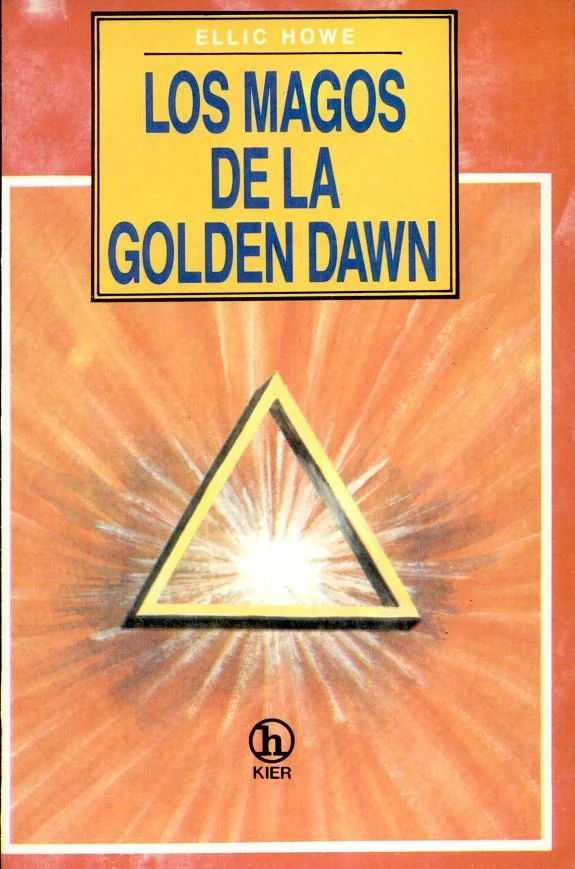
The Magicians of the Golden Dawn
 75
75

The Magicians of the Golden Dawn
Ellic Howe’s "The Magicians of the Golden Dawn" remains an indispensable scholarly achievement, meticulously piecing together the history of this influential magical society. Its strength lies in its granular detail, presenting evidence from diaries, letters, and official records to paint a vivid picture of the Order's rise and internal schisms. The section detailing the "Second Order" and the subsequent fragmentation, particularly the role of figures like Mathers and Crowley, is exceptionally well-argued. However, the book's sheer density of factual information, while laudable for its accuracy, can sometimes make it a challenging read for those unfamiliar with the specific individuals and arcane terminology. For instance, Howe’s careful exposition of the Golden Dawn's theoretical framework, especially its reliance on the Kabbalistic Tree of Life, offers a clear window into their magical worldview. This is a foundational text for understanding modern Western occultism.
📝 Description
75
Ellic Howe's 1985 study reconstructs the Hermetic Order of the Golden Dawn from archival evidence.
Ellic Howe's "The Magicians of the Golden Dawn" meticulously examines the Hermetic Order of the Golden Dawn, a significant magical society operating in England from the late 19th century. Published in 1985, the book draws on extensive archival research and primary source materials to detail the Order's structure, its key members, and the doctrines it taught. Howe’s scholarly approach reconstructs the society’s inner workings and its influence on later Western esoteric movements.
The volume is particularly valuable for students of Western esotericism and occult history. It offers a factual, evidence-based account of a foundational magical order, moving beyond mere speculation. Readers interested in the origins of modern magical practices, the lives of figures like Aleister Crowley and W.B. Yeats, or the intellectual currents of late Victorian Britain will find substantial material here.
The Golden Dawn, founded in 1888, was a major force in the late 19th century occult revival. It sought to systematize Western magical traditions, drawing from Kabbalah, Hermeticism, and Rosicrucianism. This revival occurred alongside other esoteric movements like Theosophy, creating a diverse intellectual landscape. Howe's book places the Golden Dawn within this specific historical and intellectual milieu, showing its role in shaping later occult thought and practice.
💡 Why Read This Book?
• Gain a factual understanding of the Hermetic Order of the Golden Dawn's structure and doctrines, as detailed in its founding documents and early history. • Trace the influence of key figures like Samuel Liddell MacGregor Mathers and Aleister Crowley within the Order's development, understanding their roles in its schisms. • Grasp the foundational esoteric concepts, such as the Order's initiatory system and its synthesis of Kabbalistic and Hermetic principles, as presented by Howe's research.
⭐ Reader Reviews
Honest opinions from readers who have explored this book.
❓ Frequently Asked Questions
When was the Hermetic Order of the Golden Dawn founded?
The Hermetic Order of the Golden Dawn was founded in London in 1888 by William Robert Woodman, William Wynn Westcott, and Samuel Liddell MacGregor Mathers. Ellic Howe’s book meticulously documents its early years.
Who were some prominent members of the Golden Dawn mentioned in the book?
Ellic Howe details the involvement of significant figures such as Aleister Crowley, W.B. Yeats, Florence Farr, and Annie Horniman, exploring their roles and contributions to the Order.
What is the primary focus of Ellic Howe's research in 'The Magicians of the Golden Dawn'?
Howe's research focuses on the historical and factual reconstruction of the Golden Dawn, utilizing archival documents to present an accurate account of its organization, teachings, and internal conflicts.
Did the Golden Dawn have different levels of membership?
Yes, the Golden Dawn operated with a structured hierarchy, including an Outer Order and an Inner or Second Order, each with distinct teachings and initiatory grades as explained by Howe.
What esoteric traditions influenced the Golden Dawn?
The Order drew heavily from Hermeticism, Kabbalah, Rosicrucianism, Freemasonry, and Egyptian mythology, synthesizing these elements into its unique magical system.
How did the Golden Dawn influence later magical orders?
The Golden Dawn's teachings, rituals, and organizational structure provided a foundational blueprint for many subsequent Western esoteric orders, including the Stella Matutina and the Builders of the Adytum (B.O.T.A.).
🔮 Key Themes & Symbolism
Order Structure and Schisms
The work thoroughly maps the organizational framework of the Hermetic Order of the Golden Dawn, from its initial formation in 1888 to its internal disputes and eventual fragmentation. Howe details the roles of the Outer and Inner Orders, the specific rituals of initiation, and the power struggles that characterized its existence. Particular attention is paid to the schisms that occurred, notably those involving Samuel Liddell MacGregor Mathers and the departure of members who formed rival organizations, illustrating the inherent tensions within such esoteric societies.
Synthesis of Esoteric Traditions
A central theme is how the Golden Dawn synthesized diverse occult streams into a cohesive magical system. Howe demonstrates the Order's reliance on Kabbalistic principles, particularly the Tree of Life, alongside Hermetic philosophy, Rosicrucian lore, and Masonic symbolism. The book elucidates how these elements were integrated into practical ritual magic, creating a comprehensive curriculum designed for spiritual and magical development, which became highly influential.
Key Personalities and Their Influence
The book provides detailed biographies and analyses of the Order's most influential figures. It examines the contributions and conflicts of founders and prominent members such as William Robert Woodman, William Wynn Westcott, Samuel Liddell MacGregor Mathers, Aleister Crowley, and W.B. Yeats. Howe scrutinizes their roles in shaping the Order's doctrines, rituals, and its eventual internal strife, offering a nuanced perspective on their ambitions and relationships.
The Golden Dawn's Legacy
Howe underscores the profound and lasting impact of the Golden Dawn on the range of Western esotericism. The book highlights how its structured approach to magic, its initiatory system, and its mix of traditions provided a template for numerous subsequent occult groups. The legacy is traced through the formation of successor organizations and the continued study of its teachings by practitioners and historians alike.
💬 Memorable Quotes
Direct passages from the work, attributed to the author.
“The Order's structure was an elaborate system of grades and teachings.”
— This highlights the Golden Dawn's deliberate and systematic approach to magical training, contrasting with more informal or individualistic esoteric paths. It emphasizes the structured curriculum designed for progressive spiritual and magical attainment.
“Internal disputes often revolved around leadership and doctrinal interpretation.”
— This points to the common challenges faced by organized esoteric groups, where personality clashes and differing views on core tenets can lead to significant divisions and the formation of new factions.
“Kabbalah formed a significant theoretical backbone for the Order's magical practices.”
— This emphasizes the deep integration of Jewish mysticism into the Golden Dawn's system, showing how concepts like the Sephiroth and paths on the Tree of Life were adapted for practical magical work.
“The Order attracted individuals from diverse intellectual and social backgrounds.”
— This observation underscores the broad appeal of occultism in the late Victorian and Edwardian eras, drawing in artists, writers, and intellectuals seeking alternative spiritual and philosophical frameworks.
“Rituals were meticulously designed to enact specific magical intentions.”
— This speaks to the operational aspect of the Golden Dawn's magic, where carefully constructed ceremonies were employed as tools to achieve defined spiritual or material results, grounded in symbolic correspondence.
🌙 Esoteric Significance
Tradition
The work is central to understanding the history of Western Hermeticism and ceremonial magic. It meticulously documents the Hermetic Order of the Golden Dawn, a society that sought to revive and systematize ancient magical traditions. Howe's scholarship places the Order within the lineage of Rosicrucianism and Kabbalah, demonstrating how it acted as a crucial bridge, translating esoteric doctrines into a structured, operative magical system that profoundly influenced subsequent magical orders.
Symbolism
The book illuminates the Golden Dawn's sophisticated use of symbolism, particularly the Kabbalistic Tree of Life, which served as a cosmological map and a framework for magical rituals and initiations. Howe also details the significance of elemental symbolism, planetary correspondences, and the use of divine names and sigils within their magical system. These symbols were not mere decoration but integral components of the Order's method for spiritual ascent and magical working.
Modern Relevance
Contemporary practitioners and scholars of Western esotericism frequently reference Howe's research. The Golden Dawn's system of ritual, its initiatory structure, and its theoretical underpinnings continue to inform modern magical orders and individual practitioners. Thinkers and groups involved in contemporary Hermeticism, Kabbalistic magic, and ceremonial magic often draw directly from the historical foundations meticulously laid out in this book to understand their own practices.
👥 Who Should Read This Book
• Students of Western Esotericism: Those seeking a factually grounded history of foundational magical orders will find Howe's detailed archival research invaluable. • Practitioners of Ceremonial Magic: Individuals interested in the roots of modern ritual systems will gain insight into the Golden Dawn's influential techniques and theoretical framework. • Historians of Religion and Culture: Researchers examining the late 19th and early 20th-century occult revival will benefit from this scholarly examination of a key societal and intellectual movement.
📜 Historical Context
Ellic Howe's "The Magicians of the Golden Dawn," first published in 1985, arrived during a resurgence of academic and popular interest in the occult, yet it distinguished itself through rigorous scholarship. The book examines the Hermetic Order of the Golden Dawn, founded in 1888 by William Robert Woodman, William Wynn Westcott, and Samuel Liddell MacGregor Mathers. This period saw numerous esoteric movements, including Helena Blavatsky's Theosophical Society, which offered alternative spiritual paradigms. Howe's work provided a much-needed factual counterpoint to more sensationalized or mythologized accounts of magical societies. The Order itself was a complex synthesis of Rosicrucian, Kabbalistic, and Masonic traditions, aiming to systematize Western ceremonial magic. Its influence was immediate, attracting figures like Aleister Crowley and W.B. Yeats, and its eventual schisms, detailed by Howe, led to the formation of successor orders that continued its legacy, making this book crucial for understanding the lineage of modern Western esotericism.
📔 Journal Prompts
The Golden Dawn's synthesis of Kabbalah and Hermeticism.
Samuel Liddell MacGregor Mathers's leadership challenges.
The role of rituals in the Outer Order's curriculum.
W.B. Yeats's engagement with the Order's teachings.
The impact of the 1900 schism on the Order's future.
🗂️ Glossary
Hermetic Order of the Golden Dawn
A secret society founded in London in 1888, dedicated to the study and practice of ceremonial magic, occultism, and esoteric philosophy, drawing heavily from Hermeticism and Kabbalah.
Outer Order
The introductory level of the Golden Dawn, where new members were initiated into the basic principles of magical theory and practice, focusing on elemental work and correspondences.
Inner Order (or Second Order)
An advanced level within the Golden Dawn, requiring further initiation and study, focused on higher magic, spiritual development, and the deeper mysteries of Kabbalah and Rosicrucianism.
Kabbalah
A system of Jewish mysticism that explores the nature of God and the universe through esoteric interpretations of scripture, often represented by the Tree of Life diagram.
Hermeticism
A religious, philosophical, and esoteric tradition based on the purported teachings of Hermes Trismegistus, emphasizing divine knowledge, spiritual transformation, and the interconnectedness of the cosmos.
Rosicrucianism
A mystical and esoteric tradition that originated in early 17th-century Europe, associated with secret societies and a focus on spiritual alchemy and wisdom.
Correspondences
In occultism, the principle that relates different elements, symbols, planets, colors, etc., based on perceived affinities or symbolic connections, used extensively in ritual magic.
This book appears in 1 collection
🔮 Readers Also Liked
Browse all →









From the “Golden Dawn” Collection
View all →




More Free Occult Philosophy Books
View all →