Immortal
 72
72

Immortal
J.R. Ward's "Immortal" delivers a climactic, if somewhat predictable, conclusion to a long-running supernatural saga. The central premise of Wrath, a fallen angel wrestling with the seven deadly sins while tasked with saving humanity, offers a compelling mythological framework. Ward excels at portraying the raw emotional turmoil of her characters, particularly Wrath's internal conflict and his protective instincts towards the chosen souls. However, the sheer density of the established lore and the multitude of characters, some less developed than others, can occasionally weigh down the narrative's momentum. A particularly effective sequence involves Wrath confronting a manifestation of his own despair, vividly illustrating the internal battles that define his character. The resolution, while earned, might feel slightly rushed for those deeply invested in the intricate subplots. Ultimately, "Immortal" provides a satisfying, albeit imperfect, end to its epic scope.
📝 Description
72
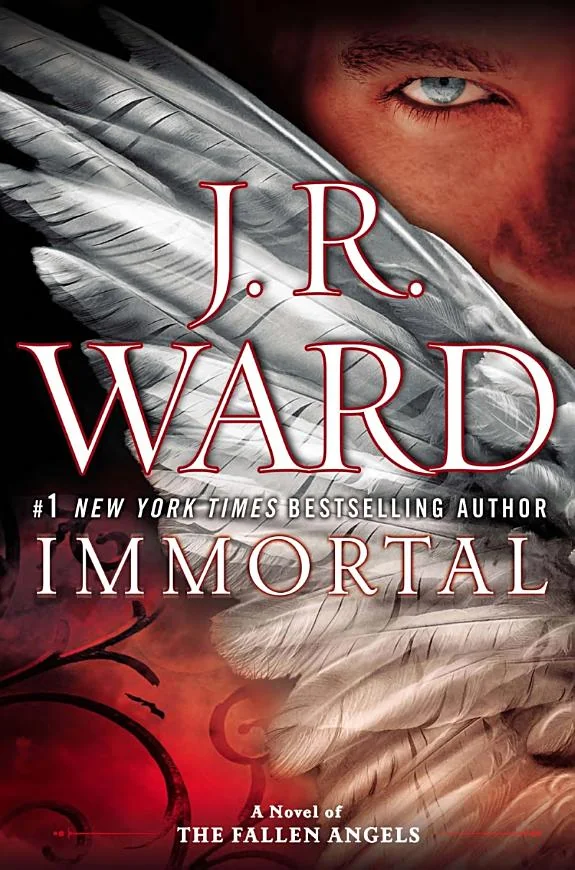
J.R. Ward's "Immortal" concluded the saga of Wrath, a fallen angel, in 2014.
Published in 2014, J.R. Ward's "Immortal" brings a long saga to a close. The story follows Wrath, a fallen angel who carries the burden of the seven deadly sins. His task is to guide seven chosen souls through the end of days. This novel reaches a crucial point in the series, showing the internal struggles of a reluctant savior facing his final test. The plot uses grand cosmic stakes to illustrate the personal crises of its characters.
Readers familiar with the "Black Dagger Brotherhood" series will find "Immortal" a significant conclusion. The book resolves plot threads and addresses the fate of its main characters. It will appeal to those who enjoy paranormal romance but want darker, more complex mythological elements. Fans of stories driven by character development, exploring themes of redemption, sacrifice, and the ongoing conflict between good and evil, will find much to consider. This novel is intended for adult readers seeking mature storytelling within a fantasy setting.
This novel engages with themes common in certain branches of occult and religious thought, particularly concerning fallen angels and their potential for redemption. The concept of the seven deadly sins functions not just as moral failings but as active, almost elemental forces within the narrative. The book touches upon ideas of divine judgment and the possibility of atonement for beings who have transgressed fundamental cosmic laws. It places these ancient theological concepts within a modern paranormal fiction framework.
💡 Why Read This Book?
• Gain insight into the symbolic weight of the seven deadly sins as presented through Wrath's character arc, offering a unique lens on moral failing and redemption. • Experience the conclusion of a sprawling paranormal narrative that began with the "Black Dagger Brotherhood" series, providing closure to established character destinies. • Explore the thematic tension between predestination and free will as the "chosen souls" navigate their fated paths under Wrath's reluctant guidance.
⭐ Reader Reviews
Honest opinions from readers who have explored this book.
❓ Frequently Asked Questions
Is "Immortal" a standalone novel, or does it require knowledge of previous books?
"Immortal" is the concluding novel in a series. While it attempts to provide closure, prior reading of the "Black Dagger Brotherhood" series, particularly books focusing on Wrath, is highly recommended for full comprehension and emotional impact.
What are the main themes explored in J.R. Ward's "Immortal"?
The book primarily explores themes of redemption, sacrifice, the internal struggle with sin and salvation, and the burden of leadership for a reluctant savior. It delves into the consequences of past actions and the possibility of atonement.
Who is the main protagonist in "Immortal"?
The central figure is Wrath, a fallen angel who embodies the seven deadly sins. He is depicted as a reluctant hero tasked with protecting seven chosen souls and ultimately confronting a great cosmic challenge.
When was J.R. Ward's "Immortal" first published?
J.R. Ward's novel "Immortal" was first published in 2014, serving as a significant installment within her established paranormal romance series.
Does "Immortal" feature elements of paranormal romance?
Yes, "Immortal" is part of a series known for its paranormal romance elements, blending supernatural action and mythology with romantic relationships and character development.
What is the significance of the 'seven deadly sins' in the book?
The 'seven deadly sins' are integral to the character of Wrath, the fallen angel protagonist. They represent his internal struggles and the temptations he must overcome, shaping his journey toward potential salvation.
🔮 Key Themes & Symbolism
Fallen Angel Redemption
The narrative centers on Wrath, a fallen angel burdened by his association with the seven deadly sins. His journey is one of seeking atonement and redemption, not just for himself but for the souls he is tasked to protect. This theme explores whether beings of immense power and past transgressions can truly find salvation, questioning the permanence of divine judgment and the capacity for profound change even after a fall from grace.
The Burden of the Chosen
The concept of 'seven chosen souls' introduces a predestined element to the narrative. These individuals are marked by fate to play crucial roles in the unfolding apocalypse. The theme examines the weight of such destiny, the pressures it places on ordinary beings, and their struggle to accept or defy their fated paths. It questions the nature of free will when confronted with cosmic designs and the sacrifices required of those singled out by destiny.
Internalized Sin as Antagonist
Beyond external threats, the primary antagonist for Wrath is often his own nature, intrinsically linked to the seven deadly sins. These vices are not abstract concepts but active forces that threaten to consume him. The book uses this internal conflict to explore the nature of evil, both as an external force and as an inherent potential within beings, highlighting the constant battle for self-control and moral integrity.
Cosmic Stakes, Personal Sacrifice
The overarching plot involves world-ending stakes, a classic apocalyptic scenario. However, the narrative emphasizes that these cosmic events are experienced through the personal trials of its characters. The theme focuses on the sacrifices – both grand and intimate – that individuals must make when faced with such ultimate consequences. It underscores that even in a battle for the fate of all existence, individual acts of love, loss, and courage hold profound significance.
💬 Memorable Quotes
Direct passages from the work, attributed to the author.
“This is a world where sin and salvation collide.”
— This concise statement expresses the core thematic tension of the novel, highlighting the perpetual struggle between moral failing and the possibility of redemption that defines the characters' existence and the narrative's conflict.
“Mankind's reluctant savior struggles with his greatest challenge yet.”
— This points to the climax of the series, framing Wrath not as a willing hero but as a burdened figure thrust into a role of immense importance, facing an ultimate test that will determine the fate of humanity.
“The series... comes to an epic close.”
— This phrase indicates that "Immortal" serves as the concluding volume of a larger narrative arc, promising a grand resolution to the storylines and conflicts that have been developed over multiple preceding books.
“The seven chosen souls are integral to the salvation of the world.”
— This interpretation emphasizes the crucial role of the selected individuals, suggesting they are not merely passive characters but active agents or focal points in the larger cosmic struggle for survival and redemption.
💡 Key Ideas
Editorial paraphrase of the work's core concepts — not direct quotes.
A cynical fallen angel struggles with the seven deadly sins and seven chosen souls.
This quote identifies the central protagonist, Wrath, and his primary conflicts: his internal battle against the sins he embodies and his external responsibility towards the seven souls destined for an important role.
🌙 Esoteric Significance
Tradition
While not strictly adhering to a single esoteric lineage, "Immortal" draws heavily from Gnostic and Abrahamic traditions, particularly concepts of fallen angels, divine judgment, and the struggle between good and evil. The notion of a flawed savior and the burden of sin aligns with dualistic philosophies found in Gnosticism, where the material world and its inhabitants are seen as inherently compromised. The structure of seven deadly sins also echoes medieval Christian demonology and moral theology, framing the narrative within a recognizable, albeit reinterpreted, spiritual framework.
Symbolism
The primary symbols are the 'fallen angel' (representing a being of great power corrupted or cast out, embodying internal conflict) and the 'seven deadly sins' (acting as archetypal vices that manifest as specific temptations and obstacles). The 'chosen souls' symbolize destiny, hope, and the potential for humanity's salvation, often representing specific virtues or vulnerabilities that Wrath must protect or cultivate. These symbols are employed to explore complex theological and psychological themes within a supernatural context.
Modern Relevance
Contemporary discussions around demonology, angelology, and the nature of sin within occult and metaphysical circles often reference works like Ward's for their modern interpretations of ancient concepts. Thinkers exploring the psychology of addiction, moral corruption, and the path to self-redemption find parallels in Wrath's struggle. Furthermore, the blend of paranormal romance and dark fantasy continues to influence modern authors exploring similar themes of flawed protagonists and epic, often romantic, battles against overwhelming darkness.
👥 Who Should Read This Book
• Devoted fans of the "Black Dagger Brotherhood" series seeking the narrative conclusion to Wrath's story and the overarching saga. • Readers of paranormal romance and urban fantasy who appreciate dark themes, complex mythology, and character-driven plots. • Individuals interested in exploring modern interpretations of angelic lore, the seven deadly sins, and concepts of redemption within a fictional context.
📜 Historical Context
Published in 2014, J.R. Ward's "Immortal" arrived at a peak moment for paranormal romance and urban fantasy. Ward herself was a recognized force, having launched her immensely popular "Black Dagger Brotherhood" series in 2005. This established universe provided a loyal fanbase eager for the series' conclusion. The genre had been significantly amplified by the success of authors like Stephenie Meyer and Charlaine Harris in the years prior, creating a robust market for supernatural-themed fiction aimed at adult readers. "Immortal" tapped into this established demand, offering a dark, complex narrative that appealed to readers seeking more than simple romance, exploring themes of mythology, redemption, and apocalyptic stakes. The reception was generally positive among her readership, who appreciated the continuation and conclusion of the intricate lore Ward had meticulously built.
📔 Journal Prompts
Wrath's internal battle with the seven deadly sins.
The concept of 'chosen souls' and their fated paths.
The conflict between sin and salvation in your own life.
The nature of redemption for a 'fallen' being.
The weight of responsibility for a reluctant savior.
🗂️ Glossary
Fallen Angel
A celestial being, often an angel, who has been cast out of heaven due to disobedience or rebellion. In "Immortal," Wrath is a prominent example, embodying complex struggles with sin and redemption.
Seven Deadly Sins
A classification of vices used in early Christian teachings to educate and instruct followers concerning fallen humanity's tendency to sin. In the book, these are embodied by the protagonist, Wrath.
Chosen Souls
Individuals within the narrative who are designated by fate or divine will to play a critical role in significant events, often concerning the salvation or downfall of the world.
Paranormal Romance
A subgenre of romance fiction that combines supernatural or fantasy elements, such as vampires, werewolves, angels, and demons, with a central love story.
Urban Fantasy
A subgenre of fantasy fiction set in a contemporary urban environment. It often features magic, supernatural creatures, and conflicts that are hidden from the ordinary human population.
Apocalypse
In a religious or mythological context, a prophetic revelation concerning the end of the world or of times. The narrative often builds towards such an event.
Redemption
The act of being saved from sin, error, or evil. This is a central theme for the protagonist, Wrath, as he navigates his past and present actions.
This book appears in 1 collection
🔮 Readers Also Liked
Browse all →








From the “Immortality” Collection
View all →





More Free Occult Philosophy Books
View all →