Divine Madness
 84
84

Divine Madness
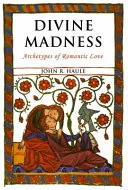
John R. Haule’s "Divine Madness: Archetypes of Romantic Love" attempts to bridge the chasm between the ecstatic heights of romantic passion and the rarefied air of divine union. Haule’s central thesis—that romantic love is a form of divine love—is a compelling, if ambitious, proposition. He draws adeptly from depth psychology, particularly Jungian thought, to dissect the archetypal patterns at play. The examination of how the experience of romantic love "both conceals and reveals the ultimate Lover and Beloved" is particularly insightful, offering a psychological framework for understanding devotion and longing. However, the work sometimes struggles under the weight of its own conceptual architecture, occasionally becoming dense and less accessible to the uninitiated. A notable strength lies in its integration of diverse mystical traditions, moving beyond a purely Western psychological view. The limitation appears when the psychological interpretation, though well-argued, can feel somewhat detached from the raw, often messy, lived experience of romantic relationships. Ultimately, Haule provides a potent lens for viewing love not just as personal, but as a conduit for the sacred.
📝 Description
84
In 2010, John R. Haule's 'Divine Madness' argued romantic love reflects the divine.
John R. Haule's 2010 book, 'Divine Madness: Archetypes of Romantic Love,' examines romantic love not just as an emotion but as a manifestation of the divine. The work proposes that the intense experiences associated with romantic love, seen across literature, myth, religion, and personal lives, act as both veils and revelations of an ultimate divine union. Haule blends depth psychology with global mystical traditions to analyze the archetypal patterns that influence how we perceive love and relationships.
This book is for students of psychology, comparative religion, and esoteric philosophy interested in the complex nature of human connection. It appeals to those who wish to understand the spiritual aspects of romantic involvement and its impact on personal transformation. Readers familiar with Jungian psychology or world mystical traditions will find Haule's analytical approach and extensive cross-cultural examples particularly relevant. His work situates itself within a renewed interest in Jungian archetypes and the connection between psychology and spirituality.
Published in 2010, 'Divine Madness' engages with traditions that have long explored divine love, from Neoplatonism to Sufism. Haule applies a modern psychological lens to these ancient concepts, drawing from depth psychology. His approach echoes Carl Jung's use of alchemy and mythology to understand the psyche. The book is situated within a period of renewed interest in Jungian archetypes and the intersection of psychology and spirituality, alongside contemporary discussions of the sacred feminine and masculine and the spiritual underpinnings of relationship dynamics.
💡 Why Read This Book?
• Gain a psychological framework for understanding romantic love as a spiritual path, drawing from Haule's concept of "divine love" as a species of human affection. • Explore the archetypal figures of the "Lover and Beloved" as they manifest in mythology and personal relationships, as detailed in Haule's analysis. • Understand the transformative potential of "divine madness" as a catalyst for spiritual integration, a concept Haule elucidates through his integration of depth psychology and mystical traditions.
⭐ Reader Reviews
Honest opinions from readers who have explored this book.
❓ Frequently Asked Questions
What is the central argument of John R. Haule's 'Divine Madness'?
The book argues that romantic love is a form of divine love, acting as a conduit that both obscures and illuminates the ultimate divine Lover and Beloved.
What academic fields does 'Divine Madness' draw from?
Haule's work integrates depth psychology, particularly Jungian concepts, with insights from world mystical traditions and comparative religion.
When was 'Divine Madness' first published?
The book was first published in March 2010.
What archetypes are central to the book's exploration of romantic love?
Key archetypes explored include the 'Lover' and the 'Beloved,' seen as manifestations of divine principles within human relationships.
How does 'Divine Madness' view the intensity of romantic love?
The intensity is framed as 'divine madness,' a potentially transformative psychological and spiritual experience that can lead to profound personal growth.
Who is John R. Haule?
John R. Haule is an author and scholar known for his work in psychology and spirituality, particularly concerning the nature of love and religious experience.
🔮 Key Themes & Symbolism
Love as Divine Manifestation
Haule posits romantic love as a "species of divine love," a critical concept suggesting that our earthly passions are echoes or reflections of a cosmic divine union. This perspective reframes the intensity and longing experienced in relationships not as mere human frailty, but as a spiritual yearning. The book explores how these intense emotions both obscure and reveal the ultimate divine Lover and Beloved, implying that the path to spiritual realization can be found through the crucible of romantic entanglement. This echoes ancient traditions that saw divine Eros as a fundamental force in creation.
Archetypes of the Lover and Beloved
Central to "Divine Madness" are the archetypal figures of the Lover and the Beloved. These are not merely individual roles but represent primal psychic energies and divine aspects. Haule examines how these archetypes are projected onto partners in romantic relationships, driving the dynamics of attraction, idealization, and devotion. The "divine madness" arises when these projections become so potent that they seem to transcend the human, pointing towards a divine presence. The interplay between these archetypes is analyzed through literature, myth, and psychological case studies.
Transformative Power of Passion
The book views the extreme emotional states associated with romantic love, termed "divine madness," as potent catalysts for personal and spiritual transformation. This intensity, often seen as destabilizing, is reframed as a force that can shatter ego boundaries and open individuals to deeper psychological and spiritual realities. By confronting the overwhelming power of love, individuals are challenged to integrate shadow aspects of themselves and move towards a more complete, divinely-infused consciousness. This aligns with mystical accounts of union achieved through ecstatic states.
Psychology Meets Mysticism
Haule's work is notable for its synthesis of depth psychology, particularly Jungian analysis, with the mystical traditions of the world. He uses psychological concepts to interpret spiritual phenomena and mystical experiences to illuminate psychological dynamics. This interdisciplinary approach allows for a nuanced understanding of how the unconscious mind engages with the sacred, and how archetypal patterns in relationships mirror cosmic principles. The book bridges the empirical methods of psychology with the intuitive wisdom of esoteric philosophies.
💬 Memorable Quotes
Direct passages from the work, attributed to the author.
“Human love is a species of divine love.”
— This core assertion suggests that the profound emotions and connections experienced in human romantic relationships are not separate from, but rather a manifestation or reflection of, a higher divine love.
“Our experience of romantic love both conceals and reveals the ultimate Lover and Beloved.”
— This highlights the paradoxical nature of romantic love; it can obscure our vision of the divine through ego-driven possessiveness, yet also serve as a powerful pointer towards ultimate spiritual union.
“The archetypes of the Lover and Beloved are fundamental to our understanding of relationship.”
— This points to the idea that patterns of attraction, devotion, and idealization in love are rooted in deep, universal psychological structures that shape how we perceive and engage with our partners.
“Divine madness is a call to spiritual integration.”
— This interpretation frames intense romantic experiences, often labeled as madness, not as pathology but as a potentially transformative spiritual imperative driving individuals toward wholeness.
“Myth, religion, and literature provide frameworks for understanding romantic love.”
— Haule suggests that these cultural expressions offer insights into the universal patterns and archetypal forces that shape our experience of love, serving as guides to its deeper meaning.
🌙 Esoteric Significance
Tradition
Haule's work draws heavily from the tradition of depth psychology, particularly the analytical psychology of Carl Jung, which itself was deeply informed by Gnosticism, alchemy, and Hermeticism. He applies these psychological frameworks to understand spiritual phenomena, particularly the experience of divine love as manifested in romantic relationships. The book can be seen as extending Jung's project of integrating psychological and spiritual quests, viewing the individual's journey of love as a microcosm of a universal spiritual drama.
Symbolism
The central symbols in "Divine Madness" revolve around the archetypes of the "Lover" and the "Beloved." These figures represent not just individuals but primal divine energies and the ultimate union sought in spiritual traditions. The "madness" itself is a symbol of the ecstatic, ego-dissolving state often encountered in mystical experiences and intense romantic passion, signifying a breaking of ordinary consciousness to glimpse the divine. The interplay between concealment and revelation also acts symbolically, representing the veiling nature of the material world and the potential for spiritual insight.
Modern Relevance
Contemporary spiritual and psychological circles focusing on attachment theory, relationship dynamics, and the integration of the sacred into everyday life find value in Haule's work. Thinkers exploring trauma-informed spirituality and the psychology of intimacy often reference the archetypal dimensions he explores. His synthesis of Jungian psychology with mystical traditions remains relevant for those seeking to understand love as a path to wholeness in an era grappling with both relational challenges and a search for deeper meaning.
👥 Who Should Read This Book
• Students of Jungian psychology and archetypal studies seeking to understand the application of these concepts to romantic relationships and spiritual development. • Individuals interested in comparative religion and mysticism who wish to explore how divine love is understood across different traditions through a psychological lens. • Those undergoing intense romantic experiences or seeking a deeper understanding of love's spiritual dimensions, looking for frameworks that validate passion as a path to self-discovery.
📜 Historical Context
Published in 2010, "Divine Madness: Archetypes of Romantic Love" emerged during a resurgence of interest in Jungian psychology and the spiritual dimensions of human relationships. Haule's work situates itself within a lineage of thinkers who sought to understand love through both psychological and metaphysical lenses, echoing figures like Carl Jung, who explored the anima/animus and the symbolic dimensions of human connection in his writings from the mid-20th century. The early 21st century saw numerous explorations into archetypal psychology and comparative mysticism, with Haule contributing a specific focus on romantic love. While contemporary psychological discourse often emphasized empirical data and cognitive behavioral approaches, Haule's book represented a more depth-oriented and spiritually inclined perspective, engaging with traditions that predate modern psychology, such as Neoplatonism and various Gnostic traditions, which also grappled with divine and human love.
📔 Journal Prompts
The concept of "divine madness" as a species of divine love.
Archetypal projections of the Lover and Beloved in personal relationships.
Romantic love's dual role in concealing and revealing the ultimate divine.
The psychological interpretation of ecstatic love experiences.
Integrating the intensity of romantic passion with spiritual growth.
🗂️ Glossary
Divine Madness
A term used by Haule to describe the intense, often overwhelming psychological and spiritual states experienced in romantic love, viewed not as pathology but as a potential conduit to divine experience.
Archetype
In Jungian psychology, a universal, inherited pattern of thought or imagery derived from the experiences of the human species and present in the collective unconscious, influencing behavior and perception.
Lover and Beloved
Archetypal figures representing the dynamics of attraction, devotion, and union central to romantic love and spiritual longing, seen as aspects of the divine.
Depth Psychology
A branch of psychology, particularly associated with Freud and Jung, that explores the unconscious mind and its influence on behavior, often through the analysis of dreams, symbols, and repressed memories.
Mystical Traditions
Various religious and spiritual paths focused on direct experience of the divine or ultimate reality, often involving practices aimed at achieving altered states of consciousness or union.
Species of Divine Love
Haule's concept that human romantic love is a form or manifestation of a higher, divine love, connecting earthly passion to cosmic principles.
Conceals and Reveals
Describes how romantic love can both obscure spiritual truth through egoic attachment and simultaneously point towards or unveil the divine Lover and Beloved.
This book appears in 1 collection
🔮 Readers Also Liked
Browse all →









From the “Archetypes” Collection
View all →




More Free Occult Philosophy Books
View all →