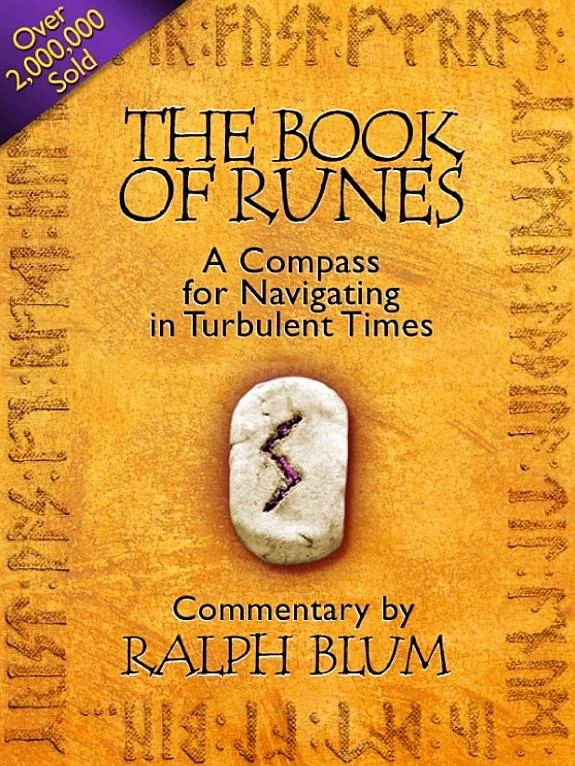
The Book of Runes
 71
71

The Book of Runes
Ralph Blum’s The Book of Runes is less a scholarly treatise and more a practical, albeit idiosyncratic, guide to the runes for the modern seeker. Its strength lies in its accessible language and its framing of the runes as psychological archetypes, a perspective deeply influenced by Jungian thought prevalent in the late 20th century. The inclusion of the blank rune, while controversial among traditionalists, serves a clear purpose in Blum's system: to represent the unknowable, the void from which all potential arises. However, the work sometimes leans into a therapeutic, rather than purely divinatory, interpretation, which may not satisfy those seeking purely predictive outcomes. A passage discussing the rune *Othala* as a symbol of heritage and belonging offers a compelling, if simplified, view of its ancestral significance.
Blum offers a distinctive entry point into runic study, prioritizing personal connection over strict historical adherence.
📝 Description
71
Ralph Blum's The Book of Runes, published in 1982, reinterpreted the ancient Germanic runes for modern self-understanding.
This 1982 book presents a modern take on the Germanic runes, framing them as archetypal forces and psychological keys for personal insight. It moves beyond simple fortune-telling, suggesting the runes offer guidance for self-discovery. The work introduces a set of 25 runes, including the blank rune, to aid in this personal exploration.
Blum's approach focuses on the runes as energetic patterns and psychological tools. He suggests using them for guidance rather than strict prediction. A key element is the inclusion of the blank rune, which signifies the unknown or potential. This concept addresses themes of fate, free will, and the unfolding of destiny. The book aims to foster a personal connection with each rune's meaning, encouraging readers to develop their own understanding.
Published in 1982, The Book of Runes arrived during a resurgence of interest in esoteric traditions and Jungian psychology. It offered a contemporary interpretation of the Elder Futhark, the oldest runic alphabet, making its symbolism accessible. The book engaged with the renewed attention to occult studies in the late 20th century, providing a practical tool for individuals interested in self-discovery and ancient systems of knowledge.
💡 Why Read This Book?
• Learn a modern method for using the 25-rune set, including the blank rune, for self-reflection and guidance, moving beyond simple fortune-telling. • Gain insight into the psychological archetypes represented by each rune, inspired by Jungian concepts, as presented in Blum's 1982 interpretation. • Explore the concept of the blank rune, which Blum positions as a symbol of the unknown and potential, offering a unique perspective on fate and destiny.
⭐ Reader Reviews
Honest opinions from readers who have explored this book.
❓ Frequently Asked Questions
What is the significance of the blank rune in The Book of Runes?
The blank rune, introduced by Ralph Blum in his 1982 edition, represents the unknown, the void, or potential. It signifies that which is yet to be revealed or determined, encouraging contemplation on fate and the unpredictable nature of existence.
Is Ralph Blum's The Book of Runes suitable for beginners?
Yes, the book is widely considered accessible for beginners. Blum's approach focuses on psychological interpretation and personal connection, making the complex system of runes understandable without requiring deep prior knowledge of Norse mythology or Germanic history.
How does Blum's interpretation of runes differ from traditional methods?
Blum emphasizes the runes as psychological archetypes and tools for self-discovery, influenced by Carl Jung's theories. This differs from more traditional methods that might focus solely on divination, historical context, or magical applications of the Elder Futhark.
What historical runic alphabet does The Book of Runes primarily use?
While the book draws inspiration from the Elder Futhark, the oldest Germanic runic alphabet, Ralph Blum's interpretation notably expands it to 25 runes by including the blank rune, a concept not found in historical runic inscriptions.
When was The Book of Runes first published?
The Book of Runes by Ralph Blum was first published in 1982, contributing to a surge of interest in esoteric studies and personal development during that era.
Can I use The Book of Runes for predictive divination?
While the book can be used for divination, Blum's primary focus is on using the runes for psychological insight and guidance rather than strict prediction. The interpretation of the runes is geared towards understanding inner states and life patterns.
🔮 Key Themes & Symbolism
Runic Archetypes and Psychology
Blum frames the runes not merely as symbols for divination but as potent archetypes mirroring fundamental human experiences and psychological states, echoing Jungian concepts. Each rune is presented as a key to unlocking aspects of the self, offering pathways for introspection and personal growth. The work encourages readers to see the runes as living forces that can illuminate patterns in their lives, fostering a deeper understanding of their own psyche and motivations.
The Blank Rune and the Unknown
A central innovation in Blum's work is the inclusion of the blank rune, a concept absent from historical runic systems. This symbol represents the unknown, the potential that precedes manifestation, or the inexplicable element of fate. It serves as a powerful reminder that not all outcomes are predictable or controllable, inviting contemplation on destiny, free will, and the mysteries of existence. Its presence challenges readers to confront uncertainty and embrace the unformed.
Divination as Self-Inquiry
The Book of Runes reconceptualizes runic divination as a tool for profound self-inquiry rather than fortune-telling. The act of casting runes becomes a dialogue with one's inner self, guided by the archetypal wisdom of the symbols. Blum encourages readers to develop a personal relationship with the runes, interpreting their messages through the lens of their own life experiences and psychological landscape, fostering insight and personal transformation.
Norse Mythology and Modern Resonance
While drawing inspiration from the historical Germanic runes and their roots in Norse traditions, Blum adapts their meanings for a contemporary audience. The book bridges ancient symbolism with modern psychological understanding, making the wisdom of the Eddas and the sagas relevant to 20th-century spiritual seekers. It demonstrates how these ancient symbols can continue to offer guidance and meaning in the face of modern challenges and existential questions.
💬 Memorable Quotes
Direct passages from the work, attributed to the author.
“The runes are not a system of prediction, but a means of inquiry.”
— This interpretation highlights Blum's central thesis: that the runes are best utilized not to foretell future events with certainty, but as prompts for introspection and self-understanding, encouraging a deeper dialogue with one's own inner landscape.
“When you cast the runes, you are not asking 'What will happen?' but 'What is happening within me?'”
— This interpretation underscores the book's focus on internal exploration. It reframes the act of divination as a process of self-discovery, where the rune casts serve to illuminate the reader's current psychological state and inner dynamics.
💡 Key Ideas
Editorial paraphrase of the work's core concepts — not direct quotes.
The blank rune represents the unknown, the void from which all things emerge.
This quote captures the significance of Blum's controversial addition to the runic set. It points to the rune's function as a symbol of pure potentiality and the unmanifest, inviting contemplation on what lies beyond the field of conscious knowledge and control.
Each rune is an archetype, a key to a door within yourself.
This paraphrased concept emphasizes the psychological dimension of Blum's work. It suggests that the runes correspond to fundamental patterns of human experience and consciousness, acting as metaphorical keys to unlock deeper self-awareness and personal insight.
The runes offer guidance, not destiny.
This quote captures the nuanced approach Blum takes towards the runes. It distinguishes between predetermined fate and the supportive wisdom the runes can provide, suggesting that they empower the individual to make informed choices rather than passively accept a fixed future.
🌙 Esoteric Significance
Tradition
Blum's work draws heavily from the Germanic and Norse traditions associated with the runic alphabets, particularly the Elder Futhark. However, it significantly departs from purely historical or strictly divinatory applications by integrating modern psychological frameworks, notably Carl Jung's theories on archetypes and the collective unconscious. It positions the runes as tools for contemporary self-exploration, acting as a bridge between ancient Northern European esoteric currents and 20th-century depth psychology.
Symbolism
Key symbols in Blum's system include the runes themselves, each representing specific archetypal forces and psychological states. The *Fehu* rune, for instance, is often interpreted as representing wealth and abundance, but Blum might explore its psychological manifestation as self-worth or creative energy. The controversial blank rune is a potent symbol of the unknown, the void, or pure potential, representing that which is not yet defined or manifest, challenging notions of predictable fate.
Modern Relevance
The Book of Runes continues to influence contemporary practitioners of modern paganism, witchcraft, and New Age spirituality. Its psychological approach appeals to modern therapeutic and self-help movements, and its accessible format makes it a common starting point for individuals interested in divination and archetypal work. Thinkers and practitioners exploring symbolic languages for personal growth often reference Blum's interpretation, particularly his concept of the blank rune.
👥 Who Should Read This Book
• Individuals new to rune study seeking an accessible, psychologically-oriented introduction to the Elder Futhark and its meanings. • Practitioners of Jungian psychology or those interested in archetypal symbolism who wish to explore its application in divination and self-inquiry. • Seekers of alternative spiritual paths looking for tools to understand personal challenges and foster inner growth beyond traditional religious frameworks.
📜 Historical Context
Published in 1982, Ralph Blum's The Book of Runes arrived at a central moment for esoteric studies in the West. The late 20th century saw a resurgence of interest in ancient wisdom traditions, often filtered through the lens of modern psychology, particularly Jungian analysis. Blum’s work tapped directly into this current, presenting the Elder Futhark runes not just as divination tools but as psychological archetypes. This approach distinguished it from more traditional, historically-focused runology and from contemporary occult systems like Aleister Crowley's Thelema or the ceremonial magic revival led by figures such as Israel Regardie. The book's accessible style and its inclusion of the controversial blank rune made it a popular entry point for a generation exploring alternative spiritualities, diverging from academic historical scholarship on runic inscriptions.
📔 Journal Prompts
The *Gebo* rune's representation of exchange and partnership.
Reflecting on the blank rune's meaning in a current life situation.
The *Thurisaz* rune's energy as a force of disruption or protection.
Interpreting *Othala* in relation to personal heritage or ancestral connections.
The *Ansuz* rune's message regarding communication and wisdom.
🗂️ Glossary
Elder Futhark
The oldest known runic alphabet, consisting of 24 runes, used by Germanic tribes from the 2nd to 8th centuries CE. Blum's work expands upon this with an additional rune.
Blank Rune
A concept introduced by Ralph Blum, representing the unknown, potential, or the unmanifest. It signifies that which cannot be predicted or controlled, inviting contemplation on fate and mystery.
Archetype
In Jungian psychology, a universal, archaic pattern and image that derives from the collective unconscious and is the psychic counterpart of an inherited structure. Blum applies this concept to the runes.
Divination
The practice of seeking knowledge of the future or the unknown by supernatural means. Blum reframes this as a tool for self-inquiry and psychological insight.
Casting
The act of throwing or laying out runes to receive a reading or insight. In Blum's system, this is a process of dialogue with the self and the archetypal forces represented by the runes.
Psychological Interpretation
An approach that views symbols, myths, and practices through the lens of mental and emotional processes, focusing on inner meaning and personal experience rather than solely external or historical factors.
Norse Mythology
The body of myths and beliefs of the North Germanic peoples, stemming from Norse paganism and continuing after the Christianization of Scandinavia. The runes are historically linked to this tradition.
This book appears in 1 collection
🔮 Readers Also Liked
Browse all →





From the “Rune Reading” Collection
View all →




More Free Occult Philosophy Books
View all →