Palmistry
 81
81

Palmistry
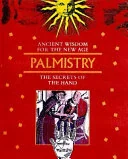
Olga Lempiinska's 'Palmistry' offers a refreshingly grounded approach to chiromancy. Unlike sensationalist guides, it anchors its interpretations in observable hand topography, presenting detailed illustrations that genuinely aid in identification. The meticulous breakdown of mounts, such as the Mount of Apollo correlating to artistic talent, provides concrete points of reference. However, the book occasionally leans towards a deterministic view, which may not satisfy readers seeking a more fluid interpretation of destiny. The strength lies in its systematic cataloging of hand features and their associated traits. The limitation appears in its occasional lack of exploration into how these traits might be consciously influenced or overcome. Despite this, it serves as an excellent, well-illustrated primer for understanding the physical language of the hands.
📝 Description
81
Olga Lempiinska's 'Palmistry', published in 1998, reinterprets hand analysis as a character diagnostic tool.
This volume presents palmistry not as simple fortune-telling, but as a method for understanding innate character, potential skills, and life paths. It meticulously details how the physical characteristics of the hand—lines, mounts, finger shapes, and skin texture—correlate to psychological traits and life circumstances. The book emphasizes that the hands serve as a map of the self, offering insights into health, ambition, and artistic inclinations. Individuals curious about self-discovery, character analysis, and subtle bodily energies will find this guide useful. It suits those seeking a practical framework to understand themselves and others, whether for personal growth, relationship insights, or exploring latent talents. Beginners will appreciate the clear illustrations, while more experienced practitioners may find new perspectives on established principles.
The book dissects the hand into distinct regions and features. Key concepts include the 'Mounts'—elevated areas on the palm named after planets, each associated with specific qualities like love, health, ambition, and creativity. The major lines (Life, Head, Heart) are explained in terms of their depth, clarity, and breaks, offering narratives of vitality, intellect, and emotional disposition. Finger shapes and lengths further refine these interpretations, creating a comprehensive picture of the individual.
Palmistry has roots stretching back to ancient Greece, with mentions by Aristotle. Its study saw periods of both interest and suppression throughout history. The late 20th century brought a revival in esoteric studies, and Lempiinska's work emerged from this renewed engagement with ancient divinatory arts. It sits within a tradition that often combines comparative mysticism and psychological profiling.
💡 Why Read This Book?
• Learn to interpret the specific 'Mounts' like the Mount of Luna and its connection to intuition, providing a unique lens for self-understanding beyond general personality quizzes. • Understand the detailed meaning of the 'Head Line' and 'Heart Line' formations, offering concrete insights into cognitive patterns and emotional expression specific to your own hands. • Discover the significance of finger lengths and shapes as discussed in the book, allowing for a personalized assessment of your innate strengths and potential challenges, as outlined in Lempiinska's original 1998 publication.
⭐ Reader Reviews
Honest opinions from readers who have explored this book.
❓ Frequently Asked Questions
What is the historical origin of palmistry discussed in the book?
The book references the ancient Greek origins of palmistry, noting its presence in philosophical discourse, and places its own 1998 publication within a broader late 20th-century revival of esoteric studies.
How does Olga Lempiinska's 'Palmistry' differ from modern fortune-telling apps?
Lempiinska's work emphasizes a detailed, illustrative system derived from centuries of practice, focusing on character and potential rather than predictive 'fortune-telling,' offering a more analytical and less speculative framework.
Are the illustrations in 'Palmistry' helpful for beginners?
Yes, the book features minutely detailed and labeled illustrations that clearly point out each curve and indentation, making it accessible for beginners to locate and understand hand features.
What specific hand features does the book analyze?
The book analyzes lines (Life, Head, Heart), mounts (named after planets like Venus and Jupiter), finger shapes, and the overall structure of the palm and fingers to interpret character and potential.
Can 'Palmistry' help in understanding one's career path?
Yes, the book explores how traits associated with specific mounts, like the Mount of Jupiter for ambition and leadership, and the structure of the Head Line, can offer insights into professional aptitudes and potential career directions.
Is this book about predicting the future or understanding oneself?
While the blurb mentions future, the core of the book focuses on understanding inherent character traits, skills, and life pathways through the physical map of the hand, positioning it more as a tool for self-awareness.
🔮 Key Themes & Symbolism
The Hand as a Microcosm
This work posits the palm as a living document, a microcosm reflecting the individual's entire being. It moves beyond simple predictions to interpret the inherent blueprint of character, talents, and predispositions. The detailed analysis of mounts, like the Mount of Venus for vitality and love, and the structure of the Head Line for mental faculties, illustrates how specific physical attributes correspond to psychological and energetic patterns. It's an exploration of how the physical form serves as a direct conduit for understanding inner potential and life's inherent tendencies.
Lines as Life Narratives
The major lines—Life, Head, and Heart—are presented not as rigid fate markers, but as narratives of an individual's vitality, intellect, and emotional landscape. Lempiinska meticulously describes variations in depth, clarity, breaks, and formations, correlating these features to specific life experiences and personality aspects. For instance, a clear and deep Heart Line might indicate emotional stability and strong affections, while a broken Head Line could suggest scattered thought patterns. This approach offers a nuanced reading of personal history and potential future expressions.
Mounts and Planetary Correspondences
Central to Lempiinska's system is the interpretation of the hand's mounts—the fleshy, raised areas named after classical planets. The Mount of Jupiter, for example, is linked to ambition, leadership, and self-esteem, while the Mount of Apollo signifies artistic talent and success. The book details how the prominence or deficiency of these mounts, often first discussed in ancient texts, directly influences an individual's expression of these planetary energies in their life. This provides a framework for understanding innate strengths and areas for development.
Finger Anatomy and Expression
Beyond lines and mounts, 'Palmistry' studies the significance of finger shapes, lengths, and even the nails. Each finger is associated with a specific mount and planetary influence, offering further layers of interpretation. The relative lengths of fingers to the palm, and the specific shape of the fingertips (e.g., square, spatulate), are analyzed for their correlation to traits like practicality, logic, creativity, or impulsivity. This comprehensive approach ensures that every aspect of the hand contributes to a holistic understanding of the individual.
💬 Memorable Quotes
Direct passages from the work, attributed to the author.
“Your future lies in your own two hands!”
— This foundational statement reframes palmistry from passive prediction to active self-understanding. It suggests that the hands are not merely indicators of destiny, but rather reveal the inner resources and potentials available to the individual to shape their path.
“The lines, bumps, shapes, and structure of your palm and fingers contain the truth about love, work, character traits, and skills.”
— This highlights the comprehensive nature of palmistry as presented in the book. It asserts that a detailed examination of the hand can reveal profound truths about fundamental aspects of a person's life and inner makeup.
“With minutely detailed and labeled illustrations pointing out each curve and indentation, locate the mounts of the hand...”
— This emphasizes the practical, visual learning approach of the book. The detailed illustrations are key to accurately identifying and interpreting the various features of the hand, making the complex subject accessible.
“...recognize which determine good health, strong ambition, and an extremely developed artistic nature.”
— This points to specific correlations the book makes between hand features and significant life aspects. It suggests that palmistry can offer concrete indicators for areas such as well-being, drive, and creative inclination.
“The structure of your palm and fingers contain the truth about... character traits.”
— This distilled concept underscores the book's focus on using hand analysis as a tool for psychological insight. It suggests that the physical layout of the hand offers a direct window into a person's core personality and disposition.
🌙 Esoteric Significance
Tradition
This work aligns with the Western Hermetic tradition, which historically incorporates various divinatory arts, including chiromancy, as tools for self-knowledge and understanding cosmic correspondences. It draws upon a lineage that views the human body as a microcosm reflecting the macrocosm, where physical features can be read as symbolic language. Lempiinska's approach, while practical, fits within this framework of seeing divine order or inherent patterns reflected in the physical form, offering a path to understanding one's place within a larger energetic system.
Symbolism
The core symbolism revolves around the planetary correspondences assigned to the mounts of the hand. The Mount of Jupiter symbolizes authority and expansion, while the Mount of Venus relates to love, passion, and physical vitality. The lines themselves—Life, Head, and Heart—are symbolic narratives: the Life Line representing physical energy and well-being, the Head Line denoting mental processes and intellect, and the Heart Line signifying emotional capacity and relationships. These elements form a symbolic language for reading an individual's energetic constitution and life trajectory.
Modern Relevance
Contemporary practitioners of somatic psychology and embodied cognition may find value in Lempiinska's detailed mapping of physical hand features to psychological traits. Furthermore, modern esotericists and occultists, particularly those within Hermetic or neo-traditionalist circles, continue to reference and utilize classical palmistry systems for personal readings and spiritual development. The book's systematic approach also appeals to those seeking structured methods within the broader resurgence of interest in divination and symbolic languages in the 21st century.
👥 Who Should Read This Book
• Aspiring chiromancers seeking a foundational text with clear, labeled illustrations to begin interpreting hand features. • Individuals interested in psychological profiling and self-discovery looking for a structured system to understand their innate character and talents. • Students of esoteric history and comparative divination interested in late 20th-century popularizations of ancient practices.
📜 Historical Context
Published in 1998, Olga Lempiinska's 'Palmistry' emerged during a period of renewed interest in esoteric practices, following the New Age movements of previous decades. While academic study of divination had waned significantly since the late 19th century, popular interest saw a resurgence, often blending traditional methods with modern psychology. This era also saw a growing market for accessible guides to occult subjects, catering to a public seeking personal development and alternative frameworks for understanding life. Lempiinska's work, with its detailed illustrations and systematic approach, positioned itself as a serious, albeit popular, exploration of chiromancy, distinct from more sensationalist or purely fortune-telling manuals. It offered a structured alternative to the more diffused spiritualism that had characterized earlier periods, aiming for a practical application of ancient knowledge.
📔 Journal Prompts
The Mount of Venus: How does its prominence or subtlety manifest in your current life experiences and relationships?
Your Life Line's trajectory: What major phases or energies does its shape and depth suggest for your personal journey?
The Head Line's formation: Reflect on the clarity and breaks in your Head Line and their connection to your thinking patterns.
Finger Lengths and Shapes: Consider how the characteristics of your individual fingers align with the traits described.
The Hand as a Map: What overarching narrative does your dominant hand present about your core nature and potential?
🗂️ Glossary
Mounts
The raised fleshy pads on the palm, named after classical planets (e.g., Jupiter, Saturn, Apollo, Venus), each associated with specific personality traits, talents, and life energies.
Life Line
The prominent arc extending from near the thumb towards the wrist, traditionally interpreted as indicative of physical vitality, health, and significant life events.
Head Line
The line running horizontally across the palm, typically representing intellectual capacity, mental processes, communication style, and learning patterns.
Heart Line
The line situated horizontally above the Head Line, interpreted as reflecting emotional nature, romantic life, relationships, and emotional expression.
Mount of Jupiter
Located at the base of the index finger, this mount is associated with ambition, leadership, confidence, spirituality, and a desire for success and recognition.
Mount of Venus
The fleshy area at the base of the thumb, linked to love, passion, sensuality, vitality, enthusiasm, and physical attractiveness.
Chiromancy
The practice of divination and character analysis through the study of the palm, including lines, mounts, finger shapes, and overall hand structure; synonymous with palmistry.
This book appears in 1 collection
🔮 Readers Also Liked
Browse all →







From the “Palmistry” Collection
View all →








More Free Occult Philosophy Books
View all →