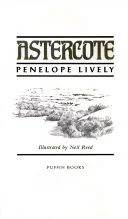
Astercote
 71
71

Astercote
Penelope Lively’s Astercote offers a quietly compelling exploration of a lost village and the children who stumble upon its spectral presence. The novel succeeds admirably in its depiction of childhood curiosity and the way young minds grapple with the tangible remnants of history. Lively’s prose, while accessible for its target age group, carries a sophisticated undertone, particularly in its portrayal of the village’s lingering atmosphere. A notable strength lies in the subtle creation of suspense; the children's gradual uncovering of Astercote feels organic and genuinely intriguing. However, the book’s pacing can occasionally feel a touch too deliberate for some younger readers, with the build-up to revelations taking precedence over immediate action. The passage detailing the children’s initial sighting of the village ruins, bathed in an ethereal light, exemplifies the book’s atmospheric power. Lively masterfully evokes a sense of wonder tinged with a gentle melancholy. It is a finely crafted piece that speaks to the enduring power of place and memory.
📝 Description
71
Penelope Lively's 1987 novel Astercote reveals a village lost to time.
In Penelope Lively's 1987 novel Astercote, a group of children stumbles upon a forgotten village. This hidden place, abandoned for centuries, carries the weight of its past.
The narrative weaves historical fiction with subtle supernatural elements. As the children explore Astercote, they begin to uncover its secrets and understand the echoes of lives lived long ago. The story considers how the present can connect with and illuminate the past.
Lively, an established author known for her thoughtful explorations of childhood and history, published Astercote during a time when children's literature was broadening its thematic scope. The novel engages with themes of time, memory, and the presence of forgotten places, appealing to young readers interested in historical mysteries.
Astercote touches on the idea of places that exist outside of conventional time and memory, a common motif in certain esoteric traditions. The discovery of such a location by unsuspecting children mirrors narratives where the veil between worlds is thin, allowing glimpses into other realities or past epochs. The village's abandonment suggests a rupture, a place where a community's presence lingers, accessible only through a specific kind of perception or accidental encounter. This resonates with lore concerning liminal spaces and the persistence of human imprints on the environment.
💡 Why Read This Book?
• Gain an understanding of how historical remnants can evoke past lives, as seen in the children's discovery of the abandoned Astercote village. • Experience the narrative technique of blending present-day childhood discovery with the spectral echoes of a forgotten community, a hallmark of Lively’s style. • Appreciate the subtle exploration of time and memory through the children's interaction with the physical landscape of Astercote, first published in 1987.
⭐ Reader Reviews
Honest opinions from readers who have explored this book.
❓ Frequently Asked Questions
What age group is Astercote by Penelope Lively suitable for?
Astercote is recommended for readers in grades 4, 5, 6, and 7, typically aligning with ages 9 to 13. It is well-suited for young readers who enjoy historical mysteries and stories with a touch of the uncanny.
What is the main theme of Astercote?
The central theme revolves around the discovery of a lost, abandoned village and the children's interaction with its past. It explores how places hold memories and how the present can connect with historical echoes.
Who is the author of Astercote?
The author of Astercote is Penelope Lively, a celebrated British author known for her children's and adult fiction. The book was first published in 1987.
Does Astercote have supernatural elements?
While not overtly supernatural, Astercote has a strong sense of atmosphere and the lingering presence of the past. The children experience the village's history as if it were still there, creating a subtly uncanny effect.
Where does the story Astercote take place?
The story takes place in and around a fictional, hidden, abandoned village called Astercote. The discovery of this village is central to the plot, revealing layers of its history to the children.
What grade levels does the original blurb suggest for Astercote?
The original blurb indicates suitability for grade levels 4, 5, 6, and 7, suggesting an intended readership of middle-grade children.
🔮 Key Themes & Symbolism
The Persistence of Place
The novel emphasizes how locations, even abandoned ones like Astercote, retain a palpable connection to their past inhabitants and events. The children's discovery isn't just physical; it's an encounter with the spectral imprint of former lives. This theme underscores the idea that history is not merely a record but an active presence that can be sensed and engaged with, particularly through the remnants left behind.
Childhood Perception of History
Astercote explores how children perceive and interact with historical sites. Unlike adults who might see ruins, the children experience the village with a heightened sense of wonder and imagination, allowing them to 'see' its past more vividly. This perspective highlights the unique ability of youth to bridge the gap between present reality and historical narrative, making the past feel immediate and alive.
Memory and Forgetting
The forgotten village of Astercote serves as a powerful symbol of collective memory and the processes of forgetting. The children's investigation reconstructs the village's history, pulling it back from obscurity. This process reflects on how communities and individuals choose what to remember and what to let fade, and the significance of uncovering these lost narratives.
The Unseen Layers of Reality
Lively subtly introduces the idea that reality is multi-layered, with unseen histories and presences coexisting with the visible world. The children's journey into Astercote reveals these hidden dimensions, suggesting that the 'real' world is more complex and filled with more depth than immediately apparent. This appeals to esoteric notions of hidden knowledge and perception.
💬 Memorable Quotes
Direct passages from the work, attributed to the author.
“They found a path that led them down, down, into the hollow.”
— This simple description emphasizes the descent into the hidden village, both literally and metaphorically. The repetition of 'down' creates a sense of entering a different realm, a journey into the forgotten depths of history.
“It was as if the village had been left in a hurry.”
— This interpretation of the abandoned state of Astercote hints at a sudden departure, imbuing the site with a sense of mystery and perhaps even tragedy. It prompts questions about why the inhabitants left so abruptly.
“The children looked at the ruins and saw more than just stone.”
— This signifies the children's imaginative capacity to perceive the past within the present. They don't just see decay; they envision the lives and activities that once filled the space, bridging the temporal gap.
“It was a place that had once been alive.”
— This statement is a direct acknowledgment of the village's lost vitality. It contrasts the current state of Astercote with its former existence, highlighting the theme of time's passage and the traces of life.
💡 Key Ideas
Editorial paraphrase of the work's core concepts — not direct quotes.
The village lay in a hollow, a place where the wind seemed to have died down.
This line captures the atmospheric isolation of Astercote. It suggests a place removed from the ordinary flow of the world, a pocket of stillness where the past might naturally linger undisturbed by the forces of the present.
🌙 Esoteric Significance
Tradition
While Astercote does not overtly align with a specific esoteric lineage like Hermeticism or Kabbalah, it appeals to a broader stream of Western esotericism that emphasizes the psychic imprints of places and the permeable boundary between past and present. It touches upon themes found in psychogeography and certain interpretations of ley lines, where landscapes are seen to hold energetic or historical residues that can be perceived by sensitive individuals.
Symbolism
The primary symbol is the abandoned village of Astercote itself, representing a place 'out of time' and forgotten by collective memory. The crumbling buildings and overgrown paths symbolize the decay of the physical world but also the enduring presence of what once was. The children's discovery acts as a symbol of uncovering hidden knowledge or accessing a deeper layer of reality, akin to initiatory journeys into obscured truths.
Modern Relevance
In contemporary times, Astercote's themes find relevance in the resurgence of interest in local history, urban exploration, and the concept of 'genius loci' (spirit of place). Modern practitioners of landscape magic or those interested in ancestral remembrance might find resonance in the book's depiction of how a place can hold and communicate its history to receptive minds, connecting to practices that seek to understand and interact with the energetic legacy of locations.
👥 Who Should Read This Book
• Young readers aged 9-13 interested in history and mystery, who will appreciate the discovery of a hidden, abandoned village and its untold stories. • Educators and parents seeking literature that subtly explores themes of time, memory, and the connection between past and present in an accessible format. • Aspiring writers and storytellers interested in how atmosphere and place can be used to create compelling narratives for younger audiences.
📜 Historical Context
Penelope Lively’s Astercote, published in 1987, emerged during a period of significant evolution in children's literature. Authors were increasingly emboldened to tackle more complex themes and historical settings. Lively, already an established writer with works like 'The Ghost of Thomas Kempe' (1977), brought a mature sensibility to her children’s fiction. The 1980s saw a rise in historical fiction for young readers, moving beyond simple adventure narratives to explore the nuances of past lives and societal changes. While not a direct engagement with a specific esoteric movement, the novel taps into a broader cultural fascination with hidden histories and the resonance of the past, a current also explored in more overtly mystical children's books of the era. Its reception was generally positive, praised for its atmospheric writing and thoughtful exploration of memory and place, fitting within a literary landscape that valued nuanced storytelling for younger audiences.
📔 Journal Prompts
The discovery of Astercote and its forgotten history.
The children's perception of the abandoned village.
The lingering atmosphere of the hollow.
The contrast between the village's past life and its present ruin.
The paths leading into the forgotten hollow.
🗂️ Glossary
Astercote
The name of the fictional, abandoned village discovered by the children in the novel. It serves as the central location and a symbol of forgotten history.
Hollow
A geographical depression or valley, often secluded. In the context of Astercote, the hollow emphasizes the village's hidden nature and isolation from the outside world.
Ruins
The remains of buildings or structures that have been destroyed or decayed. The ruins of Astercote are key to the children's discovery and their understanding of the past.
Traces of the Past
A concept suggesting that past events, emotions, or presences can still be felt or perceived in a location. This is central to the children's experience of Astercote.
Layers of History
The idea that a place contains multiple historical periods or events superimposed upon each other, which can be uncovered or sensed. The children peel back these layers in Astercote.
Forgotten Village
A community that has been lost to memory or historical record. Astercote embodies this concept, existing only in its physical remnants until rediscovered.
Childhood Discovery
The act of children finding something new or unknown, often with a sense of wonder and imagination. This is the primary narrative driver in Astercote.
This book appears in 1 collection
🔮 Readers Also Liked
Browse all →









From the “Superstition” Collection
View all →




More Free Occult Philosophy Books
View all →