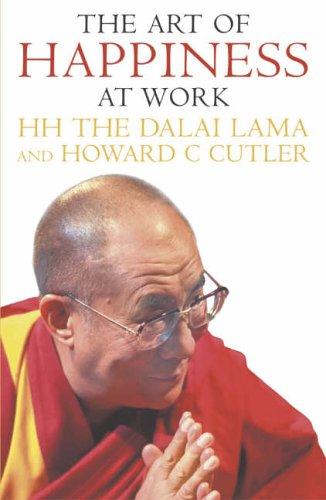
The Art of Happiness at Work

 72
72

The Art of Happiness at Work
The collaboration between the Dalai Lama and Dr. Cutler in The Art of Happiness at Work offers a refreshing antidote to the relentless pressure of contemporary professional life. While the book’s central premise—that happiness is an internal state achievable regardless of external circumstances—is not novel, its presentation is remarkably accessible. The strength lies in the seamless integration of Buddhist teachings with clinical psychological insights, particularly in the section discussing the nature of suffering. Cutler’s case studies ground the Dalai Lama’s philosophy in relatable scenarios, making abstract concepts tangible. However, the book occasionally feels repetitive, revisiting similar points across different chapters without significant new development. A limitation is that some readers might find the Buddhist underpinnings too spiritual for a purely secular workplace context. Nevertheless, the practical advice on managing anger and cultivating patience remains potent. The work’s enduring value lies in its gentle yet firm insistence that our inner state dictates our experience of external events.
📝 Description
72
Published in 2003, The Art of Happiness at Work combines Buddhist thought with psychiatry.
This book offers practical advice for finding contentment and reducing stress in professional life. His Holiness Tenzin Gyatso the XIV Dalai Lama and psychiatrist Howard C. Cutler present methods for shifting one's view of work and its difficulties. They address the roots of workplace anxiety and suggest ways to encourage happiness and kindness.
The book is for anyone wishing to improve their daily work experience, from new workers to experienced leaders. It is especially helpful for those unhappy with their jobs, facing conflicts with colleagues, or feeling overwhelmed by modern career pressures. Individuals interested in bringing ethical principles and mindful awareness to their jobs will find it valuable.
It covers how to understand suffering at work, build emotional strength, and foster positive mental attitudes. Key ideas include separating physical and mental pain, the value of compassion for oneself and others, and using difficult emotions as chances for development. The book also touches on the moral aspects of work and the search for a significant purpose.
This work draws from the Tibetan Buddhist tradition, specifically the teachings of His Holiness the Dalai Lama. It translates core Buddhist concepts, such as compassion, mindfulness, and the understanding of suffering, into the context of secular professional life. The book reflects a modern effort within Buddhist thought to make ancient wisdom accessible and applicable to the challenges of contemporary society, particularly the stresses and demands of the workplace. It bridges the gap between spiritual practice and everyday professional experience.
💡 Why Read This Book?
• You will learn to differentiate between physical discomfort and mental distress, a core concept from Buddhist philosophy that helps reframe workplace frustrations, allowing for greater emotional regulation. • You will gain practical techniques for cultivating compassion, a central tenet of the Dalai Lama's teachings, enabling you to foster more positive and productive relationships with colleagues. • You will discover how to reframe your perception of work challenges, moving beyond mere endurance to find genuine satisfaction, a benefit directly informed by the book's exploration of the eight worldly concerns.
⭐ Reader Reviews
Honest opinions from readers who have explored this book.
❓ Frequently Asked Questions
What is the primary Buddhist concept discussed in The Art of Happiness at Work?
The primary Buddhist concept is the understanding of suffering (dukkha) and its origins, particularly as it manifests in the workplace. The book teaches how to transform negative emotions and cultivate happiness through mental training.
How does Howard C. Cutler contribute to the book?
Dr. Howard C. Cutler, a psychiatrist, provides a psychological perspective and case studies that ground the Dalai Lama's philosophical teachings. He illustrates how Buddhist principles can be applied to modern work challenges, making them accessible to a Western audience.
When was The Art of Happiness at Work first published?
The Art of Happiness at Work was first published in 2003, reflecting a growing interest in mind-body wellness and the application of spiritual practices to secular life.
Does the book offer specific techniques for stress reduction at work?
Yes, the book offers several techniques, including mindfulness exercises, cultivating compassion for oneself and others, and reframing negative thoughts. These are presented as ways to manage stress and improve one's work experience.
What are the 'eight worldly concerns' mentioned in the book?
The eight worldly concerns are attachment and aversion to gain and loss, fame and disrepute, pleasure and pain. The book uses this concept to illustrate how our reactions to these common life events create suffering and how to approach them with equanimity.
Is this book suitable for people with no prior knowledge of Buddhism?
Absolutely. The book is designed for a general audience, explaining Buddhist concepts in clear, accessible language. It focuses on practical application rather than theological doctrine, making it relevant for anyone seeking greater happiness at work.
🔮 Key Themes & Symbolism
Transforming Suffering
The work systematically addresses the nature of suffering, distinguishing between physical pain, which is unavoidable, and mental suffering, which is largely a product of our reactions and attachments. The text posits that by understanding the roots of our mental anguish—such as desire, aversion, and ignorance—we can learn to mitigate its impact. This involves a conscious effort to reframe our perceptions of workplace difficulties, viewing them not as insurmountable obstacles but as opportunities for personal growth and the development of resilience. The esoteric angle lies in recognizing that the external world is a projection of our internal state.
Cultivating Compassion
Compassion is presented not merely as a desirable emotional state but as a practical tool for navigating complex workplace dynamics. The book advocates for extending compassion first to oneself, recognizing one's own struggles and imperfections, and then outwards to colleagues, superiors, and subordinates. This practice is framed as a powerful antidote to anger, resentment, and inter-personal conflict. By actively developing empathy and understanding, individuals can foster a more harmonious and productive work environment, aligning with ancient contemplative traditions that emphasize interconnectedness.
The Eight Worldly Concerns
This classic Buddhist framework—gain and loss, fame and disrepute, pleasure and pain—is applied to the modern professional setting. The text illustrates how our constant striving for the positive aspects and avoidance of the negative aspects of these dualities fuels much of our workplace anxiety and dissatisfaction. The esoteric teaching here is to cultivate equanimity, recognizing that these are transient phenomena and that true contentment arises from an inner source, independent of external validation or circumstance. This detachment is key to finding lasting happiness.
Meaningful Work
Beyond mere survival or financial gain, the book explores the concept of work as a vehicle for purpose and contribution. It encourages readers to identify the values that drive them and to align their professional activities with these deeper meanings. This perspective shifts the focus from the burdens of labor to the potential for fulfillment and service. By seeking work that aligns with one's ethical framework and offers opportunities for positive impact, individuals can transform their daily tasks into a source of profound satisfaction and spiritual development.
💬 Memorable Quotes
Direct passages from the work, attributed to the author.
“Real happiness is generated from within, not from external circumstances.”
— This statement expresses the core message: our internal state is the primary determinant of our happiness. It suggests that external achievements or possessions are transient and cannot provide lasting contentment, which must be cultivated through mental discipline and perspective shifts.
“Suffering is not in the event itself, but in our reaction to it.”
— This highlights the psychological component of suffering. The book argues that it is our interpretation, attachment, and aversion to events—rather than the events themselves—that cause distress, offering a path to mitigate suffering by changing our internal response.
“We ourselves are the creators of our own happiness.”
— This interpretation of the Dalai Lama's teachings emphasizes personal agency. It asserts that individuals possess the inherent capacity to cultivate positive mental states and achieve happiness, rather than being passive recipients of fortune or misfortune.
“Our main purpose in life is to be happy.”
— This straightforward assertion reframes the objective of existence. It suggests that the pursuit of happiness, understood as inner peace and well-being, should be the guiding principle for our actions and life choices.
💡 Key Ideas
Editorial paraphrase of the work's core concepts — not direct quotes.
Compassion is the radical act of loving others as yourself.
This quote frames compassion not as mere sentimentality but as an active, transformative practice. By equating the love for others with self-love, it elevates compassion to a principle that can resolve conflict and foster universal connection.
🌙 Esoteric Significance
Tradition
This work draws heavily from the Tibetan Buddhist tradition, a branch of Mahayana Buddhism. Its esoteric significance lies in its presentation of core Buddhist principles—such as the nature of suffering, impermanence, emptiness, and the cultivation of compassion—in a format accessible to a global, secular audience. It departs from highly ritualistic or doctrinal Buddhist texts by focusing on the psychological and practical application of these teachings for everyday life, particularly within the demanding context of modern work.
Symbolism
While not overtly symbolic in the way of some esoteric traditions, the book implicitly uses concepts like 'suffering' and 'happiness' as symbolic representations of internal states of being. The 'workplace' itself can be viewed symbolically as a microcosm of life's challenges. The emphasis on 'transformation' acts as a symbolic journey from a state of distress and confusion to one of clarity and peace, mirroring alchemical or spiritual transformation narratives.
Modern Relevance
The concepts presented in The Art of Happiness at Work continue to resonate strongly with contemporary mindfulness movements, positive psychology practitioners, and leadership development programs. Thinkers and organizations focused on emotional intelligence, resilience training, and ethical business practices frequently cite or draw upon the Dalai Lama's emphasis on compassion and inner peace. Its teachings are particularly relevant to current discussions around mental health in the workplace and the search for purpose-driven careers.
👥 Who Should Read This Book
• Professionals experiencing burnout or dissatisfaction: Individuals feeling overwhelmed by workplace stress will find practical strategies for reframing their experiences and cultivating inner resilience, directly addressing the book's core concern with transforming suffering. • Leaders and managers seeking to improve team dynamics: Those in leadership roles can learn to foster more compassionate and understanding environments, applying the book's principles on extending empathy and managing conflict constructively. • Individuals interested in applied Buddhist philosophy: Readers curious about integrating spiritual or ethical frameworks into their daily lives will appreciate the accessible explanation of Buddhist concepts like the eight worldly concerns and their relevance to secular challenges.
📜 Historical Context
Published in 2003, The Art of Happiness at Work arrived at a juncture where the Western corporate world was increasingly acknowledging the detrimental effects of stress and burnout. The early 2000s saw a surge in popularity for self-help literature, particularly that which offered Eastern philosophical perspectives as an alternative to purely material or psychological approaches. The book built upon the global renown of His Holiness the XIV Dalai Lama, who had become a prominent advocate for compassion and interfaith dialogue since his exile from Tibet in 1959. Its publication coincided with a growing academic and popular interest in positive psychology, a field that began to formalize the study of human flourishing, spearheaded by figures like Martin Seligman. While not directly engaging with a specific competing school of thought in a confrontational manner, its Buddhist framework offered a distinct alternative to secular humanistic or cognitive-behavioral approaches to well-being prevalent at the time.
📔 Journal Prompts
Your personal interpretation of the eight worldly concerns and their impact on your daily work.
Reflecting on a specific workplace challenge through the lens of mental versus physical suffering.
Mapping out opportunities to practice compassion towards a difficult colleague.
Identifying the core values that would make your work feel more meaningful.
Assessing your current sources of happiness and their internal versus external origins.
🗂️ Glossary
Dukkha
A Sanskrit and Pali term often translated as 'suffering,' 'dissatisfaction,' or 'stress.' In Buddhist philosophy, it refers to the inherent unsatisfactoriness of conditioned existence, arising from impermanence and attachment.
Eight Worldly Concerns
A Buddhist framework describing the dualistic forces that often disturb our peace: gain/loss, fame/disrepute, praise/blame, pleasure/pain. The text explores how attachment to the positive and aversion to the negative create mental turmoil.
Equanimity
A mental state of calm and balanced awareness, free from the disturbances of pleasure and pain, gain and loss. It involves maintaining composure and clarity amidst life's fluctuations.
Impermanence (Anicca)
The Buddhist doctrine that all phenomena are in a constant state of flux and change. Recognizing impermanence helps to reduce attachment to transient states and experiences.
Compassion (Karuna)
In Buddhism, a deep awareness of the suffering of others coupled with the desire to alleviate it. The book emphasizes cultivating this feeling towards oneself and others.
Mindfulness
A state of active, open attention on the present. It involves observing one's thoughts, feelings, and surroundings without judgment, a key practice for managing workplace stress.
Attachment
An excessive desire for or clinging to things, people, or ideas. The book identifies attachment as a primary cause of suffering and dissatisfaction.
🔮 Readers Also Liked
Browse all →









More by His Holiness Tenzin Gyatso the XIV Dalai Lama, Howard C. Cutler
All books →


More Free Occult Philosophy Books
View all →