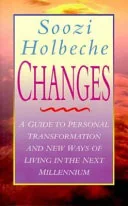
Changes
 74
74

Changes
Holbeche's "Changes" presents a direct, no-nonsense approach to internal transformation. Its strength lies in its clear articulation of techniques like visualization and positive thinking, moving beyond abstract concepts to provide actionable steps. The 1998 publication date grounds it in a specific era of self-help literature, but the core principles remain relevant. A notable concept is the emphasis on 'inner guidance' as an accessible resource, rather than an external decree. However, the text sometimes leans towards a prescriptive tone, which might feel limiting to readers who prefer more nuanced or experimental approaches to self-discovery. The limitation isn't in the efficacy of the methods, but in their presentation as universally applicable solutions. Despite this, "Changes" offers a solid toolkit for personal empowerment.
📝 Description
74
Soozi Holbeche's 1998 book 'Changes' offers practical techniques for accessing inner wisdom.
Soozi Holbeche's "Changes," published in 1998, presents actionable methods for personal evolution and internal shifts. The book is for individuals ready to actively engage in their self-development, particularly those feeling stagnant or facing major life decisions. It suits self-starters who prefer guided self-exploration and are interested in the mechanics of psychological and spiritual change.
Holbeche emphasizes the mind's role in shaping reality and facilitating growth. She posits that internal states directly influence external circumstances and one's capacity for change. Cultivating self-awareness and consciously applying mental disciplines are key. The book introduces specific exercises to develop this awareness and harness mental energy for constructive purposes, aiming for tangible internal shifts rather than just aspirations.
Emerging in the late 1990s, "Changes" contributed to a trend in accessible, practical spiritual tools. This period saw growing interest in New Age spirituality and self-help, following more esoteric explorations of preceding decades. Holbeche's work focused on the practical application of psychological and spiritual concepts, differentiating itself by detailing the *how-to* of accessing inner guidance, alongside figures like Marianne Williamson and Louise Hay who also championed inner transformation.
💡 Why Read This Book?
• Learn specific visualization and meditation techniques to access your own inner guidance, as detailed in the book's practical exercises, allowing for more intuitive decision-making. • Understand the mechanics of positive thinking as a tool for personal evolution, enabling you to consciously shift your internal landscape and attract desired changes. • Discover how to make significant internal changes by developing self-awareness, a core concept explored through Holbeche's structured approach to self-exploration.
⭐ Reader Reviews
Honest opinions from readers who have explored this book.
❓ Frequently Asked Questions
What core techniques does Soozi Holbeche's "Changes" focus on for self-improvement?
"Changes" primarily focuses on visualization, meditation, and positive thinking as core techniques. Published in 1998, the book offers practical exercises to help readers access their inner guidance and enact personal changes.
Who is the intended audience for the book "Changes"?
The book is designed for individuals actively seeking personal development and self-directed change. It suits those ready to engage with practical methods for internal transformation and wish to cultivate greater self-awareness.
When was Soozi Holbeche's "Changes" first published and what was its context?
Soozi Holbeche's "Changes" was first published in 1998. It emerged during a period of growing interest in accessible self-help and New Age spirituality, offering practical tools for personal evolution.
What is the main goal of the exercises presented in "Changes"?
The main goal of the exercises in "Changes" is to empower readers to access their own inner guidance. This is achieved through mental disciplines, enabling them to make conscious and positive changes within themselves.
How does "Changes" differ from other self-help books from the late 1990s?
While sharing the era's focus on positive psychology, "Changes" distinguishes itself by offering highly specific, actionable techniques for accessing inner wisdom, emphasizing a practical 'how-to' over abstract philosophy.
Can the concepts in "Changes" be applied to areas outside of personal growth?
While the book's primary focus is internal change, the principles of visualization and positive thinking can be adapted to goal setting in various life areas, including career and relationships, by fostering a proactive mindset.
🔮 Key Themes & Symbolism
Accessing Inner Guidance
A central theme in "Changes" is the cultivation of an internal compass. Holbeche guides readers to trust and utilize their own intuition and wisdom, rather than relying solely on external advice. This is presented not as a mystical gift, but as a skill developed through consistent practice of techniques like focused meditation and self-reflection. The book clarifies this process, making personal guidance an accessible resource for navigating life's challenges and opportunities.
The Power of Positive Thinking
Holbeche explores positive thinking not as mere optimism, but as a deliberate mental strategy for shaping one's reality. The work details how the conscious application of positive thought patterns can influence perception, attract desired outcomes, and foster internal resilience. This isn't about ignoring difficulties, but about reframing them and focusing mental energy constructively to facilitate personal evolution and achieve desired internal states.
Conscious Self-Transformation
The book is fundamentally about agency in personal change. It posits that significant internal shifts are not random occurrences but can be consciously engineered. Through visualization and focused intention, readers are shown how to actively participate in their own development. This theme emphasizes that individuals have the inherent capacity to alter their beliefs, habits, and perspectives, leading to a more fulfilling existence.
Visualization as a Tool
Visualization is presented as a potent technique for manifesting desired changes. "Changes" details how to create vivid mental imagery, engaging the senses to imprint new realities onto the subconscious. This practice is framed as a bridge between current circumstances and future aspirations, allowing individuals to mentally rehearse and internalize the states and outcomes they wish to achieve.
💬 Memorable Quotes
Direct passages from the work, attributed to the author.
“Our inner guidance is the most reliable compass we possess.”
— This concept highlights the book's core philosophy: that individuals hold the key to their own wisdom. It encourages a shift from external validation to internal trust, positioning intuition as a primary tool for decision-making and personal direction.
“Positive thought is not passive wishing, but active creation.”
— This interpretation clarifies the book's practical approach to positive thinking. It distinguishes deliberate mental effort from mere hope, framing it as a dynamic force that can actively shape one's experiences and internal state.
“Change begins with a clear intention and focused visualization.”
— This statement expresses the book's methodology. It suggests that intentionality, coupled with the practice of creating vivid mental images, forms the foundation for initiating and sustaining personal transformation.
“Meditation is the practice of quieting the external noise to hear the internal voice.”
— This emphasizes the function of meditation within Holbeche's framework. It's presented as a method to reduce mental clutter and distractions, thereby enhancing one's ability to perceive and act upon inner wisdom.
“We are the architects of our internal landscape.”
— This powerful metaphor suggests that individuals have complete control over their inner world. It underscores the theme of agency, implying that our thoughts, beliefs, and attitudes are consciously constructible elements.
🌙 Esoteric Significance
Tradition
While "Changes" doesn't strictly adhere to a single esoteric lineage like Hermeticism or Kabbalah, it draws heavily from the principles of Western Esotericism that gained popular traction in the 20th century. Its emphasis on mind-over-matter, the power of intention, and internal energy aligns with concepts found in New Thought and general metaphysical traditions. Holbeche's work can be seen as a modern, secularized interpretation of these older ideas, making them palatable and practical for a contemporary audience seeking self-mastery.
Symbolism
The book's primary 'symbol' is the internal landscape itself, which readers are encouraged to visualize and reshape. The concept of 'inner guidance' functions symbolically as a guiding light or wise inner voice. While not relying on overt traditional symbols, the act of visualization itself can be seen as a form of internal sigil creation, where focused mental imagery serves as a symbolic representation of desired future states or internal qualities.
Modern Relevance
The principles outlined in "Changes" remain highly relevant today, particularly within the broader wellness and mindfulness movements. Concepts like guided meditation, positive affirmations, and intentional living are now mainstream. Contemporary thinkers and practitioners in fields ranging from positive psychology to life coaching continue to explore and adapt these techniques, demonstrating the enduring utility of Holbeche's approach to accessible personal transformation.
👥 Who Should Read This Book
• Individuals new to self-help and personal development seeking a structured, technique-driven introduction. • Those feeling stuck or seeking clarity on life decisions who want practical tools to access their own intuition. • Readers interested in the practical application of visualization and meditation for tangible internal shifts, beyond abstract philosophical discussions.
📜 Historical Context
Soozi Holbeche's "Changes," published in 1998, arrived during a vibrant period for self-help and personal development literature. The late 1990s saw a surge in books focusing on practical psychological techniques, influenced by earlier waves of New Age thought and humanistic psychology. Holbeche's work contributed to this trend by offering accessible methods for self-directed change. It emerged in parallel with authors like Marianne Williamson, who popularized spiritual principles for everyday life, and Louise Hay, a pioneer in positive affirmations. While many books offered motivational content, "Changes" distinguished itself by detailing specific techniques for accessing inner guidance through visualization and meditation. Its reception was part of a broader cultural embrace of self-empowerment, positioning personal growth as an achievable internal project rather than an elusive ideal.
📔 Journal Prompts
The concept of inner guidance as a compass: how has it been perceived or ignored in your life?
Reflect on a specific visualization exercise from the book and its impact on your internal state.
How can the principles of positive thinking, as described in "Changes", be applied to a current challenge?
Consider the idea of being the 'architect of your internal landscape'. What changes would you consciously design?
Explore the practice of quieting external noise to hear the internal voice through meditation.
🗂️ Glossary
Inner Guidance
The intuitive wisdom or inner knowing that resides within an individual, accessible through introspection and practice. It is presented as a reliable internal compass for decision-making.
Visualization
The mental process of creating vivid images or scenes in one's mind, used as a technique to influence the subconscious, foster positive thinking, and manifest desired outcomes.
Positive Thinking
A mental attitude that focuses on the good and expects positive results. In the context of the book, it is an active practice aimed at shaping reality and facilitating personal growth.
Meditation
A practice where an individual uses a technique – such as mindfulness, or focusing the mind on a particular object, thought, or activity – to train attention and awareness, and achieve a mentally clear and emotionally calm state.
Internal Landscape
Refers to the sum total of an individual's thoughts, beliefs, emotions, and mental patterns. The book suggests this landscape can be consciously shaped and altered.
Self-Transformation
The process of making fundamental changes to one's character, behavior, or way of thinking, driven by conscious effort and intention.
Intention
A purpose or aim. In the context of the book, a clear intention is a foundational element for directing mental energy towards desired changes.
This book appears in 1 collection
🔮 Readers Also Liked
Browse all →









From the “Aura Cleansing” Collection
View all →








More Free Occult Philosophy Books
View all →