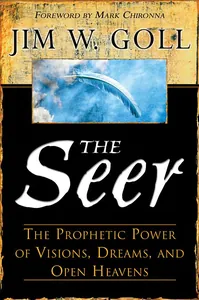
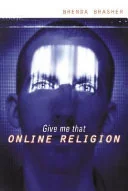
Give Me That Online Religion
 83
83

Give Me That Online Religion
Brenda E. Brasher's "Give Me That Online Religion" remains a remarkably prescient examination of how faith adapted to the digital frontier. The book’s strength lies in its early, grounded ethnographic approach, capturing the raw energy of nascent online religious communities before the phenomenon became ubiquitous. Brasher’s detailed descriptions of personal web "altars" and the spontaneous formation of "circles of faith" offer a vivid snapshot of a world still figuring out its digital soul. A notable limitation, however, is the inherent shelf-life of any work focused on the bleeding edge of technology; some specific platforms or early web design trends it details feel dated, though the underlying human impulse remains relevant. The passage discussing how individuals could "express adoration for living celebrities, just as they honor the memory of long-departed martyrs" is particularly potent, highlighting a continuity in devotional object even as the medium shifts dramatically. It captures the essence of digital syncretism with striking clarity. Ultimately, this is a foundational text for understanding the digital evolution of belief.
📝 Description
83
Brenda E. Brasher's 2001 book documented early religious expression on the internet.
Published in 2001, "Give Me That Online Religion" examines the initial ways people used the internet for religious purposes. Brasher observed how established religions started using online spaces and how individuals created new spiritual groups without needing traditional structures or physical locations. This work captures a moment when the internet began to change what religious practice and community meant.
Scholars of religious sociology, digital culture, and the history of belief systems will find Brasher's analysis valuable. The book discusses phenomena like online influencers, virtual congregations, and digital prayer groups, providing a historical basis for practices now common. It offers a structured academic look at how technology and spirituality started to merge.
While not explicitly esoteric in its subject matter, "Give Me That Online Religion" arrived during a time when digital platforms were becoming new spaces for exploring belief. The internet's capacity to connect individuals across distances and bypass traditional gatekeepers mirrored some of the decentralized or individually focused aspects found within various esoteric traditions. Brasher's study, therefore, provides a historical lens on how a new medium facilitated the spread and formation of spiritual expressions, some of which might align with individualistic or non-traditional paths.
💡 Why Read This Book?
• Understand the foundational concepts of online religious communities, such as "electronic shrines" and "circles of faith," as detailed by Brasher in the early 2000s, offering a historical anchor for today's digital spiritualities. • Gain insight into the sociological impact of the internet on religious practice by examining how established communities and new movements alike utilized the platform circa 2001 to expand reach and connection. • Appreciate the early blending of the sacred and secular online, as Brasher observed individuals venerating both historical figures and contemporary celebrities, revealing evolving patterns of devotion.
⭐ Reader Reviews
Honest opinions from readers who have explored this book.
❓ Frequently Asked Questions
When was Brenda E. Brasher's "Give Me That Online Religion" first published?
Brenda E. Brasher's "Give Me That Online Religion" was first published on February 23, 2001, capturing the early landscape of digital religious expression.
What are some examples of early online religious practices mentioned in the book?
The book details practices like the creation of "electronic shrines" and personal "Web 'altars'," often dedicated to celebrities or historical figures, illustrating novel forms of digital devotion.
Does the book discuss new religious movements forming online?
Yes, "Give Me That Online Religion" explores the ease with which individuals could create "new circles of faith" online, forming entirely new spiritual communities independent of traditional structures.
Who is Brenda E. Brasher?
Brenda E. Brasher is an expert on online religion and the author of "Give Me That Online Religion," known for her early academic work analyzing the intersection of faith and the internet.
What is the historical context of the book's publication?
Published in 2001, the book emerged during the rapid expansion of the internet, documenting how religious expression was adapting to this new digital frontier before it became a widespread phenomenon.
Is "Give Me That Online Religion" still relevant today?
Absolutely. Its analysis of how technology facilitates new forms of religious community and devotion provides crucial historical context for understanding contemporary online spiritual practices and movements.
🔮 Key Themes & Symbolism
Digital Shrines and Altars
The work meticulously documents the creation of "electronic shrines" and personal "Web 'altars'" as novel expressions of devotion in the early internet era. These digital spaces allowed individuals to venerate both historical figures and contemporary celebrities, demonstrating a fundamental human need for sacred objects and spaces, adapted to the online medium. Brasher's analysis highlights how these virtual constructions served as focal points for personal faith and community identity, blurring lines between the sacred and secular.
Formation of Online Faith Circles
A central theme is the unprecedented ease with which "new circles of faith" could be established online, independent of geographical constraints or established religious institutions. Brasher illustrates how the internet empowered individuals to connect with like-minded believers, forming cohesive communities around shared spiritual interests. This aspect underscores the democratizing potential of the internet in religious life, enabling niche spiritualities and personalized belief systems to flourish and find adherents.
Reaching the Unaffiliated
Brasher examines how long-established religious communities began to leverage online platforms to connect with individuals who were unaffiliated with traditional congregations. The internet provided a powerful tool for outreach, allowing for the dissemination of religious information and the fostering of connections beyond the physical church or temple walls. This exploration reveals the adaptive strategies of traditional faiths in response to changing societal demographics and the rise of digital communication channels.
The Blurring of Sacred and Secular
The book keenly observes how the early internet landscape facilitated a unique blending of the sacred and secular. Expressions of adoration for living celebrities, akin to traditional religious veneration, are presented alongside honors for departed martyrs. This phenomenon suggests a fluidity in contemporary devotion, where traditional religious objects and figures share digital space with popular culture icons, reflecting evolving patterns of belief and admiration in the digital age.
💬 Memorable Quotes
Direct passages from the work, attributed to the author.
“Electronic shrines and kitschy personal Web "altars" express adoration for living celebrities, just as they honor the memory of long-departed martyrs.”
— This observation highlights how digital spaces became arenas for devotion, mirroring traditional practices by venerating both contemporary icons and historical figures, demonstrating continuity in human adoration.
“Operating online allows long-established religious communities to reach the unaffiliated like never before.”
— This points to the internet's transformative power in expanding the reach of established religions, enabling them to connect with individuals outside their traditional membership base in novel ways.
“More startling is the ease by which anyone with internet access can create new circles of faith.”
— This emphasizes the democratizing and decentralizing effect of the internet on religion, empowering individuals to form their own spiritual communities independent of established hierarchies.
“The future of online religion is now!”
— This declarative statement, likely from the original blurb, captures the sense of immediate relevance and groundbreaking discovery surrounding the study of religion on the internet in 2001.
“Cyber c”
— This appears to be an incomplete fragment, likely cut off from the original blurb, suggesting the book examines the 'cyber' aspect of religious expression and community.
🌙 Esoteric Significance
Tradition
While not strictly aligned with a singular esoteric lineage like Hermeticism or Gnosticism, Brasher's work engages with the modern evolution of spiritual seeking. It touches upon themes common in esoteric thought, such as the individual's direct access to the divine or spiritual community, and the creation of personal sacred spaces. The book examines how technology facilitates these pursuits, reflecting a contemporary manifestation of perennial spiritual impulses finding new technological vessels.
Symbolism
The primary symbols explored are the "electronic shrine" and the "personal Web 'altar'." These function as modern digital talismans or focal points for devotion, akin to traditional altars or reliquaries. Their "kitschy" nature suggests a blending of the sacred with popular culture, a motif seen in various syncretic spiritual practices. The act of constructing these digital spaces signifies the individual's agency in defining their spiritual landscape.
Modern Relevance
Contemporary thinkers exploring digital spirituality, online communities, and the sociology of religion continue to draw on the foundational observations made in "Give Me That Online Religion." Works on virtual churches, religious influencers, and the impact of AI on faith echo Brasher's early insights. Scholars examining the commodification of spirituality and the personalization of belief systems find her analysis of celebrity veneration and self-made altars particularly relevant to current trends.
👥 Who Should Read This Book
• Students of religion and sociology: To understand the foundational academic analysis of how the internet began to reshape religious expression and community formation around the turn of the millennium. • Digital culture enthusiasts: For those interested in the early history of online communities and how nascent technologies influenced human interaction and belief systems. • Researchers of new religious movements: To gain historical context on the emergence of digitally-native spiritual groups and the adaptive strategies of established faiths online.
📜 Historical Context
Published in 2001, "Give Me That Online Religion" arrived during the dot-com boom's aftermath and the nascent stages of widespread internet adoption. The academic landscape was beginning to grapple with the societal implications of digital technologies, with scholars like Manuel Castells exploring the network society. Brasher's work was among the first to systematically examine religious phenomena online, predating the ubiquity of social media platforms like Facebook (launched 2004). While scholars like J. Gordon Melton were documenting new religious movements, Brasher focused specifically on the digital dimension. The book provided an early, empirical look at how faith communities and individual believers were adapting to and shaping this new virtual frontier, offering a stark contrast to the more established, physical modes of worship and association.
📔 Journal Prompts
The creation of "electronic shrines" and "personal Web 'altars'".
The formation of "new circles of faith" online.
The internet's role in reaching the "unaffiliated".
The blending of celebrity adoration with traditional veneration.
The concept of religion operating "online" in 2001.
🗂️ Glossary
Online Religion
Religious practices, communities, and expressions that primarily occur or are facilitated through the internet and digital technologies.
Electronic Shrine
A digital space, often a webpage, created to honor or express devotion towards a specific person, deity, or concept, serving as a virtual focal point for religious feeling.
Personal Web 'Altars'
Individualized digital spaces on the internet, analogous to physical altars, where users curate content and express personal beliefs or veneration, often for celebrities or spiritual figures.
Circles of Faith
Groups of individuals who form spiritual or religious communities, often online, connected by shared beliefs, practices, or goals, independent of traditional institutional structures.
Unaffiliated
Individuals who do not belong to or actively participate in traditional, organized religious institutions or congregations.
Cyber
Relating to or characteristic of the culture of computers, the internet, and virtual reality; often used as a prefix to denote digital or online aspects of phenomena.
Veneration
Great respect, reverence, or admiration shown towards a person or thing, often associated with religious or spiritual devotion.
This book appears in 1 collection
🔮 Readers Also Liked
Browse all →








From the “Rune Reading” Collection
View all →









More Free Sacred Texts & Gnosticism Books
View all →