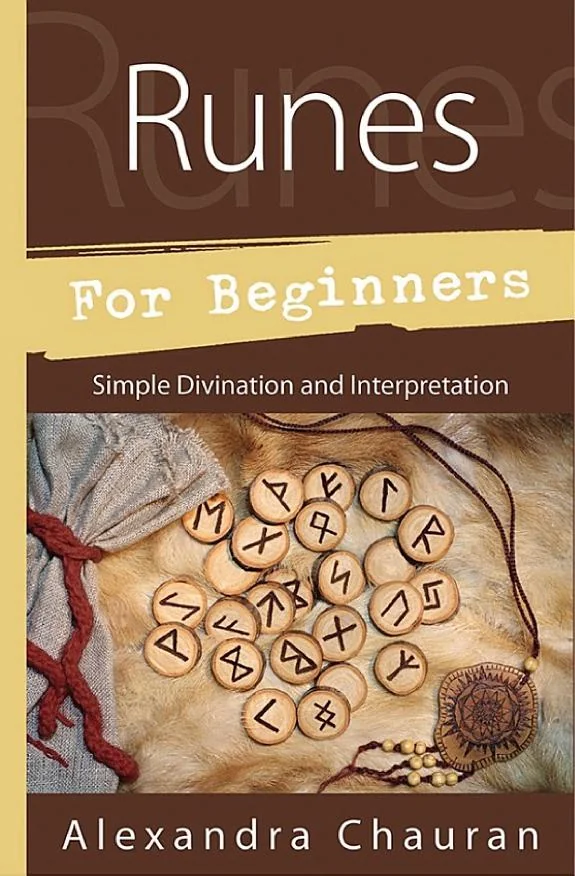
Runes for Beginners
 79
79

Runes for Beginners
Alexandra Chauran’s Runes for Beginners offers a refreshingly direct approach to a subject often shrouded in overly complex lore. The strength of this work lies in its clarity and practicality; Chauran avoids esoteric jargon, presenting the Elder Futhark with a no-nonsense attitude that is genuinely helpful for newcomers. Her systematic breakdown of each rune’s multifaceted meanings is particularly commendable. However, while the book excels at the 'what' and 'how,' it occasionally falters on the 'why' for the deeply skeptical. A brief passage discussing the historical development of rune casting, perhaps referencing early Germanic tribes, could have provided a more robust grounding. Despite this minor point, the work serves as a solid, approachable introduction to runic divination, empowering readers to begin their own practice with confidence. It’s a functional manual for those ready to engage with the runes.
📝 Description
79
Alexandra Chauran's Runes for Beginners clarifies the Elder Futhark for modern use.
This book serves as a practical introduction to the Elder Futhark, the oldest runic alphabet. Alexandra Chauran breaks down each rune, moving past simple memorization to show how to integrate runic understanding into daily life. The text aims to make rune casting accessible, presenting it as a tool for self-discovery and understanding challenges, not as an esoteric mystery.
Runes for Beginners is written for newcomers to runic study. It suits those wanting a basic grasp of runic systems for personal development, spiritual curiosity, or an entry into Norse mythology. Practitioners of other divination methods may also find it useful for broadening their skills. The author's focus on intuition and personal connection makes it suitable for anyone feeling drawn to runes without prior formal instruction.
Rune divination originates with early Germanic peoples, with the Elder Futhark active from around the 2nd to 8th centuries CE. These symbols were more than an alphabet; they carried magical and divinatory weight, often linked to Odin. Their use saw a revival in the late 19th and early 20th centuries alongside renewed interest in European paganism and esoteric thought, influenced by figures like Guido von List.
💡 Why Read This Book?
• Learn to interpret the Elder Futhark’s 24 distinct runes, understanding their mythological connections to figures like Odin, enabling personalized divination beyond simple keyword associations. • Master practical rune casting techniques, such as the one-rune draw and basic spreads, to gain actionable insights into personal questions concerning love and career from chapter three. • Connect with the historical context of rune usage among Germanic peoples, appreciating the runes not just as symbols but as ancient tools for wisdom and guidance.
⭐ Reader Reviews
Honest opinions from readers who have explored this book.
❓ Frequently Asked Questions
What is the Elder Futhark and why is it important for rune beginners?
The Elder Futhark is the oldest known runic alphabet, comprising 24 runes used by Germanic tribes from around the 2nd to 8th centuries CE. It's crucial for beginners as it forms the foundational system from which later runic alphabets and divination practices evolved.
How does Alexandra Chauran's 'Runes for Beginners' differ from other rune books?
Chauran's book emphasizes a practical, intuitive approach, aiming to demystify rune casting. It focuses on actionable interpretation and personal connection, moving beyond purely academic or overly complex esoteric explanations often found in other texts.
Can I use runes for guidance on specific life areas like career or relationships?
Yes, the book guides readers on how to ask specific questions related to love, career, health, and other significant life topics. It teaches how to interpret the runes' messages within these contexts.
Is prior knowledge of Norse mythology required to understand this book?
No prior knowledge is strictly required. While the book touches upon Norse mythology for context, it provides the necessary background information for beginners to grasp the symbolic meanings of the runes.
What are some of the key runes discussed in 'Runes for Beginners'?
The book covers all 24 runes of the Elder Futhark, including foundational runes like Fehu (wealth), Uruz (strength), and Thurisaz (chaos/defense), explaining their individual meanings and interrelations.
When was 'Runes for Beginners' first published?
The book 'Runes for Beginners' by Alexandra Chauran was first published on August 5, 2025.
🔮 Key Themes & Symbolism
Elder Futhark Unveiled
This section meticulously details each of the 24 runes of the Elder Futhark, the oldest runic alphabet. It presents not only the phonetic value and name of each rune (like Fehu, Uruz, Thurisaz) but also examines their complex meanings. These meanings extend beyond simple divination, encompassing mythological associations, symbolic interpretations, and practical applications. The text guides readers to understand how each rune can represent concepts from wealth and strength to challenges and journeys, forming the bedrock of runic interpretation.
Intuitive Rune Casting
Moving beyond rote memorization, this theme focuses on the practical application of runes for divination. The book introduces various casting methods, starting with simple, single-rune draws for daily guidance and progressing to more complex spreads designed to address specific questions about love, career, or personal challenges. The emphasis is on developing a personal connection with the runes, fostering intuition, and learning to interpret the patterns and combinations that emerge during a reading.
Historical and Mythological Roots
Understanding the runes requires acknowledging their historical and mythological context. This theme explores the origins of the Elder Futhark among Germanic peoples and its connection to Norse mythology, notably the god Odin. By providing background on how runes were used historically—not just for writing but for magic and prophecy—the book grounds the practice in its ancient lineage. This context enriches the reader's understanding of the runes' symbolic power and significance.
Personal Insight and Problem Solving
The ultimate aim of the runic practice presented is to gain self-awareness and find solutions to life's dilemmas. The book frames rune casting as a tool for introspection, helping users connect with their inner wisdom and intuition. By asking targeted questions and interpreting the resulting rune spreads, readers are encouraged to uncover hidden aspects of their personality, understand current situations more clearly, and discover potential paths forward, thereby using the runes as a guide for personal growth.
💬 Memorable Quotes
Direct passages from the work, attributed to the author.
“Each rune carries layers of meaning, from the material to the spiritual.”
— This statement highlights the complexity of runic interpretation, suggesting that a single rune is not limited to one simplistic definition but can encompass a range of concepts relevant to different aspects of life and consciousness.
“Begin by asking the runes simple questions about your day.”
— This advice emphasizes a gradual learning process, encouraging beginners to start with manageable, concrete inquiries to build confidence and familiarity with rune casting before tackling more profound or complex divinatory tasks.
“The act of casting runes is a dialogue with your intuition.”
— This points to the subjective and personal nature of rune reading, framing it not as an external force dictating fate, but as an internal process of accessing one's own subconscious wisdom through the symbolic language of the runes.
“Understanding Fehu is understanding the flow of energy and resources.”
— This interpretation focuses on a specific rune, Fehu, linking it directly to fundamental concepts of wealth, abundance, and the dynamic movement of vital energies, illustrating how each rune connects to core life principles.
“Don't fear the challenging runes; they offer opportunities for growth.”
— This encourages a balanced perspective on rune interpretation, suggesting that even seemingly negative or difficult rune meanings should be viewed not as omens of misfortune, but as catalysts for learning and personal development.
🌙 Esoteric Significance
Tradition
Runes for Beginners aligns with the broader Western Esoteric tradition, particularly its modern revivalist branches that draw upon pre-Christian European mythology and folk magic. While not explicitly Hermetic or Kabbalistic, it taps into the archetypal and divinatory currents prevalent in these traditions. It represents a contemporary effort to reclaim and adapt ancient Germanic spiritual practices, integrating them into personal development frameworks similar to how Tarot or Astrology function within other esoteric lineages.
Symbolism
Central to the runic symbolism are the individual glyphs of the Elder Futhark, each representing a complex web of meanings. For instance, Fehu symbolizes not just 'cattle' or 'wealth' but also primal energy and abundance, reflecting early agrarian societies. Uruz embodies raw, untamed strength and vitality, connecting to the archetype of the wild bull. Thurisaz represents a force of dynamic energy, often seen as a protective power or a catalyst for destruction and transformation, linked to the thunder god Thor.
Modern Relevance
Contemporary practitioners of Heathenry, Asatru, and various forms of modern Paganism continue to engage with runic divination as a core spiritual practice. Furthermore, the accessibility of works like Chauran's has introduced runes to a wider audience interested in divination, mindfulness, and alternative spiritual tools, integrating them into personal growth practices alongside other systems like Tarot, even influencing some contemporary witchcraft traditions seeking earth-based spiritual connections.
👥 Who Should Read This Book
• Individuals new to divination systems seeking a practical and straightforward introduction to rune casting and interpretation. • Students of Norse mythology and Germanic history interested in the practical, spiritual applications of the Elder Futhark beyond academic study. • Practitioners of other esoteric arts (like Tarot readers) looking to expand their divinatory toolkit with a historically rooted system.
📜 Historical Context
The resurgence of interest in runes during the late 19th and early 20th centuries occurred amidst a broader European occult revival, a period marked by fascination with ancient traditions and esoteric knowledge. Authors like Guido von List in Germany were instrumental in popularizing Neo-Pagan interpretations of runes, often imbuing them with nationalist and mystical significance. This era saw a significant departure from purely academic study, as practitioners sought to revive runic divination and magic as living traditions. While academic scholarship on runic inscriptions continued, the esoteric community, influenced by movements like Theosophy and the Hermetic Order of the Golden Dawn, reinterpreted the runes through a more spiritual and magical lens. This period also saw the development of new runic alphabets, such as the Armanen runes, diverging from the historical Elder Futhark. The reception of these esoteric interpretations varied wildly, often dismissed by mainstream academia but embraced by a growing subculture seeking alternative spiritual paths.
📔 Journal Prompts
The rune Fehu's association with primal energy and resources.
Interpreting the message of the rune Thurisaz in a challenging situation.
How the concept of 'strength' represented by Uruz applies to a personal goal.
Reflecting on the divinatory process for love questions using a single rune draw.
Connecting the historical use of runes with modern personal development insights.
🗂️ Glossary
Elder Futhark
The oldest known runic alphabet, consisting of 24 runes. It was used by Germanic tribes from approximately the 2nd to the 8th centuries CE and serves as the basis for most modern rune divination systems.
Rune Casting
The practice of using runes for divination or gaining insight. It involves drawing runes and interpreting their meanings, individually or in combination, to answer questions or understand situations.
Divination
The practice of seeking knowledge of the future or the unknown by supernatural means. In this context, it refers to using runes to gain insight into personal matters and potential outcomes.
Elder
In the context of runes, 'Elder' refers to the oldest form of the runic alphabet, distinguishing it from later variations like the Younger Futhark or Anglo-Saxon Futhorc.
Fehu
The first rune of the Elder Futhark, often translated as 'cattle' or 'wealth.' It symbolizes abundance, prosperity, energy, and new beginnings, representing mobile wealth and power.
Uruz
The second rune of the Elder Futhark, meaning 'aurochs' (a wild ox). It represents raw strength, untamed power, vitality, courage, and the fundamental life force.
Thurisaz
The third rune of the Elder Futhark, often associated with 'thorn' or 'giant.' It signifies destructive or defensive force, chaos, conflict, and the power of giants or Thor.
This book appears in 1 collection
🔮 Readers Also Liked
Browse all →









From the “Rune Reading” Collection
View all →








More Free Occult Philosophy Books
View all →