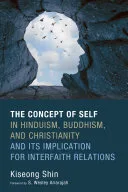
The Concept of Self in Hinduism, Buddhism, and Christianity and Its Implication for Interfaith Relations
 82
82

The Concept of Self in Hinduism, Buddhism, and Christianity and Its Implication for Interfaith Relations
Kiseong Shin's comparative study is a welcome, if academically dense, exploration of a perennial philosophical problem: the nature of the self. The author commendably avoids facile generalizations, instead meticulously dissecting the distinct ontological and soteriological frameworks of Hinduism, Buddhism, and Christianity. The strength lies in its detailed examination of how each tradition addresses human imperfection and the path to transcendence. For instance, the nuanced discussion of Anatta in Buddhism and its contrast with the Hindu Atman is particularly illuminating. However, the book's academic rigor sometimes leads to a prose that can feel dense for the uninitiated, making certain passages require considerable concentration. A particularly impactful section is Shin's analysis of the Christian emphasis on an immortal soul, juxtaposed with the Eastern traditions' focus on impermanence and liberation from cyclical existence. This work provides a solid foundation for understanding these traditions' divergent yet sometimes convergent approaches to human existence.
📝 Description
82
Kiseong Shin's 2017 study compares the concept of self in Hinduism, Buddhism, and Christianity.
Kiseong Shin's 2017 book offers a comparative analysis of how Hinduism, Buddhism, and Christianity conceptualize the self, or its absence. The work goes beyond surface-level observations to scrutinize the core doctrines of each tradition regarding personhood and liberation. Shin identifies a common thread in the acknowledgment of human suffering and the pursuit of ultimate resolution, while carefully distinguishing the unique paths and knowledge systems each religion proposes.
The book is aimed at academics in comparative religion and theology, as well as advanced practitioners interested in doctrinal similarities and differences. It is especially useful for those involved in interfaith discussions who need a firm grasp of the philosophical foundations of selfhood across various spiritual systems. Readers curious about the ultimate goals of Hinduism, Buddhism, and Christianity and how these are expressed through differing ideas of the person will find this study valuable.
This work engages with a long tradition of comparing Eastern and Western religious thought, a practice that gained momentum in the late 19th century. While earlier attempts sometimes led to syncretism, Shin's analysis operates within a more refined academic context. By examining the concept of self, the book touches upon central themes in mystical and contemplative traditions that seek liberation from perceived limitations of the individual ego, drawing parallels between distinct paths toward spiritual realization.
💡 Why Read This Book?
• Gain a precise understanding of the distinct doctrines of Atman (Hinduism) and Anatta (Buddhism) as presented by Kiseong Shin, moving beyond common misconceptions. • Grasp how Christian theology's concept of the soul, as explored in the book, diverges from and potentially intersects with Eastern views on selfhood. • Discover the specific soteriological goals of each tradition, as detailed by Shin, and how they relate to the differing views of human nature presented in his 2017 publication.
⭐ Reader Reviews
Honest opinions from readers who have explored this book.
❓ Frequently Asked Questions
What is the primary focus of Kiseong Shin's "The Concept of Self in Hinduism, Buddhism, and Christianity"?
The book's primary focus is a comparative study of the concept of 'self' and 'no-self' across Hinduism, Buddhism, and Christianity, examining their implications for interfaith relations and understanding human liberation.
When was "The Concept of Self in Hinduism, Buddhism, and Christianity" first published?
The book was first published on May 5, 2017.
Does the book argue for a unified concept of self across these religions?
No, the book highlights doctrinal differences while exploring shared beliefs about human predicament and the need for liberation, rather than asserting a unified concept of self.
What is the significance of the comparison between Indian religions and Christianity in the book?
The work contrasts the Indian religions' view of inherently perfectible human nature with Christianity's integral focus on the epistemological and psychological limitations of humans.
Who would benefit most from reading this comparative study?
Scholars of comparative religion, theology students, and individuals involved in interfaith dialogue seeking a deep understanding of differing perspectives on the self would benefit greatly.
What core Eastern concept is contrasted with Christian belief in the book?
The book contrasts the Hindu concept of Atman and the Buddhist doctrine of Anatta (no-self) with the Christian understanding of the soul.
🔮 Key Themes & Symbolism
The Human Predicament
Shin meticulously outlines the shared recognition across Hinduism, Buddhism, and Christianity that humanity faces a fundamental predicament requiring resolution. This predicament is framed not merely as moral failing but as an inherent condition of existence, whether understood as ignorance and suffering (Buddhism), bondage to illusion (Hinduism), or separation from the divine (Christianity). The book argues that understanding this shared diagnosis is crucial for fostering genuine interfaith dialogue and appreciating the common ground underlying diverse soteriological aims.
Divergent Paths to Liberation
A central theme is how each tradition proposes distinct epistemological and psychological frameworks for achieving liberation. Hinduism offers paths to realizing the eternal Atman, Buddhism seeks liberation through the dissolution of the illusory self (Anatta), and Christianity posits salvation through divine grace and faith in Christ. Shin's comparative approach highlights how these differing views on the self directly shape the methods, goals, and ultimate understanding of spiritual freedom within each system.
Self vs. No-Self
The core philosophical tension explored is the contrast between the affirmation of an enduring self (Atman in Hinduism, the soul in Christianity) and the negation of a permanent, independent self (Anatta in Buddhism). The work investigates how these contrasting views impact ethics, metaphysics, and the very definition of what it means to be human and to achieve spiritual realization. Shin carefully navigates the complexities, avoiding reductionism and respecting the integrity of each tradition's stance.
Epistemological Limitations
Shin emphasizes how each religious system perceives human cognitive and experiential limitations as integral to the spiritual journey. For Indian religions, this might involve overcoming ignorance through direct realization; for Christianity, it often involves recognizing the inadequacy of human reason apart from divine revelation. This theme underscores how limitations are not just obstacles but are often seen as necessary conditions for the reception of ultimate truth or salvation.
💬 Memorable Quotes
Direct passages from the work, attributed to the author.
“human beings are in a predicament from which they need to be liberated”
— This core statement captures the shared starting point for the three traditions examined. It posits that suffering or imperfection is not an aberration but a fundamental aspect of the human condition, setting the stage for diverse spiritual paths aimed at overcoming it.
“Indian religions... share the belief that human nature is inherently perfectible”
— This highlights a key point of divergence with Christian theology. It suggests that within Hinduism and Buddhism, there is an intrinsic potential for achieving a perfected state, which contrasts with the Christian emphasis on inherent sinfulness and reliance on external grace for salvation.
“the epistemological and psychological limitation of the human being is integral to Christian belief”
— This phrase points to a foundational aspect of Christian thought: the recognition that human understanding and capacity are inherently flawed, making divine intervention and revelation essential for spiritual truth and salvation.
“This is the first comparative study of the self and no-self in Hinduism, Buddhism, and Christianity.”
— This statement, from the original blurb, emphasizes the book's unique contribution to scholarship by being the inaugural work to directly and comprehensively compare these specific concepts across these three major traditions.
“In spite of doctrinal differences within these three belief systems, they agree that human beings are in a predicament...”
— This highlights the book's approach to interfaith relations: finding commonality in the diagnosis of the human condition, even amidst profound disagreements on the nature of the self and the methods of liberation.
🌙 Esoteric Significance
Tradition
While not strictly within a single esoteric lineage like Hermeticism or Gnosticism, Shin's work engages with concepts that are foundational to many esoteric traditions. The exploration of Atman and Anatta, for instance, touches upon metaphysical ideas of ultimate reality and the nature of consciousness that are central to perennial philosophy. Esoteric schools often draw from both Eastern and Western mystical traditions, and this book provides a scholarly bridge, clear how different paths address the fundamental question of 'who am I?' from a metaphysical perspective.
Symbolism
Key symbolic concepts include the 'self' (Atman, soul) and 'no-self' (Anatta). In many esoteric traditions, the 'self' can symbolize the divine spark within or the higher consciousness, while 'no-self' might relate to the dissolution of the ego to achieve union with the divine or absolute. The predicament itself can be symbolized by the Veil of Maya or the fallen state of humanity, from which liberation is sought through esoteric knowledge (gnosis) or spiritual practice.
Modern Relevance
Contemporary thinkers and practitioners in fields like transpersonal psychology, integral theory, and various mindfulness-based spiritualities often grapple with the concepts of selfhood and consciousness explored in Shin's book. Scholars and teachers who integrate Eastern and Western contemplative practices find this comparative framework useful for articulating the underlying principles and potential convergences. The work informs modern discussions on identity, suffering, and the pursuit of well-being across diverse philosophical and religious landscapes.
👥 Who Should Read This Book
• Comparative religion scholars and students: To gain a rigorous, textually grounded understanding of the concept of self across three major world religions, enhancing their analytical frameworks. • Interfaith dialogue practitioners: To develop a deeper, more nuanced appreciation of the theological underpinnings that shape differing religious perspectives, fostering more informed and respectful conversations. • Philosophers and theologians: To engage with a critical examination of core metaphysical and soteriological doctrines, particularly concerning personhood and liberation, and their implications for understanding human existence.
📜 Historical Context
Kiseong Shin's work emerges from a long tradition of comparative religious studies, a field that gained significant momentum following the Parliament of the World's Religions in Chicago in 1893. This event, which brought together diverse religious leaders and thinkers, fostered an environment for cross-cultural theological exchange. While earlier comparative efforts, particularly in the late 19th and early 20th centuries, were sometimes characterized by a Western bias or a drive towards syncretism, contemporary scholarship, like Shin's, aims for more nuanced and methodologically rigorous comparisons. The book builds upon decades of academic engagement with Indian philosophy and Christian theology, seeking to address fundamental questions of existence that have been central to both traditions. Its publication in 2017 places it within an era where interfaith dialogue is increasingly recognized as vital, yet complex, demanding deep understanding of doctrinal underpinnings.
📔 Journal Prompts
The Hindu concept of Atman and its relation to the Christian soul.
The Buddhist doctrine of Anatta and its implications for personal identity.
The shared human predicament as a foundation for interfaith understanding.
How the epistemological limitations described in Christian belief shape its path to liberation.
The role of the perfectible human nature in Hinduism and Buddhism.
🗂️ Glossary
Atman
In Hinduism, the eternal, unchanging self or soul that is ultimately identical with Brahman, the ultimate reality. Realizing the Atman is a central goal in many Hindu traditions.
Anatta (Anatman)
A core doctrine in Buddhism, meaning 'no-self' or 'non-soul.' It posits that there is no permanent, unchanging, independent self or soul. What appears as a self is an aggregate of impermanent components.
Soteriology
The study of religious doctrines of salvation. It explores how salvation or liberation is achieved within different belief systems, including the role of divine grace, human effort, or knowledge.
Epistemology
The branch of philosophy concerned with the theory of knowledge. It investigates the nature, origin, and limits of human understanding and belief.
Predicament
In the context of the book, this refers to the fundamental problematic condition of human existence, characterized by suffering, ignorance, or separation from ultimate reality, from which liberation is sought.
Perfectible Human Nature
The belief, prominent in Hinduism and Buddhism, that human beings possess an inherent capacity for spiritual or existential perfection, which can be realized through various practices and insights.
Soul
In Christian theology, the immortal spiritual essence of a human being, created by God, often understood as the seat of personality and consciousness, and central to the concept of salvation.