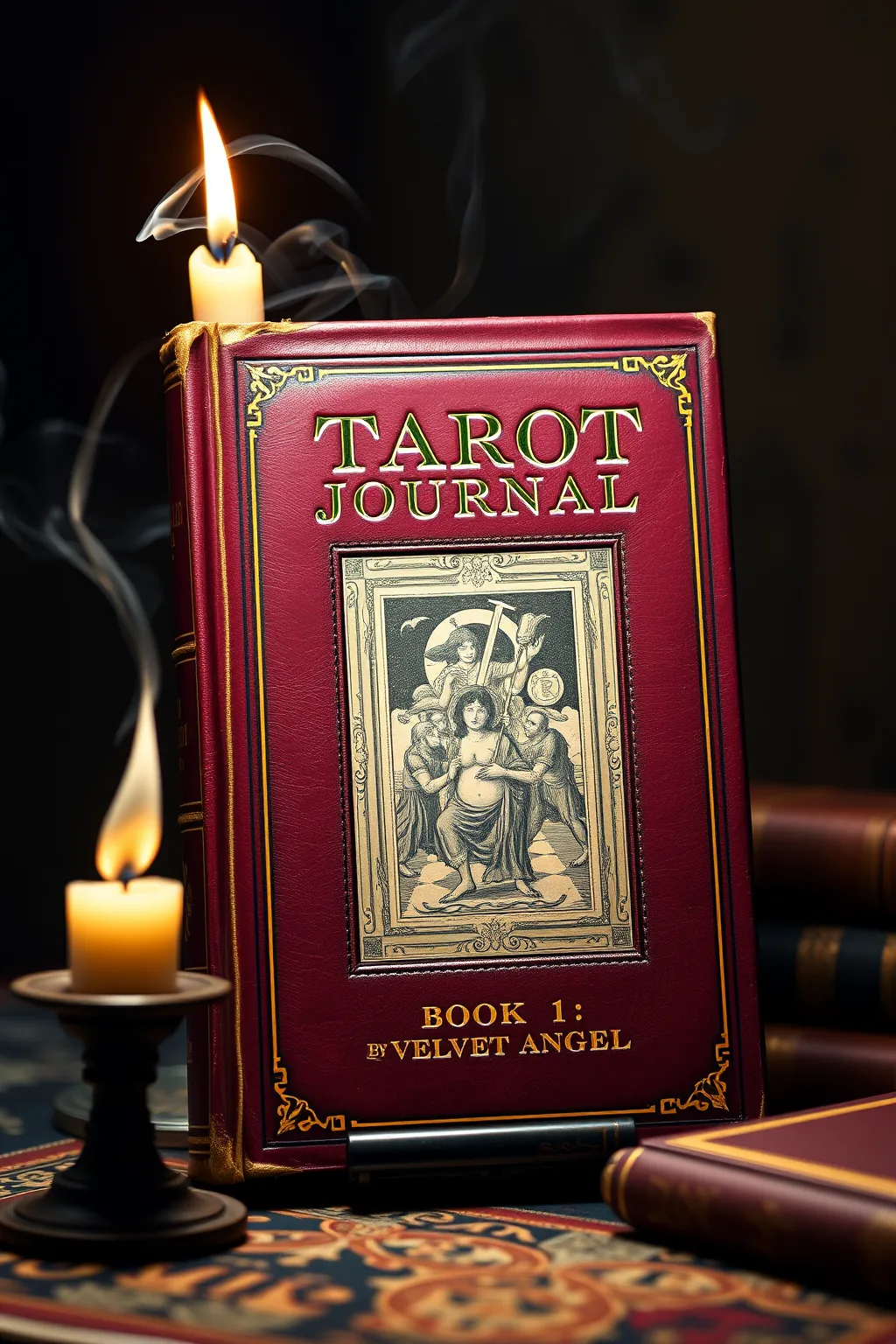
Tarot Journal of Wisdom Study Course: Book 1
 78
78

Tarot Journal of Wisdom Study Course: Book 1
Velvet Angel’s "Tarot Journal of Wisdom Study Course: Book 1" presents a refreshingly disciplined entry into the crowded field of Tarot instruction. Unlike many guides that skim over the Major Arcana, this volume dedicates significant attention to the first half, from The Fool to The Hierophant. Its strength lies in its structured, almost academic approach, which benefits serious students. The detailed exploration of card meanings across various life domains – love, money, work – is particularly useful, moving beyond generic interpretations. However, the book’s comprehensive nature means it might feel dense for absolute beginners seeking quick answers. The early publication date of 2009 is evident in its slightly dated formatting, but the core content remains robust. The work effectively grounds esoteric symbolism in practical application, a commendable balance. It is a solid, albeit demanding, first step for dedicated Tarot scholars.
📝 Description
78
Published in 2009, Tarot Journal of Wisdom Study Course: Book 1 offers a structured method for Tarot study.
This is the first volume in Velvet Angel's seven-part series on Tarot. It focuses on the first half of the Major Arcana, examining both upright and reversed card meanings in detail. The course is for serious students of Tarot who want a systematic approach, moving beyond simple intuition. It aims to build proficiency through clear instruction. The book teaches a method for interpreting cards not in isolation, but as part of a larger narrative. It also shows how to apply these interpretations to various aspects of life, such as relationships, finances, and personal development. The attention to both upright and reversed meanings encourages a thorough understanding of each card's potential.
Emerging in 2009, this work appeared during a time of increased interest in divination and occult studies, aided by online communities. Velvet Angel structured this course with a pedagogical focus, treating Tarot as a subject for serious study rather than solely a predictive tool. It connects to the broader revival of esoteric traditions seen since the late 20th century.
💡 Why Read This Book?
• Gain a methodical framework for understanding the first half of the Major Arcana, including detailed upright and reversed meanings, a feature explicitly detailed in the course structure for each card. • Learn to apply specific card interpretations to distinct life areas such as love, work, and spirituality, moving beyond generalized readings as outlined for each card's analysis. • Fulfill a desire for proficient Tarot reading through a comprehensive study plan, as the book is Book 1 of a 7-part course designed to build expertise systematically.
⭐ Reader Reviews
Honest opinions from readers who have explored this book.
❓ Frequently Asked Questions
What is the primary focus of Tarot Journal of Wisdom Study Course: Book 1?
This book focuses on the first half of the Major Arcana Tarot cards, providing in-depth meanings for both upright and reversed interpretations as part of a comprehensive study course.
Who is the intended audience for this Tarot study course?
It is designed for individuals who dream of reading Tarot proficiently and seek a structured, comprehensive study method beyond basic introductions.
What types of questions can I expect to answer using the methods in this book?
The book guides interpretations for questions concerning love, relationships, money, work, life path, health, spirituality, and potential outcomes, among others.
How does this book differ from other Tarot guides?
It presents a Tarot study course unlike typical presentations, offering a systematic approach for both upright and reversed cards across a seven-book series.
When was Tarot Journal of Wisdom Study Course: Book 1 first published?
The first edition of Tarot Journal of Wisdom Study Course: Book 1 was published on January 19, 2009.
Does this book cover all the Tarot cards?
No, Book 1 specifically covers the first half of the Major Arcana; subsequent books in the series would cover the remaining cards.
🔮 Key Themes & Symbolism
Structured Major Arcana Study
This volume meticulously unpacks the first half of the Major Arcana, treating each card from The Fool to The Hierophant as a distinct lesson. It moves beyond superficial meanings by exploring nuances for both upright and reversed positions. This systematic breakdown encourages a deep, analytical understanding, fostering a connection with the archetypal energies represented, crucial for practitioners seeking to build a robust interpretive framework.
Practical Application of Meanings
Beyond theoretical knowledge, the course emphasizes applying Tarot insights to tangible life circumstances. It provides frameworks for interpreting card meanings in relation to love, relationships, finances, career, health, and spiritual development. This practical grounding ensures that the esoteric wisdom of the Tarot can be translated into actionable guidance for everyday challenges and aspirations.
Proficiency Through Sequential Learning
Positioned as Book 1 of a seven-part series, this work is built on the principle of progressive mastery. It aims to equip readers with the foundational skills necessary to become proficient Tarot readers through consistent study. The sequential nature of the course is designed to build confidence and competence, guiding learners from foundational concepts to more complex interpretations.
Holistic Card Interpretation
The study course advocates for a holistic view of Tarot, integrating upright and reversed significations. This dual approach allows for a more comprehensive understanding of the energies at play in a reading, acknowledging both overt manifestations and subtle influences. It encourages readers to consider the full spectrum of meaning each card can convey, enriching the depth of their interpretations.
💬 Memorable Quotes
Direct passages from the work, attributed to the author.
“A Tarot presentation unlike any you have probably seen!”
— This introductory statement highlights the author's intent to offer a novel perspective on Tarot study, suggesting a departure from conventional teaching methods and promising a unique learning experience for the reader.
“It covers the first half of the Major Arcana Tarot cards.”
— This factual statement clearly defines the scope of Book 1 within the larger study course, setting expectations for the reader regarding the specific content covered in this initial volume.
“This is Book 1 of 7 in the comprehensive Tarot study course for both upright and reversed cards.”
— This statement establishes the foundational nature of the book within a larger, structured curriculum, indicating that it is the beginning of an extensive learning process focused on complete card interpretation.
💡 Key Ideas
Editorial paraphrase of the work's core concepts — not direct quotes.
Learn in-depth card meanings for questions concerning love and relationships, money, work, life, health, people, spirituality, potential outcomes, and more!
This paraphrased concept emphasizes the practical utility of the course, detailing the broad spectrum of life areas where the Tarot knowledge gained can be applied, promising comprehensive guidance.
If you've always "dreamed" about reading the Tarot and becoming a proficient reader, now is a real opportunity to fulfill that dream.
This paraphrased concept serves as an encouraging call to action, directly addressing the aspirations of potential readers and presenting the book as a viable pathway to achieving their goal of Tarot mastery.
🌙 Esoteric Significance
Tradition
This work fits within the broad Western Esoteric tradition, particularly drawing from lineages that approach Tarot as a symbolic language and a tool for self-knowledge, reminiscent of Hermetic and Alchemical principles. It departs from purely divinatory approaches by framing Tarot study as a structured course, akin to formal philosophical education, emphasizing intellectual understanding alongside intuitive perception.
Symbolism
Key symbols within the first half of the Major Arcana, such as The Fool's journey or The Magician's tools, are presented not merely as archetypes but as components of a structured learning path. The number associated with each card (e.g., 0 for The Fool, I for The Magician) is treated as significant, reflecting Kabbalistic numerological correspondences and Hermetic concepts of progression and manifestation.
Modern Relevance
Contemporary Tarot practitioners and educators seeking structured curricula often reference or build upon methodical approaches like that found in this series. Its emphasis on comprehensive study, including upright and reversed meanings, speaks to modern psychological and archetypal interpretations of Tarot, making it relevant for those who integrate Tarot into self-development and therapeutic practices.
👥 Who Should Read This Book
• Aspiring Tarot readers seeking a structured curriculum to build foundational knowledge and interpretive skills for the Major Arcana. • Students of Western Esotericism interested in a systematic approach to Tarot as a symbolic system, moving beyond superficial readings. • Individuals looking for a comprehensive study guide that addresses both upright and reversed card meanings for practical application in life.
📜 Historical Context
Published in 2009, Velvet Angel's "Tarot Journal of Wisdom Study Course: Book 1" emerged within a burgeoning digital landscape for esoteric literature. The early 21st century saw a significant expansion of online occult communities and self-publishing platforms, making works like this accessible to a global audience. While the tradition of Tarot study itself dates back centuries, with foundational texts like A.E. Waite's "The Pictorial Key to the Tarot" (1910) offering influential interpretations, Angel's approach sought a pedagogical structure suited for the modern, self-directed learner. This period also saw a proliferation of intuitive-based Tarot methods, making Angel's focus on systematic study and in-depth analysis, including reversed meanings, a notable counterpoint for those seeking a more academic or disciplined engagement with the cards.
📔 Journal Prompts
The Fool's leap into the unknown: what represents your current threshold?
The Magician's tools: which aspects of your will are you consciously wielding?
Reflect on the contrasting energies of The High Priestess and The Hierophant.
How does the concept of Justice, as presented for card VIII, apply to recent decisions?
The Lovers card in its relationship context: explore chosen paths and their implications.
🗂️ Glossary
Major Arcana
The set of 22 trump cards in a Tarot deck, traditionally representing significant life lessons, archetypal figures, and major spiritual or personal milestones.
Upright Card
A Tarot card drawn and interpreted in its intended, natural orientation, signifying the most direct or commonly understood meaning.
Reversed Card
A Tarot card drawn and interpreted upside down, often indicating blocked energy, internal struggles, or a nuanced, opposite, or delayed meaning compared to its upright aspect.
Archetype
A universal, inherited pattern of thought or imagery derived from the collective unconscious, often represented by figures or symbols in Tarot.
Divination
The practice of seeking knowledge of the future or the unknown by supernatural means, such as interpreting Tarot cards.
Tarot Deck
A deck of cards typically consisting of 78 cards, divided into the Major Arcana and the Minor Arcana, used for divination, spiritual guidance, and introspection.
Esoteric
Intended for or likely to be understood by only a small number of people with a specialized knowledge or interest; relating to mystical or occult subjects.
![The Byrhtferth's Manuscript (MS 17) † Saint John’s College † Oxford † [1111]](/img/thumb/the-byrhtferth-s-manuscript-ms-17-saint-john-s-college-oxford-1111-the-monk-byrhtferth.webp)