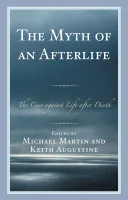
The Myth of an Afterlife
 84
84

The Myth of an Afterlife
Michael Martin and Keith Augustine’s compilation, *The Myth of an Afterlife*, offers a bracingly rationalistic dissection of one of humanity's most persistent hopes. Its strength lies in its systematic dismantling of common arguments for post-mortem existence, drawing on a wide array of philosophical and scientific critiques. The editors have curated a collection that, while sometimes dry, consistently prioritizes evidence and logical coherence. One particularly effective section scrutinizes the interpretation of near-death experiences, suggesting neurological rather than supernatural causes. However, the book’s relentless focus on negation can feel emotionally sterile; it offers little solace to those grappling with grief or existential dread. For readers seeking an intellectual challenge to the notion of an afterlife, this work provides a thorough, if unsparing, examination.
📝 Description
84
Published in 2015, The Myth of an Afterlife critically assesses arguments for life after death.
Edited by Michael Martin and Keith Augustine, this 2015 collection gathers essays that rigorously examine claims for an afterlife. The contributors approach the topic from philosophical, scientific, and historical angles, prioritizing critical assessment over comforting conclusions. The book investigates the origins and persistence of afterlife beliefs across different cultures and historical periods, questioning common assumptions.
This volume is suited for readers who seek evidence-based discussions on mortality and existence. It will particularly interest skeptics, atheists, and those drawn to philosophical arguments challenging supernatural claims. Anyone studying the history of religious thought, the philosophy of mind, or scientific critiques of spiritualism will find significant material here. The work is for individuals who value critical inquiry above comforting narratives.
This book emerges from a modern intellectual climate interested in empirically grounded critiques of traditional spiritual beliefs. It contrasts with earlier spiritualist apologetics and engages with contemporary debates on consciousness and its connection to the physical brain. The collection serves as a counterpoint to the enduring cultural prevalence of afterlife beliefs, a topic examined by thinkers throughout history.
💡 Why Read This Book?
• You will learn to critically evaluate evidence for near-death experiences, understanding the scientific arguments presented by figures like Keith Augustine, which challenge supernatural interpretations. • You will gain insight into the philosophical underpinnings of consciousness and its relation to the brain, exploring arguments that position mind as an emergent property rather than an independent soul. • You will discover the historical context of afterlife beliefs, examining how philosophical and scientific advancements since the mid-20th century have shifted the discourse away from traditional spiritualist claims.
⭐ Reader Reviews
Honest opinions from readers who have explored this book.
❓ Frequently Asked Questions
What is the primary purpose of 'The Myth of an Afterlife'?
The book aims to critically examine and present arguments against the existence of an afterlife, focusing on philosophical reasoning and scientific evidence rather than comforting affirmations.
Who are the main editors of this collection?
The book is edited by Michael Martin and Keith Augustine, both known for their work in skepticism and philosophy.
What kind of evidence does the book analyze regarding afterlife claims?
It analyzes evidence from near-death experiences, purported psychic phenomena, and various philosophical arguments, often offering counter-explanations rooted in neuroscience and psychology.
Is this book suitable for someone seeking comfort about lost loved ones?
No, the book is designed for critical inquiry and skeptical analysis, deliberately challenging rather than affirming beliefs in an afterlife, and may not offer comfort.
What is the publication year of the first edition?
The first edition of 'The Myth of an Afterlife' was published on March 12, 2015.
Does the book explore the psychological reasons people believe in an afterlife?
Yes, it delves into the psychological and social functions that belief in an afterlife serves for individuals and societies, exploring its origins and persistence.
🔮 Key Themes & Symbolism
Critique of Near-Death Experiences
This collection systematically scrutinizes the prevalent accounts of near-death experiences (NDEs), a reference for many afterlife believers. The authors explore potential neurological and psychological explanations for these phenomena, arguing that subjective experiences during extreme physiological stress do not necessarily indicate a disembodied consciousness. By examining specific NDE reports and contrasting them with scientific understanding of brain function under duress, the book challenges the interpretation of these events as proof of life after death, proposing alternative, materialistic frameworks for their occurrence.
Consciousness and the Brain
A central theme is the relationship between consciousness and the physical brain. The book presents arguments that consciousness is an emergent property of complex neural activity, rather than an independent entity that can survive bodily death. This perspective draws heavily on neuroscience and philosophy of mind, questioning dualistic theories that posit a separate soul or spirit. The implications for personal identity and the nature of selfhood are explored, suggesting that our sense of being is intrinsically tied to our biological substrate.
Psychological and Social Functions of Belief
The work also investigates why the belief in an afterlife is so widespread and persistent across human cultures. It examines the psychological benefits, such as coping with mortality and providing a sense of justice or ultimate meaning, and the social roles it plays in moral regulation and community cohesion. By understanding these functions, the book offers a framework for comprehending the enduring appeal of afterlife narratives, viewing them as deeply ingrained human psychological and sociological phenomena.
Historical Skepticism
The collection situates its arguments within a broader tradition of philosophical and scientific skepticism. It traces the evolution of thought concerning life after death, highlighting how advancements in scientific understanding have increasingly challenged supernatural explanations. By referencing historical debates and figures who questioned established doctrines, the book frames its critical stance not as novel, but as a continuation of a long-standing intellectual inquiry seeking rational explanations for existence.
💬 Memorable Quotes
Direct passages from the work, attributed to the author.
“The evidence of our senses and the ever-gaining strength of scientific evidence strongly suggest otherwise.”
— This statement captures the core thesis of the collection: that empirical observation and scientific inquiry point away from the existence of an afterlife, challenging widespread intuitive or faith-based beliefs.
“The vast majority of books on the topic affirm the reality of life after death without a backward glance.”
— This highlights the book's contrarian stance, positioning itself against a common trend in literature that readily accepts and promotes afterlife beliefs without critical examination.
“Because every single one of us will die, most of us would like to know what—if anything—awaits us afterward.”
— This acknowledges the profound human interest in mortality and the unknown future, framing the book's investigation as a response to a universal existential concern.
“Given the nearly universal vested interest in deciding this question in favor of an afterlife...”
— This points to the deep-seated human desire for continued existence or reunion, suggesting that emotional preference often overshadows objective assessment when considering the afterlife.
“What awaits us afterward, not to mention the fate of lost loved ones.”
— This captures the dual motivation behind afterlife beliefs: personal hope for continuation and solace regarding the departed, underscoring the emotional stakes of the inquiry.
🌙 Esoteric Significance
Tradition
While not directly a text of traditional esoteric lineages like Hermeticism or Kabbalah, this work functions as a critical counterpoint within the broader range of metaphysical inquiry. Its rigorous empiricism and philosophical skepticism stand in stark opposition to the faith-based and experiential approaches common in many esoteric traditions that posit non-physical realities. The book's significance lies in its challenge to the assumptions underlying many esoteric beliefs about consciousness and the afterlife, forcing a re-examination of their foundations from a materialist perspective.
Symbolism
The book's approach eschews traditional esoteric symbolism in favor of empirical data and logical argumentation. Instead of exploring archetypes or mystical symbols, it focuses on deconstructing the language and evidence used by proponents of an afterlife. Symbols like the 'soul,' 'spirit,' or 'immortality' are treated not as mystical truths but as concepts requiring rigorous definition and empirical validation, stripping them of their traditional esoteric weight and subjecting them to rational scrutiny.
Modern Relevance
In contemporary discussions surrounding consciousness, artificial intelligence, and the nature of reality, *The Myth of an Afterlife* remains highly relevant. Thinkers in fields ranging from neuroscience and cognitive science to secular philosophy and critical thinking movements draw upon its arguments. It provides a foundational text for those seeking to understand the scientific and philosophical challenges to supernatural claims about existence beyond death, influencing debates on mind uploading, AI consciousness, and the increasing secularization of Western thought.
👥 Who Should Read This Book
• Skeptics and atheists: Readers who question supernatural claims will find a comprehensive collection of arguments and evidence supporting a naturalistic worldview. • Philosophy students: Those studying philosophy of mind, metaphysics, and epistemology will benefit from the rigorous examination of consciousness, evidence, and belief. • Researchers of religion and belief systems: Individuals interested in the sociology and psychology of religion can explore the origins and functions of afterlife beliefs.
📜 Historical Context
Published in 2015, *The Myth of an Afterlife* emerged during a period of increasing dialogue between scientific findings and philosophical inquiry regarding consciousness and mortality. This era saw significant advancements in neuroscience, particularly in understanding brain function and its correlation with subjective experience, which provided fertile ground for critiques of dualistic thought. The book stands in contrast to the spiritualist movements of the late 19th and early 20th centuries, which often embraced and sought evidence for an afterlife through mediums and phenomena like those investigated by the Society for Psychical Research. While figures like William James explored the boundaries of consciousness and religion, Martin and Augustine’s work represents a more direct, evidence-based challenge, engaging with contemporary scientific literature and philosophical skepticism, rather than the more esoteric or overtly mystical explorations common in earlier decades.
📔 Journal Prompts
The concept of consciousness as an emergent property of the brain.
The neurological explanations for near-death experiences.
The psychological roots of the desire for an afterlife.
The evidence presented against psychic phenomena.
The philosophical implications of a purely material existence.
🗂️ Glossary
Dualism
The philosophical position that reality consists of two fundamental, distinct substances, typically mind (or soul) and matter (or body). This contrasts with monism, which posits only one fundamental substance.
Materialism/Physicalism
The philosophical view that all reality is fundamentally physical or material. Consciousness and mental states are seen as products of physical processes, typically in the brain.
Near-Death Experience (NDE)
A profound personal experience associated with dying, often involving feelings of peace, out-of-body sensations, seeing a light, and life review. Interpreted by some as evidence of an afterlife.
Emergent Property
A property of a complex system that cannot be predicted or understood solely by analyzing its individual components. Consciousness is often described as an emergent property of the brain.
Empiricism
The theory that all knowledge is derived from sense-experience. It emphasizes evidence, observation, and experimentation.
Skepticism
An attitude of doubt or a disposition to incredulity, either in general or toward a particular subject. In this context, it involves questioning claims lacking sufficient evidence.
Epistemology
The branch of philosophy concerned with the theory of knowledge, investigating its nature, scope, and justification.