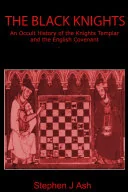
The Black Knights
 72
72

The Black Knights
Stephen J Ash's "The Black Knights" presents an intriguing, albeit sometimes uneven, exploration of the Templar legacy. Ash, claiming direct descent from Templar Knights, brings a personal investment to his subject that is palpable. He commendably navigates the treacherous waters between scholarly fact and intuitive speculation, drawing on sources like the Chinon Document. The chapter discussing the symbolic architecture of Templar churches is particularly strong, offering a fresh lens on familiar structures. However, the work occasionally falters when its speculative leaps outpace the available evidence, leaving the reader wishing for more concrete substantiation. Despite this, the book offers a valuable, if subjective, occult perspective on a perennially fascinating historical enigma.
This is a worthwhile read for those seeking a less conventional take on Templar history.
📝 Description
72
Stephen J Ash's 2007 book examines the Knights Templar through original research and intuitive interpretation.
Published in 2007, "The Black Knights" by Stephen J Ash offers a unique perspective on the Knights Templar. The book draws on original research, balancing established historical scholarship with interpretive insights. It was released during a time of heightened interest in the Templars, coinciding with the 700th anniversary of their suppression. Ash engages with contemporary academic discussions, referencing key documents such as the Chinon Parchment. The work distinguishes itself from purely materialistic historical views by incorporating occult interpretations.
The book views the Templar Order as more than a military or financial entity, suggesting it served as a conduit for esoteric knowledge. Ash investigates potential links to Gnostic traditions, Catharism, and early Freemasonry. He also scrutinizes the symbolism within Templar architecture and rituals, proposing a veiled spiritual agenda that persisted after the order's official dissolution. This approach appeals to readers interested in the esoteric history of the Knights Templar, seeking a balance between historical analysis and speculative occult philosophy.
Stephen J Ash's "The Black Knights" positions itself within traditions that seek hidden meanings behind historical institutions. It aligns with esoteric interpretations of the Knights Templar, which often view them not merely as crusaders but as custodians of secret knowledge. The book touches upon themes common in Western esotericism, such as Gnosticism and the influence of suppressed spiritual movements like Catharism. Its examination of Templar rituals and symbolism suggests a continuity of mystical practices, sometimes linked to the origins of Freemasonry, presenting a vision of the order's enduring spiritual legacy.
💡 Why Read This Book?
• Gain a unique occult perspective on the Knights Templar, moving beyond standard historical narratives by exploring potential Gnostic and mystical connections, as detailed in the book's analysis of Templar symbolism. • Understand the historical context of the Templars' suppression in 1312, examining how newly available documents like the Chinon Parchment informed interpretations at the time of the book's 2007 publication. • Discover an esoteric lineage that Stephen J Ash suggests has been passed down, offering a personal interpretation of the Templar Order's enduring spiritual influence and hidden knowledge.
⭐ Reader Reviews
Honest opinions from readers who have explored this book.
❓ Frequently Asked Questions
What is the primary focus of "The Black Knights" by Stephen J Ash?
"The Black Knights" focuses on the Knights Templar, presenting new insights and an occult perspective on the medieval order, particularly commemorating the 700th anniversary of their suppression in 1312.
What sources does Stephen J Ash use in his research?
Ash draws on original research, established scholarship, and published sources, notably including the Chinon Document, which became more accessible around the time of the book's 2007 publication.
What is the author's connection to the Knights Templar?
Stephen J Ash states that he is a descendant of Templar Knights, lending a personal and familial connection to his investigation of the order's history and mysteries.
What is the book's approach to Templar history?
The book attempts to balance scholarly research with intuitive speculation, offering an occult philosophical viewpoint on the Templar institution that goes beyond purely historical accounts.
When was "The Black Knights" first published?
The book "The Black Knights" by Stephen J Ash was first published on November 27, 2007.
Does the book discuss the trials and dissolution of the Templars?
Yes, the book addresses the demise of the Knights Templar, marked by their suppression around 1312, and seeks to unveil new insights into the order's nature.
🔮 Key Themes & Symbolism
Templar Esotericism
This theme explores the Knights Templar beyond their military and financial roles, positing them as guardians of hidden knowledge. Ash examines potential links to Gnostic traditions and early mystical practices, suggesting their rituals and symbols held deeper, esoteric meanings. The work posits that the order's true purpose transcended the Crusades, focusing instead on spiritual development and the preservation of secret doctrines passed down through generations, a lineage the author claims to inherit.
Symbolism and Architecture
The book studies the symbolic language embedded within Templar structures and artifacts. Ash analyzes the design of Templar churches and castles, interpreting architectural elements as keys to occult teachings. This theme investigates how specific motifs, such as the double-headed eagle or the pentagram, might have represented initiatory stages or cosmic principles within the order's secret teachings, connecting them to broader Hermetic and alchemical symbolism.
Suppression and Survival
A central theme is the fate of the Templars following their suppression by Philip IV of France in 1312. Ash scrutinizes the historical accounts of the trials and executions, contrasting them with theories of the order's survival through clandestine networks. This section explores how Templar knowledge and influence might have been transferred to successor organizations, such as Freemasonry, ensuring the perpetuation of their esoteric legacy despite official dissolution.
Personal and Familial Legacy
Stephen J Ash frames his research through the lens of his claimed descent from Templar Knights. This personal connection adds a layer of inherited narrative and intuitive understanding to the historical inquiry. The theme explores the idea of lineage as a conduit for esoteric knowledge, suggesting that certain insights into the Templar mysteries are accessible not just through academic study but through a felt, ancestral connection.
💬 Memorable Quotes
Direct passages from the work, attributed to the author.
“The Chinon Document reveals confessions under duress, but also hints at doctrines the inquisitors did not comprehend.”
— This highlights the book's approach: acknowledging official records like the Chinon Parchment while suggesting they contain veiled meanings or complexities that contemporary authorities missed, pointing towards deeper esoteric truths.
“Templar architecture was not merely defensive; it was a map of spiritual ascent.”
— This interpretation underscores the book's focus on symbolism, suggesting that the physical structures built by the Templars were designed with occult principles and initiatory pathways in mind, serving a spiritual rather than purely military purpose.
“My lineage connects me not just to history, but to the living memory of the Order.”
— This reflects Ash's personal claim of descent, suggesting that familial ties provide a unique, intuitive access to the Templar tradition, complementing academic research with a sense of inherited knowledge.
“Between the scholar's text and the mystic's vision lies the true Templar narrative.”
— This expresses the book's methodological approach, seeking a synthesis between rigorous historical investigation and intuitive, speculative exploration of the occult dimensions of the Knights Templar.
💡 Key Ideas
Editorial paraphrase of the work's core concepts — not direct quotes.
The 700th anniversary of their demise marked a moment to re-examine their true legacy.
This quote frames the book's publication in 2007, emphasizing the significance of the 700th anniversary of the Templars' suppression (around 1312) as a catalyst for uncovering a more profound, esoteric understanding of the order.
🌙 Esoteric Significance
Tradition
The work situates itself within the Western Esoteric Tradition, specifically drawing connections to Gnosticism, Hermeticism, and potentially early Rosicrucianism. It interprets the Templar Order not merely as a historical entity but as a vehicle for preserving and transmitting ancient, hidden knowledge. Ash's approach departs from strict historical accounts by emphasizing the symbolic and initiatory aspects of the Templar structure, aligning with traditions that view historical orders as manifestations of perennial spiritual principles.
Symbolism
Central symbols explored include the Templar Cross, often interpreted beyond its Christian context to represent cosmic balance or divine union. The book likely examines motifs such as the Baphomet, the Holy Grail, and specific architectural elements found in Templar churches (like round churches). These symbols are presented not as mere historical artifacts but as coded keys to understanding the Templars' alleged pursuit of alchemical transformation and Gnostic illumination.
Modern Relevance
Contemporary esoteric practitioners and scholars interested in medieval secret societies continue to engage with "The Black Knights." The book's approach influences modern interpretations of Templarism within groups focused on Western Mystery Traditions, Grail studies, and Knights Templar lineages. Thinkers exploring the intersection of history, mythology, and occult philosophy find Ash's synthesis a valuable, albeit debated, resource for understanding the enduring appeal and potential hidden legacies of the Templar Order.
👥 Who Should Read This Book
• Students of medieval history and secret societies seeking alternative interpretations beyond purely academic accounts, particularly those interested in the Knights Templar's 1312 suppression. • Practitioners of Western Esotericism interested in the potential Gnostic, Hermetic, or alchemical underpinnings of historical orders, exploring symbolic meanings in Templar architecture. • Readers fascinated by Grail legends and the survival of esoteric knowledge through clandestine lineages, appreciating an author claiming direct Templar ancestry.
📜 Historical Context
Published in 2007, "The Black Knights" emerged during a resurgence of popular and scholarly interest in the Knights Templar, amplified by the 700th anniversary of their suppression. This period saw increased accessibility to primary sources, including the recently examined Chinon Parchment, which provided new perspectives on the Templars' confessions and trials under Philip IV of France. Ash's work enters a field populated by historians like Malcolm Barber and authors exploring more speculative theories, such as those concerning Templar connections to the Holy Grail or secret societies. The book positions itself distinctively by attempting a synthesis of academic research with an occult philosophical framework, diverging from purely materialistic historical interpretations prevalent in some academic circles. Its reception likely contributed to the ongoing debate about the Templars' dual identity: a historical military order versus a repository of esoteric wisdom.
📔 Journal Prompts
The Templar Order's symbolic architecture as a map of spiritual ascent.
Reflecting on the legacy of the Knights Templar post-1312 suppression.
The potential Gnostic connections suggested by the Chinon Document.
Personal interpretation of Templar lineage and inherited esoteric knowledge.
Examining the balance between historical scholarship and intuitive speculation in occult studies.
🗂️ Glossary
Knights Templar
A medieval Catholic military order founded around 1119, ostensibly to protect Christian pilgrims in the Holy Land. Officially dissolved in 1312 after facing accusations of heresy and blasphemy.
Esoteric Philosophy
A body of knowledge and belief concerning hidden truths, often involving mystical, spiritual, or occult principles, distinct from exoteric or public teachings.
Chinon Document
A document originating from the trial of the Knights Templar, discovered in the Vatican Secret Archives and made more widely known around the time of the book's publication, containing records of Templar confessions.
Gnosticism
A complex set of religious ideas and systems originating in the early Christian era, emphasizing spiritual knowledge (gnosis) for salvation and often viewing the material world as flawed or evil.
Hermeticism
A philosophical and religious tradition based on writings attributed to Hermes Trismegistus, emphasizing divine knowledge, alchemy, astrology, and the interconnectedness of the cosmos.
Occult
Relating to hidden or secret knowledge, practices, or phenomena often associated with magic, mysticism, and the supernatural.
Templar Suppression
The arrest, trial, and eventual dissolution of the Knights Templar order by Pope Clement V and King Philip IV of France, culminating around 1312.
This book appears in 1 collection
🔮 Readers Also Liked
Browse all →







From the “Templar Knights” Collection
View all →
![EBOOK COLLECTION ( PART 8) [ CSI][h 33t]](/img/thumb/ebook-collection-part-8-csi-h-33t.webp)





More Free Sacred Texts & Gnosticism Books
View all →