Confucius and Confucianism
 81
81

Confucius and Confucianism
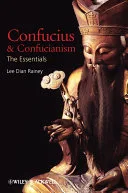
Lee Dian Rainey's "Confucius and Confucianism" provides a structured overview of a philosophical tradition that has profoundly shaped East Asian civilization. The author adeptly connects the ancient milieu of Confucius to modern societal quandaries, particularly concerning governance and ethics. A notable strength is the clear exposition of core concepts like *Ren* and *Li*, making them accessible without oversimplification. However, the book occasionally feels more like a textbook summary than a critical engagement. For instance, the discussion on the influence of Confucianism during the Han Dynasty, while factually presented, could benefit from a deeper analysis of its ideological contestation. The work's commitment to comprehensive historical tracing is commendable, though it sometimes sacrifices incisive commentary for breadth. Overall, "Confucius and Confucianism" serves as a solid, if somewhat reserved, academic introduction to its subject.
📝 Description
81
Lee Dian Rainey's 2015 book examines Confucius's life and the philosophical tradition that bears his name.
This book traces the development of Confucian thought from its origins in ancient China to its continuing impact. It highlights the enduring wisdom in Confucius's ethical and political philosophy, linking the societal challenges of his time to present-day issues. The text addresses topics such as governmental integrity, social upheaval, economic shifts, and technological change, all of which led Confucius to examine human nature and societal structures.
Readers who want a scholarly yet approachable introduction to Confucianism will find this volume useful. It suits students of philosophy, history, and comparative religion, and anyone interested in the ethical foundations of governance and social order. Those curious about the key texts and figures that shaped East Asian thought and culture will appreciate its thorough scope. Individuals looking to grasp the historical roots of concepts like filial piety and the rectification of names will discover detailed explanations.
Within the esoteric tradition, this book provides a structured examination of a major philosophical system often studied for its practical application in self cultivation and social order. While Confucianism itself is not always categorized as strictly esoteric, its emphasis on moral cultivation, the study of classical texts, and the pursuit of social harmony can resonate with esoteric interests. The book's focus on the historical development and core concepts of Confucianism allows readers to engage with a tradition that has historically influenced meditative practices, ethical frameworks, and approaches to governance, which are themes often found in esoteric studies.
💡 Why Read This Book?
• Understand the foundational principles of *Ren* (benevolence) and *Li* (ritual propriety), as detailed in the book's exploration of Confucius's ethical framework, to better grasp how ancient Chinese thought addresses interpersonal harmony. • Gain insight into the socio-political landscape of the Spring and Autumn period (c. 771–476 BCE), learning how this era of fragmentation directly influenced Confucius's ideas on ideal governance. • Explore the concept of the *junzi* (superior person) as presented by Rainey, enabling you to compare ancient ideals of personal cultivation with contemporary notions of ethical leadership and self-improvement.
⭐ Reader Reviews
Honest opinions from readers who have explored this book.
❓ Frequently Asked Questions
When was Confucius, the central figure of Confucianism, alive?
Confucius, or Kong Fuzi, lived during a period of significant upheaval in China. His life spanned from approximately 551 to 479 BCE, a time known as the Spring and Autumn period, which heavily influenced his philosophical inquiries into social order and ethical governance.
What is the primary goal of Confucianism as presented in the book?
The primary goal of Confucianism, as explored in "Confucius and Confucianism," is the cultivation of individual virtue and the establishment of social harmony. This is achieved through ethical conduct, adherence to rituals (*Li*), and the development of humaneness (*Ren*), ultimately aiming for a well-ordered state and society.
Does the book discuss Confucianism's influence beyond ancient China?
Yes, the book traces the development of Confucian thought from its ancient origins to its enduring relevance in contemporary times. It highlights how Confucian principles have shaped East Asian cultures and continue to be debated and applied in modern societal contexts.
What are some key virtues emphasized in Confucian teachings according to the book?
Key virtues emphasized include *Ren* (benevolence, humaneness), *Li* (propriety, ritual), *Xiao* (filial piety), and *Yi* (righteousness). The book explains how these virtues are interconnected and essential for personal cultivation and societal stability.
Is "Confucius and Confucianism" suitable for academic study?
Absolutely. The book is structured as a comprehensive introduction, drawing on scholarly research to present the life of Confucius and the evolution of his philosophy. It's well-suited for students of philosophy, history, and religious studies.
How does the book connect Confucius's era to the 21st century?
The book draws parallels between the societal challenges of Confucius's time, such as government corruption and social change, and those faced in the 21st century. This comparison underscores the persistent relevance of his analyses of human nature and societal organization.
🔮 Key Themes & Symbolism
Ethical Governance
The book meticulously details Confucius's vision of governance, which is rooted in personal virtue and moral example rather than coercion. It explores how concepts like *Ren* and *Li* were intended to foster a stable and just society. Rainey illustrates how Confucius believed rulers should cultivate themselves to better serve their people, drawing parallels between the ethical demands placed on ancient Chinese officials and the responsibilities of leaders today. The work examines the practical implications of this ethical framework for public administration and social order.
Personal Cultivation and Virtue
A central theme is the Confucian emphasis on self-cultivation as the bedrock of a harmonious society. The book elaborates on the ideal of the *junzi* (superior person), detailing the virtues and practices necessary to achieve this state. It explains how virtues like filial piety (*Xiao*) and righteousness (*Yi*) are not merely personal attributes but essential components of social cohesion. The esoteric angle lies in viewing this self-cultivation not just as a social duty but as a path toward inner alignment and spiritual refinement, echoing similar aims in various contemplative traditions.
Social Harmony and Ritual
The work examines the crucial role of *Li* (ritual propriety) in maintaining social order and fostering harmonious relationships. It presents *Li* not as empty ceremony but as embodied ethical practice that guides human interaction. The book explains how adherence to established norms and rituals helps individuals understand their roles and responsibilities within the family and the state. This focus on structured social interaction offers an esoteric perspective on the power of form and tradition in shaping collective consciousness and individual behavior.
Human Nature and Societal Change
Rainey examines Confucius's views on human nature and his responses to the rapid societal changes of his era. The book highlights how Confucius sought to understand the fundamental aspects of human behavior amidst political fragmentation and social flux. It draws connections between these ancient inquiries and contemporary debates about societal evolution, technological impact, and the enduring questions of what it means to be human. This exploration invites a deeper contemplation of humanity's place within evolving social and cosmic orders.
💬 Memorable Quotes
Direct passages from the work, attributed to the author.
“The superior person understands righteousness; the small person understands profit.”
— This statement expresses the core Confucian distinction between ethical motivation and self-interest. It suggests that true leadership and personal integrity are defined by a commitment to what is morally right, rather than by a pursuit of personal gain.
“Learning without thought is labor lost; thought without learning is perilous.”
— This aphorism emphasizes the indispensable link between acquiring knowledge and critical reflection. It implies that intellectual development requires both the intake of information and the active processing and understanding of that information.
“At home, a young person should be dutiful; abroad, respectful.”
— This highlights the Confucian emphasis on familial piety and social deference as foundational virtues. It suggests that proper conduct begins within the family unit and extends outwards into broader social interactions.
“He who does not understand the words of others cannot understand him.”
— This interpretation highlights the importance of empathy and careful listening in human relations. It suggests that true understanding requires a capacity to grasp the perspectives and intentions of those around us.
“Do not do to others what you do not want done to yourself.”
— This is a foundational principle of reciprocity, often referred to as the Silver Rule. It serves as a simple yet profound ethical guideline for interpersonal conduct, promoting consideration for others' well-being.
🌙 Esoteric Significance
Tradition
While Confucianism is primarily a socio-ethical philosophy, its emphasis on self-cultivation and achieving a state of inner harmony aligns with broader esoteric aims found in various spiritual traditions. Its focus on order, ritual, and the proper functioning of the cosmos through human action can be seen as a form of 'social alchemy.' It shares with Hermeticism the principle of 'As Above, So Below,' where the order of the state and the cosmos is mirrored in the ethical conduct of the individual.
Symbolism
Key symbols include the concept of the *junzi* (superior person), representing an archetype of perfected human potential and ethical mastery. The *Li* (rituals and propriety) themselves function symbolically, acting as structured pathways for individuals to connect with cosmic order and social responsibility. The rectification of names (*zhengming*) is another symbolic act, signifying the power of language and accurate definition to bring order to chaos, reflecting esoteric traditions that value precise nomenclature for spiritual efficacy.
Modern Relevance
Contemporary thinkers and spiritual practitioners in fields like positive psychology and ethical leadership studies draw upon Confucian principles. Movements focused on mindfulness and intentional living often echo the Confucian emphasis on self-awareness and disciplined practice. Furthermore, interfaith dialogues frequently engage with Confucian ethics as a non-theistic moral framework, demonstrating its continued relevance in discussions about global ethics and societal well-being.
👥 Who Should Read This Book
• Students of comparative philosophy and religion seeking a foundational understanding of East Asian thought, particularly the ethical and social dimensions of Confucianism. • Individuals interested in the history of governance and ethics, looking to explore how ancient Chinese thinkers addressed issues of leadership, social order, and personal responsibility. • Readers exploring esoteric traditions who wish to understand how philosophies focused on self-cultivation and societal harmony intersect with broader spiritual and metaphysical inquiries.
📜 Historical Context
Published in 2010, Lee Dian Rainey's "Confucius and Confucianism" arrived during a period of renewed global interest in Eastern philosophies and ethical systems, particularly in light of globalization and economic shifts. Confucius (c. 551–479 BCE) emerged during China's Spring and Autumn period, a time of intense political fragmentation and intellectual ferment, contrasting sharply with the later unified Han Dynasty (206 BCE – 220 CE) where Confucianism became state orthodoxy. Rainey's work situates itself within modern sinology, engaging with ongoing scholarly debates about the interpretation and historical trajectory of Confucian thought. While not facing direct censorship, the reception of Confucianism itself has historically been complex, sometimes challenged by competing schools like Daoism and later by the rise of Communism, which initially suppressed its influence. The book aims to bridge this historical distance, presenting Confucianism's enduring relevance.
📔 Journal Prompts
The concept of *Ren* (benevolence) as a foundation for societal harmony.
Reflections on the *junzi* ideal and its application in contemporary life.
The role of *Li* (ritual propriety) in structuring personal and social conduct.
Confucius's views on governance versus modern political systems.
The practice of filial piety (*Xiao*) in a globalized world.
🗂️ Glossary
Ren (仁)
Often translated as benevolence, humaneness, or goodness. It is the core virtue in Confucianism, emphasizing empathy, compassion, and the profound connection between individuals.
Li (禮)
Encompasses rituals, propriety, etiquette, and social norms. It guides human behavior, fostering social harmony and respect through prescribed conduct and ceremonies.
Xiao (孝)
Filial piety, the virtue of respect for one's parents, elders, and ancestors. It is considered a core part of Confucian ethics, extending to loyalty and care for family.
Junzi (君子)
Literally 'son of a ruler,' translated as 'superior person' or 'gentleman.' It represents the ideal moral exemplar in Confucianism, characterized by virtue, wisdom, and ethical conduct.
Yi (義)
Righteousness or justice. It refers to the moral disposition to do what is right and good, often in accordance with *Li* and *Ren*.
Spring and Autumn period
An era in Chinese history (c. 771–476 BCE) marked by political fragmentation and frequent warfare, during which Confucius lived and developed his philosophy.
Zhengming (正名)
The rectification of names. Confucius believed that for society to function harmoniously, names (titles, roles) must correspond accurately to reality and one's duties.