Angelology
 81
81

Angelology
Potter's *Angelology* offers a meticulously researched survey, charting the lineage of celestial messengers from Mesopotamian pantheons to the New Age. Its strength lies in its rigorous textual analysis, particularly in how it connects the Hebrew Scriptures to later Christian and philosophical interpretations. The section discussing Pseudo-Dionysius’s influence on angelic hierarchies is exceptionally clear, providing a solid anchor for understanding medieval thought. However, the sheer scope can sometimes feel overwhelming, and the transition to modern New Age interpretations, while present, feels less developed than the earlier historical sections. A particular point of interest is the book's argument regarding the continuity of certain archetypal patterns in angelic representation. Potter's work is a significant academic contribution, though its density might challenge the casual reader.
📝 Description
81
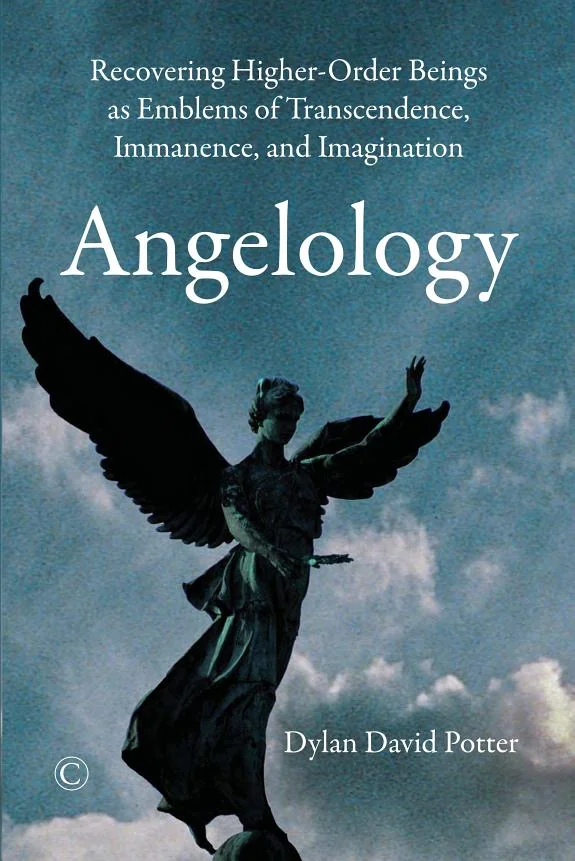
Dylan David Potter's Angelology traces angelic concepts from ancient Near East to medieval thought.
Dylan David Potter's *Angelology* offers a scholarly study of angelic beings across theological and historical periods. The book traces the development of these celestial figures from their origins in ancient Near Eastern cultures, through their depiction in the Hebrew Scriptures, and into later Christian and medieval thought. It examines the appearances and roles attributed to higher-order beings in various texts, showing both continuity and change in the concept.
This work is intended for serious students of religious history, comparative mythology, and esoteric studies. Readers who prefer a critical, text-based analysis of angelology over devotional material will find it especially useful. It is suitable for academics, theologians, and practitioners interested in the historical evolution of spiritual concepts and their textual representations.
Potter situates the understanding of angels within a broad historical context, starting with their origins in ancient Near Eastern cosmologies. The book engages directly with foundational texts like the Hebrew Scriptures and later theological elaborations. It discusses figures such as Pseudo-Dionysius, whose hierarchical schema greatly influenced medieval angelology, and Thomas Aquinas, whose theological works also addressed these beings. The analysis continues to modern interpretations, illustrating how the concept has been recontextualized.
This book engages with the historical and theological development of angelology, a subject central to many esoteric traditions. It examines how concepts of celestial intermediaries and divine messengers evolved from ancient Near Eastern mythologies through Abrahamic faiths and into medieval Christian thought. By focusing on textual analysis and historical context, *Angelology* provides a scholarly foundation for understanding the construction of angelic beings, a topic that resonates with practitioners and scholars of various mystical and Gnostic paths seeking to understand the structure of the cosmos and the nature of divine communication.
💡 Why Read This Book?
• Gain a nuanced understanding of angelic figures by tracing their origins from ancient Near Eastern cultures, a detail rarely covered with such depth in popular works. • Analyze the specific theological contributions of figures like Pseudo-Dionysius (circa 5th-6th century CE) to the structured understanding of angelic orders, moving beyond generic notions. • Grasp how the concept of angels evolved through the Hebrew Scriptures and into later Christian theological frameworks, providing a concrete historical trajectory.
⭐ Reader Reviews
Honest opinions from readers who have explored this book.
❓ Frequently Asked Questions
What is the primary focus of Dylan David Potter's Angelology?
The book's primary focus is a scholarly examination of how angelic beings have been portrayed across different historical periods and theological traditions, from ancient Near Eastern origins to modern interpretations.
Which historical periods does Angelology cover regarding angelic figures?
It covers a broad spectrum, starting with ancient Near Eastern origins, moving through the Hebrew Scriptures, and extending to the writings of figures like Pseudo-Dionysius and Thomas Aquinas, and concluding with modern New Age perspectives.
Is Angelology a religious text or a historical study?
Angelology is primarily a historical and theological study, analyzing the textual and conceptual evolution of angels across different belief systems and eras, rather than a devotional or theological treatise.
Who would benefit most from reading Angelology?
Students of religious history, comparative mythology, theology, and esoteric studies would benefit most, particularly those interested in a critical, text-based analysis of angelology.
Does the book discuss the origins of angels in ancient Near Eastern cultures?
Yes, the book explicitly traces patterns in the appearance of higher-order beings from their ancient Near Eastern origins as a foundational element of its historical analysis.
What role do figures like Thomas Aquinas play in the book?
Thomas Aquinas is examined as a key figure in theological history whose writings contributed to the discourse and understanding of angelic beings within Christian thought.
🔮 Key Themes & Symbolism
Angelic Evolution Across Eras
This theme tracks the transformation of angelic concepts from their earliest manifestations in ancient Near Eastern mythologies. Potter meticulously follows how these beings were reinterpreted within the Hebrew Scriptures, subsequently influencing Christian theology through figures like Pseudo-Dionysius and Thomas Aquinas. The analysis highlights the enduring yet mutable nature of angelic archetypes, showing how their perceived roles and forms adapted to different cultural and religious contexts throughout history, extending even to modern esoteric interpretations.
Textual Basis of Angelic Portrayals
Central to *Angelology* is the emphasis on the textual foundations of our understanding of angels. The book scrutinizes specific biblical passages, theological treatises, and historical documents to demonstrate how these writings shaped and codified beliefs about celestial hierarchies. By examining the language and narrative structures used to describe angelic encounters, Potter illustrates the critical role of scripture and theological discourse in constructing and maintaining the concept of angels across millennia.
The Invisible Dimension
The book posits angels as signifiers of an unseen reality that parallels our own. This theme explores how the concept of angels serves as a bridge between the material and the spiritual, offering glimpses into higher orders of existence. Potter examines how different traditions have conceptualized this invisible dimension and the beings that inhabit it, suggesting that the fascination with angels stems from a fundamental human intuition about realities beyond empirical perception.
Comparative Theological Frameworks
Potter employs a comparative approach to understand angelology, placing the development of angelic concepts within broader theological and cultural currents. By juxtaposing interpretations from ancient Near Eastern sources, Jewish scripture, Christian theology (including medieval scholastics), and modern esoteric thought, the work reveals both commonalities and divergences. This method allows for a richer appreciation of how the idea of angels has functioned across diverse intellectual landscapes.
💬 Memorable Quotes
Direct passages from the work, attributed to the author.
“Angels point to an invisible dimension that parallels our own.”
— This core idea suggests that our fascination with angels isn't just about mythical beings, but about a perceived reality beyond our immediate senses, a spiritual or higher plane of existence.
“Tracing patterns in the appearance of higher-order beings from their ancient Near Eastern origins.”
— This indicates the book's methodology, focusing on the historical lineage and evolution of celestial entities, showing how concepts might have migrated or transformed from early Near Eastern cosmologies.
“Examining portrayals at key points in biblical and theological history.”
— This highlights the book's structured approach, focusing on important moments and texts within religious history to understand the development and changing nature of angelic depictions.
“The work demonstrates that angels...”
— This incomplete phrase from the blurb suggests the book concludes with a specific thesis or finding about the nature or function of angels, derived from its historical and textual analysis.
“Analysis extends to modern New Age writers.”
— This signals the book's contemporary relevance, showing that it doesn't stop at historical theology but also considers how angelic concepts are understood and utilized in current spiritual movements.
🌙 Esoteric Significance
Tradition
This work engages with the broader tradition of comparative mythology and religious studies, often foundational for esoteric scholarship. While not strictly aligned with a single lineage like Hermeticism or Gnosticism, *Angelology* provides the historical and textual bedrock upon which many esoteric interpretations of angelic beings are built. It offers a critical lens for understanding how concepts of intermediary beings and celestial hierarchies have permeated diverse spiritual and philosophical systems.
Symbolism
Key symbols explored implicitly include the ladder or stairway (connecting earthly and heavenly realms, as famously seen with Jacob's ladder), wings (representing transcendence, speed, and divine communication), and light (symbolizing purity, divine presence, and knowledge). The book examines how these motifs function within textual narratives and theological doctrines to convey the nature and role of angelic entities.
Modern Relevance
Contemporary esoteric practitioners and thinkers, particularly those involved in angel magic, angelic communication, or Western ceremonial magic, draw heavily on the historical and textual understandings presented in works like *Angelology*. It informs modern practices by providing context for the angelic orders and correspondences studied in traditions influenced by figures like Aleister Crowley or Dion Fortune, and by bridging historical theology with current spiritual explorations.
👥 Who Should Read This Book
• Students of comparative religion and mythology seeking to understand the historical evolution of spiritual beings across cultures. • Scholars and theologians interested in textual analysis of religious traditions, particularly concerning the development of angelology from ancient Near East to medieval Europe. • Practitioners of Western esoteric traditions who desire a deeper, historically grounded understanding of the angelic hierarchies and figures they may work with.
📜 Historical Context
Published in 2017, Dylan David Potter's *Angelology* entered a scholarly landscape already rich with studies on angel lore. Its significance lies in its ambitious chronological sweep, connecting ancient Near Eastern concepts of divine messengers to the sophisticated theological frameworks of medieval Europe and beyond. The book directly engages with foundational texts, particularly the Hebrew Scriptures, and critically examines the impact of figures like Pseudo-Dionysius (whose writings circulated widely by the 6th century) and Thomas Aquinas (13th century) on the formalization of angelic hierarchies. Potter’s work stands apart by explicitly linking these historical developments to contemporary New Age interpretations, offering a continuous narrative thread. While not a direct engagement with a specific contemporary rival school, its broad comparative theological approach implicitly contrasts with more narrowly focused studies, providing a holistic view of angelic traditions.
📔 Journal Prompts
The concept of angels as indicators of an invisible dimension.
Patterns in higher-order beings from ancient Near Eastern origins.
Portrayals of angels in the Hebrew Scriptures versus later theological history.
The influence of Pseudo-Dionysius on angelic hierarchies.
The enduring fascination with celestial intermediaries.
🗂️ Glossary
Angelology
The theological and philosophical study of angels, examining their nature, roles, and significance within various religious and spiritual traditions.
Hebrew Scriptures
The collection of ancient religious writings forming the foundational texts of Judaism, also known as the Old Testament in Christianity, significant for early accounts of angelic beings.
Pseudo-Dionysius
A 5th or 6th-century Christian theologian whose writings, particularly 'De Coelesti Hierarchia' (On the Celestial Hierarchy), profoundly shaped medieval understanding of angelic orders.
Thomas Aquinas
A highly influential 13th-century Dominican friar, philosopher, and theologian in the scholastic tradition, whose works like the 'Summa Theologica' systematically addressed angelic nature and existence.
New Age writers
Authors and thinkers associated with the diverse spiritual and cultural movement known as the New Age, which often incorporates eclectic beliefs about spirituality, consciousness, and non-physical entities, including angels.
Ancient Near Eastern origins
Refers to the earliest documented conceptions of divine messengers or celestial beings found in the cultures of Mesopotamia, Egypt, and surrounding regions predating or contemporary with early Hebrew texts.
Higher-order beings
A term used to describe celestial entities, such as angels, demons, or other spiritual intelligences, perceived as existing on a different plane or level of reality than humans.
This book appears in 1 collection
🔮 Readers Also Liked
Browse all →









From the “Angelology” Collection
View all →






More Free Sacred Texts & Gnosticism Books
View all →