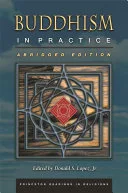
Buddhism in Practice
 80
80

Buddhism in Practice
Donald S. Lopez, Jr.'s "Buddhism in Practice" is an indispensable resource, offering a compelling counterpoint to more abstract or generalized accounts of Buddhist thought. The strength of this collection lies in its direct engagement with translated primary materials, each prefaced by insightful commentary from its respective translator. This approach grants readers an unmediated glimpse into the lived experience of Buddhist devotion and ritual across centuries. A limitation, however, is that the sheer diversity presented, while its greatest asset, can feel overwhelming without a deeper foundational knowledge of Buddhist history. The section on monastic rules, for instance, meticulously details the practicalities of monastic life, which, while informative, requires significant reader engagement to fully appreciate its significance within the broader landscape of Buddhist practice. It is a work that rewards careful study rather than casual browsing. The book functions as a vital compendium for understanding the multifaceted reality of Buddhism.
📝 Description
80
Donald S. Lopez, Jr.'s 1995 anthology gathers thirty-five translated texts on Buddhist practices.
Buddhism in Practice collects thirty-five translated texts that reveal the diverse ways Buddhist traditions have been lived across Asia. Each translated text comes with an introduction from its translator, offering historical and cultural context for the practices described. The anthology's aim is to show the wide range of Buddhist engagement with its core ideas.
This book is for readers who want a broad look at Buddhist practices beyond abstract philosophy. Students of religion, cultural historians, and anyone curious about how Buddhism actually functions in different places and times will find it valuable. Those who appreciate primary source material, even in translation, will recognize the worth of these carefully chosen selections.
The collection was published in 1995, a time when Western academic interest in non-Western religions was growing. Scholarship on Buddhism was shifting from solely doctrinal studies to include ritual, devotion, and the social aspects of religious life. This work adds to the academic discussion about religious variety and how sacred texts and traditions are understood.
While not strictly an esoteric text itself, Buddhism in Practice illuminates the practical application of Buddhist principles, which often carry esoteric dimensions. The collected writings show how concepts like karma, rebirth, and the pursuit of enlightenment are interpreted and enacted within specific cultural and historical settings. This approach reveals the lived experience behind doctrines, demonstrating that Buddhist practice is a dynamic, evolving phenomenon rather than a static set of beliefs. The emphasis on lived realities and diverse interpretations places it within a broader scholarly interest in understanding the deeper, often less visible, currents of religious traditions.
💡 Why Read This Book?
• Gain direct exposure to translated Buddhist texts, such as those detailing the practices of Tibetan yogins, offering a tangible connection to historical practitioners. • Understand the historical evolution of Buddhist rituals and beliefs by examining selections spanning from early Buddhism to more contemporary expressions in Asia. • Appreciate the diversity of monastic discipline through detailed accounts of Vinaya rules, providing concrete examples of how ethical conduct shapes Buddhist life.
⭐ Reader Reviews
Honest opinions from readers who have explored this book.
❓ Frequently Asked Questions
What is the primary focus of "Buddhism in Practice"?
The book's primary focus is illustrating the vast scope and diversity of Buddhist practices across Asia, both historically and in contemporary times, through translated texts and expert introductions.
When was "Buddhism in Practice" originally published?
The anthology was originally published in 1995, with a subsequent re-release in a revised edition.
How many translated texts are included in the collection?
The collection features thirty-five translated texts, each accompanied by a substantial introduction written by its translator.
Who is the editor of "Buddhism in Practice"?
The editor of "Buddhism in Practice" is Donald S. Lopez, Jr., a distinguished scholar in Buddhist studies.
What kind of reader would benefit most from this book?
Readers interested in the practical, lived aspects of Buddhism, including students of religion, cultural historians, and those seeking to understand Buddhist diversity beyond doctrine, would benefit.
Does the book cover Buddhist practices from a specific region only?
No, the book illustrates the scope of Buddhist practice across Asia, encompassing various regions and historical periods.
🔮 Key Themes & Symbolism
Ritual and Devotion
This theme examines the myriad ways Buddhist principles are enacted through ritual and devotional activities. The texts showcase practices ranging from elaborate ceremonies and monastic ordinations to personal meditation and the recitation of mantras. It highlights how these outward expressions are integral to the spiritual path, facilitating merit-making, purification, and the cultivation of wisdom and compassion across different cultural contexts in Asia.
Monastic Life and Discipline
The anthology offers detailed insights into the structure and daily life within Buddhist monastic communities. It explores the Vinaya, the code of conduct for monks and nuns, revealing the practical rules that govern their existence. This theme underscores the importance of discipline and community in sustaining the Buddhist tradition, providing a tangible sense of the commitment required by those who dedicate their lives to the practice.
Textual Transmission and Interpretation
A significant aspect of the work is its focus on how Buddhist teachings and practices are transmitted through written texts and their interpretation. The inclusion of translated scriptures, commentaries, and instructional manuals demonstrates the critical role of literacy and scholarship. It reveals how texts serve as both a guide and a source of ongoing debate and refinement within diverse Buddhist schools over millennia.
Regional Diversity of Practice
This theme emphasizes that Buddhism is not a uniform entity but a mosaic of distinct traditions shaped by local cultures and histories. The selected texts illustrate variations in doctrine, ritual, and social expression found in regions such as India, Tibet, China, and Southeast Asia. This diversity challenges monolithic understandings and reveals Buddhism's adaptability and enduring appeal across the Asian continent.
💬 Memorable Quotes
Direct passages from the work, attributed to the author.
“The vast scope of Buddhist practice in Asia, past and present.”
— This concept, central to the book's re-release blurb, expresses the anthology's core aim: to present a wide spectrum of how Buddhism has been lived and understood across diverse cultures and eras.
“Thirty-five translated texts, each preceded by a substantial introduction.”
— This structural element highlights the book's scholarly approach, emphasizing the importance of contextualizing primary source material for the reader's comprehension of specific Buddhist practices.
“Remarkable diversity of the practices of persons who over the course of 2,500 years have been identified, by themselves or by others, as Buddhist.”
— This phrasing underscores the book's commitment to showcasing the varied and sometimes contested ways individuals and groups have engaged with Buddhism throughout its long history, acknowledging the fluidity of religious identity.
“Re-released now in a slimmer but still extensive edition.”
— This note points to the book's enduring relevance and accessibility, suggesting that the updated edition maintains a significant breadth of content despite being more compact than its original publication.
“Unusual sources provides the reader with a sense of remarkable diversity.”
— This suggests the anthology includes texts that might not be commonly encountered in standard introductions to Buddhism, aiming to offer a more nuanced and perhaps surprising view of the tradition's practice.
🌙 Esoteric Significance
Tradition
While "Buddhism in Practice" primarily focuses on mainstream Buddhist traditions, its exploration of diverse practices touches upon elements that resonate with esoteric interests. Certain Tibetan Buddhist practices, for example, involve complex visualizations and tantric methodologies that have long captivated Western occultists and esoteric scholars seeking direct experiential knowledge beyond intellectual understanding.
Symbolism
The anthology implicitly engages with Buddhist symbolism, such as the stupa (representing the Buddha's enlightened mind) or the lotus flower (symbolizing purity and enlightenment arising from defilement). These symbols, while not always explicitly discussed in esoteric terms, are foundational to Buddhist iconography and meditation, serving as focal points for contemplation and understanding the path to liberation.
Modern Relevance
Contemporary Western esoteric practitioners, particularly those within Buddhist-inspired movements or those seeking to integrate Eastern contemplative techniques with Western magical systems, draw upon the detailed accounts of practice found in this book. Thinkers and groups exploring embodied spirituality, ritual efficacy, and the phenomenology of consciousness find the historical examples of Buddhist engagement particularly relevant.
👥 Who Should Read This Book
• Students of Comparative Religion: Those seeking to understand the practical manifestations of a major world religion across diverse cultural landscapes will find extensive material. • Scholars of Asian Studies: Researchers interested in the social, ritual, and daily life aspects of Buddhist societies will benefit from the primary source translations. • Individuals exploring contemplative practices: Readers curious about the historical methods and disciplines employed by Buddhist practitioners over centuries will gain valuable context.
📜 Historical Context
Published in 1995, "Buddhism in Practice" emerged during a significant expansion of Western academic engagement with Asian religions. The late 20th century saw a shift from purely philosophical or historical analyses of Buddhism towards an emphasis on lived religion, ritual studies, and the anthropology of Buddhism. Lopez's work contributed to this trend by making accessible a wide array of primary source materials that illuminated devotional, meditative, and monastic practices. It arrived at a time when scholars like Richard Gombrich were also producing influential works examining Buddhism's social and historical dimensions. While academic interest in Buddhism was growing, it often stood in contrast to popular, often Westernized, interpretations of Buddhist meditation. The book's reception within academia was positive, recognized for its scholarly rigor and its valuable compilation of translated texts.
📔 Journal Prompts
The diversity of Buddhist practices across Asia.
Monastic discipline as depicted in the Vinaya.
The role of translated texts in transmitting Buddhist teachings.
Ritual and devotional activities in Buddhist life.
The concept of merit-making through practice.
🗂️ Glossary
Vinaya
The monastic code of conduct for Buddhist monks and nuns, encompassing rules regarding discipline, etiquette, and communal living. It forms a foundational part of the Buddhist canon.
Mantra
A sacred utterance, sound, syllable, word, or group of words believed to have psychological or spiritual power. Mantras are often chanted or recited in meditation and ritual.
Karma
The principle of cause and effect, where intentional actions (physical, verbal, or mental) influence an individual's future experiences and rebirths. It is a core concept in Buddhist ethics and soteriology.
Stupa
A dome-shaped structure erected as a Buddhist shrine, typically containing relics of the Buddha or other revered figures. It serves as a focal point for devotion and circumambulation.
Soteriology
The study of religious doctrines concerning salvation or liberation. In Buddhism, soteriology focuses on the path to enlightenment and release from suffering (nirvana).
Tantra
A specific set of esoteric traditions within Buddhism (and Hinduism) that often employ ritual, meditation, and visualization techniques aimed at achieving enlightenment rapidly.
Merit-making
The accumulation of spiritual credit or good karma through virtuous actions, such as generosity, ethical conduct, and devotional practices, believed to lead to favorable rebirths and spiritual progress.