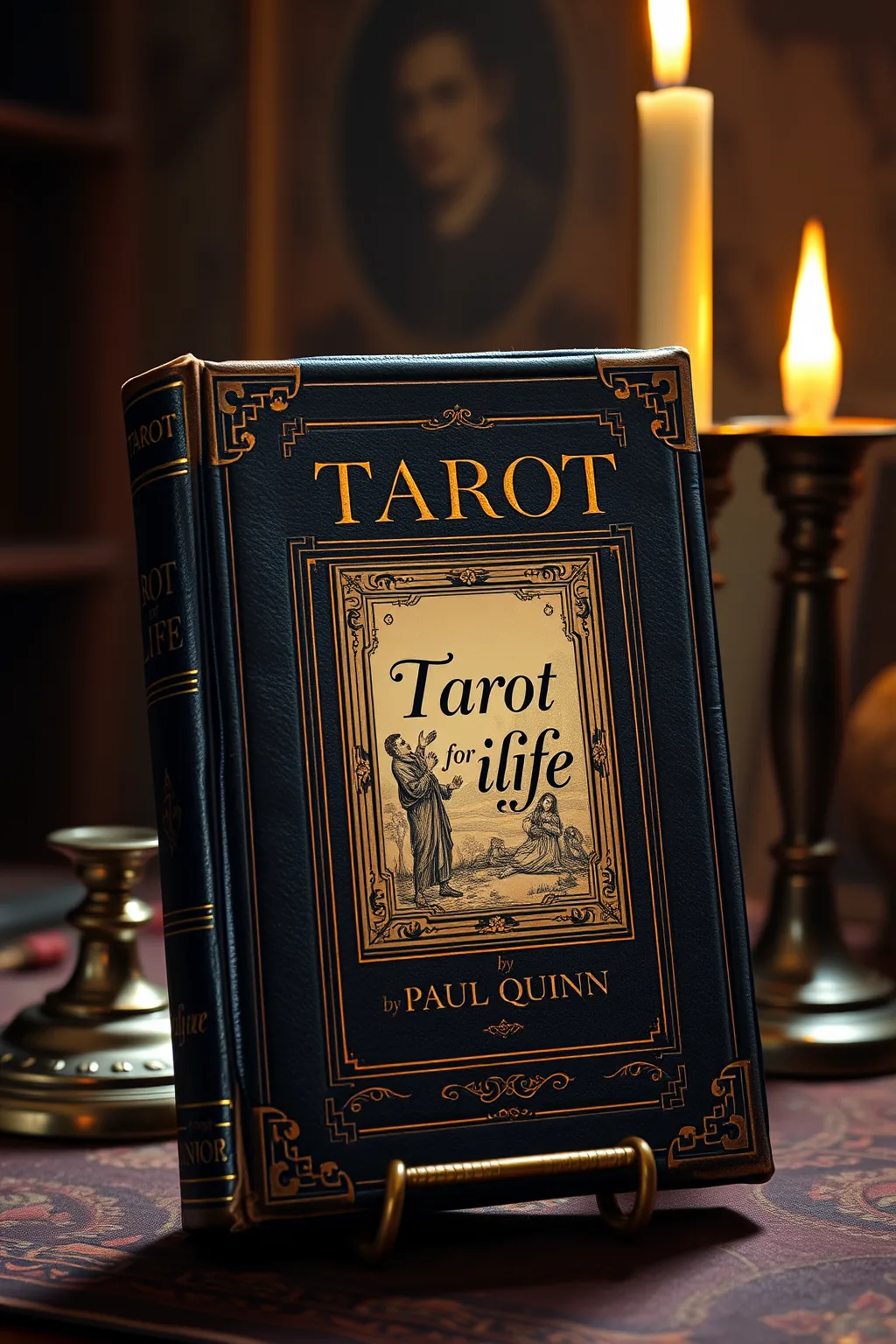
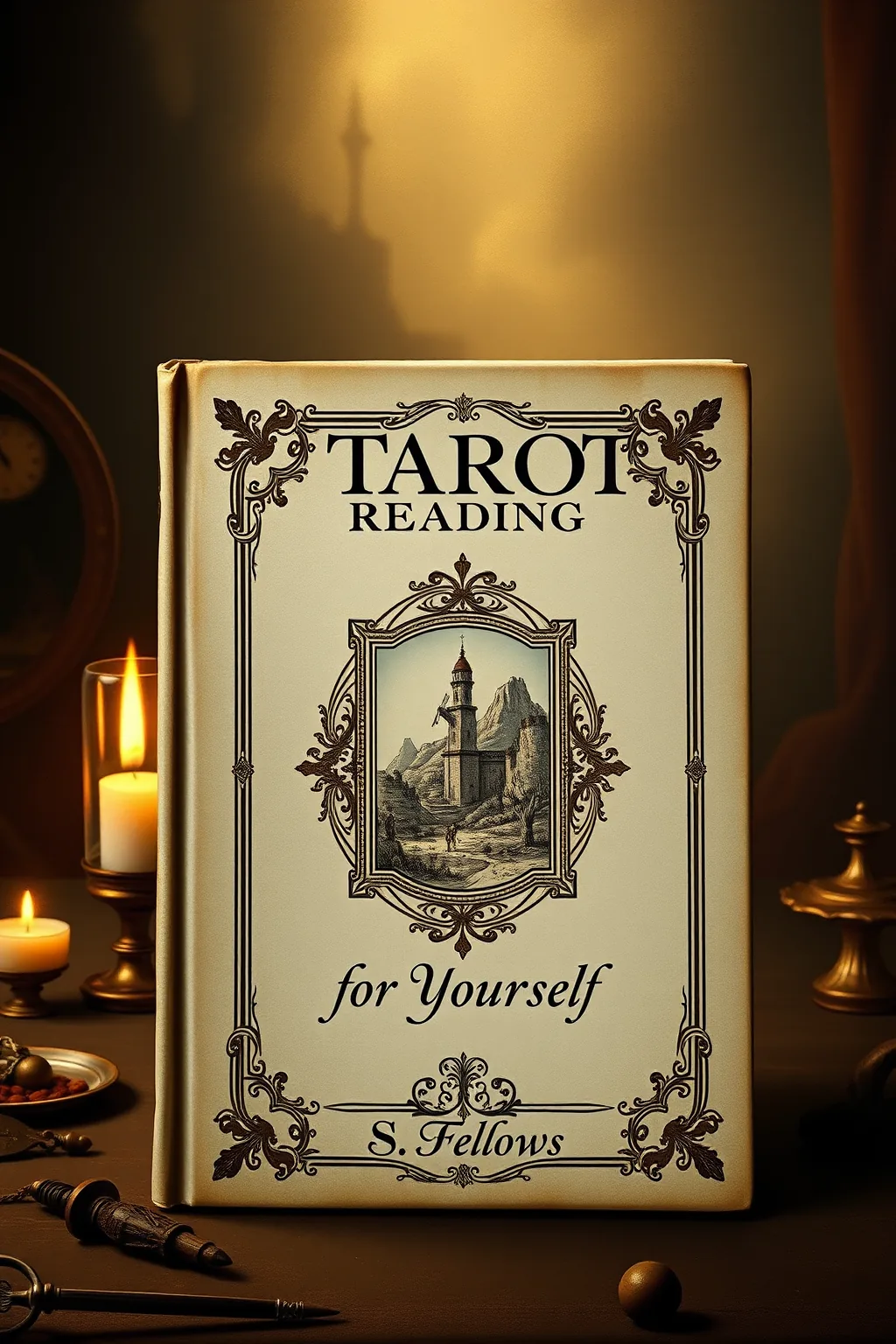
Tarot Reading for Yourself
 61
61

Tarot Reading for Yourself



Sophia Crane (Associate Editor) — "Tarot Reading for Yourself" by S. Fellows is an indispensable addition to any serious occultist's library. Fellows eschews superficial interpretations, instead delving into the profound symbolic language and philosophical underpinnings of the Tarot. The book offers a deeply personal approach, encouraging an intuitive bond with the cards that transcends rote memorization. Its strength lies in its ability to demystify complex archetypes, making them accessible for self-exploration and spiritual growth. Ideal for those seeking genuine insight and a more profound connection to the Tarot's ancient wisdom, this volume is a true gift to the modern mystic.
📝 Description
61
S. Fellows's 2016 book, Tarot Reading for Yourself, argues the Tarot is a tool for self-reflection, not just prediction.
Tarot Reading for Yourself, written by S. Fellows and published in 2016, presents the Tarot as a system for personal insight rather than a simple fortune-telling method. Fellows focuses on the seventy-eight cards as symbolic keys that can illuminate an individual's inner landscape and life path. The book encourages readers to develop a direct, intuitive relationship with the cards, moving beyond rote interpretations to a deeper understanding of their personal meaning.
Fellows details how each card functions as a symbolic representation, offering a lens through which to examine one's life and potential. The aim is to foster self-awareness and spiritual growth by engaging with these archetypal images. The text suggests that a consistent practice with the Tarot can lead to significant personal transformation and a greater connection to universal principles.
This book sits within the Western esoteric tradition that views the Tarot not merely as a game or a predictive device, but as a complex symbolic system tied to spiritual development. Similar to practices found in Hermeticism and certain branches of occultism, Fellows frames the Tarot's imagery as a mirror to the psyche and a map for inner exploration. The emphasis on personal connection and intuitive understanding aligns with the broader esoteric goal of direct experience and gnosis, positioning the Tarot as a means to access inner knowledge and understand one's place within a larger cosmic order.
💡 Why Read This Book?
Uncover the ancient, symbolic language of the Tarot for profound self-discovery. This book empowers you to connect intuitively with the archetypes, transforming readings into a sacred dialogue with your inner wisdom. It's perfect for seekers of truth, students of esotericism, and anyone yearning for a deeper understanding of life's mysteries through the timeless wisdom of the cards.
⭐ Reader Reviews
Honest opinions from readers who have explored this book.
❓ Frequently Asked Questions
What is the primary focus of this book?
The primary focus is on developing an intuitive and personal connection with the Tarot for self-understanding and spiritual growth, rather than solely for predictive purposes.
Is this book suitable for absolute beginners?
Yes, "Tarot Reading for Yourself" is designed to be accessible to beginners, offering clear guidance while also satisfying the curiosity of those with some prior experience.
Does the book delve into specific card meanings?
Absolutely. It provides detailed explorations of each Major and Minor Arcana card, emphasizing their symbolic depth and psychological resonance.
Can I use this book with any Tarot deck?
While it uses archetypal imagery, the principles taught are universally applicable to most traditional Tarot decks, encouraging adaptation to your chosen cards.
How does this book differ from other Tarot guides?
It emphasizes a holistic, introspective approach, viewing the Tarot as a tool for self-realization and a map of the psyche, rather than just a fortune-telling device.
🔮 Key Themes & Symbolism
The Tarot as a Mirror of the Psyche
This book posits the Tarot not merely as a divinatory tool, but as a profound symbolic language that mirrors the intricate range of the human psyche. Each card, from the Fool's innocent journey to the World's completion, represents an archetypal stage of consciousness, a facet of the soul's journey. Fellows guides readers to interpret these archetypes as reflections of their own inner states, hidden desires, and unconscious patterns. By engaging with the cards on this deeply personal level, practitioners can gain invaluable insights into their motivations, fears, and untapped potentials, fostering a more integrated and self-aware existence.
Intuitive Connection and Personal Symbolism
Central to "Tarot Reading for Yourself" is the cultivation of an authentic, intuitive connection with the Tarot. Fellows argues that true understanding arises not from memorizing rigid meanings, but from attuning oneself to the subtle energetic currents and personal resonance each card evokes. The book encourages readers to develop their own symbolic vocabulary, recognizing that the cards can speak uniquely to each individual based on their life experiences and inner wisdom. This approach transforms the reading process into a dynamic, co-creative dialogue between the seeker, the cards, and the universe, fostering a more profound and empowering relationship with the Tarot.
The Archetypal Journey and Spiritual Evolution
Fellows frames the Tarot as a sacred map charting the archetypal journey of spiritual evolution. The sequence of the Major Arcana, in particular, is presented as a progression through life's fundamental lessons and initiations, leading towards greater wisdom and self-realization. The book illuminates how understanding these universal patterns can provide solace, direction, and a sense of purpose. By recognizing oneself within these archetypal narratives, readers are empowered to navigate challenges with greater insight, embrace personal growth, and ultimately align with their higher spiritual path, fostering a deeper understanding of their place within the cosmic order.
💬 Memorable Quotes
Direct passages from the work, attributed to the author.
“Each card is a key, unlocking a door within your own soul.”
— This highlights the introspective nature of Tarot reading, positioning the cards as catalysts for inner exploration and personal discovery.
“The true magic lies not in the deck, but in the reader's open heart.”
— This underscores the importance of intuition, empathy, and receptivity in interpreting the Tarot's wisdom.
“Symbolism is the language of the subconscious, and the Tarot speaks it fluently.”
— This points to the deep, symbolic nature of Tarot, connecting it to the hidden domains of the mind and intuition.
“Seek not answers from the cards, but the courage to find them within.”
— This encourages self-reliance and empowerment, positioning the Tarot as a guide to accessing one's own inner strength and wisdom.
💡 Key Ideas
Editorial paraphrase of the work's core concepts — not direct quotes.
The cards do not predict your future; they reveal the currents of your present.
This quote emphasizes the Tarot's role as a tool for self-awareness and present-moment understanding, rather than a deterministic prophecy.
🌙 Esoteric Significance
Tradition
This work draws heavily from the Western Esoteric Tradition, particularly its Hermetic and Kabbalistic underpinnings, which view the Tarot as a visual representation of cosmic principles and human consciousness. It aligns with traditions that see the Tarot as a 'Book of Thoth' or a symbolic key to universal truths, accessible through intuitive understanding and spiritual practice. The emphasis on archetypes and the journey of the soul connects it to Jungian psychology and broader mystical philosophies seeking to bridge the seen and unseen realms.
Symbolism
The Tarot's strong symbolism is central to this book. Fellows unpacks the archetypal imagery of the Major Arcana (e.g., The Fool, The Magician, The High Priestess) as stages of spiritual development and universal human experiences. The Minor Arcana are explored for their depiction of earthly concerns and energetic flows, with suits representing elements and core life themes. The intricate details within each card, from color to posture, are presented as layers of meaning intended to unlock clear insights into the querent's inner and outer worlds.
Modern Relevance
In a world often characterized by rapid change and external pressures, "Tarot Reading for Yourself" offers a timeless anchor for introspection and self-discovery. Its emphasis on intuitive connection and personal meaning resonates deeply with contemporary seekers looking for authentic guidance and tools for navigating life's complexities. The book's approach empowers individuals to tap into their inner wisdom, fostering resilience, clarity, and a more profound sense of purpose in their personal and spiritual lives, making it a vital resource for modern spiritual practitioners.
👥 Who Should Read This Book
This informative volume is essential for the earnest seeker yearning for deeper self-understanding, offering a pathway to unlocking personal truths through the symbolic language of the Tarot. Novice practitioners will find clear, empowering guidance to begin their journey, while experienced readers will appreciate the profound, esoteric insights that deepen their practice. Scholars of esotericism will discover a rich exploration of archetypal symbolism and its philosophical underpinnings. Ultimately, anyone feeling a pull towards the mystical, seeking a tool for introspection, or desiring a more conscious engagement with life's journey will find invaluable wisdom within these pages.
📜 Historical Context
Published during a period of burgeoning interest in esoteric studies and the occult revival, "Tarot Reading for Yourself" by S. Fellows emerged as a significant contribution to the spiritual landscape. The late 20th and early 21st centuries saw a renewed fascination with ancient wisdom traditions, including Tarot, as people sought alternative frameworks for understanding themselves and the universe in an increasingly complex world. This era was marked by a shift from purely predictive interpretations of Tarot towards a more psychological and self-exploratory approach. Fellows' work is deeply rooted in this movement, emphasizing the archetypal significance and personal empowerment offered by the cards, aligning with a broader cultural exploration of consciousness, symbolism, and inner journeying.
📔 Journal Prompts
Reflect on a recent challenge in your life. Which Tarot card (or archetype) do you feel best represents your current approach to it?
Choose a Major Arcana card that appeals to you today. What message does its symbolism hold for your personal growth?
Consider a recurring dream or thought pattern. How might a specific Tarot spread illuminate the subconscious meaning behind it?
If you were to create your own 'personal symbol' based on a Tarot card, what would it be and why?
How can the lessons learned from the Minor Arcana's suits (Wands, Cups, Swords, Pentacles) be applied to enhance your daily life?
🗂️ Glossary
Archetype
A universal, archaic pattern and image that derives from the collective unconscious and is inherited across generations, often represented by figures or themes in myths and the Tarot.
Esoteric
Intended for or likely to be understood by only a small number of people with a specialized knowledge or interest; relating to mystical or secret knowledge.
Intuition
The ability to understand something immediately, without the need for conscious reasoning; a spontaneous knowing or insight that arises from the subconscious or spirit.
Symbolism
The use of symbols to represent ideas or qualities; the practice of interpreting the deeper meanings embedded in visual representations, like those found in the Tarot.
Querent
The person for whom a Tarot reading is being conducted; the individual seeking insight or guidance from the cards.
This book appears in 3 collections
🔮 Readers Also Liked
Browse all →








More by S. Fellows
All books →

From the “Tarot” Collection
View all →








More Free Divination & Tarot Books
View all →