The Norse tarot
 65
65

The Norse tarot



Celeste Moreau, Divination & Symbolism Reviewer – Clive Barratt's 'The Norse Tarot' is a masterclass in bridging ancient Germanic mysticism with the universal language of Tarot. Barratt's scholarship shines, offering a deeply researched and intuitively interpreted fusion of Norse cosmology and Tarot archetypes. The book masterfully deciphers the potent symbolism, revealing how the Nine Worlds, the runes, and the sagas inform the Major and Minor Arcana. It’s an invaluable resource for experienced practitioners seeking to deepen their practice with a powerful, primal energetic framework, and for beginners eager to explore divination through a less common, yet profoundly rich, esoteric tradition. This work is a significant contribution to the field, offering a fresh perspective on fate and self-discovery.
📝 Description
65
Clive Barratt's 'The Norse Tarot' was published in 1995, connecting Norse myths to tarot archetypes.
Clive Barratt's 'The Norse Tarot' examines the relationship between Norse mythology and the practice of tarot divination. The book draws parallels between the Elder Futhark runes and tarot archetypes, using ancient Norse sagas as a basis. Barratt discusses figures like Odin, Thor, and Freyja, and concepts such as cosmic cycles and the Norns. He presents each tarot card as a representation of Norse themes, including creation, destruction, and the world tree Yggdrasil.
The work aims to be more than a simple card reading manual. It seeks to introduce readers to a worldview that links magic, destiny, and the divine. Barratt's approach offers a way for students of esoteric subjects and those seeking spiritual understanding to engage with Norse cosmology. The book provides a framework for gaining personal insights through the lens of these ancient myths and symbols.
This book fits within the modern esoteric tradition that seeks to synthesize disparate mystical systems. It follows a trend of applying tarot symbolism, originally derived from Western esotericism and Renaissance imagery, to other mythologies and spiritual frameworks. Barratt's work aligns with practices that use established divinatory tools as a means to access the wisdom of different cultural and religious traditions, such as Norse paganism.
💡 Why Read This Book?
Uncover the primal energies of Norse mythology through the evocative symbolism of the Tarot. 'The Norse Tarot' offers a unique pathway for seekers and practitioners to connect with ancient wisdom, explore themes of destiny, courage, and rebirth, and gain profound insights into the cyclical nature of life. Ideal for those drawn to runes, sagas, and the potent forces of Northern Europe.
⭐ Reader Reviews
Honest opinions from readers who have explored this book.
❓ Frequently Asked Questions
What is the primary focus of 'The Norse Tarot'?
The book uniquely merges the rich symbolism and narrative power of Norse mythology with the archetypal framework of the Tarot, offering a novel approach to divination and self-exploration rooted in ancient Germanic traditions.
Who is the intended audience for this book?
'The Norse Tarot' is ideal for Tarot enthusiasts, practitioners of Norse paganism, students of mythology, and anyone seeking a deeper, more primal connection to esoteric wisdom and divination techniques.
Does the book provide a new Tarot deck or only interpret existing ones?
While the book focuses on the interpretive framework, it encourages readers to visualize or create their own Norse-themed Tarot deck, drawing inspiration from the detailed descriptions and symbolic connections provided.
How does this book relate to traditional Tarot readings?
It offers an alternative lens through which to view Tarot, infusing traditional meanings with the specific energies, deities, and narratives of Norse mythology, thereby enriching interpretation and intuition.
What is the significance of the runes in relation to the Tarot in this book?
Barratt explores how the Elder Futhark runes can inform and deepen the understanding of Tarot cards, revealing complementary layers of meaning and ancient Germanic divinatory wisdom.
🔮 Key Themes & Symbolism
The Cosmic Set of the Nine Worlds
This theme examines how the cosmology of the Nine Worlds, interconnected by Yggdrasil, mirrors the structure and journey of the Tarot. Each World—from the celestial Asgard to the subterranean Svartalfheim—provides a unique energetic backdrop and symbolic resonance for the cards. Readers will learn to interpret the influences of these realms on their readings, understanding how divine, human, and elemental forces interact. This exploration offers a profound understanding of life's interconnectedness and the vast cosmic forces at play in destiny.
Runes as Archetypal Keys
Barratt expertly combines the Elder Futhark runes into the fabric of the Tarot, presenting them as ancient keys that unlock deeper layers of meaning within each card. The inherent symbolism and divinatory power of each rune are explored in conjunction with their Tarot counterparts, creating a potent synergy. This section illuminates how the primal forces represented by the runes—such as strength, protection, and transformation—enhance and clarify the messages conveyed by the Tarot archetypes, offering a more nuanced and ancient perspective on fate.
The Æsir, Vanir, and the Fates
The pantheon of Norse gods and goddesses, including the Æsir and Vanir, are presented not just as mythological figures but as powerful archetypes that inform the Tarot. Their stories, their domains, and their interactions with humanity and each other offer rich allegorical content for understanding the Major Arcana. Furthermore, the Norns, the weavers of destiny, are explored as the ultimate embodiment of fate, providing a profound context for the divinatory purpose of the Tarot, emphasizing the cyclical nature of time and the power of understanding one's path.
💬 Memorable Quotes
Direct passages from the work, attributed to the author.
“Each card is a threshold, a whisper from the realms beyond.”
— This highlights the Tarot's function as a liminal space, a conduit for intuitive messages from unseen dimensions, inviting the reader to step beyond the ordinary into a area of symbolic insight.
“Yggdrasil's roots drink from the wells of destiny.”
— This evocative metaphor links the cosmic World Tree to the concept of fate, suggesting that all existence, and therefore all divinatory insights, are fundamentally connected to and nourished by the powers that govern destiny.
“The runes are the ancient alphabet of the gods, the Tarot their unfolding story.”
— This concisely articulates the book's core thesis: the synergistic relationship between runes and Tarot, portraying runes as foundational symbols and Tarot as the narrative expression of divine will and cosmic order.
“To read the cards is to listen to the elements of the sagas.”
— This suggests that Tarot readings are not abstract exercises but are deeply informed by the rich, epic narratives of Norse history and myth, connecting the reader to a lineage of ancient stories and wisdom.
💡 Key Ideas
Editorial paraphrase of the work's core concepts — not direct quotes.
The wisdom of the North is etched in the very bones of the world, waiting to be read.
This quote emphasizes the inherent, primal knowledge embedded within Norse mythology and its connection to divination, suggesting that such wisdom is fundamental and accessible through careful observation and interpretation.
🌙 Esoteric Significance
Tradition
This work is deeply rooted in the esoteric traditions of Germanic paganism and Norse mythology, specifically focusing on the divinatory aspects inherent in their cosmology, mythology, and runic systems. It seeks to revive and reinterpret these ancient practices, presenting them as a potent and relevant system for spiritual insight, self-understanding, and connection to primal forces.
Symbolism
The book meticulously unpacks the strong symbolism of Norse mythology, from the archetypal figures of gods and giants to the cosmic structures like Yggdrasil and the Nine Worlds. It then maps this symbolism onto the Tarot archetypes, revealing how concepts like creation, destruction, fate, courage, and wisdom are expressed through both systems, creating a powerful synergistic language of divination.
Modern Relevance
'The Norse Tarot' offers a compelling alternative to more common divination systems, appealing to those who feel a resonance with the primal energies and heroic narratives of the North. In an age seeking authenticity and deep connection to nature and ancestral wisdom, this book provides a framework for understanding personal challenges and potentials through a lens of ancient power and cyclical time.
👥 Who Should Read This Book
This book is a treasure for seasoned Tarot practitioners seeking to expand their repertoire with a powerful, mythologically rich system. It is equally useful for students of Norse mythology and rune magic who wish to explore their divinatory applications. Beginners interested in a more primal, less common approach to Tarot will find it an engaging and insightful introduction. Scholars of esoteric traditions will appreciate the depth of research and the unique synthesis of disparate symbolic languages.
📜 Historical Context
Clive Barratt's 'The Norse Tarot' emerges from a resurgence of interest in ancient European mythologies and esoteric traditions in the late 20th and early 21st centuries. This period saw a growing desire to explore spiritual paths beyond the dominant Western paradigms, leading scholars and practitioners to explore the rich lore of cultures like the Norse. The book taps into this broader movement, offering a sophisticated synthesis of Germanic paganism, rune lore, and the established structure of Tarot divination. It reflects a scholarly yet accessible approach, aiming to reconstruct and reinterpret ancient divinatory practices for a modern audience seeking deeper spiritual connections and a more robust understanding of fate and self.
📔 Journal Prompts
Reflect on the connection between Odin's quest for wisdom and the Major Arcana's journey of self-discovery.
How does the concept of 'wyrd' (fate) as depicted in Norse sagas influence your understanding of a recent Tarot reading?
Choose a Norse deity and explore their corresponding Tarot card, journaling about their shared archetypal energies.
Consider the symbolism of Yggdrasil in relation to a complex life situation revealed by a Tarot spread.
Meditate on the power of the runes and their potential to illuminate the Minor Arcana suits (Wands, Cups, Swords, Pentacles).
🗂️ Glossary
Æsir
The principal pantheon of Norse gods, including Odin, Thor, and Frigg, associated with power, war, and the sky. Their archetypes often inform the more commanding and dynamic cards of the Tarot.
Vanir
A second group of Norse gods associated with fertility, prosperity, and magic, such as Freyja and Freyr. They often represent themes of abundance, love, and the natural world in Tarot interpretations.
Yggdrasil
The immense World Tree in Norse cosmology, connecting the Nine Worlds. Its structure and symbolism can be seen as a map of existence, mirroring the journey and interconnectedness represented in a Tarot spread.
Norns
The female beings who combine the fate of gods and men. They embody the concepts of past, present, and future, directly relating to the divinatory purpose of the Tarot and the unfolding of destiny.
Elder Futhark
The oldest runic alphabet used by Germanic peoples. Each rune possesses unique symbolic meanings and divinatory significance, which Barratt intricately links to Tarot archetypes.
This book appears in 3 collections
🔮 Readers Also Liked
Browse all →
More by Clive Barratt
All books →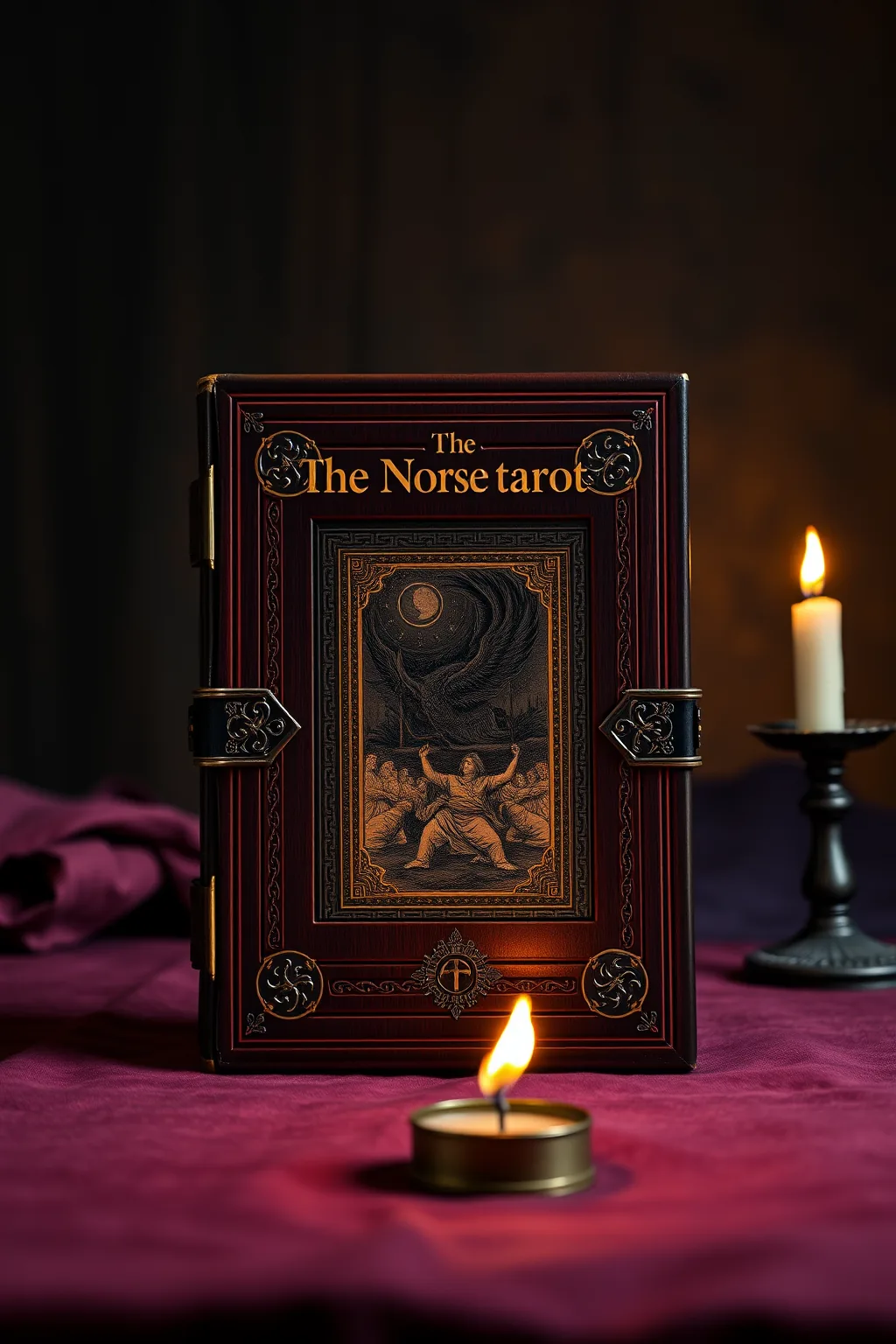
From the “Tarot” Collection
View all →
More Free Divination & Tarot Books
View all →