CIA Reading Room cia-rdp78b05700a000500130006-3: CABLE(SANITIZED)FROM DIRECTOR

 79
79

CIA Reading Room cia-rdp78b05700a000500130006-3: CABLE(SANITIZED)FROM DIRECTOR



Review by Celeste Moreau (Divination & Symbolism Reviewer) — This declassified cable is a fascinating artifact, offering a stark, albeit cryptic, testament to the CIA's historical engagement with esoteric tools. The mention of 'tarot materials' within a high-priority intelligence directive from 1958 is profoundly intriguing, suggesting a serious, albeit classified, exploration of divination's potential applications. While the content is largely obscured, the very fact of its classification and subsequent release speaks volumes about the perceived utility of such knowledge. It compels us to consider the veiled methodologies of intelligence agencies and the universal appeal of symbolic systems for understanding complex realities. An essential read for serious scholars of occult history and intelligence studies.
📝 Description
79
A 1958 CIA cable, originating from the Director, discusses 'assistance' and 'tarot materials.'
This document, cia-rdp78b05700a000500130006-3, comes from the CIA's Reading Room archives. It is a sanitized cable dated February 15, 1958, sent by the Director. The text mentions 'assistance' and 'tarot materials.' The context suggests an interest in using divination for intelligence or psychological evaluations during the Cold War.
This is not a guide to tarot reading. Instead, it serves as a historical artifact. It prompts reflection on how ancient symbolic systems were viewed and possibly used by significant institutions during that period. The document raises questions about concealed knowledge and humanity's ongoing interest in fate, prediction, and subtle influences on events. Its existence, classified and redacted, points to a hidden institutional curiosity about cosmic symbolism.
This cable touches on the historical engagement of governmental bodies with esoteric practices, specifically divination through tarot. It reflects a period where institutions, facing complex geopolitical challenges, may have investigated non-traditional methods for insight or advantage. This aligns with broader historical instances of interest in occult or symbolic systems by various powers seeking an edge, placing it within a long tradition of exploring hidden knowledge.
💡 Why Read This Book?
Uncover the clandestine curiosity surrounding divination and esoteric knowledge within a pivotal historical period. This declassified document offers a rare, albeit cryptic, insight into the potential intelligence applications of tarot. Ideal for historians, occult researchers, and anyone intrigued by the intersection of secret agencies and ancient symbolic systems. It's a glimpse into the hidden discussions that shaped perceptions of foresight.
⭐ Reader Reviews
Honest opinions from readers who have explored this book.
❓ Frequently Asked Questions
What is the primary subject of this declassified document?
The document, a sanitized cable from the CIA Director dated 1958, hints at inquiries related to divination and specifically mentions 'tarot materials,' suggesting an exploration of their potential use or understanding.
Why is this document considered 'esoteric'?
Its esoteric nature stems from its reference to divination tools like tarot, traditionally used for symbolic interpretation and foresight, within the context of a government intelligence agency's operations.
What is the significance of the redaction and classification?
The heavy redaction and classification underscore the sensitive or classified nature of the information, implying a strategic or covert interest in the subject matter that was deemed vital to national security at the time.
Who would find this document most interesting?
Historians, researchers of occult and esoteric practices, intelligence studies scholars, and individuals interested in the psychological and symbolic aspects of divination will find this document particularly compelling.
Does this document provide instructions on tarot reading?
No, this document is a historical communication and not a guide to tarot reading. Its value lies in its context as evidence of institutional interest in divination, not in its instructional content.
🔮 Key Themes & Symbolism
The Veiled Pursuit of Foresight
This theme examines the historical inclination of institutions, particularly governmental ones, to explore and potentially harness methods of foresight and divination. The document serves as a stark reminder that throughout history, seekers of knowledge and power have often looked beyond conventional means to understand future possibilities. The very act of classifying and declassifying such a document suggests a complex relationship with these practices – one of curiosity, potential utility, and perhaps even apprehension. It invites contemplation on why symbolic systems like tarot might have been considered relevant by intelligence agencies during a period of intense geopolitical tension, pushing us to consider the broader human impulse to predict and influence outcomes.
Symbolism as a Tool of Analysis
Beyond mere fortune-telling, esoteric systems like the tarot are rich with symbolic language. This theme explores how such symbolism might have been perceived by intelligence analysts as a potential framework for understanding complex geopolitical landscapes or human psychology. The archetypal imagery and narrative structures within tarot could offer a unique lens through which to interpret events or motivations that were otherwise opaque. The document prompts us to consider if these systems were viewed as a form of psychological profiling, predictive modeling, or even a means to decode hidden messages, thereby transforming abstract symbols into actionable intelligence.
The Intersection of the Arcane and the State
This theme examines the surprising, yet historically recurring, intersection of esoteric practices and state apparatuses. The declassified cable from the CIA Reading Room exemplifies this confluence, revealing that even during the height of the Cold War, elements within powerful governmental bodies were engaging with, or at least investigating, what might be considered 'occult' or 'mystical' disciplines. It challenges the common perception of such agencies as purely pragmatic and rational, hinting at a deeper, more complex engagement with the full spectrum of human knowledge and belief systems, particularly those that touch upon the unknown and the unquantifiable.
💬 Memorable Quotes
Direct passages from the work, attributed to the author.
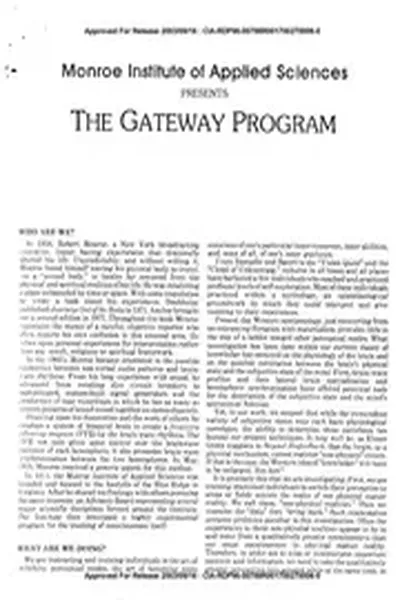
“Approved For Release 2007/08/10: CIA-RDP78BO570OA000500130006-3”
— This official stamp signifies the document's journey from classified secrecy to public record, marking a transition from hidden inquiry to historical artifact.
“CABLE(SANITIZED)FROM DIRECTOR”
— Highlights the authoritative origin and the deliberate obscuring of its specific content, emphasizing its sensitive nature.
“ASSISTANCE Sr-C TAROT NATM ALS P RPAL”
— A highly suggestive fragment indicating a request or discussion regarding tarot materials, hinting at their potential role in an 'assistance' capacity.
“PRIORITY”
— Underscores the urgency and importance placed on the subject matter by the Director, suggesting significant perceived value.
“DATE: 15 February 1958”
— Places the inquiry firmly within the Cold War era, a period of intense global tension and strategic interest in all forms of intelligence.
🌙 Esoteric Significance
Tradition
While not explicitly stated, the mention of 'tarot materials' directly links this document to the Western esoteric tradition, specifically those practices involving cartomancy and symbolic divination. This tradition often intertwines with Hermeticism, Kabbalah, and various forms of occult philosophy, where the tarot deck is viewed as a symbolic map of the cosmos and the human psyche. The document suggests an external institutional interest in these deeply symbolic systems.
Symbolism
The primary symbol here is the tarot itself, representing a complex system of archetypal imagery and narrative. The 'sanitized' nature of the cable implies that specific cards or interpretations were likely the focus. The act of classification and declassification also becomes a symbol, representing the tension between hidden knowledge and public record, and the state's complex relationship with the esoteric.
Modern Relevance
The modern relevance lies in understanding the enduring human fascination with foresight and the potential of symbolic systems to provide insight. It also highlights the historical continuity of institutional interest in exploring alternative knowledge domains for practical application, a trend that continues in contemporary discussions around consciousness studies and advanced psychological operations. The document serves as a historical touchstone for the ongoing dialogue between the rational and the intuitive.
👥 Who Should Read This Book
This document is a compelling read for a diverse audience. **Occult Historians** will find it important for its direct evidence of institutional engagement with divination. **Intelligence Studies Scholars** can use it to understand the breadth of methods explored during the Cold War. **Practitioners of Divination**, particularly tarot readers, may find it useful to see how their art was perceived by powerful entities. **Seekers of Hidden Knowledge** and those interested in the intersection of psychology, symbolism, and history will be drawn to its cryptic revelations. Even **General Readers** curious about the stranger corners of historical archives will find this a thought-provoking glimpse into the past.
📜 Historical Context
This document originates from February 15, 1958, a period deeply entrenched in the Cold War. The global political climate was dominated by the ideological struggle between the United States and the Soviet Union, leading to a heightened state of vigilance and an intense pursuit of intelligence across all possible avenues. Agencies like the CIA were actively exploring unconventional methods to gain an advantage, including psychological warfare, mind control experiments, and an interest in parapsychology and esoteric phenomena. The fascination with divination, such as tarot, during this era can be understood as part of a broader search for predictive capabilities and insights into the human psyche that might offer strategic benefits. The very fact that such a communication was deemed worthy of classification and later declassification speaks to the complex and often clandestine ways in which institutions grappled with the unknown.
📔 Journal Prompts
Reflect on the potential 'assistance' a government agency might seek from tarot materials. What specific questions could they have been trying to answer?
How does the act of classification and declassification shape our understanding of historical events and institutional motivations?
Consider the archetypal symbolism of the tarot. If you were to interpret this cable through a tarot spread, which cards might emerge, and what would they signify?
What does this document suggest about the boundaries between accepted knowledge and esoteric practices in the mid-20th century?
Imagine you are an analyst receiving this cable in 1958. What would be your immediate thoughts, concerns, and potential actions?
🗂️ Glossary
Sanitized
Refers to a document from which sensitive or classified information has been removed or obscured, typically through blacking out text, before public release.
Cable
A message transmitted electronically, often used in diplomatic and intelligence contexts for rapid communication.
Director
The highest-ranking official of an organization, in this context, the Director of the Central Intelligence Agency (CIA).
Divination
The practice of seeking knowledge of the future or the unknown by supernatural means, often through methods like tarot reading, astrology, or scrying.
Tarot Materials
Refers to the cards, decks, or associated literature used in the practice of tarot reading, a form of divination using a deck of cards with symbolic imagery.
This book appears in 3 collections
🔮 Readers Also Liked
Browse all →


![The history of England from the accession of James the Second [2/5]](/img/thumb/the-history-of-england-from-the-accession-of-james-the-second-2-5-thomas-babington-macaulay.webp)






More by CIA Reading Room
All books →



From the “Tarot” Collection
View all →








More Free Divination & Tarot Books
View all →