Tarot
 77
77

Tarot
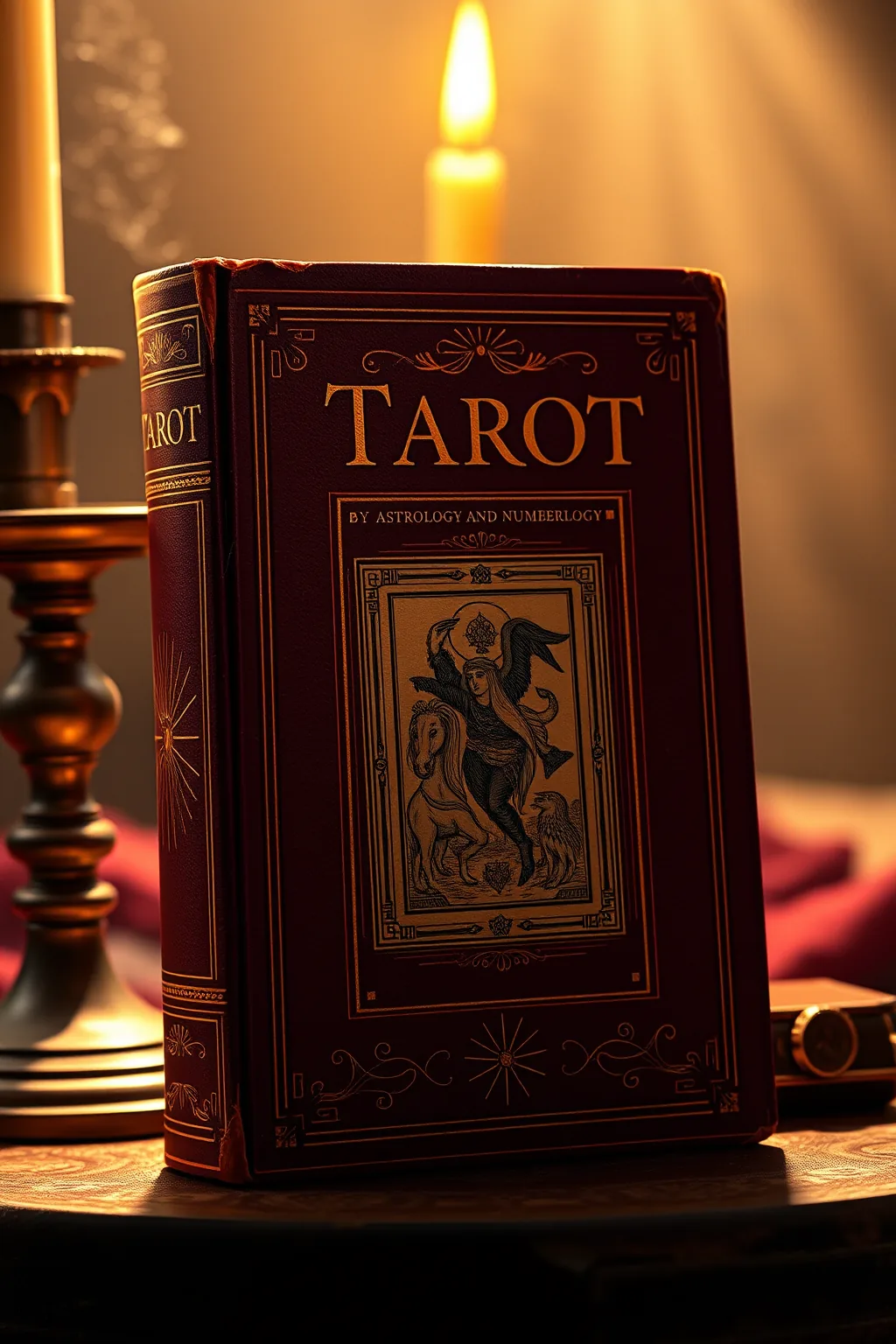
Astrology And Numerology Academy's "Tarot" offers a remarkably direct pathway into cartomancy, eschewing overly academic or spiritualized jargon for pragmatic instruction. Its strength lies in its clarity; by focusing on immediate interpretation techniques, it successfully lowers the barrier to entry for absolute novices. The explanation of how the Minor Arcana's suits correspond to elemental energies and life areas is particularly well-articulated. However, the book's conciseness, while beneficial for beginners, may leave those with some existing knowledge wanting more depth. The interpretation of the Fool card, for instance, feels somewhat abbreviated, missing opportunities to explore its more nuanced philosophical implications. Ultimately, "Tarot" is a functional primer, best suited for those taking their very first steps into card reading.
📝 Description
77
Published in 2020, this guide breaks down the 78-card Tarot deck for new readers.
This book aims to make Tarot accessible for beginners, focusing on intuitive interpretation over memorization. It explains the structure of a standard 78-card deck, differentiating the Major and Minor Arcana. The text provides practical tools for reading cards, encouraging readers to connect with symbolic narratives in divination. It is designed for those interested in developing psychic abilities or understanding subconscious patterns through card imagery. The material is presented in a straightforward manner, suitable for individuals starting their Tarot practice regardless of the specific deck they use.
The book covers core concepts like the symbolic meanings of the Major Arcana, representing life lessons and archetypal energies, and the Minor Arcana, detailing everyday events and practical matters. Readers will learn about the four suits: Wands, Cups, Swords, and Pentacles, as well as the roles of the court cards—Page, Knight, Queen, and King—and the significance of numbered cards within each suit.
The practice of Tarot divination has roots stretching back to the late 18th century, evolving from earlier card games. While early decks served different purposes, their imagery established a visual language. This book acknowledges that history, offering a contemporary perspective on established symbolic systems. It fits within a broader renewed interest in esoteric practices that emerged in the late 19th century and continues today, influenced by figures who sought to codify and interpret these traditions.
💡 Why Read This Book?
• Learn to interpret the 22 Major Arcana cards, such as The Fool, by understanding their role in depicting significant life lessons and archetypal energies, as detailed in the book's foundational concepts. • Gain practical skills for reading the Minor Arcana’s four suits—Wands, Cups, Swords, and Pentacles—to gain clarity on everyday situations and challenges. • Develop an intuitive connection with any Tarot deck by following the clear, concise guide designed for immediate application, as emphasized in the book's introductory sections.
⭐ Reader Reviews
Honest opinions from readers who have explored this book.
❓ Frequently Asked Questions
What is the difference between the Major and Minor Arcana in Tarot?
The Major Arcana, typically 22 cards, represent significant life lessons, spiritual awakenings, and archetypal forces. The Minor Arcana, 56 cards divided into four suits, reflect daily events, practical matters, and personal challenges.
Can I use this book with any Tarot deck?
Yes, the book is designed for use with any standard 78-card Tarot deck. It focuses on the core meanings and symbolic language common to most decks, rather than specific artwork variations.
What are the four suits of the Minor Arcana?
The four suits are Wands (often associated with creativity, passion, and action), Cups (emotions, relationships, intuition), Swords (intellect, conflict, truth), and Pentacles (material world, finances, work).
How does this book help develop psychic power?
The book aims to enhance psychic awareness by guiding readers to connect with their subconscious through the symbolic language of Tarot. It fosters intuitive interpretation skills, which are key to developing psychic abilities.
Is "Tarot" suitable for someone who has never seen a Tarot deck before?
Absolutely. The book is explicitly written for beginners and assumes no prior knowledge. It provides a clear, step-by-step introduction to the cards and their meanings.
When was "Tarot" by Astrology And Numerology Academy first published?
The first publication date for this edition is October 10, 2020. This reflects a modern approach to classic esoteric teachings.
🔮 Key Themes & Symbolism
Archetypes of the Major Arcana
The Major Arcana serves as the narrative spine of the Tarot, detailing the archetypal journey of the soul. Cards like The Fool, The Magician, and The High Priestess represent fundamental human experiences, spiritual lessons, and transformative stages. This book explains how these 22 powerful cards act as signposts for major life events and personal growth, offering guidance on confronting challenges and embracing opportunities inherent in these universal patterns.
The Four Elements and Minor Arcana
The Minor Arcana's structure is deeply rooted in the classical elements, with each of the four suits (Wands, Cups, Swords, Pentacles) corresponding to Fire, Water, Air, and Earth respectively. This book elucidates how these elemental correspondences shape the interpretation of daily events, relationships, thoughts, and material concerns. Understanding this connection allows readers to see the flow of energy and influence in their lives through the lens of the cards.
Intuitive Interpretation Techniques
Beyond memorizing card meanings, the book emphasizes developing an intuitive connection with the Tarot. It guides readers on how to blend symbolic knowledge with personal insight, encouraging them to trust their inner voice during readings. This approach transforms Tarot from a mere predictive tool into a method for self-discovery and accessing subconscious wisdom, fostering a deeper dialogue with the higher self.
Practical Application for Clarity
The primary aim of this guide is to provide practical utility for everyday life. It teaches readers how to use Tarot cards to gain clarity on confusing situations, make decisions, and understand underlying dynamics. By presenting straightforward interpretations and reading methods, the book empowers individuals to actively engage with the Tarot for problem-solving and personal guidance.
💬 Memorable Quotes
Direct passages from the work, attributed to the author.
“The Tarot experience can indeed be empowering, bringing clarity to confusing situations.”
— This highlights the book's central promise: Tarot is not just symbolic; it's a practical tool for gaining insight and resolving uncertainty in one's life.
“Tarot for Beginners is a clear, concise guide designed to get you reading the cards right away.”
— This statement underscores the book's pedagogical approach, focusing on immediate usability and accessibility for those new to the practice.
“Ideal for use with any Tarot card deck, this friendly book will help you tap into the power and wisdom of the cards.”
— This emphasizes the universal applicability of the book's teachings, assuring readers that its principles apply regardless of the specific deck they own.
“Want to harness your psychic power and develop a deeper connection to your higher self and subconscious?”
— This question frames Tarot reading as a spiritual and psychological practice, aiming to unlock inner potential and facilitate self-understanding.
“Explore the magic of Tarot cards.”
— This invites the reader into the mystical and wondrous aspects of Tarot, suggesting that the practice holds a special kind of enchantment.
🌙 Esoteric Significance
Tradition
This work fits within the Western Esoteric tradition, specifically its cartomantic branch. It draws upon the established symbolic systems largely popularized by occultists like Eliphas Lévi and A.E. Waite, who integrated Kabbalistic and Hermetic principles into Tarot interpretation. While not looking at arcane ceremonial magic, it presents Tarot as a practical means of accessing subconscious wisdom and spiritual guidance, aligning with the Theosophical and New Age emphasis on inner development.
Symbolism
Key symbols include the archetypes of the Major Arcana, such as The Fool representing potential and beginnings, and The High Priestess embodying intuition and hidden knowledge. The four suits of the Minor Arcana—Wands (Fire), Cups (Water), Swords (Air), and Pentacles (Earth)—are central, symbolizing distinct domains of human experience: passion/action, emotion/relationships, intellect/conflict, and the material world/security.
Modern Relevance
Contemporary practitioners of divination, self-help coaches, and enthusiasts of Jungian psychology often utilize Tarot as presented in works like this. Its straightforward approach appeals to modern seekers looking for accessible tools for introspection and personal growth, bridging the gap between ancient symbolism and 21st-century spiritual seeking. It informs modern practices focused on mindfulness and intuitive development.
👥 Who Should Read This Book
['• Absolute beginners to Tarot seeking a clear, step-by-step introduction to card meanings and basic reading techniques.', '• Individuals interested in developing their intuition and connecting with their subconscious through symbolic language.', '• Those looking for a practical tool to gain clarity and guidance on everyday life situations and decisions.']
📜 Historical Context
The late 18th century marked the true emergence of Tarot as a tool for occult and divinatory practices, moving beyond its origins as a card game. Antoine Court de Gébelin’s writings in the 1780s, linking Tarot to ancient Egyptian mysteries, were highly influential. Later, figures like Eliphas Lévi in the 19th century further codified its esoteric associations, particularly with Kabbalah. The early 20th century saw the publication of A.E. Waite and Pamela Colman Smith’s Rider-Waite deck in 1909, which standardized many interpretations and imagery still prevalent today. This book, published in 2020, operates within this long-standing esoteric tradition, yet its accessible format reflects a modern resurgence of interest in practical divination, often competing with more complex grimoires or academic studies of Western esotericism.
📔 Journal Prompts
The Fool's journey: Reflect on the concept of a new beginning and the inherent risks involved.
Reflect on the symbolic meaning of the Cups suit in relation to your emotional landscape.
Consider the core message of The Magician card in the context of your personal power.
Analyze the role of Swords in your life – how does intellect or conflict manifest?
Contemplate the practical advice offered by the Pentacles suit for material stability.
🗂️ Glossary
Major Arcana
The 22 trump cards in a Tarot deck, representing significant life lessons, spiritual themes, and archetypal influences on a person's journey.
Minor Arcana
The 56 cards in a Tarot deck, divided into four suits, which typically represent everyday events, challenges, and circumstances.
Suits
The four divisions of the Minor Arcana: Wands, Cups, Swords, and Pentacles. Each suit is associated with an element and a specific area of life experience.
Court Cards
The Page, Knight, Queen, and King cards found within each suit of the Minor Arcana, often representing people or specific personality types.
Divination
The practice of seeking knowledge or insight into the future or the unknown through supernatural means, such as interpreting Tarot cards.
Higher Self
A spiritual or psychological concept referring to one's true, authentic, or most evolved consciousness, often seen as a source of wisdom and guidance.
Subconscious
The part of the mind of which one is not fully aware and from which memories, desires, and feelings can influence behavior. Tarot is often used to access this realm.