76
76

Summa Theologica



Ophelia Vance (Mystical Literature Reviewer) — Thomas Aquinas's *Summa Theologica* stands as a titan of Western thought, yet its true esoteric value lies in its rigorous examination of divine revelation and inspired knowledge. Aquinas's treatment of prophecy, for instance, reveals a sophisticated understanding of how divine truth can permeate the material world, even beyond the confines of mortal life. This work is essential for scholars of comparative mysticism and theologians seeking to bridge classical philosophy with spiritual insight. Its strength lies in its systematic approach, making complex metaphysical concepts accessible through logical exposition. Recommended for those who appreciate deep intellectual exploration into the nature of the sacred and the mechanisms of spiritual communication.
📝 Description
Delve into the profound intellectual cosmos of Thomas Aquinas's *Summa Theologica*, a monumental work that transcends mere theological discourse to explore the very architecture of divine knowledge and human understanding. Within its vast expanse lies a hidden reservoir of esoteric wisdom, particularly concerning the nature of prophecy, divine inspiration, and the subtle currents of spiritual illumination. Aquinas meticulously dissects concepts that resonate deeply with seekers of hidden truths, examining the ethereal whispers of the divine that can manifest through human vessels, even in their physical repose. This is not a text of simple dogma, but a labyrinth of reasoned contemplation, inviting the dedicated scholar, the curious mystic, and the philosopher of the sacred to unravel the intricate tapestry of existence and the conduits through which ultimate reality communicates. Its pages offer a rare glimpse into the medieval mind’s grappling with the ineffable, presenting a philosophical framework that continues to illuminate the perennial quest for transcendence and the understanding of veiled spiritual phenomena.
✍️ Author
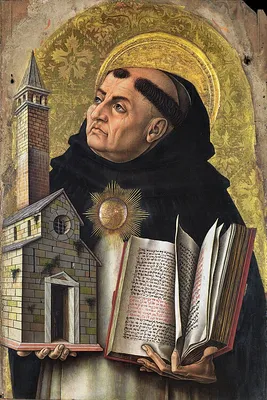
Thomas Aquinas
Thomas Aquinas ( ə-KWY-nəs; Italian: Tommaso d'Aquino, lit. 'Thomas of Aquino'; c.
💡 Why Read This Book?
Embark on a journey to grasp the mechanics of divine inspiration and prophecy as meticulously analyzed by a master theologian. *Summa Theologica* offers unparalleled insights into how spiritual truths are perceived and transmitted, making it invaluable for scholars, theologians, and practitioners of esoteric arts seeking a foundational understanding of divine communication and veiled knowledge.
⭐ Reader Reviews
Honest opinions from readers who have explored this book.
❓ Frequently Asked Questions
What is the primary focus of the Summa Theologica?
The *Summa Theologica* primarily focuses on systematizing Christian theology, exploring God, creation, humanity's purpose, and the path to salvation through faith and reason. It covers a vast array of philosophical and theological questions.
How does the Summa Theologica relate to esoteric traditions?
While not an esoteric text in the modern sense, its deep dives into divine attributes, the nature of knowledge, prophecy, and the soul offer profound philosophical underpinnings that resonate with esoteric inquiry into hidden truths and spiritual illumination.
Is the Summa Theologica accessible to beginners?
The *Summa Theologica* is a complex academic work, demanding significant intellectual engagement. However, its structured approach can make it navigable for dedicated beginners willing to study its arguments systematically, perhaps with supplementary guides.
What is the significance of Aquinas's discussion on prophecy?
Aquinas treats prophecy as a form of divine knowledge, distinguishing it from mere human foresight. His analysis explores its divine origin, its manifestation, and its role in conveying God's will, offering a theological perspective on supra-rational insight.
Can the Summa Theologica be considered a divination text?
No, the *Summa Theologica* is not a divination text in the common sense. It analyzes prophecy from a theological perspective, focusing on divine revelation rather than predictive methods. However, its exploration of divine knowledge is relevant to understanding spiritual insight.
🔮 Key Themes & Symbolism
The Nature of Divine Knowledge and Revelation
This theme delves into Aquinas's exploration of how God's perfect knowledge is communicated to humanity. It examines the channels of divine revelation, the role of scripture, tradition, and the intellect in apprehending divine truths. The text scrutinizes the very possibility of knowing God and the limitations and possibilities of human reason in grasping ultimate realities, laying a foundation for understanding inspired insights and veiled truths.
Prophecy and Spiritual Illumination
Aquinas dissects the concept of prophecy not as mere fortune-telling, but as a divine gift bestowing knowledge of future events or hidden truths. This section explores the theological framework for prophecy, its relationship to faith and reason, and how it serves as a conduit for divine will. The text examines the spiritual state required for receiving such illumination and its impact on individuals and the broader community.
The Intellect and the Soul's Ascent
This theme focuses on Aquinas's intricate philosophy of the human intellect and its capacity for both earthly understanding and spiritual ascent. It investigates how the soul, through contemplation and divine grace, can move towards a deeper apprehension of God. The discussions on virtues, contemplation, and the ultimate beatific vision offer a profound, albeit theological, perspective on the soul's journey towards enlightenment and union with the divine.
💬 Memorable Quotes
“Prophecy is not a form of knowledge.”
— This paradoxical statement challenges conventional views, suggesting prophecy operates beyond typical human cognitive processes, hinting at a divine infusion of understanding.
“When he was dead his body prophesied.”
— Illustrates the enduring power of divine influence, suggesting spiritual gifts can transcend physical death, a concept resonating with relics and post-mortem spiritual presence.
“His bones were visited and they prophesied.”
— Reinforces the idea of sacred objects or places retaining spiritual efficacy, enabling divine communication even through inanimate matter, a theme found in many mystical traditions.
“The light of God is the cause of intellectual knowledge.”
— Highlights the divine origin of all true understanding, positioning God as the ultimate source of insight, which is foundational to appreciating inspired or prophetic knowledge.
“Grace does not destroy nature, but perfects it.”
— A cornerstone of Thomistic thought, suggesting divine intervention enhances, rather than supplants, natural human faculties, including the capacity for spiritual perception.
🌙 Esoteric Significance
Tradition
While primarily a scholastic theological work, the *Summa Theologica*'s exploration of divine knowledge, prophecy, the soul's journey, and the nature of spiritual illumination resonates deeply with Neoplatonic and Hermetic traditions. Its systematic approach to understanding veiled realities provides a philosophical framework that esoteric scholars can use to contextualize their own investigations into mystical experiences and divine contact.
Symbolism
Key symbols implicitly explored include divine light as the source of knowledge, the soul's ascent as a journey towards spiritual purity, and prophecy as a manifestation of God's direct communication. The very structure of the *Summa*, with its questions, objections, and replies, can be seen as a symbolic representation of the dialectical process of uncovering truth, moving from initial confusion to reasoned clarity.
Modern Relevance
In an age often characterized by fragmentation and empirical reductionism, the *Summa Theologica*'s rigorous intellectual framework offers a counterpoint, demonstrating the enduring power of reasoned contemplation and metaphysical inquiry. Its discussions on divine inspiration, the nature of truth, and the possibility of higher knowledge remain relevant for contemporary seekers of wisdom, providing a robust philosophical basis for exploring spiritual phenomena and the limits of human understanding.
👥 Who Should Read This Book
Scholars of theology and philosophy will find the *Summa Theologica* indispensable for its systematic exposition of Christian doctrine and its engagement with classical thought. Mystics and esoteric practitioners can benefit from its profound insights into divine knowledge, prophecy, and the soul's journey towards illumination, offering a robust intellectual grounding for their spiritual pursuits. Beginners interested in the history of Western thought and complex metaphysical ideas will find it a challenging but rewarding read, best approached with supplementary resources. Those seeking to understand the philosophical underpinnings of faith and reason will find a comprehensive and articulate guide.
📜 Historical Context
Written in the 13th century, the *Summa Theologica* emerged during the High Middle Ages, a period marked by the resurgence of classical philosophy, particularly Aristotle, and the flourishing of scholasticism. Thomas Aquinas, a Dominican friar, sought to synthesize Aristotelian logic and metaphysics with Christian doctrine, creating a comprehensive system of theology. This era was characterized by a fervent intellectual curiosity within the Church, aiming to reconcile faith and reason. The *Summa* became a foundational text for Catholic theology, influencing countless scholars and shaping Western thought for centuries. Its meticulous structure and comprehensive scope reflected the medieval desire for ordered knowledge and a unified understanding of God's creation.
📔 Journal Prompts
Reflect on a moment where you felt a strong sense of intuitive knowledge or insight. How did this differ from your usual thought processes?
Consider the concept of divine communication. In what ways do you believe divine truths can be revealed beyond empirical observation?
Aquinas discusses prophecy as a divine gift. How might such 'gifts' manifest in contemporary life, and how can they be discerned?
Explore the relationship between faith and reason in your own spiritual or philosophical journey. Where do they complement each other, and where do they diverge?
Meditate on the idea of 'perfection' in knowledge. What does it mean to possess perfect knowledge, and how does human knowledge strive towards it?
🗂️ Glossary
Scholasticism
A medieval method of critical thought which dominated the academic world. It is characterized by the rigorous application of logic and dialectic to analyze and synthesize existing knowledge, particularly in theology and philosophy.
Theology
The study of the nature of God and religious belief. In the context of the Summa, it refers to the systematic and rational exploration of Christian doctrine and divine revelation.
Prophecy
In Thomistic theology, a supernatural gift of knowledge bestowed by God, enabling the recipient to know future events or hidden truths, serving as a divine revelation rather than mere human prediction.
Intellect
The faculty of the mind by which one knows or understands. Aquinas distinguishes between the active and passive intellect, exploring its role in acquiring knowledge and moving towards spiritual understanding.
Divine Illumination
The concept that true knowledge and understanding originate from God's direct influence on the human mind, enabling the intellect to grasp truths that transcend sensory experience.