I Ching
 61
61

I Ching



Celeste Moreau (Divination & Symbolism Reviewer) — The I Ching, as presented by Amber Books, is an indispensable portal into one of the world's most ancient and enduring wisdom traditions. This edition masterfully distills the complex symbolism of the hexagrams, rendering its profound esoteric insights accessible without sacrificing its mystical depth. It illuminates the interplay of Yin and Yang, the six lines of each hexagram, and their dynamic transformations, offering a powerful tool for self-reflection and guidance. Ideal for seasoned practitioners and curious newcomers alike, this volume serves as a reliable compass for navigating the inevitable cycles of change, fostering a deeper connection to the universal currents that govern our lives.
📝 Description
61
First compiled around the 9th century BCE, the I Ching is a classic Chinese divination text.
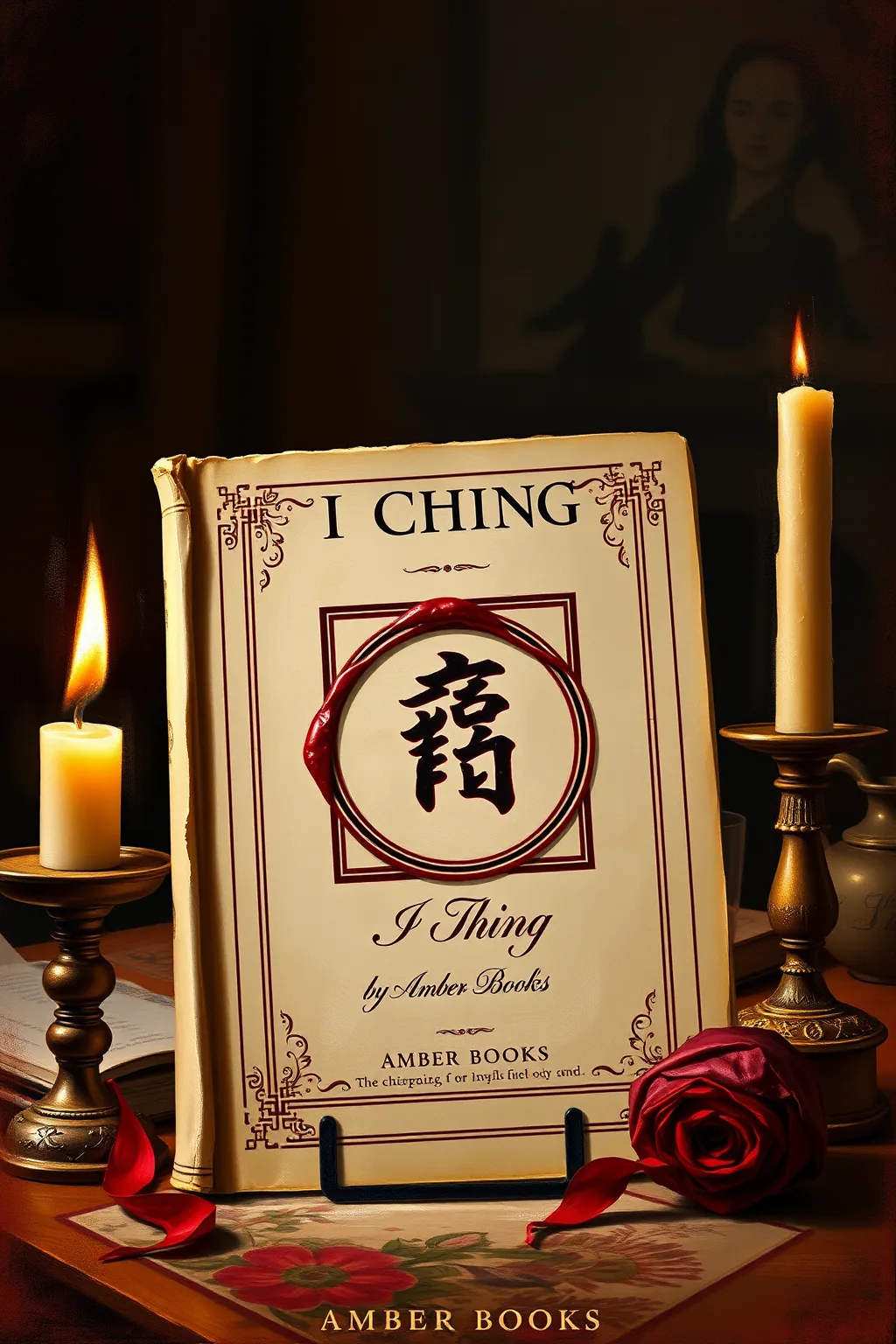
This edition of the I Ching, published by Amber Books, presents the ancient Chinese text known as the 'Book of Changes.' It contains 64 hexagrams, which are symbolic representations of various situations and archetypes. The book aims to guide readers through understanding shifting energies and patterns in both human life and the natural world. It reflects the interconnectedness of events and offers insights into fortune. The I Ching is intended for those interested in philosophy, hidden knowledge, or aligning with the Tao. Its philosophical content addresses causality, fate, and the role of choice. This work serves as an oracle, containing wisdom relevant to fundamental human questions.
The I Ching is a central text in Chinese philosophy and divination, dating back thousands of years. It is considered one of the oldest Chinese classics. Its system of hexagrams, derived from combinations of yin and yang lines, provides a framework for understanding change and predicting outcomes. It is deeply intertwined with Taoist principles and has influenced various schools of thought, including Confucianism. Its practice often involves consulting the text for guidance on personal decisions and understanding the flow of events.
💡 Why Read This Book?
Unravel the enigmatic wisdom of the 'Book of Changes.' This edition provides a clear yet profound exploration of the I Ching's hexagrams and their symbolic language, empowering you to understand life's cycles and make informed decisions. It is an essential resource for spiritual seekers, students of ancient philosophies, and anyone wishing to cultivate inner harmony and foresight.
⭐ Reader Reviews
Honest opinions from readers who have explored this book.
❓ Frequently Asked Questions
What is the I Ching?
The I Ching, or 'Book of Changes,' is an ancient Chinese divination text and philosophical classic. It uses a system of 64 hexagrams, formed from combinations of six broken (Yin) and unbroken (Yang) lines, to interpret situations and predict future developments.
How is the I Ching used for divination?
Traditionally, divination involves casting yarrow stalks or coins to generate a hexagram. This hexagram, along with its changing lines, is then interpreted using the text's commentary to gain insight into a present situation or question.
What are the key philosophical concepts in the I Ching?
Central concepts include the dynamic interplay of Yin and Yang, the cyclical nature of change, the harmony of heaven, earth, and humanity, and the importance of adapting one's actions to the prevailing circumstances.
Is the I Ching only for divination?
While renowned for its divinatory aspects, the I Ching is also a profound philosophical text offering guidance on ethics, strategy, personal growth, and understanding the natural order of the universe.
Who is the intended audience for this edition?
This edition is suitable for anyone interested in Eastern philosophy, divination, symbolism, or seeking a deeper understanding of life's transformations. It caters to both beginners and those with prior knowledge.
🔮 Key Themes & Symbolism
The Dance of Yin and Yang
At the heart of the I Ching lies the fundamental principle of Yin and Yang, the complementary and interdependent forces that shape all phenomena. This duality is not one of opposition but of dynamic equilibrium, a constant flux that drives creation and transformation. The text illustrates how these forces manifest in nature, human relationships, and personal development, offering a profound understanding of balance and harmony as the foundation for a well-lived life. Understanding this interplay is key to deciphering the hexagrams and working through the ebb and flow of existence.
The Science of Change and Transformation
The I Ching is fundamentally a manual for understanding and navigating change. It posits that the universe is in perpetual motion, and wisdom lies in recognizing the patterns of transformation and adapting oneself accordingly. Each of the 64 hexagrams represents a unique situation and its potential evolution, providing a framework for anticipating shifts and responding with insight and flexibility. This perspective moves beyond fatalism, emphasizing the power of conscious choice and timely action in shaping one's destiny amidst the ever-changing tides of life.
Archetypal Situations and Human Destiny
The hexagrams of the I Ching are not mere random symbols but archetypal representations of the fundamental situations and challenges that humanity has faced throughout history. From beginnings and growth to conflict and completion, these archetypes offer a mirror to our own experiences, revealing the underlying patterns that govern our personal journeys and collective endeavors. By contemplating these archetypal narratives, readers can gain profound self-awareness, understand the forces at play in their lives, and find guidance for aligning their actions with the cosmic flow.
💬 Memorable Quotes
Direct passages from the work, attributed to the author.
“The superior man acts without giving up and succeeds without taking credit.”
— This aphorism speaks to the principle of effortless action aligned with the Tao, where efficacy arises from natural flow rather than forceful exertion or egoic attachment to outcomes.
“When you are in doubt, it is best to stop.”
— This highlights the wisdom of pause and introspection when faced with uncertainty, suggesting that decisive action without clarity can lead to greater complications.
“The superior man understands the dictates of heaven.”
— This emphasizes the importance of aligning one's will and actions with the natural order and cosmic principles, seeking harmony with the greater forces at play.
“To know the changes is to know the future.”
— This profound statement underscores the predictive and insightful power of the I Ching, suggesting that understanding the patterns of change allows one to foresee and navigate future developments.
“Hold fast to the central way.”
— This encourages adherence to moderation, balance, and integrity, avoiding extremes and maintaining a steady course amidst life's fluctuations.
🌙 Esoteric Significance
Tradition
The I Ching is a core part of Chinese esoteric traditions, deeply interwoven with Taoism and its emphasis on the Tao, the primordial unity and the natural order of the universe. It also holds significance within the philosophical underpinnings of Confucianism, particularly in its ethical teachings and guidance for governance. Within a broader esoteric context, it serves as a universal oracle, a map of cosmic and human cycles that speaks to hermetic principles of 'as above, so below' and the interconnectedness of all phenomena.
Symbolism
The core symbolism of the I Ching resides in its 64 hexagrams, each composed of six lines (solid for Yang, broken for Yin). These lines and their combinations represent archetypal situations, natural phenomena, and human relationships. The trigrams (three-line combinations) within hexagrams further amplify these meanings, depicting fundamental elements like Heaven, Earth, Water, Fire, and so forth. The dynamic transformation of hexagrams, where lines change from Yin to Yang or vice versa, symbolizes the perpetual flow of energy and the inevitable evolution of all things.
Modern Relevance
In the modern era, the I Ching continues to offer profound relevance as a tool for self-discovery, ethical guidance, and navigating complex life decisions. Its emphasis on adaptability, balance, and understanding cyclical patterns provides a powerful antidote to the anxieties of a rapidly changing world. Psychologically, it offers archetypal insights akin to Jungian concepts, aiding in individuation. For practitioners of divination, it remains a sophisticated system for divination, while for philosophers, it presents timeless wisdom on the nature of reality and human existence.
👥 Who Should Read This Book
This edition of the I Ching is a treasure for a diverse audience. **Beginners** will find a clear, accessible entry point into this ancient wisdom, explaining its complex symbolism. **Scholars** of Eastern philosophy and comparative religion will appreciate its depth and historical context. **Spiritual seekers** and those on a path of self-discovery will find it an invaluable guide for introspection and understanding life's journey. **Practitioners** of divination and esoteric arts will discover a powerful, nuanced oracle for guidance and insight. Ultimately, anyone seeking greater wisdom, clarity, and harmony with the natural flow of life will benefit immensely.
📜 Historical Context
The I Ching's origins are shrouded in the mists of antiquity, predating written history and attributed by legend to the sage-emperor Fu Xi. Its early development is intertwined with the shamanistic practices and cosmological observations of ancient China. Over millennia, it evolved from a divination tool into a profound philosophical and ethical treatise, influenced by Confucianism and Taoism. During the Zhou Dynasty (c. 1046–256 BCE), its text and commentaries were compiled and refined, solidifying its status as one of the Five Classics. Its influence extended far beyond China, impacting Korean, Japanese, and Vietnamese thought, and eventually reaching the Western world, where it has captivated philosophers, psychologists, and spiritual seekers alike.
📔 Journal Prompts
Reflect on a recent situation where you felt caught between two opposing forces (Yin and Yang). How did you navigate this tension?
Consider a time when adapting to change was difficult. What hexagram might represent that situation, and what lesson did you learn?
Identify a personal challenge you are currently facing. What archetype does this challenge embody, and what wisdom can the I Ching offer?
How can you better align your daily actions with the natural rhythms of the universe, as suggested by the I Ching?
Explore a situation where you acted decisively without full clarity. What were the consequences, and how might a pause have altered the outcome?
🗂️ Glossary
Hexagram
A symbol composed of six stacked lines, either solid (Yang) or broken (Yin). There are 64 unique hexagrams in the I Ching, each representing a specific situation or archetype.
Trigram
A basic symbol composed of three stacked lines (Yang or Yin). There are eight trigrams, representing fundamental elements and concepts like Heaven, Earth, Water, Fire, etc.
Yang
In the I Ching, represented by a solid line (—). It symbolizes active, masculine, light, and creative principles.
Yin
In the I Ching, represented by a broken line (--). It symbolizes passive, feminine, dark, and receptive principles.
Tao
The fundamental principle in Taoism, referring to the natural order of the universe, the way, or the path. The I Ching is seen as a reflection of the Tao.
This book appears in 3 collections
🔮 Readers Also Liked
Browse all →









From the “Tarot” Collection
View all →








More Free Divination & Tarot Books
View all →