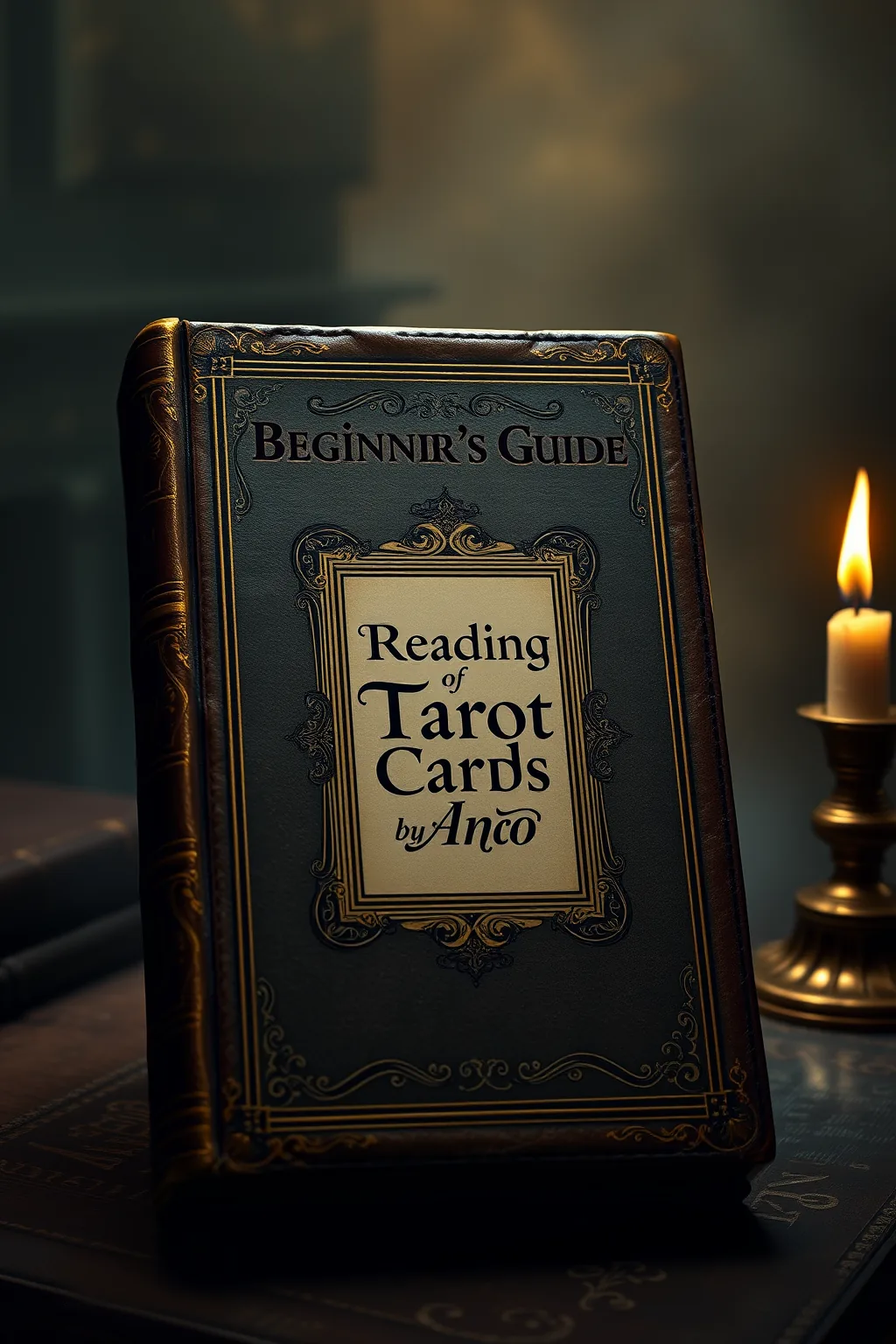
Beginner's Guide to Reading Tarot Cards - a Helpful Guide for Anybody with an Interest in Reading Cards
 61
61

Beginner's Guide to Reading Tarot Cards - a Helpful Guide for Anybody with an Interest in Reading Cards



Lorelei Sage (Contemplative Literature Editor) — This 'Beginner's Guide to Reading Tarot Cards' is a rare gem, offering a clear yet deeply resonant entry into the esoteric art of cartomancy. The author, though anonymous, possesses a remarkable gift for demystifying complex symbolism, presenting the tarot not as a rigid oracle, but as a dynamic system of psychological and spiritual exploration. Its strength lies in its accessible approach, fostering confidence in absolute beginners while offering valuable insights for those with nascent interests. This book is an ideal companion for anyone seeking to cultivate their intuition and engage with the archetypal wisdom embedded within the tarot's vibrant imagery.
📝 Description
61
Published anonymously, this 2014 guide aims to teach anyone interested in reading tarot cards.
This book introduces the basics of tarot card reading for newcomers. It explains the meanings behind the Major and Minor Arcana cards, presenting them as tools for self-understanding rather than just fortune-telling. The text encourages intuition and provides a quiet space for learning. It aims to help readers transform everyday questions into deeper insights by using the symbolism found in the cards. The guide intends to connect readers with the mystical forces that influence life. It is designed for those beginning their study of the tarot.
The author treats the tarot as a system of archetypes and cosmic energies. Readers learn how to interpret the symbolic language within the deck. The book focuses on developing a personal connection to the cards and understanding their role in self-awareness. It is structured to be accessible to those with no prior knowledge of the tarot.
This guide sits within the Western esoteric tradition of tarot, which views the cards as a symbolic system reflecting universal archetypes and psychological principles. Unlike purely divinatory approaches, this book emphasizes the tarot's potential for introspection and personal growth. It aligns with hermetic and occult philosophies that seek hidden knowledge through symbolic interpretation, positioning the tarot as a mirror to the inner self and a map for understanding life's complexities.
💡 Why Read This Book?
This guide is essential for anyone feeling the subtle call of the cards. It provides a clear, unpretentious pathway into understanding tarot symbolism, transforming it from an esoteric mystery into an accessible tool for self-discovery. Ideal for curious beginners, spiritual seekers, and those wishing to deepen their intuitive practice, it demystifies the process and empowers readers to forge their own unique connection with this ancient art.
⭐ Reader Reviews
Honest opinions from readers who have explored this book.
❓ Frequently Asked Questions
What is the primary purpose of this beginner's guide?
This guide aims to provide a clear and accessible introduction to the fundamental principles of tarot card reading, focusing on understanding symbolism, interpretation techniques, and developing intuitive skills for personal insight and guidance.
Do I need any prior knowledge of the occult to use this book?
No prior knowledge of the occult is necessary. The book is designed for complete beginners, explaining concepts and terminology in an easy-to-understand manner, making the tarot accessible to everyone.
How does this guide approach the interpretation of tarot cards?
It emphasizes a holistic approach, combining the traditional meanings of the cards with intuition and context. The guide encourages readers to develop their personal connection to the symbolism and to consider the spread and the querent's question.
What kind of tarot deck is recommended for beginners using this guide?
While the guide is versatile, it implicitly references decks with rich symbolism, such as the Rider-Waite-Smith or its derivatives, as they are often the most visually and thematically accessible for learning core archetypes.
Can this guide help me predict the future?
The guide focuses on tarot as a tool for self-reflection, understanding present energies, and exploring potential future paths, rather than deterministic fortune-telling. It empowers readers to make informed choices.
🔮 Key Themes & Symbolism
The Language of Symbols
This guide examines the profound symbolic lexicon of the tarot, presenting each card as a potent archetype imbued with layers of meaning. From the elemental energies of the Minor Arcana to the grand archetypal journeys of the Major Arcana, readers are encouraged to see the cards not as random images, but as a visual language that mirrors the human condition. The book illuminates how these ancient symbols connect us to universal truths, offering insights into our inner landscape and the external forces at play in our lives. Understanding this symbolic grammar is the first step to unlocking the tarot's transformative power.
Cultivating Intuitive Connection
Beyond rote memorization of card meanings, this guide champions the development of intuitive perception. It guides the reader in fostering a symbiotic relationship with the tarot deck, encouraging them to trust their inner voice and personal resonance with the imagery. Through practical exercises and reflective prompts, the book teaches how to move beyond the 'dictionary' definition of a card and tap into its felt sense. This cultivates a more dynamic and personalized reading experience, transforming the tarot from a mere tool into a trusted confidante and guide.
Tarot as a Mirror to the Soul
This work presents the tarot as a profound psycho-spiritual mirror, reflecting the querent's inner state, challenges, and potential pathways. It reframes card reading not as an act of passive prediction, but as an active process of self-exploration and empowerment. By engaging with the archetypal energies and narratives within a reading, individuals can gain clarity on their motivations, confront subconscious patterns, and illuminate avenues for personal growth. The tarot becomes a sacred space for introspection, facilitating a deeper understanding of one's own journey and destiny.
💬 Memorable Quotes
Direct passages from the work, attributed to the author.
“Intuition is the whisper of the universe, and the tarot is its receptive ear.”
— This emphasizes the importance of intuition in tarot reading, positioning the cards as a conduit for universal wisdom that is best accessed through our inner knowing.
“Every spread is a map, and every card a landmark on the road of self-discovery.”
— This metaphor frames tarot readings as a navigational tool, where the arrangement of cards (spread) provides a guide for exploring one's path of personal growth and understanding.
“The Fool's leap is not recklessness, but faith in the unseen possibilities.”
— This interprets the symbolism of The Fool card, suggesting that embracing new beginnings and taking leaps of faith, despite uncertainty, is a fundamental aspect of growth and spiritual progression.
“The arcane is not hidden from us, but merely waiting to be unveiled by the willing heart.”
— This optimistic perspective suggests that esoteric knowledge, like that found in tarot, is not inherently inaccessible but is revealed to those who approach it with an open and receptive mindset.
💡 Key Ideas
Editorial paraphrase of the work's core concepts — not direct quotes.
The cards are not mere pictures, but windows into the soul's unfolding narrative.
This quote highlights the profound depth of tarot symbolism, suggesting that each card holds a narrative that directly reflects our inner world and personal journey, inviting introspection.
🌙 Esoteric Significance
Tradition
This guide is deeply rooted in the Western Esoteric Tradition, drawing heavily from Hermeticism, Kabbalah, and Jungian psychology. It aligns with the Hermetic principle of 'As Above, So Below,' viewing the tarot as a microcosm reflecting macrocosmic universal laws and archetypes. The Kabbalistic Tree of Life often informs the structure and understanding of the Major Arcana, while Jungian concepts of archetypes and the collective unconscious provide a framework for interpreting the cards' psychological resonance.
Symbolism
The core of the book lies in deciphering the rich, multi-layered symbolism inherent in tarot. This includes the elemental correspondences of the suits (Wands-Fire, Cups-Water, Swords-Air, Pentacles-Earth), the numerological significance of each card, and the potent archetypal imagery of the Major Arcana. Each symbol, from the celestial bodies to the figures depicted, is presented as a key to understanding cosmic principles, human experiences, and the intricate dance between the conscious and unconscious mind.
Modern Relevance
In an age of rapid change and existential questioning, the tarot offers a grounding and introspective practice. This guide's relevance lies in its ability to provide a framework for navigating personal challenges, fostering self-awareness, and connecting with a deeper sense of purpose. It equips individuals with a symbolic language to process complex emotions, explore life's transitions, and cultivate resilience, making it a valuable tool for contemporary spiritual and psychological well-being.
👥 Who Should Read This Book
This guide is an indispensable companion for the curious soul venturing into the mystical arts. Absolute beginners will find their initial trepidation dissolved by its clear, encouraging approach to learning card meanings and spreads. Spiritual seekers yearning for deeper self-understanding and intuitive development will discover a potent tool for introspection. Aspiring practitioners looking to build a solid foundation in cartomancy will appreciate its comprehensive yet accessible methodology. Even those with some prior exposure may find its insightful perspectives and emphasis on personal connection to be a valuable refresher and deepening of their practice.
📜 Historical Context
Emerging from a body of occult revival movements and esoteric philosophies that gained traction in the late 19th and early 20th centuries, the practice of tarot reading as a divinatory and self-exploratory tool became increasingly popular. This era saw a resurgence of interest in Hermeticism, Kabbalah, and ancient mystical traditions, which heavily influenced the symbolic systems and interpretations applied to tarot decks, particularly the Rider-Waite-Smith deck. 'Beginner's Guide to Reading Tarot Cards' likely draws upon this lineage, aiming to democratize access to these esoteric arts. It reflects a broader cultural shift towards seeking spiritual and psychological insights beyond conventional religious or scientific frameworks, making the tarot an accessible gateway for individual exploration and personal empowerment.
📔 Journal Prompts
Reflect on the Major Arcana card that most speaks to your current life path. What message does it hold for you?
Choose a Minor Arcana suit that you find challenging. How can understanding its elemental nature help you navigate its energies?
Describe a recent situation where you felt guided by intuition. How might the tarot have illuminated that inner knowing?
If you drew a card for an obstacle you are currently facing, what would it be, and what does its symbolism suggest as a way forward?
How does the concept of 'faith in unseen possibilities' apply to your personal aspirations?
🗂️ Glossary
Arcana
Refers to the two main divisions of the tarot deck: the Major Arcana (22 cards representing significant life lessons and archetypal journeys) and the Minor Arcana (56 cards divided into four suits, representing daily events and experiences).
Archetype
In tarot, archetypes are universal, primal symbols or images that represent fundamental human experiences and motivations, such as The Fool, The Magician, or The Empress.
Divination
The practice of seeking knowledge of the future or the unknown by supernatural means, often through tools like tarot cards, astrology, or runes.
Querent
The person for whom a tarot reading is performed. Their questions and life circumstances are the focus of the interpretation.
Spread
A specific arrangement of tarot cards laid out for interpretation. Different spreads are designed to address particular types of questions or areas of focus.
This book appears in 3 collections
🔮 Readers Also Liked
Browse all →
More by Anon
All books →
From the “Tarot” Collection
View all →
More Free Divination & Tarot Books
View all →