You and Tarot
 61
61

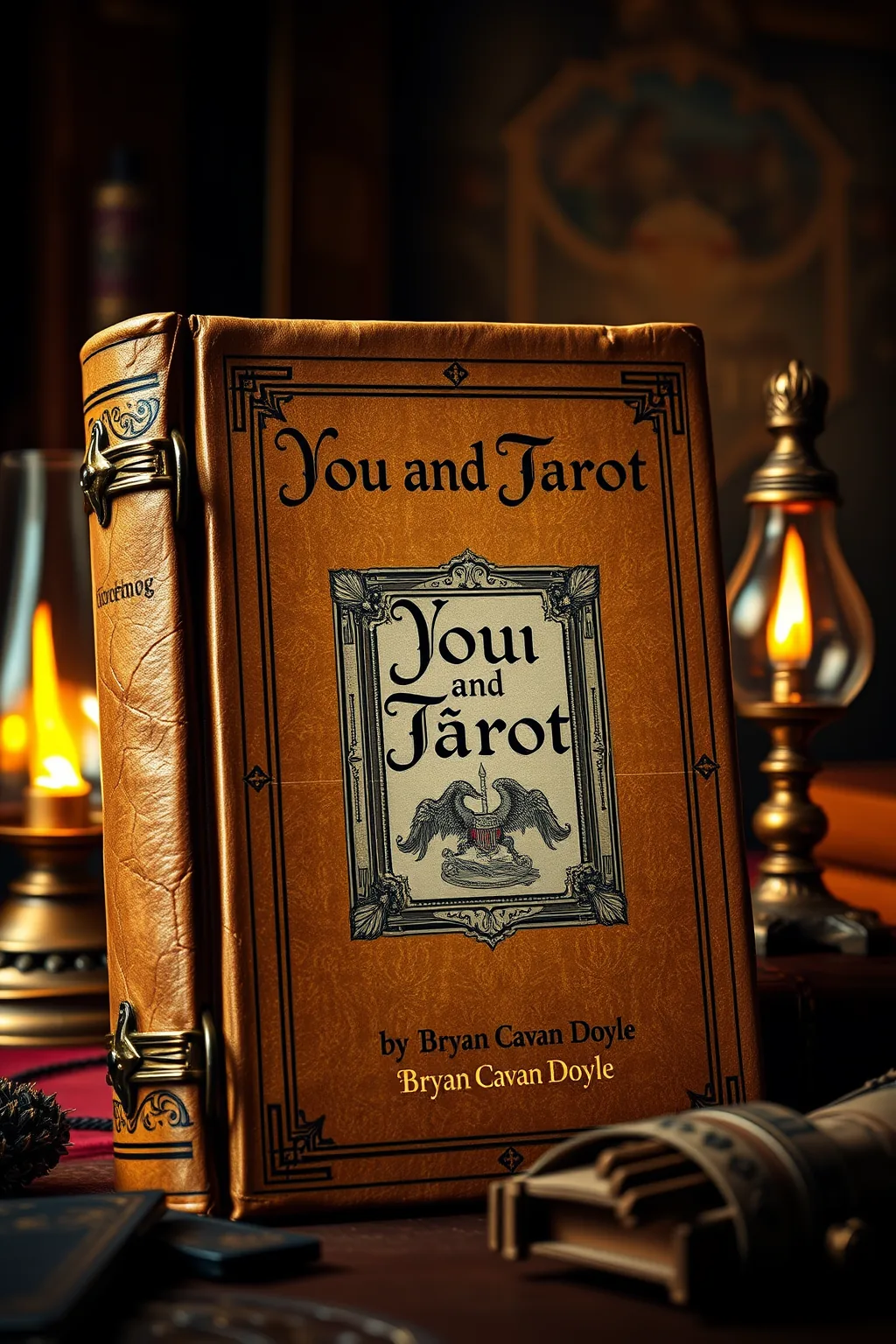
You and Tarot



Silas Hawthorne (Hermetic Studies Editor) — Bryan Cavan Doyle's 'You and Tarot' is a masterful exposition, delving deep into the esoteric currents that animate the Tarot. Doyle artfully dissects the archetypal language, revealing its profound connection to Hermetic philosophy and Jungian psychology. He doesn't just teach card meanings; he guides the reader to an intuitive understanding of the Tarot's role as a sacred map for spiritual evolution. The book's strength lies in its ability to synthesize complex metaphysical concepts into accessible, transformative insights. Essential reading for anyone seeking to move beyond superficial readings and engage with the Tarot as a profound tool for self-discovery and esoteric wisdom.
📝 Description
61
Bryan Cavan Doyle's 'You and Tarot' (published 2021) decodes the Major and Minor Arcana beyond simple prediction.
Bryan Cavan Doyle's 'You and Tarot' moves past fortune telling to examine the archetypal meanings within the Tarot deck. The book treats the twenty-two Major Arcana as keys to spiritual growth and the Minor Arcana as representations of everyday life. Doyle uses clear prose to explain the symbolic language of the cards. He shows how the Tarot can serve as a tool for self-understanding, reflecting internal states and external influences. The text encourages readers to see the Tarot not just as a predictive instrument but as a mirror for personal insight. It is intended for those who wish to grasp the metaphysical foundations of the Tarot and its connection to broader universal forces. The work aims to deepen the reader's relationship with the symbolism inherent in the cards.
This work situates itself within the Western esoteric tradition, particularly in its approach to the Tarot. It connects the cards to Jungian psychology and archetypal symbolism, moving beyond earlier divinatory interpretations. The book implies a lineage of thought that views the Tarot as a map of consciousness and spiritual development, aligning with occult and mystical interpretations that have evolved since the 18th century. It presents the Tarot as a system for understanding both personal destiny and cosmic order.
💡 Why Read This Book?
Uncover the mystical underpinnings of the Tarot beyond mere fortune-telling. 'You and Tarot' offers a profound exploration of its archetypal symbolism and philosophical depth, connecting you to ancient wisdom. Ideal for serious seekers, students of esotericism, and practitioners who wish to deepen their intuitive connection and unlock the Tarot's transformative potential for personal growth and spiritual insight.
⭐ Reader Reviews
Honest opinions from readers who have explored this book.
❓ Frequently Asked Questions
What makes 'You and Tarot' different from other Tarot books?
This book emphasizes the esoteric and philosophical dimensions of the Tarot, viewing it as a symbolic map of consciousness and spiritual development, rather than solely a divinatory tool.
Who is the intended audience for this book?
It is written for sincere seekers, students of occult traditions, and practitioners who wish to explore the deeper metaphysical and psychological meanings of the Tarot.
Does the book teach specific card spreads?
While it focuses on understanding the cards' essence, it provides the foundational knowledge to interpret any spread with profound insight and intuition.
Can I learn to read Tarot for the first time with this book?
Yes, but it is recommended for those with an open mind and a genuine curiosity for the mystical aspects of Tarot, as it prioritizes depth over basic instruction.
What are the main philosophical influences in the book?
The book draws heavily from Hermeticism, archetypal psychology, and general esoteric philosophy, connecting the Tarot to universal spiritual principles.
🔮 Key Themes & Symbolism
The Archetypal Journey
The book posits the Tarot as a grand allegorical journey mirroring the soul's evolution. The Major Arcana are presented not as isolated symbols, but as stages in a cosmic drama, depicting the challenges, lessons, and ultimate apotheosis of the individual consciousness. Doyle examines the psychological resonance of each archetype, linking them to universal human experiences and the process of individuation, offering a framework for understanding life's significant transitions and personal growth through the lens of ancient wisdom.
Symbolic Language of the Cosmos
Doyle elucidates the Tarot's wide range of symbolism, revealing how each card acts as a microcosm of universal principles. From the elemental correspondences in the Minor Arcana to the celestial and alchemical allusions in the Major Arcana, the book demonstrates how the Tarot serves as a Rosetta Stone for understanding the hidden language of the universe. It encourages readers to perceive the interconnectedness of all things, seeing the Tarot as a sacred text that maps the divine order and its manifestation in human affairs.
The Tarot as a Mirror of Consciousness
Beyond divination, 'You and Tarot' positions the Tarot as a profound tool for self-reflection and inner alchemy. Each card is explored as a facet of the human psyche, offering insights into our deepest desires, fears, and potentials. The book guides readers to use the Tarot not to predict the future, but to understand their present reality, illuminate unconscious patterns, and consciously engage with the transformative energies at play in their lives, fostering self-awareness and spiritual empowerment.
💬 Memorable Quotes
Direct passages from the work, attributed to the author.
“Each card is a doorway to understanding.”
— This highlights the Tarot's function as a key, unlocking new perspectives and deeper comprehension of oneself and the world.
“The Fool's journey is your journey.”
— This emphasizes the personal relevance of the Major Arcana, suggesting that the archetypal path of The Fool mirrors the reader's own life experience and spiritual quest.
“Seek not answers, but questions that illuminate.”
— This encourages a shift in focus from seeking definitive predictions to engaging with the Tarot as a catalyst for introspection and deeper inquiry.
“The symbols speak when the mind is still.”
— This points to the importance of intuition and quiet contemplation in understanding the Tarot's subtle messages, transcending logical analysis.
💡 Key Ideas
Editorial paraphrase of the work's core concepts — not direct quotes.
The Tarot is not a deck of cards, but a library of the soul.
This quote suggests the Tarot's profound depth, likening its cards to volumes containing the accumulated wisdom and experiences of the human spirit.
🌙 Esoteric Significance
Tradition
The Tarot is deeply interwoven with the Hermetic tradition, particularly its emphasis on the correspondence between the macrocosm and the microcosm. It embodies Kabbalistic principles, with the Major Arcana often mapped onto the Tree of Life, and alchemical symbolism is evident in the transformative journeys depicted. Jungian psychology also finds a fertile ground in the Tarot's archetypes, viewing them as manifestations of the collective unconscious and tools for individuation.
Symbolism
Key symbols abound: the archetypal figures of the Major Arcana represent stages of consciousness and universal human experiences. The four suits of the Minor Arcana (Wands, Cups, Swords, Pentacles) correspond to the four elements and aspects of existence – spirit, emotion, intellect, and matter. The numerical sequences within each suit also carry Kabbalistic and numerological significance, offering a layered system of meaning that reflects the intricate workings of the universe.
Modern Relevance
In contemporary times, the Tarot serves as a potent tool for psychological exploration, mindfulness, and personal development. Its archetypal narratives resonate with modern challenges, offering guidance for navigating life's complexities. Esoteric practitioners continue to use it for divination and spiritual insight, while therapists and coaches increasingly recognize its value in facilitating self-awareness and creative problem-solving, proving its enduring relevance as a universal language of wisdom.
👥 Who Should Read This Book
This book is essential for the dedicated student of esoteric studies seeking to grasp the profound philosophical underpinnings of the Tarot. It is important for seasoned Tarot practitioners who wish to move beyond rote memorization and cultivate a more intuitive, archetypal understanding. Spiritual seekers exploring the nature of consciousness and the hidden order of the universe will find it a guiding light. Beginners with a genuine desire for depth and a willingness to engage with symbolic language will also benefit immensely, provided they approach it with an open, inquisitive mind.
📜 Historical Context
The Tarot emerged during the Italian Renaissance, a period of intense intellectual and artistic ferment, where occultism, Neoplatonism, and Hermetic philosophy were re-examined and integrated with burgeoning scientific inquiry. Early Tarocchi decks, like those from the Visconti-Sforza family, were initially used for games but quickly acquired a mystique, attracting the attention of occultists who saw in their allegorical imagery a reflection of esoteric doctrines. Figures like Antoine Court de Gébelin in the 18th century famously linked the Tarot to ancient Egyptian wisdom, solidifying its reputation as a repository of hidden knowledge. This context of intellectual curiosity and the search for lost wisdom profoundly shaped the perception and study of the Tarot, positioning it as a key artifact in the Western esoteric tradition.
📔 Journal Prompts
Reflect on the Fool's journey as it relates to a current transition in your life. What fears and excitements does this evoke?
Choose one Major Arcana card that appeals to you today and explore its symbolism as a mirror to your inner state. What message is it offering?
Consider the elemental associations of the Minor Arcana suits. How is each element (Fire, Water, Air, Earth) manifesting in your current circumstances?
How can the archetypal energies represented by the Tarot be consciously integrated into your daily life for greater balance and purpose?
If the Tarot is a library of the soul, what chapter are you currently reading, and what wisdom do you seek from its pages?
🗂️ Glossary
Archetype
A universal, primordial pattern or image that recurs across cultures and time, representing fundamental human experiences and symbolic forms, such as the Hero, the Mother, or the Trickster.
Esotericism
A broad range of spiritual, mystical, and occult traditions that emphasize secret knowledge, inner experience, and symbolic interpretation, often distinct from exoteric or mainstream religious doctrines.
Hermeticism
An ancient philosophical and religious tradition based on the writings attributed to Hermes Trismegistus, emphasizing divine wisdom, the correspondence between the spiritual and material realms, and the pursuit of spiritual enlightenment through knowledge.
Individuation
A central concept in Jungian psychology, referring to the process of psychological development by which a person becomes a whole, integrated self, differentiating from the collective unconscious and realizing their unique potential.
Macrocosm/Microcosm
A core Hermetic principle stating that the universe (macrocosm) and the individual (microcosm) are fundamentally alike, reflecting each other in structure and principle. 'As above, so below'.
This book appears in 3 collections
🔮 Readers Also Liked
Browse all →
From the “Tarot” Collection
View all →
More Free Divination & Tarot Books
View all →