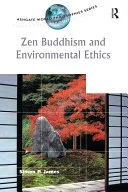
Zen Buddhism and Environmental Ethics
 78
78

Zen Buddhism and Environmental Ethics
Simon P. James's Zen Buddhism and Environmental Ethics offers a compelling argument for the relevance of Zen principles to our current ecological crisis. Its strength lies in clearly articulating how core Buddhist concepts, like interdependence and non-self, can reframe our relationship with nature. The work meticulously traces these ideas through various Zen schools, making a strong case against interpretations that have historically led to environmental detachment. A potential limitation, however, is that the accessibility for newcomers might occasionally simplify complex philosophical nuances for seasoned scholars. The exploration of the concept of 'no-mind' (mushin) as a pathway to intuitive ecological action, for instance, is particularly illuminating. This book effectively bridges Eastern philosophy and Western ethical debate.
📝 Description
78
Simon P. James' 2017 book links Zen Buddhist thought to environmental ethics.
Published in 2017, Zen Buddhism and Environmental Ethics by Simon P. James investigates the connections between Zen philosophy and present ecological challenges. The author frames Zen as more than a spiritual practice; it is a way to understand our ethical duties toward the natural world. This book is relevant for anyone interested in environmental ethics, comparative philosophy, or East Asian religions. It is designed to be approachable for newcomers to Zen Buddhism, while also providing detailed arguments for those already engaged with the subject.
The work appears in the mid-2010s, a time when awareness of climate change was growing. It places Zen's meditative practices within current global conversations about the environment. This response acknowledges a rising academic focus on Buddhist thought's ecological aspects, a trend seen in thinkers like Gary Snyder.
This book engages with Mahayana Buddhist traditions, specifically the Chan (Zen) school. It draws upon core Mahayana concepts that underwent particular development and emphasis within Zen practice. The focus on emptiness (śūnyatā) and interdependence (pratītyasamutpāda) are central to Mahayana philosophy. By applying these to environmental concerns, James connects a historically contemplative and introspective tradition to pressing worldly issues, bridging the gap between inner cultivation and outer ecological responsibility.
💡 Why Read This Book?
• Gain a novel perspective on environmental responsibility by understanding how Zen's concept of interdependence (pratītyasamutpāda) dissolves the subject-object divide between humans and nature. • Learn how Zen's emphasis on present-moment awareness, as discussed in relation to koans, can foster a more mindful and less consumptive engagement with the environment. • Discover how the Buddhist doctrine of emptiness (śūnyatā) can dismantle anthropocentric arrogance, promoting a more humble and ethical stance towards all life forms, as explored in the book's 2017 publication.
⭐ Reader Reviews
Honest opinions from readers who have explored this book.
❓ Frequently Asked Questions
What is the primary argument of Zen Buddhism and Environmental Ethics?
The book argues that core Zen Buddhist teachings, such as interdependence and non-self, provide a robust philosophical foundation for developing a more compassionate and responsible environmental ethic, challenging anthropocentric views prevalent in Western thought.
Is this book suitable for someone new to Zen Buddhism?
Yes, the book is designed to be accessible. It offers a clear introduction to key Zen concepts for readers unfamiliar with East Asian thought while simultaneously engaging with complex philosophical debates.
What specific Zen concepts does the book explore in relation to the environment?
It delves into concepts like emptiness (śūnyatā), non-self (anātman), interdependence (pratītyasamutpāda), and no-mind (mushin), demonstrating their implications for our moral relationship with the natural world.
When was Zen Buddhism and Environmental Ethics first published?
The book was first published on March 2, 2017, placing it within a contemporary discourse on environmental ethics and Asian philosophies.
Who is the author of Zen Buddhism and Environmental Ethics?
The author is Simon P. James, whose work bridges philosophical inquiry with religious studies, focusing on the ethical dimensions of Buddhist traditions.
Does the book discuss specific Zen practices?
Yes, it explores how Zen practices, such as meditation and the contemplation of koans, can cultivate an ecological consciousness and foster a deeper connection with the environment.
🔮 Key Themes & Symbolism
Interdependence and Non-Self
The book centers on the Buddhist concepts of interdependence (pratītyasamutpāda) and non-self (anātman) as crucial for dismantling anthropocentric biases. By illustrating that no phenomenon exists independently, Zen encourages a recognition of our embeddedness within the ecological web. This understanding moves beyond a human-centric view, fostering a moral framework where the well-being of the environment is intrinsically linked to our own, challenging the illusion of a separate self that exploits nature.
Emptiness and Ecological Awareness
The doctrine of emptiness (śūnyatā) is presented not as nihilism, but as the profound realization of the lack of inherent, independent existence in all things, including the self. This philosophical insight, explored through Zen's contemplative methods, liberates one from ego-driven desires and attachments that fuel environmental destruction. It cultivates a state of receptivity and awareness, allowing for a more harmonious and less dominating interaction with the natural world.
Mindfulness and Present Moment Practice
Zen's emphasis on mindfulness and present-moment awareness, often cultivated through meditation (zazen) and koan study, is shown to be directly applicable to environmental ethics. By fully inhabiting the present, individuals can become more attuned to the subtle cues of the natural world and less preoccupied with future anxieties or past regrets, which often drive unsustainable consumption patterns. This focus encourages a more direct, unmediated experience of nature.
Challenging Dualisms
A core theme is the deconstruction of artificial dualisms, particularly the mind-body and human-nature divides. Zen traditions, through their non-dualistic philosophy, encourage seeing the interconnectedness of all phenomena. This perspective inherently challenges the notion of nature as a mere resource for human exploitation, advocating instead for a unified, ecological understanding of existence that prioritizes balance and respect for all life.
💬 Memorable Quotes
Direct passages from the work, attributed to the author.
“Zen teachings offer a framework for moral relations with the natural world.”
— This statement captures the book's central thesis: that the philosophical underpinnings of Zen Buddhism are not just spiritual guides but provide a robust ethical system applicable to environmental concerns.
“Interdependence dissolves the subject-object distinction.”
— This highlights how Zen's understanding of interconnectedness breaks down the perceived separation between the observer (subject) and the observed (object), including the natural world, fostering a sense of unity.
“Non-self leads to a reevaluation of human dominance.”
— This concept suggests that understanding anātman challenges the anthropocentric view that humans are separate from and superior to nature, thereby reducing the impetus for exploitation.
“Mindfulness cultivates direct engagement with nature.”
— This points to how Zen's focus on present-moment awareness encourages a more immediate and less mediated experience of the natural world, fostering appreciation and care.
💡 Key Ideas
Editorial paraphrase of the work's core concepts — not direct quotes.
Emptiness as a basis for ecological ethics.
This paraphrase points to the book's exploration of śūnyatā not as a void, but as the realization of interconnectedness, which liberates one from ego and promotes ethical consideration for the environment.
🌙 Esoteric Significance
Tradition
While Zen Buddhism is a distinct tradition within Mahayana Buddhism, its philosophical underpinnings—particularly its emphasis on direct experience, non-duality, and the nature of consciousness—resonate with broader esoteric currents. It shares with Hermeticism an interest in uncovering hidden realities through introspective practice and with Gnosticism a concern for overcoming illusory perceptions of self and world. This work bridges these contemplative disciplines with contemporary ethical concerns, positioning Zen's insights as a vital, non-dogmatic path for understanding our place in the cosmos.
Symbolism
Key symbolic motifs explored include the koan, a paradoxical riddle used in Zen to provoke insight beyond rational thought, symbolizing the limits of conceptual understanding in grasping ecological reality. The concept of 'emptiness' (śūnyatā) functions symbolically, representing the interdependent nature of all phenomena, devoid of fixed, independent essence. The practice of zazen (seated meditation) itself can be seen as symbolic of stillness, presence, and the dissolution of egoic boundaries, fostering a unified experience of self and environment.
Modern Relevance
Contemporary thinkers in ecopsychology and deep ecology find resonance in Zen's non-dualistic worldview. Environmental activists and mindfulness practitioners are increasingly drawing upon its principles to foster a sense of interconnectedness and reduce anthropocentric bias. The work's examination of Zen as a practical ethic for living sustainably informs modern movements advocating for mindful consumption and a reevaluation of human-nature relationships, moving beyond purely utilitarian or conservationist approaches.
👥 Who Should Read This Book
• Students of comparative religion and philosophy: To understand how a major Eastern tradition offers unique ethical perspectives on global environmental challenges. • Environmental ethicists and activists: To gain a non-Western philosophical lens that can inform and deepen strategies for ecological stewardship and advocacy. • Practitioners of Zen Buddhism and mindfulness: To explore the practical ethical implications of their contemplative path for engaging with the natural world.
📜 Historical Context
Published in 2017, Simon P. James's work emerged during a period of heightened global ecological awareness, fueled by mounting scientific evidence of climate change. The book engages with a growing academic interest in the environmental implications of Buddhist traditions, a field that had seen significant contributions from figures like Gary Snyder in the late 20th century. It addresses a need for accessible philosophical frameworks that could counter the anthropocentric ideologies often underpinning environmental degradation. While Buddhism, particularly Zen, has historically been interpreted by some as detached from worldly concerns, James's study sought to demonstrate its profound ethical relevance. The book was published in an era where environmental ethics was a burgeoning interdisciplinary field, with scholars from philosophy, theology, and environmental science actively debating the moral status of nature and humanity's role within it.
📔 Journal Prompts
The concept of interdependence (pratītyasamutpāda) in relation to your local ecosystem.
No-mind (mushin) and its potential for intuitive environmental decision-making.
The doctrine of emptiness (śūnyatā) as a challenge to consumerist desires.
Reflecting on the ethical implications of the human-nature dualism addressed in the book.
How present-moment awareness cultivated through zazen might alter your daily environmental interactions.
🗂️ Glossary
Śūnyatā (Emptiness)
A central Mahayana Buddhist concept signifying the lack of inherent, independent existence in all phenomena. It points to the interdependent nature of reality rather than nihilism.
Anātman (Non-self)
The Buddhist doctrine that there is no permanent, unchanging, independent self or soul. This extends to the understanding of phenomena as lacking intrinsic selfhood.
Pratītyasamutpāda (Dependent Origination)
The principle that all phenomena arise in dependence upon causes and conditions. Nothing exists in isolation; everything is interconnected.
Koan
A paradoxical anecdote or riddle used in Zen Buddhism to provoke doubt and test a student's progress in Zen practice, intended to lead to enlightenment beyond intellectual understanding.
Zazen
The practice of seated meditation in Zen Buddhism, central to cultivating mindfulness, concentration, and insight into the nature of reality.
Mushin (No-mind)
A state of mind in Zen Buddhism characterized by freedom from thought, intention, and ego. It allows for spontaneous and intuitive action.
Anthropocentrism
The belief that human beings are the central or most significant entities in the universe, often leading to the exploitation of nature for human ends.