Tai Chi
 74
74

Tai Chi
Lawrence Galante's "Tai Chi" from 1981 is a substantial effort to contextualize the practice beyond mere physical movements. Its strength lies in the ambitious scope, drawing connections between Tai Chi, Western philosophy, and texts like the Tao Te Ching. The inclusion of hundreds of detailed photographs illustrating positions is invaluable for practitioners. However, the sheer breadth of topics covered, while ambitious, occasionally leads to a sense of diffusion rather than deep dives into each subject. The analysis of its relationship to Western philosophy, while present, could have benefited from more explicit comparative frameworks. Galante's work remains a solid, if somewhat dated, resource for understanding Tai Chi's multifaceted nature.
📝 Description
74
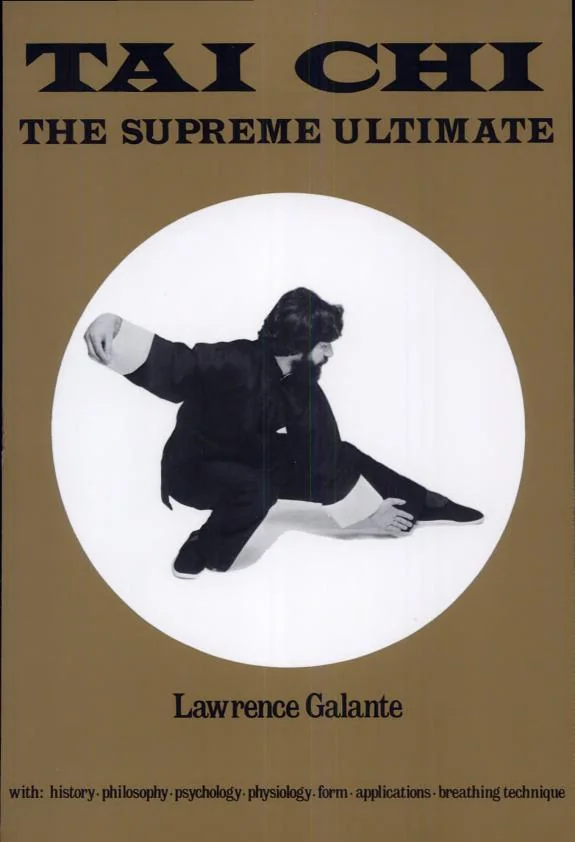
Lawrence Galante's 1981 book examines Tai Chi beyond its physical form.
First published in 1981, Lawrence Galante's "Tai Chi" offers a detailed look at the Chinese martial art and meditation practice. The book goes beyond the movements themselves to examine the philosophy and history behind Tai Chi. Galante traces the art's origins and its development over centuries.
The text is useful for those who practice Tai Chi and want to understand its history. It will also interest philosophers who study different traditions and people curious about how Eastern and Western ideas connect. The book includes information on the historical and health aspects of mind-body practices, along with photo guides.
When Galante's book came out, more people in the West were becoming interested in Eastern philosophy and martial arts, but detailed books were not common. This work helped connect the physical practice of Tai Chi with its philosophical background, something often missed in how it is practiced today in the West.
Galante's work places Tai Chi within a specific esoteric lineage, connecting its physical forms to Taoist principles found in texts like the I Ching and Tao Te Ching. It discusses the cultivation of internal energy (Qi) and the balance of Yin and Yang, concepts central to many Chinese spiritual traditions. The book frames Tai Chi not merely as a set of exercises but as a method for harmonizing oneself with fundamental cosmic forces, drawing from centuries of Chinese contemplative practice.
💡 Why Read This Book?
• Gain a comprehensive understanding of Tai Chi's historical evolution, dating back centuries, which provides context often missing in modern practice guides. • Explore the philosophical connections between Tai Chi and foundational Taoist texts like the Tao Te Ching, revealing the art's deeper energetic and spiritual dimensions. • Benefit from hundreds of detailed photographs illustrating specific positions and applications, offering a visual guide that complements the textual analysis.
⭐ Reader Reviews
Honest opinions from readers who have explored this book.
❓ Frequently Asked Questions
When was Lawrence Galante's book on Tai Chi first published?
Lawrence Galante's comprehensive text on Tai Chi was first published in 1981, during a period of growing Western interest in Eastern practices and philosophies.
What Western philosophies are discussed in relation to Tai Chi?
The book explores connections between Tai Chi and Western philosophical concepts, examining parallels and influences that bridge Eastern and Western thought traditions.
Does the book explain the history of Tai Chi?
Yes, a significant portion of the book is dedicated to a detailed study of the origins and history of Tai Chi, tracing its development through various eras.
Are there visual aids in the book?
Absolutely. The book includes several hundred detailed photographs that demonstrate the application of various Tai Chi positions, serving as a practical visual guide.
How does the book relate Tai Chi to Chinese medicine?
It discusses the integral relationship between Tai Chi practice and principles of Chinese medicine, exploring how the movements and energy cultivation align with health concepts.
What esoteric systems are mentioned in the book?
The author ties the practice and philosophy of Tai Chi to various esoteric systems, offering a perspective that transcends purely physical or martial applications.
🔮 Key Themes & Symbolism
Philosophical Synthesis
Galante's work is notable for its attempt to synthesize Tai Chi with disparate philosophical traditions. It examines how principles inherent in the I Ching and the Tao Te Ching, such as the interplay of Yin and Yang, find resonance within the physical practice of Tai Chi. Furthermore, it seeks parallels with Western philosophical thought and Eastern contemplative practices like yoga and Zen, presenting Tai Chi as a nexus point for diverse wisdom systems.
Esoteric Underpinnings
Beyond its martial or health aspects, the book studies the esoteric dimensions of Tai Chi. It explores how the art functions as a method for cultivating internal energy (Qi) and achieving a state of balance and harmony, aligning with broader esoteric goals of spiritual development and consciousness expansion. This perspective positions Tai Chi within a lineage of practices aimed at unlocking deeper potentials of the human mind and body.
Historical and Medical Context
A significant portion of the text is dedicated to tracing the historical evolution of Tai Chi, from its ancient origins to its development as a complex system of movement and philosophy. The work also elucidates its relationship with traditional Chinese medicine, explaining how Tai Chi's principles of energy flow, balance, and mindful movement contribute to physical well-being and therapeutic outcomes.
Visual Application Guide
Complementing its theoretical discussions, the book provides extensive visual instruction. Hundreds of detailed photographs are included, illustrating the precise execution of various Tai Chi postures and movements. This photographic component serves as a practical resource for practitioners, offering clear guidance on form and application, thereby bridging the gap between abstract concepts and embodied practice.
💬 Memorable Quotes
Direct passages from the work, attributed to the author.
“The author ties its use to esoteric systems.”
— This highlights Galante's approach of viewing Tai Chi not just as a physical discipline but as a practice with deeper spiritual and energetic dimensions, connecting it to broader occult and mystical traditions.
“A detailed analysis of its relationship to Western philosophy.”
— This indicates the book's ambition to bridge cultural and intellectual divides, exploring potential common ground and comparative insights between Eastern martial arts philosophy and Western philosophical inquiry.
“Includes several hundred detailed photographs showing application of the positions.”
— This emphasizes the practical, instructional value of the book, offering visual guidance that supports the theoretical exploration of Tai Chi's physical forms and techniques.
“Study of the origins and history of Tai Chi.”
— This points to the book's foundational role in providing historical context, essential for understanding the evolution and cultural significance of Tai Chi beyond its modern practice.
“Discusses health and Chinese medicine in relation to Tai Chi.”
— This signals the book's engagement with the therapeutic and holistic aspects of Tai Chi, linking the practice to ancient medical theories and principles of well-being.
🌙 Esoteric Significance
Tradition
Galante's "Tai Chi" engages with a lineage that can be broadly categorized under Taoist esoteric practices and comparative mysticism. It aligns with traditions focused on cultivating vital energy (Qi) for physical health, longevity, and spiritual cultivation. While not strictly Hermetic or Kabbalistic, it shares with these traditions an emphasis on internal alchemy, the balance of opposing forces (Yin/Yang), and the pursuit of harmony between the microcosm (human) and the macrocosm (universe).
Symbolism
Key symbols explored include the Taoist concept of Yin and Yang, representing the fundamental duality and interplay of complementary forces that govern the universe and are embodied in Tai Chi's movements. The concept of Qi, or vital life force, is central, with the practice aimed at its smooth circulation and balance within the body. The circularity and yielding nature of Tai Chi movements themselves symbolize the Taoist principle of 'wu wei' (non-action or effortless action).
Modern Relevance
The work's approach to Tai Chi as a holistic system integrating mind, body, and spirit remains relevant. Contemporary practices in embodied cognition, mindfulness-based stress reduction, and integrative medicine often echo Galante's exploration of Tai Chi's therapeutic benefits and its connection to energetic principles. Thinkers and practitioners interested in the intersection of somatic practices, philosophical inquiry, and esoteric traditions continue to find value in such foundational texts.
👥 Who Should Read This Book
• Students of comparative philosophy: Those seeking to understand cross-cultural philosophical dialogues and the parallels between Eastern (Taoist, Buddhist) and Western thought. • Martial arts practitioners: Individuals practicing Tai Chi or other internal martial arts who wish to deepen their understanding of the art's historical roots and philosophical underpinnings. • Holistic health enthusiasts: Readers interested in the intersection of mind-body practices, traditional Chinese medicine, and the energetic principles behind physical well-being.
📜 Historical Context
Published in 1981, Lawrence Galante's "Tai Chi" emerged during a period of burgeoning Western interest in Eastern philosophies and martial arts, fueled by figures like Bruce Lee and Alan Watts. While books on martial arts existed, comprehensive texts that rigorously examined Tai Chi's historical lineage and philosophical depth, particularly its esoteric connections, were less common. Galante's work sought to provide this context, situating the practice within Taoist thought (specifically referencing the I Ching and Tao Te Ching) and exploring its parallels with Western philosophy, yoga, and Zen. This was a departure from purely technical manuals and offered a more holistic perspective at a time when comparative studies of religion and philosophy were gaining academic traction. Its reception likely contributed to a more nuanced understanding of Tai Chi beyond its physical applications.
📔 Journal Prompts
The interplay of Yin and Yang within Tai Chi movements.
Connections between the Tao Te Ching and Tai Chi principles.
The role of Qi cultivation in esoteric practice.
Historical evolution of Tai Chi from its origins.
Balance between physical application and philosophical study.
🗂️ Glossary
Qi (Chi)
The fundamental life force or vital energy believed to flow through all living things in traditional Chinese culture and medicine, central to Tai Chi practice.
Yin and Yang
The Taoist concept of dualistic, complementary, and interdependent forces that govern the natural world and human existence, fundamental to understanding Tai Chi's dynamics.
I Ching
An ancient Chinese divination text and one of the oldest Chinese classics, used in the book to explore philosophical concepts relevant to Tai Chi.
Tao Te Ching
A foundational text attributed to Lao Tzu, central to Taoism, whose philosophical principles are analyzed for their connection to Tai Chi.
Wu Wei
A Taoist concept often translated as 'non-action' or 'effortless action,' representing a state of acting in harmony with the natural flow of life, reflected in Tai Chi's movements.
Zen
A school of Mahayana Buddhism that originated in China, here discussed in relation to its meditative and philosophical similarities with Tai Chi.
Yoga
An ancient Indian practice of physical, mental, and spiritual disciplines, discussed for its parallels with Tai Chi's approach to mind-body integration.
This book appears in 1 collection
🔮 Readers Also Liked
Browse all →








From the “Tai Chi” Collection
View all →


More Free Occult Philosophy Books
View all →![[The English physician] Culpeper's English physician; and complete herbal. To which are now first added, upwards of one hundred additional herbs, with a display of their medicinal and occult properties, physically applied to the cure of all disorders incident to banking. To which are annexed, rules for compounding medicine. 1789](/img/thumb/the-english-physician-culpeper-s-english-physician-and-complete-herbal-to-which-are-now-first-added-upwards-of-one-hundred-additional-herbs-with-a-display-of-their-medicinal-and-occult-properties-phys.webp)