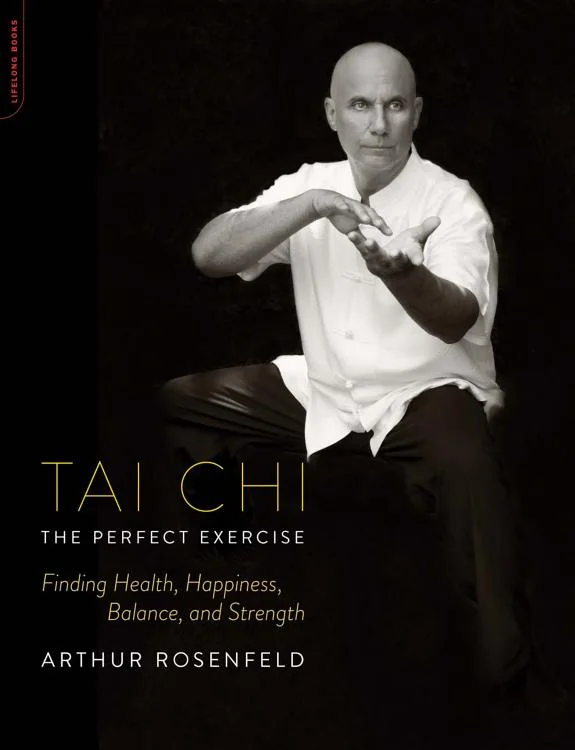
Tai Chi--The Perfect Exercise
 81
81

Tai Chi--The Perfect Exercise
Arthur Rosenfeld's "Tai Chi--The Perfect Exercise" arrives as a capable, if somewhat conventional, guide to the practice. Its primary strength lies in its clear exposition of fundamental movements and the integration of the physical with the energetic principles. Rosenfeld, known from his PBS "Longevity Tai Chi" program, brings a comforting familiarity to the text, making complex ideas feel approachable. However, the work occasionally leans into the familiar benefits of exercise without fully excavating the deeper esoteric currents that many Esoteric Library readers might seek. For instance, the discussion on Qi cultivation, while present, could benefit from a more detailed exploration of its energetic pathways beyond general health. A particular passage that stands out is the explanation of the 'push hands' exercises, which effectively demonstrates the principle of yielding. Despite this, the book ultimately serves as a solid, accessible primer rather than a deep dive into the more mystical dimensions of Tai Chi. It's a reliable starting point for the curious novice.
📝 Description
81
Arthur Rosenfeld's 2013 book explains Tai Chi not just as exercise, but as moving meditation.
Arthur Rosenfeld's "Tai Chi--The Perfect Exercise," published in 2013, introduces the ancient Chinese practice of Tai Chi. It goes beyond physical movements to discuss the core principles and health benefits of this form of moving meditation. The book breaks down the fundamental stances and sequences, making them easy for newcomers to follow.
This guide is for anyone seeking a balanced approach to well-being that merges physical activity with mental and spiritual growth. It is suitable for those new to Tai Chi and curious about its gentle effects, as well as experienced practitioners wanting to understand its deeper philosophy. Individuals interested in reducing stress, improving their balance, and practicing mindful movement will find useful advice.
The book places Tai Chi within its historical lineage, showing its journey from a martial art to a therapeutic practice. It notes how forms have changed and different styles have developed over time. Understanding this history helps in appreciating the practice's depth and flexibility.
Tai Chi, as presented by Rosenfeld, connects to Daoist principles of harmony with nature and the flow of vital energy, or Qi. Its emphasis on internal cultivation, mindful awareness, and the balance of Yin and Yang energies aligns with broader esoteric traditions focused on self-transformation and energetic well-being. The practice itself is a form of moving meditation, a path toward inner stillness and a deeper connection with one's own energetic being.
💡 Why Read This Book?
• Gain practical instruction on fundamental Tai Chi movements and forms, directly applicable to improving balance and coordination, as detailed in the book's illustrated sections. • Understand the concept of Qi cultivation as presented by Rosenfeld, learning how to channel vital energy for enhanced well-being, a core tenet of the practice. • Appreciate the historical evolution of Tai Chi, recognizing its roots and development into a widely practiced form of moving meditation since its early martial arts origins.
⭐ Reader Reviews
Honest opinions from readers who have explored this book.
❓ Frequently Asked Questions
What are the primary health benefits of practicing Tai Chi as described by Arthur Rosenfeld?
Arthur Rosenfeld's "Tai Chi--The Perfect Exercise" emphasizes benefits such as improved balance, reduced stress, enhanced flexibility, and better cardiovascular health. The book details how the gentle, flowing movements stimulate circulation and promote mental clarity.
Is "Tai Chi--The Perfect Exercise" suitable for complete beginners?
Yes, the book is designed for beginners, offering clear step-by-step instructions and explanations of fundamental Tai Chi principles and forms. Rosenfeld's approach aims to make the practice accessible to those with no prior experience.
What is the significance of Qi in Tai Chi according to Arthur Rosenfeld?
Rosenfeld explains Qi (vital energy) as a central component of Tai Chi. Cultivating and circulating Qi through mindful movement is presented as key to achieving physical health, mental calm, and overall vitality.
Does the book cover the martial arts origins of Tai Chi?
While primarily focusing on the health and meditative aspects, the book touches upon Tai Chi's origins as a martial art. It acknowledges this history to provide context for the development of its forms and principles.
When was Arthur Rosenfeld's "Tai Chi--The Perfect Exercise" first published?
Arthur Rosenfeld's "Tai Chi--The Perfect Exercise" was first published on June 4, 2013. This edition provides a contemporary perspective on the ancient practice.
What makes Tai Chi a 'perfect exercise' according to the book's title?
The title suggests Tai Chi is 'perfect' due to its holistic nature, simultaneously engaging the body, mind, and spirit. Rosenfeld highlights its adaptability for all ages and its comprehensive benefits for physical and mental well-being.
🔮 Key Themes & Symbolism
Mind-Body Integration
This work emphasizes the profound connection between mental intention and physical execution in Tai Chi. Rosenfeld illustrates how focused awareness during movement is not merely about performing steps correctly but about harmonizing the inner state with the outer form. The practice cultivates a state where the mind directs the body's energy, leading to improved coordination, balance, and a reduction in physical and mental tension. This integration is presented as the foundation for Tai Chi's therapeutic efficacy, transforming a physical discipline into a pathway for holistic well-being.
Cultivation of Qi
A central theme is the understanding and cultivation of Qi, or vital life force, within the practice of Tai Chi. Rosenfeld guides readers to perceive Qi as a subtle energy that flows through the body, and how specific movements and breathwork in Tai Chi facilitate its circulation. This energetic aspect is key to unlocking the practice's deeper benefits, moving beyond mere physical exercise to a method of enhancing vitality, resilience, and inner harmony. The book explores how conscious direction of Qi contributes to both physical health and mental serenity.
The Principle of Yielding
Rosenfeld explores the paradoxical strength found in yielding, a core principle in Tai Chi, particularly evident in its martial applications but vital for its health benefits. This concept teaches practitioners to absorb, redirect, and overcome force with softness and adaptability, rather than direct opposition. Applying this principle extends beyond physical combat to everyday life, fostering a more resilient and less reactive approach to challenges, promoting emotional balance and reducing internal conflict.
Tai Chi as Moving Meditation
The book presents Tai Chi not just as a series of physical postures but as a profound form of moving meditation. The slow, deliberate, and continuous nature of the movements encourages a state of mindful presence, quieting the incessant chatter of the mind. This meditative quality is highlighted as a primary source of stress reduction and mental clarity, offering practitioners a sanctuary of calm within the active flow of life. The practice becomes a method for achieving inner peace through dynamic movement.
💬 Memorable Quotes
Direct passages from the work, attributed to the author.
“The gentle, flowing nature of Tai Chi movements encourages the smooth circulation of Qi.”
— This statement highlights the energetic aspect of Tai Chi, suggesting that the physical form is a vehicle for cultivating and moving vital life force (Qi) throughout the body, which is central to its health benefits.
“Balance is not just physical; it is a state of mind.”
— This interpretation emphasizes the holistic approach of Tai Chi, indicating that achieving physical equilibrium through the practice is intrinsically linked to developing mental stability and focus.
“Each posture is a meditation in motion.”
— This conveys the idea that Tai Chi's value extends beyond physical exercise, positioning the practice as a dynamic form of mindfulness that cultivates inner peace and awareness through deliberate movement.
“The body's health is intrinsically linked to the flow of energy.”
— This interpretation underscores the book's focus on vital energy (Qi), presenting a fundamental concept where physical well-being is seen as a direct result of unimpeded energetic circulation within the body.
💡 Key Ideas
Editorial paraphrase of the work's core concepts — not direct quotes.
To overcome hardness, one must employ softness.
This paraphrased concept captures the essence of the yielding principle in Tai Chi, suggesting that true strength lies not in resistance but in adaptability and the ability to flow with opposing forces.
🌙 Esoteric Significance
Tradition
While not strictly adhering to a single esoteric lineage like Hermeticism or Kabbalah, Rosenfeld's work draws heavily from Taoist principles, which form the philosophical bedrock of Tai Chi. The emphasis on harmony with nature, the cultivation of vital energy (Qi), and the concept of 'wu wei' (effortless action) are deeply rooted in Taoist thought. The book integrates these ancient ideas into a practical framework for modern living, presenting Tai Chi as a method for aligning oneself with natural energetic flows, a common aspiration across many esoteric traditions.
Symbolism
Key symbols in Tai Chi, implicitly explored by Rosenfeld, include the Yin and Yang, representing the dynamic balance of complementary forces that govern the universe and the human body. The circular, flowing movements themselves symbolize continuous energy flow and the cyclical nature of life. The concept of the 'Dantian,' the energy center often located below the navel, is a subtle but significant motif, representing the seat of Qi cultivation and the source from which movements originate.
Modern Relevance
Rosenfeld's work remains relevant for contemporary practitioners and thinkers exploring embodied spirituality and somatic practices. Modern mindfulness movements, somatic experiencing therapies, and even certain schools of Western Qigong draw upon the principles of mindful movement and energy cultivation that Tai Chi embodies. Thinkers and practitioners like Donna Farhi, who explores embodied anatomy and yoga, often touch upon similar concepts of integrated movement and breath awareness that resonate with Tai Chi's core tenets.
👥 Who Should Read This Book
['• Individuals new to Tai Chi seeking a clear, accessible introduction to its forms, principles, and health benefits, as presented by Arthur Rosenfeld.', '• Practitioners of other mind-body disciplines (yoga, meditation) interested in exploring the unique energetic and movement-based approach of Tai Chi.', '• Those seeking practical methods for stress reduction, improved balance, and enhanced physical well-being through gentle, consistent practice.']
📜 Historical Context
Arthur Rosenfeld's "Tai Chi--The Perfect Exercise," published in 2013, entered a landscape already rich with interpretations of this ancient Chinese art. While its initial development in the centuries prior, particularly its refinement by masters like Yang Luchan in the 19th century, established its martial and health foundations, the mid-to-late 20th century saw a surge in Western interest. This period was marked by figures like Dr. Paul Lam, who adapted Tai Chi for therapeutic purposes, and the broader proliferation of various Tai Chi styles (Yang, Chen, Wu, etc.) through popular books and television programs. Rosenfeld's work emerged in an era where Tai Chi was widely recognized for its benefits by figures like Dr. Kenneth S. Cohen, a prominent advocate for the integration of Chinese medicine and Western healthcare, who had already published extensively on the subject. This book builds upon a substantial body of existing literature and practice, aiming to synthesize the core elements for a contemporary audience seeking accessible wellness.
📔 Journal Prompts
The cultivation of Qi through mindful movement.
The principle of yielding in physical and mental challenges.
The integration of breath and posture in Tai Chi.
Reflecting on the connection between physical balance and mental calm.
The concept of 'each posture as a meditation in motion'.
🗂️ Glossary
Qi (Chi)
Vital life force or energy believed to flow through the body and the universe, central to Chinese medicine and practices like Tai Chi. Its cultivation and circulation are key to health and vitality.
Dantian
An energy center in the body, typically located in the lower abdomen, considered a reservoir of Qi from which movements and vital energy are generated in practices like Tai Chi.
Yin and Yang
Fundamental Taoist concept representing complementary, interconnected opposites (e.g., passive/active, dark/light). In Tai Chi, it signifies the balance of opposing forces within movement and the body.
Wu Wei
A Taoist concept often translated as 'effortless action' or 'non-action.' It refers to acting in accordance with the natural flow of things, without force or excessive striving, a principle embodied in Tai Chi's yielding nature.
Form (Xing)
The specific sequence of movements and postures that constitute a particular style or school of Tai Chi, practiced for health, meditation, or martial application.
Push Hands (Tui Shou)
A training exercise in Tai Chi where partners practice sensing and responding to each other's movements, developing sensitivity, balance, and the application of yielding principles.
Movement Meditation
A practice that combines physical motion with mindful awareness, using the act of moving as a focus for meditation, cultivating presence and internal calm.
This book appears in 1 collection
🔮 Readers Also Liked
Browse all →









From the “Tai Chi” Collection
View all →






More Free Occult Philosophy Books
View all →