Boo Who?
 77
77

Boo Who?
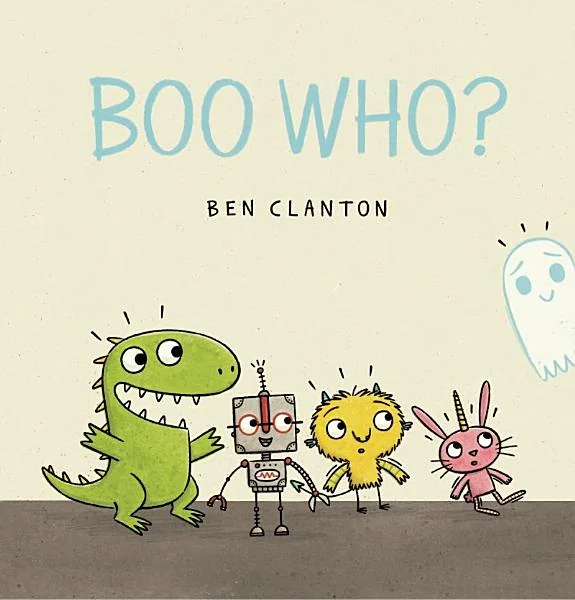
Ben Clanton's "Boo Who?" presents a disarmingly simple premise: a ghost who is too shy to make friends. The book's strength lies in its direct, uncluttered visual and narrative approach, making Boo's anxieties accessible to very young readers. Clanton avoids saccharine resolutions, instead offering a quiet acknowledgment of Boo's internal world. A particular passage where Boo attempts to join a game of tag, only to phase through his classmates, effectively captures the isolation of feeling fundamentally incompatible with social norms. However, the narrative's brevity, while suitable for its audience, leaves little room for deeper exploration of the other children's reactions or Boo's internal coping mechanisms beyond initial apprehension. Ultimately, "Boo Who?" is a tender, if brief, introduction to the experience of social diffidence.
📝 Description
77
Ben Clanton's 2017 picture book, "Boo Who?", addresses social anxiety through a shy ghost.
Published in 2017, Ben Clanton's "Boo Who?" is a children's picture book that uses a simple story to discuss feelings of social anxiety and belonging. The narrative follows Boo, a young ghost starting at a new school. Boo finds it difficult to connect with his classmates because he is shy and inherently different. His spectral nature serves as a metaphor for feeling unseen or misunderstood by others. The book touches on the difficulties of communication and participating in group activities when someone feels like an outsider.
This book is suitable for young children, roughly ages 3 to 7, who might be experiencing or observing social challenges. Boo offers a character that children who feel different or struggle to make friends can identify with. Parents and educators can use "Boo Who?" to start conversations about empathy, accepting different kinds of people, and making new students feel welcome. It highlights the need for patience and understanding from classmates.
While not tied to a specific historical esoteric movement, "Boo Who?" echoes broader philosophical ideas about self-acceptance that appear in various spiritual traditions from the mid-20th century onward. The book's central idea of an individual struggling to fit into a social group and overcoming internal barriers resonates with concepts found in traditions that focus on inner transformation and understanding one's place in the world. Boo's ghostliness can be seen as a metaphor for the internal, unseen struggles many people face when trying to connect with others.
💡 Why Read This Book?
• Understand the unique challenges of shyness and social anxiety through Boo's spectral perspective, learning how feeling 'different' can impact one's ability to connect with peers in common games. • Gain insight into fostering empathy and inclusion by observing the subtle ways Boo attempts to engage and the potential for kindness from classmates. • Appreciate the visual storytelling in Ben Clanton's 2017 work, recognizing how simple illustrations can convey complex emotions like nervousness and the desire to belong.
⭐ Reader Reviews
Honest opinions from readers who have explored this book.
❓ Frequently Asked Questions
What age group is "Boo Who?" by Ben Clanton best suited for?
"Boo Who?" is ideal for children aged 3-7. Its simple language and relatable protagonist make it suitable for preschoolers and early elementary students grappling with social interactions and feelings of shyness.
Does "Boo Who?" offer solutions for shy children?
The book doesn't offer prescriptive solutions but rather presents a relatable scenario. It encourages understanding and empathy, showing that even shy characters like Boo can find ways to connect, often with a little patience from others.
What is the main message of "Boo Who?"?
The core message revolves around embracing individuality and understanding that it's okay to feel shy or different. It promotes acceptance and the idea that everyone deserves a chance to fit in, even if they approach social situations uniquely.
Who is the author of "Boo Who?"?
The author is Ben Clanton, known for his engaging and often humorous children's books that frequently explore themes of friendship and self-discovery.
When was "Boo Who?" first published?
"Boo Who?" was first published in August 2017.
How does Boo's ghost nature affect his social interactions?
Boo's ghostliness is a metaphor for his shyness and feeling of being different. His inability to fully participate in games, like phasing through classmates during tag, directly illustrates his social isolation and the challenges he faces.
🔮 Key Themes & Symbolism
Social Anxiety Metaphor
Boo's spectral nature serves as a potent metaphor for social anxiety and the feeling of being an outsider. His inherent intangibility, a core characteristic of a ghost, mirrors the emotional distance and difficulty in connecting that many shy children experience. The work explores how this perceived fundamental difference can lead to isolation, even when the desire to participate is present. It's a subtle yet effective way to introduce young readers to the internal struggles of shyness, framing it not as a flaw but as a distinct way of being that requires understanding from both the individual and their peers.
The Desire to Belong
At its heart, "Boo Who?" is about the universal human (and in this case, spectral) desire to belong. Boo’s attempts to join games, despite his shyness, highlight his longing for connection and acceptance. The narrative gently probes the challenges of fitting into established social dynamics when one feels inherently different. This theme speaks to the core tenets of many spiritual philosophies that emphasize interconnectedness and the inherent worth of each individual soul within the collective.
Empathy and Understanding
The book implicitly calls for empathy from its readers and the characters within the story. By presenting Boo's perspective, Ben Clanton encourages young audiences to consider the feelings of those who are shy or withdrawn. The narrative suggests that true belonging comes not just from conforming, but from a community that makes space and shows patience for newcomers. This aligns with esoteric principles that advocate for compassion and seeing beyond superficial differences.
Navigating New Environments
Starting a new school or entering any unfamiliar social setting can be daunting, a theme powerfully conveyed through Boo's experience. His shyness is amplified by the newness of his surroundings and the unknown social rules. The book touches upon the courage it takes to be present in a new environment and the internal negotiation involved in deciding when and how to interact, a process familiar to anyone undertaking spiritual or personal growth.
💬 Memorable Quotes
Direct passages from the work, attributed to the author.
“Boo is a shy new ghost at school.”
— This opening statement establishes the central character and his primary internal conflict. It immediately frames Boo's ghostliness not just as a physical attribute but as intrinsically linked to his personality and social disposition, setting the stage for his struggles.
“He finds it difficult to play the same games as they do.”
— This highlights the core challenge Boo faces: his inherent nature makes participation in typical childhood activities problematic. It’s a simple yet effective illustration of how feeling different can create barriers to social integration and shared experience.
“Boo tries to fit in with the other students.”
— This phrase captures Boo's motivation and effort. Despite his shyness and unique ghost-like qualities, his underlying desire is for acceptance and belonging, a fundamental drive that underpins many human and spiritual quests.
“Boo, a ghost, is new at school.”
— This concise description sets up the narrative. It introduces the protagonist's unusual identity and the common, relatable scenario of being the 'new kid,' amplified by Boo's non-corporeal existence.
💡 Key Ideas
Editorial paraphrase of the work's core concepts — not direct quotes.
He finds it hard to join in.
This summarizes Boo's ongoing struggle. It's a direct and accessible way to communicate the essence of social anxiety and the effort required to overcome introversion and make connections.
🌙 Esoteric Significance
Tradition
While "Boo Who?" is a secular children's book, its themes of alienation and the quest for belonging can be viewed through the lens of Gnostic or Hermetic thought, which often explore the soul's journey through a challenging material world and its longing for reunification with the divine or true self. Boo's spectral nature can symbolize the soul's separation from its true essence or its struggle to manifest effectively in the mundane realm. The work, therefore, subtly touches upon the esoteric concept of the 'alienated soul.'
Symbolism
The primary symbol is Boo himself, representing the shy, introverted, or 'different' individual who feels disconnected from the collective. His ghostliness symbolizes intangibility and a perceived lack of substance or ability to fully interact with the material world, mirroring feelings of inadequacy or invisibility. The act of 'fitting in' or attempting to play games symbolizes the soul's effort to engage with the manifest world and find its place within societal structures or spiritual communities.
Modern Relevance
The work's exploration of social anxiety and the need for acceptance remains highly relevant today. It speaks to contemporary schools of thought in child psychology that emphasize early intervention and understanding of emotional development. Therapists and educators working with children experiencing social difficulties often cite books like "Boo Who?" as gentle introductions to discussing these complex feelings. Its simple message of empathy continues to inform modern approaches to inclusive education and social-emotional learning (SEL) programs.
👥 Who Should Read This Book
• Parents and caregivers seeking to introduce young children (ages 3-7) to concepts of shyness, social anxiety, and empathy in an age-appropriate manner. • Educators looking for picture books to facilitate discussions about inclusivity, understanding differences, and welcoming new students into the classroom. • Children who identify with feeling shy, different, or finding it difficult to connect with peers, offering them a relatable character and a gentle narrative of hope.
📜 Historical Context
Ben Clanton's "Boo Who?", published in 2017, emerged during a period in children's literature marked by a growing emphasis on emotional intelligence and diverse representations of childhood experiences. While not directly tied to a specific historical esoteric movement, its exploration of shyness and social integration echoes broader psychological and philosophical discussions about selfhood and belonging that gained traction throughout the late 20th and early 21st centuries. Contemporary authors like Todd Parr, who also tackles themes of acceptance with vibrant illustrations, were prominent. The book's focus on a character who feels 'different' aligns with a broader cultural conversation about neurodiversity and the acceptance of varied personalities, a trend that gained significant momentum in the 2010s, moving beyond the more rigid, prescribed ideals of earlier eras.
📔 Journal Prompts
Boo's struggle to join games.
The feeling of being new at school.
Boo's ghostliness as a metaphor.
Empathy for Boo's shyness.
Finding common ground with others.
🗂️ Glossary
Ghost
In the context of "Boo Who?", a ghost is a spectral, non-corporeal being. Boo's ghostliness serves as a metaphor for his shyness and feeling of being different, impacting his ability to interact physically with his environment and peers.
Shy
Characterized by nervousness or timidity in the company of other people. Boo embodies shyness, finding it difficult to initiate interactions or participate actively in group activities due to his introverted nature.
Fitting In
The act of conforming to the norms or expectations of a group to gain acceptance. Boo's primary goal in the book is to find a way to 'fit in' with his classmates, despite his unique challenges.
Social Anxiety
A type of anxiety disorder characterized by a significant amount of anxiety in social situations, causing individuals to feel self-conscious and concerned about what others may think. Boo's character represents a simplified, child-friendly version of this feeling.
Empathy
The ability to understand and share the feelings of another. The book encourages readers to develop empathy for Boo's situation and feelings.
Belonging
The state of being accepted and included within a group or community. Boo's narrative arc is driven by his desire for a sense of belonging at school.
Metaphor
A figure of speech in which a word or phrase is applied to an object or action to which it is not literally applicable. Boo's ghostliness is used as a metaphor for shyness and feeling different.
This book appears in 1 collection
🔮 Readers Also Liked
Browse all →









From the “Apparitions” Collection
View all →


More Free Occult Philosophy Books
View all →