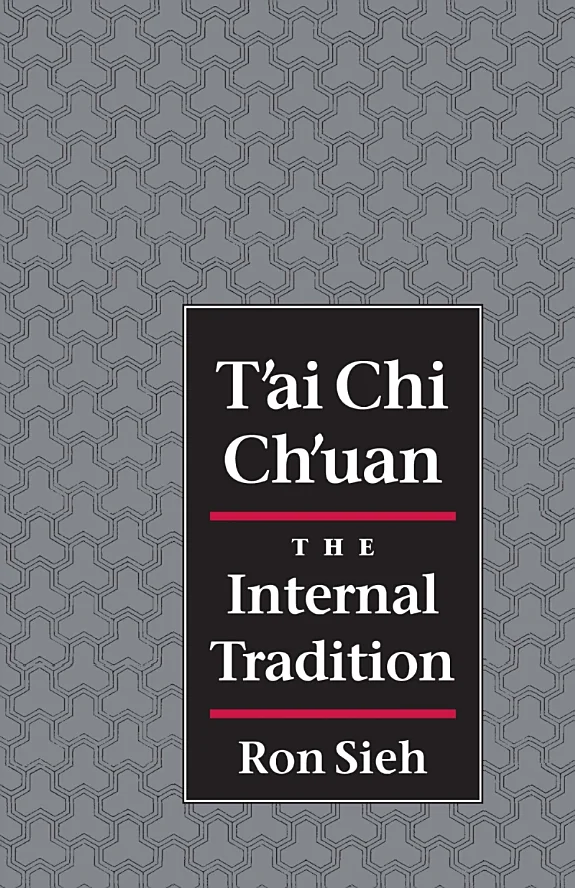
T'ai Chi Ch'uan
 77
77

T'ai Chi Ch'uan
Ron Sieh's "T'ai Chi Ch'uan: The Internal Tradition" provides a welcome counterpoint to the often-sanitized Western perception of T'ai Chi. Sieh’s examination of the martial aspects, particularly his emphasis on the “internal or feeling style,” is a significant strength. He articulates how cultivating sensitivity and internal awareness can indeed bring greater integrity to one’s life, a point often lost in simplified approaches. However, the book occasionally feels dense; while thorough, some passages could benefit from more direct illustrative examples of the movements themselves, rather than relying solely on conceptual explanation. The section exploring the fighting application is particularly compelling, forcing the reader to reconsider T'ai Chi as more than gentle exercise. It’s a rigorous, if demanding, exploration of an ancient art.
📝 Description
77
Ron Sieh's 1992 book argues T'ai Chi Ch'uan is an internal art, not just gentle exercise.
Ron Sieh's "T'ai Chi Ch'uan: The Internal Tradition" was published in 1992, a time when the martial art was often seen in the West as primarily a health practice. Sieh's work counters this by focusing on the internal mechanics and philosophical foundations of T'ai Chi. He breaks down the art into stages of training, connecting technical development with mindfulness and somatic awareness. The book aims to show the core of T'ai Chi as an internal discipline, separate from purely external fighting methods.
This text is for serious T'ai Chi practitioners who want a deeper understanding beyond basic movements. It will interest those curious about the martial applications and internal energetics, especially if they find standard explanations insufficient. Students of body-mind integration, mindfulness, and somatic psychology will find Sieh's perspective valuable, as will martial artists from other styles interested in internal traditions.
Published in 1992, "T'ai Chi Ch'uan: The Internal Tradition" emerged when T'ai Chi was increasingly known in the West, often as a gentle exercise. Sieh's book pushed back against this trend by closely examining the martial origins and internal principles. It placed T'ai Chi within a lineage of esoteric martial arts, offering a scholarly yet accessible examination of its deeper aspects, a contrast to the simpler interpretations common at the time.
💡 Why Read This Book?
• Understand the martial underpinnings of T'ai Chi Ch'uan by exploring the "fighting" aspect, as detailed in Sieh's analysis, which offers a unique perspective on its practical application. • Cultivate deeper body presence and mindfulness through Sieh's methodical breakdown of training stages, directly linking somatic awareness to technical development. • Gain insight into the "internal tradition" of T'ai Chi, distinguishing its energy cultivation and internal mechanics from purely external martial arts practices.
⭐ Reader Reviews
Honest opinions from readers who have explored this book.
❓ Frequently Asked Questions
When was T'ai Chi Ch'uan: The Internal Tradition first published?
The book "T'ai Chi Ch'uan: The Internal Tradition" by Ron Sieh was first published in 1992, offering a detailed exploration of the martial art's deeper principles.
What is the main focus of Ron Sieh's book on T'ai Chi?
The book's main focus is on the "internal tradition" of T'ai Chi Ch'uan, emphasizing mindfulness, body presence, and the martial applications derived from an internal or "feeling" style.
Does the book explain the fighting applications of T'ai Chi?
Yes, a significant part of the book investigates the "fighting" aspect of T'ai Chi, arguing that an emphasis on the internal, feeling style provides a powerful tool for efficacy.
Is this book suitable for beginners in T'ai Chi?
While it offers clarity, the book is best suited for practitioners who have moved beyond basic movements and are seeking a deeper, more rigorous understanding of T'ai Chi's internal principles.
What distinguishes Sieh's approach from other T'ai Chi books?
Sieh's approach distinguishes itself by its deep inquiry into the martial roots and internal energetics, contrasting with many books that focus primarily on T'ai Chi for health or gentle exercise.
What does 'internal tradition' mean in the context of this book?
In Sieh's work, the 'internal tradition' refers to the cultivation of energy, sensitivity, and mind-body connection within T'ai Chi, as opposed to external force or superficial form.
🔮 Key Themes & Symbolism
Internal Energetics
The work meticulously details the concept of internal energetics within T'ai Chi Ch'uan, moving beyond mere physical form. Sieh explores how cultivating 'qi' (energy) through specific practices enhances movement fluidity, power generation, and somatic awareness. This internal cultivation is presented as the core of the 'internal tradition,' distinguishing it from external martial arts that rely on brute strength. The book guides the reader to feel and direct these subtle energies, transforming the practice from a series of movements into a dynamic interplay of internal forces.
Mindfulness and Body Presence
Central to Sieh's approach is the integration of mindfulness and profound body presence into every stage of T'ai Chi training. The text argues that true mastery requires not just physical execution but a deep, felt connection to one's own body and its energetic state. This heightened awareness, cultivated through deliberate practice, allows for greater precision, responsiveness, and integrity in movement. The book offers methods to develop this somatic intelligence, making the practice a tool for self-awareness and clarity.
Martial Application and Integrity
Ron Sieh's "T'ai Chi Ch'uan: The Internal Tradition" distinctly examines the martial applications of the art, focusing on how the 'internal or feeling style' serves as a powerful tool. This perspective challenges the notion of T'ai Chi solely as a health exercise, revealing its sophisticated combat potential rooted in sensitivity and internal power. The book asserts that developing this martial integrity through internal means fosters greater clarity and ethical grounding in all aspects of life, aligning physical discipline with personal character.
Stages of Training
The book systematically outlines distinct stages of training within T'ai Chi Ch'uan, providing a structured pathway for practitioners to develop their skills. Each stage is described not just in terms of technical progression but also in its contribution to the cultivation of internal awareness and energy. This methodical approach ensures that students can build a solid foundation, gradually deepening their understanding and connection to the art's core principles, from initial movements to advanced internal applications.
💬 Memorable Quotes
Direct passages from the work, attributed to the author.
“The emphasis on the internal or feeling style is a powerful tool for bringing more integrity and clarity into our lives.”
— This statement highlights the book's core thesis: that the subtle, sensation-based approach of internal T'ai Chi cultivates not only physical skill but also a deeper sense of personal wholeness and clear intention.
“Tying mindfulness and body presence through stages of training.”
— This phrase emphasizes the book's integrated methodology, demonstrating that mindfulness and somatic awareness are not separate from technical development but are woven into its very fabric.
“Sieh's inquiry into the 'fighting' aspect.”
— This points to a key focus of the book, distinguishing it from purely health-oriented T'ai Chi texts by examining the martial applications and effectiveness of the internal style.
“A clear and insightful approach to T'ai Chi.”
— This suggests the author presents complex concepts in an understandable manner, making the intricate world of internal martial arts accessible to dedicated practitioners.
💡 Key Ideas
Editorial paraphrase of the work's core concepts — not direct quotes.
T'ai Chi Ch'uan: The Internal Tradition is a clear and insightful approach.
This quote, from the original blurb, suggests the book offers accessible yet profound explanations of T'ai Chi's complex internal principles, making it valuable for serious students.
🌙 Esoteric Significance
Tradition
This work fits within the broader esoteric tradition of internal martial arts, which often share roots with Taoist philosophy and practices aimed at cultivating vital energy (qi). While not explicitly aligning with Western Hermeticism or Kabbalah, the emphasis on internal cultivation, mind-body integration, and the flow of unseen forces connects it to a universal pursuit of inner mastery and energetic awareness found across many mystical traditions.
Symbolism
The core symbolism revolves around the concept of 'internal tradition' itself, representing the unseen energetic pathways and cultivated awareness that define the art. The 'feeling style' acts as a symbolic representation of intuitive understanding and energetic resonance, moving beyond literal interpretation. The 'fighting' aspect, while seemingly physical, symbolizes the application of internal discipline and control in confronting external challenges, embodying the Taoist principle of yielding to overcome.
Modern Relevance
Contemporary thinkers and practitioners in fields like somatic psychology, embodied cognition, and advanced martial arts studies draw on the principles articulated by Sieh. His emphasis on deep body presence and internal energetics appeals to modern explorations of consciousness and the mind-body connection, informing practices seeking holistic development beyond purely physical or intellectual engagement.
👥 Who Should Read This Book
• Dedicated T'ai Chi practitioners seeking to understand the art's martial roots and internal energetic principles beyond superficial instruction. • Students of Taoist philosophy and esoteric practices interested in how ancient wisdom is applied to physical and energetic cultivation. • Martial artists from various disciplines curious about the depth and sophistication of internal martial arts methodologies.
📜 Historical Context
Ron Sieh's "T'ai Chi Ch'uan: The Internal Tradition," published in 1992, arrived at a time when Western understanding of T'ai Chi was largely bifurcated. On one hand, it was embraced as a gentle exercise for health and longevity, popularized by figures like Dr. Paul Lam and the global spread of Yang-style routines. On the other, a more dedicated, often insular, community preserved its martial heritage. Sieh’s work positioned itself firmly within this latter group, providing a rigorous, scholarly examination of the art's internal principles and martial applications. This was a departure from the prevalent, simplified health-focused narratives and offered a more complete picture of the practice's depth. While not facing overt censorship, its detailed focus on martial aspects might have been less palatable to mainstream wellness circles of the era, which preferred to de-emphasize combativeness.
📔 Journal Prompts
The 'feeling style' and its application to cultivating integrity.
Body presence as a bridge between technique and internal awareness.
The distinction between internal and external methods in martial arts.
How mindfulness enhances the stages of training in T'ai Chi.
Interpreting the 'fighting' aspect as a metaphor for life's challenges.
🗂️ Glossary
Internal Tradition
Refers to the lineage and principles of T'ai Chi Ch'uan that emphasize the cultivation of internal energy (qi), mind-body integration, and subtle mechanics over brute force or external appearance.
Feeling Style
An approach to T'ai Chi characterized by a deep sensitivity to internal sensations, energetic flow, and subtle body movements, guiding technique through intuitive awareness rather than conscious muscular effort.
Body Presence
A state of profound somatic awareness, where one is deeply connected to and aware of their physical sensations, energetic state, and the immediate experience of their body in space.
Mindfulness
A state of active, open attention on the present, acknowledging and accepting one's feelings, thoughts, and sensations without judgment, applied here to the practice of T'ai Chi.
Qi (Chi)
In traditional Chinese culture and martial arts, qi refers to vital life force or energy that flows through the body, influencing health, vitality, and the effectiveness of movement.
Fighting Aspect
The martial applications and combat effectiveness inherent in T'ai Chi Ch'uan, explored in the book as stemming from the principles of the internal tradition and feeling style.
Stages of Training
The sequential phases or levels of development outlined in the book for learning T'ai Chi Ch'uan, progressing from foundational techniques to more advanced internal mastery.
This book appears in 1 collection
🔮 Readers Also Liked
Browse all →









From the “Tai Chi” Collection
View all →







More Free Occult Philosophy Books
View all →