The Definitive Tarot
 74
74

The Definitive Tarot
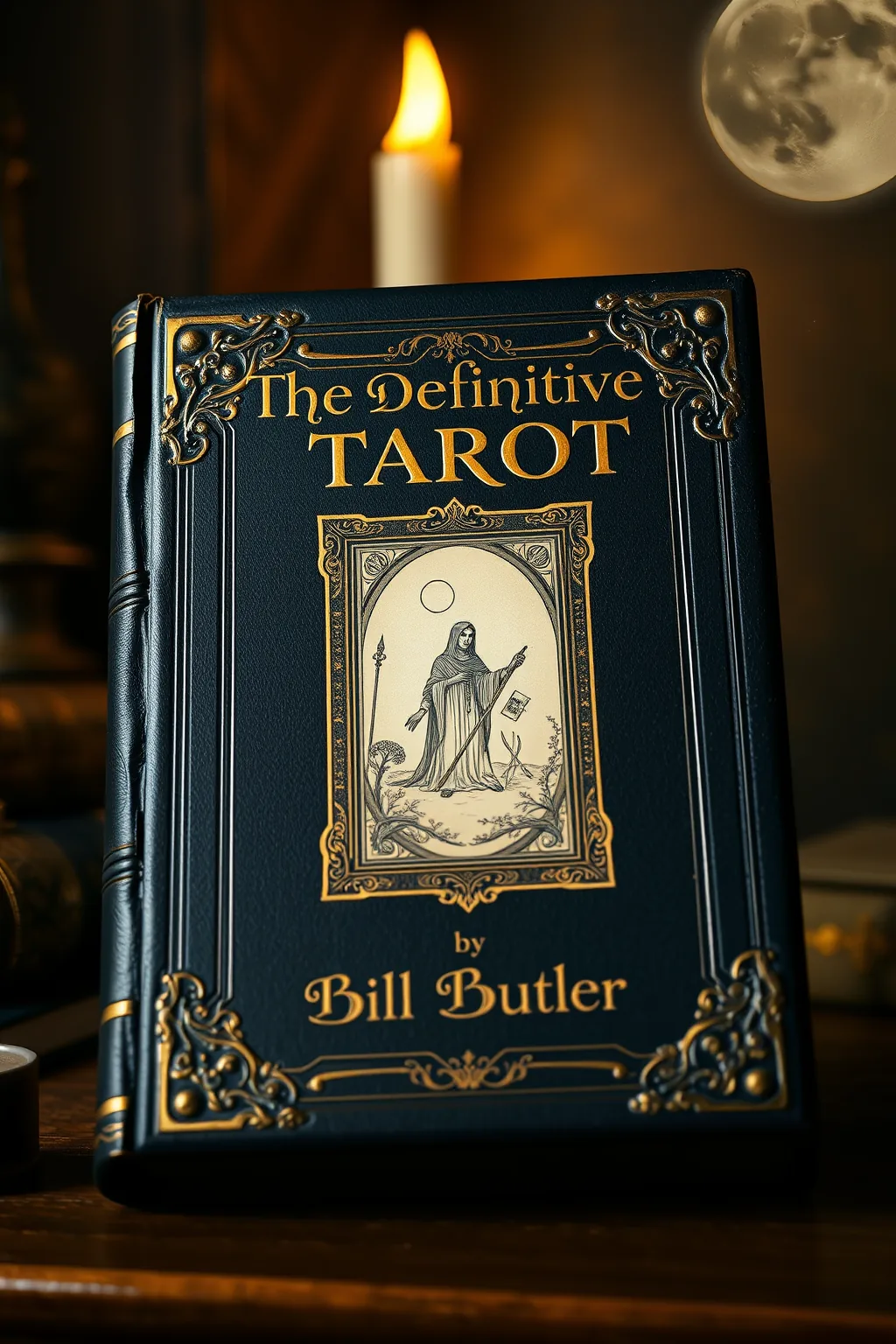
Bill Butler’s The Definitive Tarot, originating in 1975, avoids the pitfalls of overly simplistic fortune-telling manuals. Instead, it offers a structured exploration of the tarot's iconography and historical trajectory. Butler’s strength lies in his methodical approach, dissecting the symbolism of each card with a clarity that grounds the reader. He competently links the imagery to broader Western esoteric currents, providing context that enriches the understanding of the deck. However, the work occasionally feels constrained by its 1970s academic milieu, sometimes presenting interpretations with a certainty that might overlook more fluid, modern readings. A passage discussing the Fool's journey, for example, firmly anchors its meaning in a pre-ordained spiritual quest, which, while valid, omits the contemporary emphasis on free will and emergent meaning. Despite this, the book remains a solid, informative resource for those wishing to build a foundational understanding of the tarot's complex symbolic system.
📝 Description
74
Published in 1975, Bill Butler's The Definitive Tarot examines the 78 cards beyond simple fortune-telling.
Bill Butler's 1975 book, The Definitive Tarot, presents a thorough study of the tarot deck. It goes beyond basic cartomancy to examine the historical origins and symbolic language of the cards. The work serves as both a historical record and a practical manual, detailing the archetypal images and narrative structures found within the 78 cards. Butler's aim is to clarify the tarot, providing a methodical way to grasp its elements. This includes the philosophical progression of the Major Arcana and the elemental associations of the Minor Arcana.
The book is aimed at dedicated students of divination and esoteric symbolism. It is particularly for those who want a deeper grasp of the tarot's historical development and philosophical basis. Readers who see the tarot as a system of symbolic representation, connected to Western esotericism, will find it appealing. Individuals interested in how occult studies changed during the 20th century will also benefit from this volume.
The Definitive Tarot appeared during a period of renewed interest in occultism and esoteric traditions following World War II. The 1970s saw a rise in metaphysical study, influenced by figures like Dion Fortune and Aleister Crowley. Butler's work sought to organize and codify existing tarot knowledge, offering a more structured, academic approach than some contemporary mystical texts. It built upon foundations laid by earlier traditions, such as the Hermetic Order of the Golden Dawn and the Rider-Waite-Smith deck.
💡 Why Read This Book?
• Gain a structured understanding of the tarot's 78 cards, moving beyond simple interpretations to grasp their archetypal significance as presented in the book's systematic breakdown. • Explore the historical development of the tarot in the 20th century, understanding its place within the esoteric landscape of 1975 and its influences from groups like the Hermetic Order of the Golden Dawn. • Learn to connect tarot symbolism to Western esoteric traditions, appreciating how Butler frames the cards as a symbolic map of spiritual development, informed by the era's intellectual currents.
⭐ Reader Reviews
Honest opinions from readers who have explored this book.
❓ Frequently Asked Questions
When was Bill Butler's The Definitive Tarot first published?
The Definitive Tarot by Bill Butler was first published in 1975, placing it within a significant period of renewed interest in esoteric studies and symbolic systems.
What makes The Definitive Tarot different from other tarot books?
This book distinguishes itself by offering a structured, historical, and symbolic examination of the tarot, moving beyond basic divination to explore its roots and archetypal language.
Does the book discuss the historical influences on the tarot?
Yes, The Definitive Tarot explores the historical development of the tarot, referencing its place within Western esotericism and its connection to intellectual currents of the mid-20th century.
What are the main sections of the tarot discussed in the book?
The book systematically covers the Major Arcana, detailing their philosophical journeys, and the Minor Arcana, examining their elemental correspondences and narrative structures.
Is The Definitive Tarot suitable for beginners?
It is suitable for beginners seeking a comprehensive and structured introduction, but its depth and historical context also appeal to more advanced students of the tarot.
What esoteric traditions does the book relate the tarot to?
The book relates the tarot to Western esoteric traditions, including Kabbalah and astrology, framing it as a symbolic map of spiritual development, aligning with mid-20th century thought.
🔮 Key Themes & Symbolism
Archetypal Journeys
Butler meticulously dissects the Major Arcana, presenting them not as random figures but as stages in a universal human journey. The Fool's initiation, the Magician's mastery, and the World's completion are explored as symbolic representations of consciousness evolution. This approach grounds the tarot in psychological and philosophical frameworks, suggesting the cards reflect an inner field of potentials and challenges, a concept that gained traction with figures like Carl Jung in the mid-20th century.
Symbolic Language of the Minor Arcana
The Minor Arcana are examined through their elemental and numerological associations, linking them to Kabbalistic concepts and astrological correspondences. Butler breaks down the suits of Wands, Cups, Swords, and Pentacles, detailing how their progression from Ace to Ten, and the presence of Court Cards, narrates the unfolding of mundane affairs and inner states. This systematic approach aims to reveal the coherent symbolic grammar underlying the entire deck.
Historical Synthesis
Published in 1975, the book represents an effort to consolidate and present the established understanding of the tarot within Western esoteric traditions. It acknowledges the lineage of interpretation that stretches back through figures associated with the Hermetic Order of the Golden Dawn and earlier occult revivals. Butler's work serves as a snapshot of tarot scholarship during a period of significant public interest in mysticism and the occult.
Tarot as a Symbolic Map
Central to Butler's thesis is the idea of the tarot as a profound symbolic map, offering insights into the human condition and the nature of reality. It’s presented as a tool for self-reflection and understanding, rather than solely a predictive device. This perspective aligns with the psychological and philosophical applications of the tarot that became prominent in the mid-20th century, encouraging a deeper engagement with its imagery.
💬 Memorable Quotes
Direct passages from the work, attributed to the author.
“The Fool represents the raw potential and the leap of faith before the structured journey begins.”
— This interpretation highlights the archetypal beginning of the Major Arcana, emphasizing the unformed state and the courage required to begin any significant path, whether spiritual or personal.
“Each suit in the Minor Arcana corresponds to a distinct elemental force and mode of experience.”
— This concept underscores the structured nature of the Minor Arcana, suggesting that the four suits (Wands, Cups, Swords, Pentacles) represent different domains of life and consciousness tied to fire, water, air, and earth.
“The Court Cards embody different facets of personality and social interaction within the tarot's narrative.”
— This frames the Kings, Queens, Knights, and Pages not just as figures of authority but as representations of human archetypes and the dynamics of relationships and social roles.
“Understanding the tarot requires appreciating its deep roots in Western esoteric symbolism.”
— This points to the book's core argument: that a meaningful engagement with the tarot necessitates an awareness of its historical and symbolic context within traditions like Hermeticism and Kabbalah.
“The deck functions as a mirror reflecting the querent's inner landscape and external circumstances.”
— This emphasizes the divinatory and introspective purpose of the tarot, suggesting that the cards offer insights by resonating with the individual's present state and potential future paths.
🌙 Esoteric Significance
Tradition
The Definitive Tarot is firmly rooted in the Western Esoteric Tradition, drawing heavily on interpretations that evolved from Renaissance occultism through to the Hermetic Order of the Golden Dawn and early 20th-century occult revivalists. It attempts to synthesize Kabbalistic, astrological, and Hermetic principles as applied to the tarot deck. While not strictly adhering to a single lineage, it functions within the broad Hermetic stream that views the tarot as a symbolic microcosm of the universe and a map for spiritual development.
Symbolism
Key symbols explored include the archetypal figures of the Major Arcana, such as The Fool and The Magician, representing stages of consciousness and mastery. The four suits of the Minor Arcana—Wands (Fire), Cups (Water), Swords (Air), and Pentacles (Earth)—are analyzed for their elemental correspondences and narrative functions. The Court Cards are presented as embodiments of personality archetypes and social dynamics, all contributing to a rich symbolic language intended to mirror inner and outer realities.
Modern Relevance
Contemporary practitioners of Western esoteric traditions, particularly those interested in historical tarot scholarship, continue to reference Butler's work. Its systematic approach and historical grounding are valued by those seeking to understand the evolution of tarot interpretation beyond purely intuitive or New Age frameworks. Thinkers exploring the intersection of psychology and symbolism, as well as students of comparative religion and occult history, find its mid-20th-century perspective valuable for tracing the development of esoteric thought.
👥 Who Should Read This Book
• Students of Western Esotericism: Those seeking to understand the historical development and symbolic underpinnings of the tarot within traditions like Hermeticism and Kabbalah will find a structured overview. • Tarot Enthusiasts Seeking Depth: Individuals who have moved beyond basic card meanings and desire a more analytical and historical perspective on the deck's structure and symbolism. • Researchers of Occult History: Scholars and enthusiasts interested in the state of esoteric studies in the mid-20th century will find this book a valuable reference point for 1970s occult literature.
📜 Historical Context
Bill Butler's The Definitive Tarot emerged in 1975, a period marked by a burgeoning popular interest in mysticism and the occult, following the counter-cultural shifts of the 1960s. Esoteric studies were gaining broader traction, moving from niche academic circles to wider public consciousness, influenced by figures like Aleister Crowley and Dion Fortune whose works had already laid significant groundwork for modern tarot interpretation. The book entered a vibrant landscape where established traditions like the Hermetic Order of the Golden Dawn's interpretations were being re-examined and expanded upon. While occultism was becoming more accessible, it still faced skepticism from mainstream academia. Butler's work can be seen as an attempt to provide a structured, almost scholarly, framework for understanding the tarot, differentiating itself from more purely divinatory or sensationalist approaches prevalent at the time. It contributed to the ongoing effort to codify and legitimize esoteric knowledge within Western thought.
📔 Journal Prompts
The Fool's leap into the unknown: What is a current 'leap of faith' you are contemplating, and what raw potential does it represent?
Analyze the elemental correspondences of the Minor Arcana suits (Wands, Cups, Swords, Pentacles) as presented in the book. How do they manifest in your daily life?
Reflect on the archetypal journey of the Major Arcana. Which card currently feels most resonant with your personal path?
Consider the role of the Court Cards as representations of personality and social dynamics. Which card archetype do you most identify with, and why?
How does Butler's framing of the tarot as a 'symbolic map' influence your understanding of your own life path?
🗂️ Glossary
Major Arcana
The set of 22 trump cards in a tarot deck, typically depicting archetypal figures and symbolic journeys, representing significant life events and spiritual lessons.
Minor Arcana
The 56 cards divided into four suits (Wands, Cups, Swords, Pentacles), which usually represent everyday events, challenges, and circumstances in a tarot reading.
Court Cards
The four face cards in each suit of the Minor Arcana (Page, Knight, Queen, King), often interpreted as representing people, personalities, or specific aspects of a situation.
Kabbalah
A system of Jewish mysticism and esoteric interpretation that seeks to understand the divine nature and the creation of the universe, often using the Tree of Life as a framework.
Hermeticism
A philosophical and religious tradition based on the purported teachings of Hermes Trismegistus, emphasizing spiritual enlightenment, the interconnectedness of all things, and divine knowledge.
Cartomancy
The practice of fortune-telling or divination using a deck of cards, most commonly a standard 52-card deck or a tarot deck.
Archetype
In psychology and mythology, a universal, archaic pattern and image that derives from the collective unconscious and is inherited, appearing in various forms in literature and folklore.
This book appears in 1 collection
🔮 Readers Also Liked
Browse all →









From the “Major Arcana” Collection
View all →







More Free Occult Philosophy Books
View all →