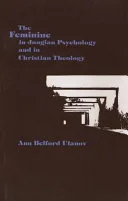
The Feminine in Jungian Psychology and in Christian Theology
 77
77

The Feminine in Jungian Psychology and in Christian Theology
Ann Belford Ulanov's 1971 study is a meticulously constructed argument that, even decades later, offers a potent lens through which to view the intersection of psychological and theological frameworks. Her ability to integrate Jung's complex concepts of the feminine archetype—particularly the anima—with the symbolic language of Christian doctrine is impressive, avoiding easy conflation while drawing illuminating parallels. The section detailing the projection of feminine archetypes onto figures like the Virgin Mary is especially compelling, offering a sophisticated psychological interpretation of devotional practices. However, the text's academic density, while a strength for scholarly pursuits, may prove challenging for readers less familiar with either Jungian terminology or theological exegesis. A clearer glossary for the non-specialist, perhaps, could have mitigated this. Despite this, the book remains a vital exploration of how psychological understanding can profoundly reshape our perception of the divine feminine within a specific religious tradition.
📝 Description
77
Ann Belford Ulanov's 1971 book examines the feminine psyche within Jungian psychology and Christian theology.
Published in 1971, "The Feminine in Jungian Psychology and in Christian Theology" by Ann Belford Ulanov systematically synthesizes Carl Jung's theories on the feminine psyche with Christian doctrine. Ulanov investigates how understanding the anima, the unconscious feminine aspect of the male psyche, and related archetypes can deepen theological perspectives on the divine and humanity. The work acts as a bridge between analytical psychology and religious thought, addressing a topic that had seen limited systematic exploration from this dual viewpoint. It emerged during a time when integrating psychological theories into theological discourse was growing, with Jung's ideas gaining attention in religious communities. Ulanov's contribution was to directly engage the complex relationship between Jung's views on the feminine principle and established Christian theology, offering a potential counterpoint to traditional interpretations.
This book is suited for scholars, theologians, advanced psychology students, and those studying comparative religion or Jungian archetypes. It appeals to individuals seeking to align psychological insights with theological frameworks, especially within Christian traditions. Readers interested in the historical development of Jungian thought and its application to religious studies will find value here. This is not an introductory text but a rigorous academic inquiry.
This work sits within the tradition of depth psychology engaging with religious symbolism and doctrine. Following Carl Jung's own forays into alchemy and comparative religion, Ann Belford Ulanov applies his analytical framework to Christian theology. Her examination of the anima, the unconscious feminine in the male psyche, and its connection to theological concepts speaks to a broader esoteric movement that sought to find psychological correlates for spiritual experiences and structures. The book's engagement with the feminine principle also aligns with later theological discussions that sought to rebalance patriarchal interpretations by drawing on psychological insights.
💡 Why Read This Book?
• Gain a nuanced understanding of the Jungian anima concept and its specific application to Christian theological imagery, as explored in Ulanov's detailed analysis of archetypes. • Discover how Jungian psychology can illuminate traditional Christian doctrines concerning the feminine, offering new perspectives on figures like the Virgin Mary and the concept of Sophia. • Appreciate the historical dialogue between psychology and religion initiated in the late 20th century, specifically through Ulanov's work which engaged directly with Jung's theories in 1971.
⭐ Reader Reviews
Honest opinions from readers who have explored this book.
❓ Frequently Asked Questions
What is the primary focus of Ann Belford Ulanov's "The Feminine in Jungian Psychology and in Christian Theology"?
The book's primary focus is to explore the implications of Carl Jung's psychological theories about the feminine psyche for Christian theology, synthesizing Jungian concepts with religious doctrines.
When was "The Feminine in Jungian Psychology and in Christian Theology" first published?
The book was first published in 1971, placing it within a period of significant integration of psychological thought into religious studies.
What is the Jungian concept of the anima as discussed in the book?
The anima is the unconscious feminine aspect within the male psyche, a concept Ulanov explores in relation to how it influences perceptions of the divine feminine in Christian theology.
Who would benefit most from reading this book?
Scholars, theologians, students of Jungian psychology, and those interested in comparative religion or the intersection of psychology and spirituality would find this work highly beneficial.
Does the book offer practical applications for personal spiritual growth?
While primarily an academic text, the insights into archetypes and the divine feminine can offer profound personal reflection and a deeper understanding of one's own psyche and spiritual landscape.
What is the relationship between Jung and Christian theology explored in the book?
Ulanov investigates how Jung's analytical psychology, particularly his ideas on the collective unconscious and archetypes, can illuminate, reframe, and enrich traditional Christian theological understandings of the feminine.
🔮 Key Themes & Symbolism
Archetypes of the Feminine
The work studies Jung's archetypal psychology, focusing on the anima as the unconscious feminine in men and its broader implications. Ulanov examines how archetypes like the Great Mother and the Wise Old Woman manifest within Christian narratives and theological constructs. This exploration moves beyond simple gender roles to understand the dynamic psychological energies that shape religious experience and doctrine, offering a framework for understanding the divine feminine not just as a theological concept but as a psychic reality.
Jungian Psychology and Theology
This theme centers on the methodological and substantive integration of Jungian psychology with Christian theology. Ulanov presents Jung's analytical approach as a tool for understanding religious symbolism and dogma, particularly concerning the feminine. The book investigates how psychological insights into the human psyche, including the unconscious and its symbolic language, can provide new interpretations of biblical narratives, the nature of God, and the structure of religious experience. It highlights the potential for fruitful dialogue between these two fields.
The Divine Feminine in Christianity
A core concern is the representation and theological status of the feminine divine within Christianity. Ulanov analyzes how figures like the Virgin Mary and the concept of Sophia (Wisdom) can be understood through the lens of Jungian feminine archetypes. The book challenges purely patriarchal interpretations by exploring the psychological significance of feminine divine imagery, suggesting that a more integrated understanding of masculine and feminine principles is essential for a complete theological picture and a healthier psyche.
Psychological Interpretation of Religious Symbolism
The book employs Jungian psychology to interpret key Christian symbols and doctrines. Ulanov examines how the human psyche naturally creates and responds to religious symbols, and how these symbols, in turn, reveal unconscious psychological dynamics. This approach offers a framework for understanding the enduring power of religious imagery and the ways in which theological concepts are deeply intertwined with fundamental human psychological structures, particularly those related to the feminine.
💬 Memorable Quotes
Direct passages from the work, attributed to the author.
“The feminine is not merely a biological or social fact, but a psychic reality that has profound theological implications.”
— This statement captures Ulanov's central thesis: that Jung's psychological understanding of the feminine principle transcends superficial definitions and offers vital insights into the nature of the divine and religious expression.
“Jung's concept of the anima offers a way to understand the projection of feminine qualities onto the divine.”
— This highlights how the anima, the unconscious feminine in men, influences how individuals perceive and relate to feminine aspects of God or the divine, impacting theological interpretations.
“Theology must account for the psychological reality of the feminine, not just its doctrinal representation.”
— This emphasizes the book's argument that religious doctrines need to be informed by a deeper understanding of human psychology, particularly concerning the feminine, to be fully realized.
“Figures like the Virgin Mary serve as potent containers for feminine archetypal energy within Christianity.”
— This interpretation suggests that the veneration and symbolic meaning of the Virgin Mary are deeply connected to the psychological experience of feminine archetypes, as explored through a Jungian lens.
💡 Key Ideas
Editorial paraphrase of the work's core concepts — not direct quotes.
The integration of masculine and feminine elements is central to both individual wholeness and a balanced theological perspective.
This paraphrased concept points to the book's exploration of psychological integration as a model for understanding theological balance, advocating for the recognition of both masculine and feminine divine principles.
🌙 Esoteric Significance
Tradition
While not strictly belonging to a single esoteric lineage, Ulanov's work draws heavily from Jungian analytical psychology, which itself has esoteric undertones and influences, particularly from Gnosticism, alchemy, and Hermeticism through Jung's own studies. The focus on archetypes and the unconscious can be seen as a modern psychological interpretation of ancient symbolic systems and universal patterns of consciousness explored in various esoteric traditions. It reframes the 'divine feminine' not just as a theological concept but as a profound psychic force, aligning with traditions that venerate feminine divine principles.
Symbolism
Key symbols explored include the anima, representing the inner feminine in men, and archetypal figures like the Great Mother and Sophia (Wisdom). In an esoteric context, the anima can be understood as the soul's connection to the divine feminine principle, a gateway to deeper spiritual understanding. The Great Mother symbolizes the generative and nurturing aspects of the cosmos, while Sophia represents divine intelligence and revelation. Ulanov's work psychologizes these potent symbols, revealing their deep resonance within the human psyche and their function in spiritual development.
Modern Relevance
Ulanov's exploration of the divine feminine continues to resonate with contemporary movements focused on ecofeminism, goddess spirituality, and the integration of psychological well-being with spiritual practice. Thinkers and practitioners in depth psychology, particularly those working within Jungian and post-Jungian frameworks, frequently cite her work. Furthermore, contemporary theological discussions seeking to de-patriarchalize religious language and explore more inclusive representations of the divine draw upon the foundations laid by this book.
👥 Who Should Read This Book
• Students of Jungian psychology seeking to understand the practical application of archetypal theory to religious and cultural phenomena. • Theologians and religious scholars interested in exploring the intersection of psychology and Christian doctrine, particularly concerning feminine symbolism. • Individuals engaged in personal spiritual development who wish to deepen their understanding of the divine feminine and its psychological manifestations within themselves and tradition.
📜 Historical Context
Published in 1971, Ann Belford Ulanov's "The Feminine in Jungian Psychology and in Christian Theology" emerged during a central era for interdisciplinary studies, particularly at the confluence of psychology and religion. The mid-20th century saw a growing interest in Carl Jung's theories, moving beyond Freudian psychoanalysis to explore the depths of the unconscious, archetypes, and the collective unconscious. In theological circles, there was a burgeoning discourse on the nature of God and the critique of patriarchal structures, influenced by thinkers and movements that questioned traditional interpretations. Ulanov's work was a significant contribution to this dialogue, directly engaging Jung's complex ideas about the anima and feminine archetypes with established Christian doctrine. It offered a sophisticated counterpoint to the prevailing theological perspectives, which often centered on masculine imagery of the divine. While contemporary theologians like Paul Tillich had begun to incorporate existential psychology, Ulanov's specific focus on the feminine in Jungian thought provided a novel and detailed exploration, filling a gap in the scholarly literature.
📔 Journal Prompts
The anima projection onto theological figures: how does this concept illuminate your personal understanding of the divine feminine?
Reflect on the archetype of Sophia: where do you encounter this figure in scripture, tradition, or your own life?
Consider the Great Mother archetype: what aspects of this symbol are most potent in your psychological or spiritual landscape?
The integration of masculine and feminine elements: how does this principle manifest in your own psyche and spiritual journey?
Ulanov's synthesis of Jung and Christian theology: what tensions or harmonies do you perceive between psychological and doctrinal frameworks?
🗂️ Glossary
Anima
In Jungian psychology, the unconscious feminine aspect within the male psyche. It influences a man's emotional life, relationships, and his perception of women and the divine feminine.
Archetype
Universal, archaic patterns and images that derive from the collective unconscious and are the psychic counterpart of instinct. Examples include the Mother, Hero, and Wise Old Man/Woman.
Collective Unconscious
A concept developed by Carl Jung, referring to the part of the unconscious mind that is common to all humanity, containing inherited psychic structures and archetypes.
Sophia
Greek for 'wisdom.' In theological and mystical traditions, Sophia often represents divine wisdom, sometimes personified as a feminine divine figure, particularly in Gnosticism and some Christian mystical traditions.
Great Mother
A primary archetype representing the nurturing, generative, and sometimes destructive aspects of the feminine principle. It encompasses fertility, motherhood, and the life-death cycle.
Psychic Reality
The state or quality of being real in terms of the mind and consciousness. Ulanov uses this to argue that psychological phenomena, like archetypes, have a tangible effect and significance.
Projection
In psychology, the unconscious attribution of one's own unacceptable feelings, impulses, or ideas to someone else. Ulanov discusses the projection of anima qualities onto religious figures.