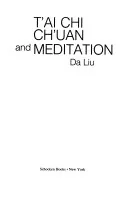
T'ai Chi Ch'uan and Meditation
 82
82

T'ai Chi Ch'uan and Meditation
Liu Da's T'ai Chi Ch'uan and Meditation presents a commendable effort to demystify the internal art for Western readers, a task it largely succeeds at due to its straightforward prose. The 1986 publication date positions it as a relatively early attempt to articulate the practice’s theoretical depth outside of traditional Chinese circles. Its strength lies in the lucid explanation of the connection between the physical forms and the internal states they aim to cultivate. A notable limitation, however, is that while it explains the theory, the sheer depth of T'ai Chi requires more than a single text for true mastery; the book functions best as an introduction. The section detailing the specific meditative postures, while clear, assumes a certain level of physical discipline that some newcomers might find challenging without direct instruction. Ultimately, it is a valuable primer for understanding the philosophical framework of T'ai Chi, more so than a comprehensive guide to advanced practice.
📝 Description
82
Liu Da's 1986 book connects T'ai Chi Ch'uan's physical practice with its meditative depths.
Published in 1986, Liu Da's T'ai Chi Ch'uan and Meditation bridges the physical movements of the internal martial art with its philosophical and contemplative dimensions. The author aimed to make the practice understandable to a broader audience, detailing specific exercises and meditation techniques. The book stresses a complete approach to integrating mind and body.
This work suits individuals seeking a clear introduction to T'ai Chi Ch'uan, especially those drawn to its spiritual and contemplative aspects. It is for practitioners wanting to grasp more than just the external forms, and for anyone interested in how martial arts can lead to self-improvement and inner calm. It serves both beginners and those looking to enhance their current training.
Liu Da's text appeared in 1986, a period when T'ai Chi Ch'uan was becoming popular in the West, often viewed as a method for health. This book stands apart by concentrating on the deeper theoretical and meditative origins, aligning with a growing interest in Eastern philosophies beyond surface applications. It provided an alternative to purely secular views of the art.
This book sits within the broader tradition of internal Chinese arts that emphasize the cultivation of *qi* and the integration of mind, body, and spirit. It connects the physical discipline of T'ai Chi Ch'uan, rooted in Taoist principles, with meditative practices aimed at spiritual development. The text positions the martial art not merely as a form of exercise or combat, but as a path toward inner stillness and expanded consciousness, reflecting a lineage of thought that views physical training as a vehicle for spiritual cultivation.
💡 Why Read This Book?
• Gain a practical understanding of how T'ai Chi Ch'uan movements serve as active meditation, as detailed in the book's descriptions of specific postures and their energetic flow. • Discover the theoretical underpinnings of *qi* cultivation as presented by Liu Da, offering insights into vital energy manipulation beyond common wellness interpretations. • Learn to integrate meditative principles into daily routines, as the book outlines methods for applying T'ai Chi theory to enhance mental clarity and focus.
⭐ Reader Reviews
Honest opinions from readers who have explored this book.
❓ Frequently Asked Questions
When was T'ai Chi Ch'uan and Meditation first published?
The book T'ai Chi Ch'uan and Meditation by Liu Da was first published in 1986, making it an early accessible guide for Western audiences interested in the practice's deeper aspects.
What is the primary focus of Liu Da's book?
The primary focus is to provide a clear introduction to T'ai Chi Ch'uan, explaining both the methods of exercise and meditation and their underlying theoretical principles.
Does the book cover advanced T'ai Chi techniques?
While it illuminates the theory, the book is primarily an introduction. It provides foundational understanding rather than advanced techniques, aiming for clarity in basic practice and theory.
Who would benefit most from reading this book?
Individuals new to T'ai Chi Ch'uan, those seeking to understand its meditative and philosophical dimensions, and practitioners looking to deepen their existing practice through theoretical knowledge.
What is the significance of 'qi' as discussed in the book?
The book explains 'qi' as vital energy, central to T'ai Chi Ch'uan. It explores how intentional movement and focused breathing cultivate and direct this energy for mind-body integration.
Can T'ai Chi Ch'uan and Meditation be used for daily practice?
Yes, the book is designed to help readers understand and practice the techniques in their daily routine, emphasizing the integration of T'ai Chi principles into everyday life.
🔮 Key Themes & Symbolism
Mind-Body Integration
The core of Liu Da's exploration lies in demonstrating how the physical discipline of T'ai Chi Ch'uan is inextricably linked to mental and spiritual states. The book emphasizes that the deliberate, flowing movements are not merely exercise but a form of active meditation. By focusing intent and cultivating awareness through each posture, practitioners can achieve a profound connection between their physical body and their inner consciousness. This integration is presented as the pathway to harmony and self-mastery, moving beyond superficial physical training to a holistic cultivation of being.
Cultivation of Qi
A central tenet discussed is the concept of 'qi' or vital energy. Liu Da explains how T'ai Chi Ch'uan practice serves as a method for cultivating, circulating, and balancing this energy within the body. The book details how specific movements, breath control, and focused intention work synergistically to enhance the flow of qi. This energetic cultivation is depicted not just as a means to improve physical health, but as a fundamental aspect of spiritual development, leading to greater vitality and inner resilience.
Theory and Practice
The work meticulously bridges the theoretical framework of T'ai Chi Ch'uan with its practical application. Liu Da avoids presenting the art as solely a set of physical techniques, instead elucidating the philosophical principles that inform each movement and meditative exercise. The book encourages readers to understand *why* they perform certain actions, fostering a deeper engagement with the practice. This dual focus ensures that practitioners can not only execute the forms but also comprehend their deeper purpose and effect on personal development.
Accessible Introduction
Published in 1986, the book aimed to clarify T'ai Chi Ch'uan for a Western audience unfamiliar with its nuances. Liu Da's clear, concise language and structured approach make complex concepts accessible to beginners. The text serves as an ideal starting point for those curious about the internal martial arts, offering a solid foundation in both the physical and meditative elements without overwhelming the reader. It prioritizes clarity and understanding, paving the way for further exploration.
💬 Memorable Quotes
Direct passages from the work, attributed to the author.
“Meditation and exercise are presented as two sides of the same coin.”
— This interpretation points to the book's central thesis: that the physical discipline of T'ai Chi Ch'uan is itself a form of active meditation. The quote suggests that the separation often made between mental and physical practices is artificial within the context of this art.
“Clarity in descriptions of methods of meditation and exercise.”
— This refers to the book's strength in detailing specific techniques. It suggests that Liu Da provides clear, actionable instructions, enabling readers to follow along and implement the practices described.
“Useful the underlying theory.”
— This concept emphasizes the book's function as an explanatory text. It aims to shed light on the principles and philosophies that form the foundation of T'ai Chi Ch'uan, going beyond superficial instruction.
“An ideal introduction to T'ai Chi Ch'uan.”
— This statement positions the book as a prime starting point for newcomers. It suggests that Liu Da's work is well-suited for those beginning their journey with the internal martial art, offering a comprehensive yet accessible overview.
💡 Key Ideas
Editorial paraphrase of the work's core concepts — not direct quotes.
The practice requires understanding the underlying theory so one can practice the techniques in their daily routine.
This paraphrased concept highlights Liu Da's emphasis on intellectual comprehension as a prerequisite for effective application. It suggests that true mastery of T'ai Chi Ch'uan involves more than rote memorization of movements; it necessitates grasping the philosophical and energetic principles that give the practice its efficacy.
🌙 Esoteric Significance
Tradition
This work fits within the broader Taoist tradition, specifically exploring the practical application of Taoist principles through the martial art of T'ai Chi Ch'uan. It emphasizes concepts such as the cultivation of *qi* (vital energy), the balance of *yin* and *yang*, and the importance of *wu wei* (effortless action) in movement and meditation. While not strictly a religious text, it draws heavily on philosophical Taoism, presenting T'ai Chi Ch'uan as a path to harmony with the natural order and the cultivation of inner stillness.
Symbolism
Key symbolism often revolves around the concept of the flowing water and the yielding reed, representing the principles of flexibility, adaptability, and non-resistance inherent in T'ai Chi Ch'uan. The circularity of movements symbolizes the cyclical nature of energy and the universe, a core Taoist idea. The deliberate slow pace of many forms is itself symbolic, representing the practice of mindfulness and the deliberate slowing of the mind's chaotic chatter to achieve a state of contemplative presence.
Modern Relevance
Contemporary practitioners of mind-body disciplines, including various forms of yoga, Qigong, and somatic therapies, can find resonance in Liu Da's emphasis on internal energy cultivation and mind-body integration. Thinkers exploring embodied cognition and the intersection of physical practice with psychological well-being may also draw parallels. The book's structured approach to translating philosophical concepts into tangible practices remains relevant for anyone seeking systematic methods for self-cultivation and stress reduction.
👥 Who Should Read This Book
• Beginners to T'ai Chi Ch'uan seeking a clear conceptual framework for the practice beyond physical movements. • Individuals interested in the meditative and philosophical aspects of internal martial arts, looking for a bridge between physical discipline and spiritual development. • Practitioners of other mind-body disciplines who wish to understand the unique theoretical underpinnings of T'ai Chi Ch'uan and its approach to energy cultivation.
📜 Historical Context
Liu Da's T'ai Chi Ch'uan and Meditation, first published in 1986, emerged during a period of significant global interest in Eastern philosophies and practices. In the West, T'ai Chi Ch'uan was increasingly recognized not only as a martial art but also as a method for health and stress reduction. While many popular interpretations focused on the physical benefits, Liu Da's work distinguished itself by examining the art's theoretical and meditative underpinnings. This approach aligned with a broader intellectual current seeking deeper, more spiritual dimensions in physical disciplines. Contemporary figures like Benjamin Hoff were also popularizing Taoist philosophy with "The Tao of Pooh," indicating a receptive audience for accessible explorations of Eastern thought. Liu Da's book offered a direct pathway into the internal martial arts' philosophical core, contrasting with more purely secular or health-focused manuals that were prevalent at the time.
📔 Journal Prompts
The integration of T'ai Chi Ch'uan movement and meditation.
Personal understanding of *qi* cultivation.
Applying the book's theory to daily routines.
The role of intention in physical practice.
Reflections on the balance between exercise and stillness.
🗂️ Glossary
T'ai Chi Ch'uan
An internal Chinese martial art practiced for both defense training and health benefits. It involves slow, flowing movements, deep breathing, and mental focus.
Qi (or Chi)
A fundamental concept in Chinese culture, often translated as vital energy or life force. It is believed to animate all living things and is central to practices like T'ai Chi Ch'uan and acupuncture.
Meditation
A practice where an individual uses a technique – such as mindfulness, or focusing the mind on a particular object, thought, or activity – to train attention and awareness, and achieve a mentally clear and emotionally calm and stable state.
Internal Martial Arts
A category of Chinese martial arts that emphasize the cultivation of internal energy (*qi*), relaxation, and mind-body coordination, as opposed to external arts which focus primarily on physical strength and speed.
Mind-Body Integration
The concept that the mind and body are not separate entities but are interconnected and influence each other. Practices like T'ai Chi Ch'uan aim to harmonize these two aspects.
Yin and Yang
In Taoism, a concept of dualism, describing how seemingly opposite or contrary forces may actually be complementary, interconnected, and interdependent in the natural world, and how they give rise to each other as they interrelate.
Wu Wei
A Taoist concept often translated as 'non-action' or 'effortless action'. It refers to acting in accordance with the natural flow of things, without forcing or striving.
This book appears in 1 collection
🔮 Readers Also Liked
Browse all →

![Qigong =: [Chi kung]](/img/thumb/qigong-chi-kung-wu-runjin-523499.webp)







From the “Tai Chi” Collection
View all →






More Free Occult Philosophy Books
View all →