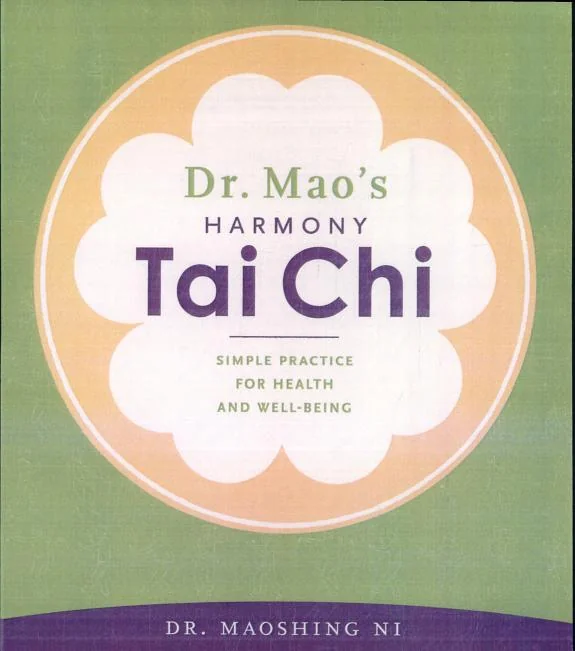
Dr. Mao's Harmony Tai Chi
 71
71

Dr. Mao's Harmony Tai Chi
Dr. Maoshing Ni’s "Harmony Tai Chi" offers a refreshing perspective on a practice often reduced to mere physical exercise. The strength of this work lies in its explicit dedication to awakening the spirit, a dimension frequently overlooked in Western interpretations of martial arts. Ni’s presentation of the "18 Found Forms" is notably clear, providing a solid framework for newcomers. However, the book occasionally feels less like a critical exploration and more like an extended lesson, with the original blurb's promise of "celebration of life itself" sometimes feeling more aspirational than fully realized within the textual structure. The section detailing the integration of breath and intention is particularly well-articulated, demonstrating the author’s deep understanding. Ultimately, "Harmony Tai Chi" succeeds as a sincere guide to integrating physical discipline with spiritual cultivation.
📝 Description
71
Published in 2006, Dr. Maoshing Ni's 'Harmony Tai Chi' views the practice as more than exercise.
Dr. Maoshing Ni's "Harmony Tai Chi," published in 2006, goes beyond a typical instructional guide. It frames Tai Chi as a complete system for developing inner calm and vital energy, not just a set of physical postures. The book introduces the "18 Found Forms," a specific sequence that makes the practice accessible to newcomers while still offering substantial content for experienced practitioners. This work is suitable for beginners wanting a clear, spiritual introduction to Tai Chi, and for seasoned practitioners aiming to deepen their connection to the practice. It focuses on uniting mind, body, and spirit, suggesting new pathways for engagement.
The book emerged in the mid-2000s, a time when Western interest in Eastern philosophies and mind-body disciplines was growing. Dr. Ni, known for his writings on longevity, placed "Harmony Tai Chi" within the Taoist tradition, which values balance and the flow of Qi, or vital energy. The book stands out by emphasizing spiritual awakening alongside physical conditioning, contributing to the ongoing discussion about health through ancient methods.
Emerging from the Taoist tradition, "Harmony Tai Chi" aligns with concepts of achieving balance and harmonizing the body's vital energy, known as Qi. The practice of specific Tai Chi forms, as detailed in the book, is presented as a method to regulate this energy flow. Dr. Ni emphasizes the synergy between physical movement, controlled breathing, and focused intention, asserting that this unified approach promotes enhanced well-being and a deeper connection to life's fundamental forces. The book thus situates Tai Chi within a broader framework of spiritual development and energy cultivation.
💡 Why Read This Book?
• Learn the "18 Found Forms" as detailed by Dr. Maoshing Ni, providing a structured sequence for developing Tai Chi proficiency and internal harmony. • Understand how specific movements, as presented in the 2006 publication, can be utilized to harmonize Qi and foster spiritual awakening, not just physical health. • Gain practical techniques for integrating breath control and mental focus with physical motion, directly from a recognized master's approach to cultivating vital energy.
⭐ Reader Reviews
Honest opinions from readers who have explored this book.
❓ Frequently Asked Questions
What is the significance of the "18 Found Forms" in Dr. Mao's Harmony Tai Chi?
The "18 Found Forms" are a specific sequence of movements detailed in the book, designed by Dr. Maoshing Ni. They serve as the core curriculum for practitioners to cultivate harmony between body, mind, and spirit, and to manage the flow of vital energy (Qi).
Is Dr. Mao's Harmony Tai Chi suitable for complete beginners?
Yes, the book is structured to be easy to navigate for beginners. It outlines foundational movements and concepts, making it an accessible entry point into Tai Chi practice with a focus on spiritual awakening.
What is the primary focus of Dr. Mao's Harmony Tai Chi, beyond physical exercise?
The book emphasizes awakening the spirit and strengthening the body. It presents Tai Chi as a holistic practice for cultivating inner peace, vital energy, and a deeper connection to life, moving beyond purely physical benefits.
When was Dr. Mao's Harmony Tai Chi first published?
Dr. Mao's Harmony Tai Chi was first published on September 21, 2006. This timing places it within a period of increased Western interest in mind-body wellness practices.
Who is Dr. Maoshing Ni, the author of Harmony Tai Chi?
Dr. Maoshing Ni is a renowned Taoist physician and master of Tai Chi and Qigong. He is known for his work on longevity and the integration of traditional Chinese medicine with modern wellness practices, following his earlier success with "Secrets of Longevity."
Does the book discuss the concept of Qi in Tai Chi?
Yes, "Harmony Tai Chi" extensively discusses the concept of Qi, or vital energy. It presents the practice as a method for harmonizing and cultivating this energy within the body for enhanced health and spiritual awareness.
🔮 Key Themes & Symbolism
Harmonizing Qi Flow
The central tenet is the cultivation and harmonization of Qi, the vital life force, through deliberate movement. Dr. Ni details how the "18 Found Forms" are specifically sequenced to facilitate the smooth and balanced flow of Qi throughout the body. This practice aims to clear energetic blockages, promote vitality, and achieve a state of internal equilibrium. It's presented not just as physical conditioning but as an energetic art form for well-being and spiritual alignment.
Spirit Awakening
Beyond physical benefits, "Harmony Tai Chi" emphasizes the awakening of the spirit. The movements are designed to foster mindfulness, stillness of the mind, and a deeper connection to one's inner essence. By engaging in the practice, individuals are encouraged to transcend the mundane and connect with a more profound sense of being, integrating spiritual awareness into daily life through the discipline of Tai Chi.
Holistic Wellness
The book advocates for a comprehensive approach to health that integrates physical, mental, and spiritual dimensions. Dr. Ni draws from his Taoist background to explain how Tai Chi acts as a conduit for holistic wellness. It's about achieving balance not just within the body but between the self and the surrounding environment, promoting longevity and a life lived in accord with natural principles.
Accessible Practice
With its focus on the "18 Found Forms," the book aims to make the profound practice of Tai Chi accessible to a wide audience. Dr. Ni breaks down complex movements into manageable steps, ensuring that both beginners and experienced practitioners can engage with the material effectively. The goal is to clarify Tai Chi, presenting it as a practical tool for everyday life.
💬 Memorable Quotes
Direct passages from the work, attributed to the author.
“Awakening the spirit while strengthening the body.”
— This core principle underscores the dual purpose of the practice as outlined by Dr. Ni. It signifies that the physical discipline of Tai Chi is a pathway to inner spiritual development and mental clarity, not just physical fitness.
“Harmony Tai Chi focuses on the flow of vital energy.”
— This interpretation emphasizes the Taoist concept of Qi. The book presents Tai Chi as a method for managing and harmonizing this essential life force, crucial for overall health and spiritual balance.
“Ideal for both beginners and those looking to deepen their practice.”
— This statement speaks to the book's broad appeal and structured approach. It suggests that the material is presented with sufficient clarity for newcomers while offering enough depth to engage and benefit experienced practitioners.
“Dr. Ni draws on years of experience as a Tai Chi master.”
— This highlights the author's authority and extensive background in the practice. It implies that the teachings within "Harmony Tai Chi" are grounded in practical, long-term mastery and understanding of the art.
💡 Key Ideas
Editorial paraphrase of the work's core concepts — not direct quotes.
The "18 Found Forms" are a celebration of life itself.
This paraphrased concept highlights the book's intention to present Tai Chi not as a mere exercise regimen, but as a dynamic expression of vitality and existence, deeply rooted in the joy and energy of living.
🌙 Esoteric Significance
Tradition
This work is firmly rooted in the Taoist tradition, a core part of Chinese esoteric philosophy. It aligns with Taoist principles of balance (Yin and Yang), the cultivation of vital energy (Qi), and living in harmony with the Tao (the Way). Dr. Ni, as a Taoist physician, interprets Tai Chi not just as a martial art or exercise but as a profound practice for spiritual cultivation and longevity, consistent with historical Taoist aims.
Symbolism
Key symbolism includes the concept of Qi, the invisible vital energy that animates all things, which Tai Chi aims to harmonize. The flowing, circular movements themselves symbolize the cyclical nature of existence and the effortless power of yielding. The "Harmony" in the title is a central symbol, representing the ideal state of balance within the individual and between the individual and the cosmos, a fundamental goal in Taoist practice.
Modern Relevance
Contemporary practices in embodied spirituality, somatic psychology, and mindfulness-based stress reduction often echo the principles found in "Harmony Tai Chi." Thinkers and practitioners in fields like somatic experiencing or those exploring the energetic body through practices like Qigong and advanced Tai Chi forms, draw on the foundational understanding of Qi and embodied consciousness that Dr. Ni articulates. It remains relevant for those seeking a structured, spiritual approach to physical well-being.
👥 Who Should Read This Book
• Individuals seeking a holistic approach to health that bridges physical movement with spiritual development, drawing from ancient Taoist principles. • Aspiring Tai Chi practitioners who desire a clear, foundational guide to essential forms with an emphasis on cultivating inner peace and vital energy. • Experienced martial artists or movement practitioners interested in exploring the esoteric and energetic dimensions of Tai Chi beyond its purely physical applications.
📜 Historical Context
Published in 2006, "Dr. Mao's Harmony Tai Chi" emerged during a period when interest in Eastern wellness practices was steadily growing in Western popular culture, fueled by figures like Dr. Andrew Weil and the proliferation of yoga studios. Dr. Maoshing Ni, already established with his 2004 book "Secrets of Longevity," positioned "Harmony Tai Chi" within the Taoist tradition, a significant lineage in esoteric philosophy and traditional Chinese medicine. This work contributed to the discourse on mind-body integration, standing alongside contemporary explorations of Qigong and other energetic arts. While not facing overt censorship, the esoteric nature of Qi cultivation sometimes met skepticism from strictly materialistic scientific circles, though the book's focus on health benefits often bridged this gap.
📔 Journal Prompts
The integration of breath and intention in the "18 Found Forms".
Cultivating harmony within the body's Qi flow.
The concept of awakening the spirit through movement.
Balancing physical strengthening with inner stillness.
Personal experience of "Harmony Tai Chi" principles.
🗂️ Glossary
Qi (Chi)
The fundamental concept of vital life force or energy in Taoist philosophy and traditional Chinese medicine. It is believed to animate all living beings and the universe, and its harmonious flow is essential for health and well-being.
Harmony Tai Chi
The specific approach to Tai Chi presented by Dr. Maoshing Ni, emphasizing the cultivation of balance and integration between the body, mind, and spirit, alongside the proper flow of Qi.
18 Found Forms
A specific sequence of Tai Chi movements detailed in the book by Dr. Maoshing Ni, serving as a foundational curriculum for practitioners to learn and embody the principles of Harmony Tai Chi.
Awakening the Spirit
A key objective of the practice as described in the book, referring to the process of enhancing inner awareness, mental clarity, and spiritual connection through Tai Chi movements.
Taoist Physician
A practitioner of traditional Chinese medicine who bases their healing philosophy and methods on the principles of Taoism, emphasizing balance, natural rhythms, and the cultivation of vital energy.
Longevity
The state of living for a long time, often associated in Taoist philosophy with maintaining the body's vital energy (Qi) and living in harmony with natural principles.
Mind-Body Integration
The concept that the mental and physical aspects of a person are interconnected and influence each other. Tai Chi is presented as a practice that fosters this integration.
This book appears in 1 collection
🔮 Readers Also Liked
Browse all →








From the “Tai Chi” Collection
View all →








More Free Occult Philosophy Books
View all →