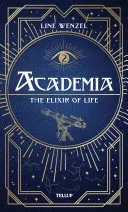
Academia #2: The Elixir of Life
 71
71

Academia #2: The Elixir of Life
Line Wenzel's "Academia #2: The Elixir of Life" presents a New York spring of 1929 where the pursuit of hermetic knowledge is fraught with very earthly dangers. Nia Himlan’s pact with Little Italy’s less savory elements for laboratory access is a stark illustration of ambition’s price. Wenzel effectively grounds the esoteric in the tangible grime of the city, making Nia's moral tightrope walk palpable. The novel’s strength lies in this gritty realism, contrasting sharply with the mystical aspirations. A slight limitation, however, is the pacing in the middle sections, where the narrative occasionally becomes bogged down in the mechanics of Nia's investigation, somewhat eclipsing the thematic depth. A particularly potent moment involves Nia realizing the true nature of her "elixir" is not alchemical gold but perhaps a more dangerous form of leverage. The book concludes by posing difficult questions about integrity in the face of professional desperation.
📝 Description
71
Academia #2: The Elixir of Life is set in 1929 New York, following a hermeticist's dangerous bargain.
Line Wenzel's Academia #2 places readers in 1929 New York, immersing them in the world of hermeticism. The story centers on Nia Himlan, a hermeticist who makes a perilous deal with the Little Italy underworld. She needs resources for her investigation into a mysterious courthouse collapse. Her drive for knowledge and career success pushes her to question the ethical limits of her ambition.
The narrative unfolds in a spring 1929 New York that is both lively and secretive. This period was rich with esoteric thought; movements like Theosophy and various occult revivals were gaining ground. Fictional universities, such as the University of Hermeticism, served as hubs for both established learning and emerging, sometimes debated, fields of study. The era combined a fascination with alchemy and ancient traditions with the rapid societal shifts of the Roaring Twenties.
The novel examines themes of ambition, compromise, and the search for hidden knowledge. It references hermetic philosophy, likely including alchemical processes and symbolic interpretations as Nia pursues her research. Her dealings with criminal figures present a version of a "deal with the devil," highlighting the personal cost of pursuing esoteric or academic goals. The book also addresses the precariousness of institutions and the outcomes of scientific or magical investigations.
This novel is situated within the tradition of occult revivalism that characterized the early 20th century, specifically the interwar period. It draws upon hermetic philosophy, a complex system of thought with roots in ancient Greece and Egypt, which experienced renewed interest during this time. The narrative likely engages with alchemical symbolism and esoteric interpretations of the cosmos, placing them within a fictionalized academic and urban setting. This blends traditional occult themes with the specific social and intellectual milieu of 1920s New York, a time when esoteric societies and practices were both present and often misunderstood.
💡 Why Read This Book?
• Gain insight into the intersection of hermeticism and urban crime in 1929 New York, understanding how esoteric pursuits might manifest under duress. • Explore the ethical compromises faced by fictional hermeticist Nia Himlan, mirroring real-world dilemmas of ambition versus integrity in academic or personal quests. • Witness the symbolic weight of "The Elixir of Life" as not just an alchemical concept but a metaphor for the dangerous bargains individuals make for advancement.
⭐ Reader Reviews
Honest opinions from readers who have explored this book.
❓ Frequently Asked Questions
What is the setting for Academia #2: The Elixir of Life?
The book is set in New York City during the spring of 1929, a period of significant cultural and intellectual activity, providing a backdrop for esoteric investigations.
Who is the main character and what is her goal?
The protagonist is Nia Himlan, a hermeticist aiming to complete her investigation into a courthouse collapse, requiring her to make a deal for laboratory access.
What challenges does Nia Himlan face in the book?
Nia faces moral challenges as she strikes a deal with shady characters from Little Italy for resources, forcing her to question how far she will go to save her career.
What esoteric tradition is explored in the novel?
The novel primarily explores hermeticism, touching upon concepts related to alchemy and hidden knowledge within a fictionalized academic setting.
When was Academia #2: The Elixir of Life first published?
The book was first published on October 24, 2024.
What does the title 'The Elixir of Life' symbolize in the context of the book?
The title likely symbolizes not just a literal alchemical substance but also the dangerous means or sacrifices Nia must make to achieve her investigative and career goals.
🔮 Key Themes & Symbolism
Ambition and Compromise
The narrative intensely scrutinizes the lengths to which individuals will go for professional advancement or the pursuit of knowledge. Nia Himlan's bargain with Little Italy's criminal elements exemplifies this, forcing a confrontation with the personal cost of her research into the courthouse collapse. It questions whether the ends justify the means, particularly when esoteric knowledge is the prize.
Hermeticism in the Urban Jungle
This book situates hermetic philosophy and practices not in cloistered studies but within the gritty reality of 1929 New York. The University of Hermeticism serves as a focal point, contrasting academic ideals with the pragmatic, often illicit, methods Nia must employ. The story explores how arcane pursuits intersect with the mundane, dangerous world.
The Price of Hidden Knowledge
The 'Elixir of Life' serves as a potent metaphor for the ultimate goal, but the book focuses more on the arduous and ethically taxing journey to attain it. Nia's experiences highlight that uncovering secrets, whether alchemical or investigative, often involves navigating treacherous social and moral landscapes, demanding sacrifices that redefine one's character.
Institutional Fragility
The investigation into a courthouse collapse and the subsequent need for specialized laboratory facilities suggest that established institutions are not always reliable or accessible. This forces characters like Nia to seek alternative, potentially dangerous, avenues, revealing the vulnerabilities within societal structures and the academic world.
💬 Memorable Quotes
Direct passages from the work, attributed to the author.
“Nia Himlan made a deal with some of Little Italy's shadier characters.”
— This statement expresses the core conflict: the hermeticist protagonist must engage with the underworld to achieve her academic goals, highlighting the moral compromises inherent in her quest.
“She is granted access to a laboratory, but everything comes at a price.”
— This emphasizes the transactional nature of Nia's pursuit of knowledge. The 'price' is not merely financial but likely involves ethical concessions and personal risks, central to the narrative's tension.
“Nia discovers how far she’s willing to go to save her career.”
— This points to the thematic exploration of ambition versus integrity. The novel explores the protagonist's internal struggle as she confronts the limits of her moral boundaries for professional survival.
“Aden Fenice suffers the consequences of a robbery committed at the University of Hermeticism.”
— This introduces a secondary plot thread involving institutional disruption and the repercussions of crime within an esoteric academic setting, hinting at broader conflicts beyond Nia's personal journey.
“The narrative unfolds in New York, spring of 1929.”
— The specific time and place anchor the esoteric themes in a concrete historical reality, suggesting the story will explore how occult interests interacted with the social and urban dynamics of the Roaring Twenties.
🌙 Esoteric Significance
Tradition
This work situates itself within the Western Esoteric Tradition, specifically Hermeticism, which draws from the Corpus Hermeticum and alchemical texts. It explores how these ancient philosophies might be applied or become entangled with modern life, particularly within an academic context. The narrative departs from purely theoretical or spiritual interpretations by grounding hermetic pursuits in practical, even criminal, endeavors.
Symbolism
The 'Elixir of Life' is a central symbol, representing not just the alchemical quest for immortality or perfection but also the dangerous shortcuts and compromises individuals undertake for power or knowledge. The courthouse collapse could symbolize the breakdown of established order or justice, necessitating unconventional methods of investigation and reconstruction, potentially involving symbolic or ritualistic approaches.
Modern Relevance
Contemporary readers interested in the intersection of historical occultism and speculative fiction find resonance here. Thinkers exploring the ethics of knowledge acquisition in fields ranging from artificial intelligence to advanced physics might draw parallels to Nia's moral quandaries. The novel speaks to modern anxieties about the societal impact of scientific or esoteric breakthroughs when pursued without ethical guardrails.
👥 Who Should Read This Book
• Students of Western Esotericism: Those interested in fictional explorations of Hermeticism and alchemy, particularly as they might intersect with historical settings and urban environments. • Historical Fiction Enthusiasts: Readers who enjoy narratives set in specific past eras, such as the 1920s, and appreciate well-researched backdrops for compelling character-driven stories. • Fans of Occult Thrillers: Individuals seeking stories that blend arcane lore and philosophical inquiry with elements of suspense, moral ambiguity, and high-stakes personal conflict.
📜 Historical Context
Set in the vibrant yet morally ambiguous field of New York City in spring 1929, "Academia #2: The Elixir of Life" taps into the interwar period's fascination with esoteric knowledge and the occult. This era saw a resurgence of interest in Hermeticism, alchemy, and spiritualism, often pursued alongside burgeoning scientific advancements. The fictional University of Hermeticism reflects the existence of specialized institutions and private circles dedicated to such studies, existing alongside mainstream academia. Contemporaries like Manly P. Hall were popularizing esoteric philosophies, though often through more overtly spiritual or philosophical lenses. The novel's juxtaposition of high intellectual pursuits with the underworld dealings of Little Italy mirrors the era's social stratification and the often-hidden currents beneath the surface of the Roaring Twenties' prosperity. The work implicitly engages with the tension between traditional wisdom and the pressures of modernity.
📔 Journal Prompts
Nia Himlan's bargain with Little Italy's underworld.
The price of access to the laboratory.
Aden Fenice's experience after the university robbery.
The meaning of 'The Elixir of Life' beyond alchemy.
Consequences of Nia's ambition on her career.
🗂️ Glossary
Hermeticism
A religious, philosophical, and esoteric tradition based on writings attributed to Hermes Trismegistus. It emphasizes divine wisdom, the interconnectedness of all things, and the pursuit of hidden knowledge, often through alchemy and astrology.
Hermeticist
An individual who studies or practices Hermeticism. In the context of the book, Nia Himlan is a hermeticist investigating a complex issue.
Alchemy
An ancient practice combining chemistry, metallurgy, physics, medicine, astrology, mysticism, and art. Historically, its practitioners sought to transmute base metals into gold and discover a universal elixir.
Elixir of Life
A legendary alchemical substance said to grant eternal life or youth. In the novel, it likely serves as a symbolic representation of ultimate goals or dangerous knowledge.
Little Italy
A historic neighborhood in Lower Manhattan, New York City, traditionally known for its Italian immigrant population and, in fiction, often associated with organized crime.
University of Hermeticism
A fictional academic institution within the book, dedicated to the study of esoteric and hermetic arts and sciences.
Courthouse collapse
A significant event that Nia Himlan is investigating, serving as the catalyst for her actions and the central mystery driving her research.