The Essential Movements of T'ai Chi
 74
74

The Essential Movements of T'ai Chi
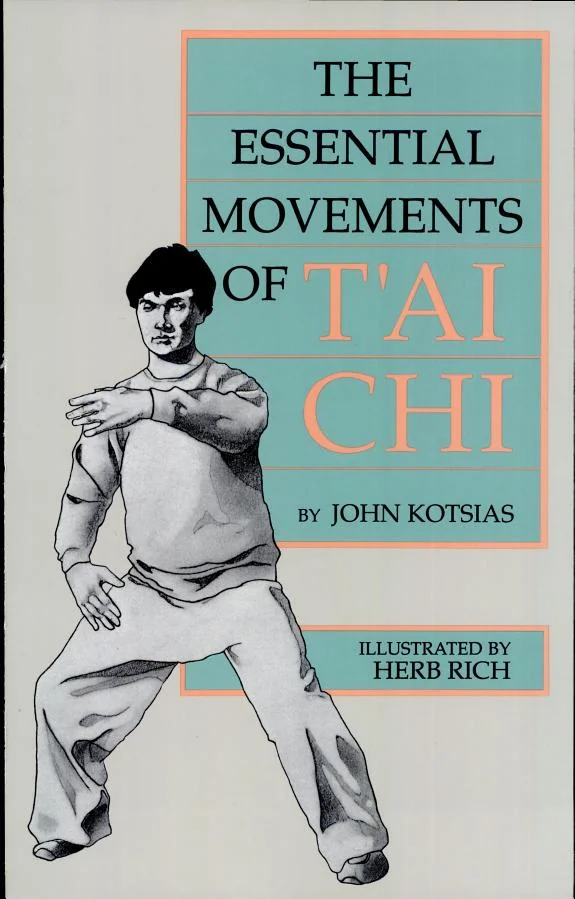
John Kotsias’s *The Essential Movements of T'ai Chi* offers a granular look at the mechanics of foundational T'ai Chi forms, a welcome departure from more abstract texts. The 1989 publication date positions it within a period of growing Western interest in Eastern practices, predating some of the more generalized interpretations that followed. Its strength lies in the detailed breakdown of movements like 'Riding a T'ai Chi Horse,' making complex postures digestible. However, the original blurb’s promise of “evocative sto[ries]” feels underserviced; the text remains primarily instructional, with less emphasis on the philosophical or symbolic narratives that often enrich T'ai Chi literature. The illustrations, while clear, sometimes lack the dynamic energy that Kotsias’s descriptions imply. Despite this, for practitioners seeking to refine their fundamental body mechanics, the book provides a solid, if somewhat dry, technical resource.
📝 Description
74
John Kotsias's 1989 book details the core principles of T'ai Chi and Qi Gong.
Published in 1989, *The Essential Movements of T'ai Chi* breaks down the physical mechanics behind T'ai Chi and Qi Gong. Kotsias uses clear, illustrated instructions to make the material accessible to practitioners regardless of their experience. The book focuses on internal awareness, detailing how weight shifts, concentration, and visualization build a stronger mind-body connection. This focus is presented as key to developing effective energy cultivation and somatic awareness. Kotsias also analyzes several basic T'ai Chi forms, such as 'Holding the Ball' and 'Carry Tiger Back to Mountain.' He breaks down each movement to show its mechanics and energetic purpose, providing building blocks for more advanced practice. While grounded in physical technique, the book also acknowledges the symbolic and energetic dimensions of T'ai Chi. Kotsias suggests the movements are more than just physical exercises; they are expressions of deeper energetic and philosophical ideas, promoting a complete engagement with the practice.
This book fits within the broader esoteric tradition of internal martial arts and contemplative practices originating in China. T'ai Chi and Qi Gong are seen not just as physical disciplines but as methods for cultivating vital energy (qi) and aligning oneself with natural principles. Their esoteric dimension lies in the understanding that physical movement can be a vehicle for spiritual development, promoting balance, harmony, and a deeper awareness of subtle energetic processes. The focus on internal cultivation and symbolic meaning connects it to traditions that view the body as a microcosm of the universe.
💡 Why Read This Book?
• Learn precise biomechanical cues for fundamental T'ai Chi movements like 'Holding the Ball' and 'Carry Tiger Back to Mountain', enabling a deeper understanding of form execution beyond superficial imitation. • Understand the critical role of weight distribution and visualization in energy cultivation, as extensively explored by Kotsias, offering practical methods for enhancing internal awareness. • Gain insight into the foundational principles that inform various Qi Gong and T'ai Chi styles, appreciating the 'Springy Step' as a core element applicable across different forms.
⭐ Reader Reviews
Honest opinions from readers who have explored this book.
❓ Frequently Asked Questions
When was The Essential Movements of T'ai Chi first published?
The Essential Movements of T'ai Chi by John Kotsias was first published in 1989, a period when Western interest in Eastern mind-body practices was rapidly expanding.
What specific T'ai Chi movements are detailed in the book?
The book provides detailed instructions for essential movements such as Holding the Ball, Bending from the Waist, Riding a T'ai Chi Horse, the Springy Step, Carry Tiger Back to Mountain, and the Rooting Exercise.
Does the book cover advanced T'ai Chi forms?
No, The Essential Movements of T'ai Chi focuses specifically on the basic body movement skills and foundational forms that are at the root of all Qi Gong and T'ai Chi practices, rather than advanced sequences.
What internal cultivation aspects does the book emphasize?
It extensively considers weight distribution, concentration, and visualization techniques, providing a detailed approach to cultivating internal awareness and mind-body connection.
Is this book suitable for absolute beginners?
Yes, with its clear, step-by-step, and carefully illustrated instructions, the book is designed to be accessible to beginners seeking to understand the fundamental mechanics of T'ai Chi and Qi Gong movements.
What is the author's approach to teaching T'ai Chi movements?
John Kotsias employs a methodical, detailed approach, breaking down each movement into its core components and emphasizing the internal aspects like concentration and visualization.
🔮 Key Themes & Symbolism
Foundational Mechanics
This work meticulously breaks down the physical underpinnings of T'ai Chi and Qi Gong. It emphasizes that mastery of fundamental movements like 'Riding a T'ai Chi Horse' or the 'Springy Step' is crucial before progressing to more complex forms. Kotsias prioritizes clear, illustrated instruction on weight distribution and body alignment, suggesting these are the essential building blocks for developing internal energy and effective practice, irrespective of the specific style or lineage.
Internal Cultivation Techniques
Beyond mere physical execution, Kotsias dedicates significant space to the internal aspects of practice. Concentration and visualization are presented not as optional add-ons but as integral components of each movement. The book guides the reader to cultivate an inner focus, using mental imagery to enhance the energetic flow and somatic awareness associated with practices like the 'Rooting Exercise'.
Qi Gong and T'ai Chi Synergy
The book posits a fundamental connection between Qi Gong and T'ai Chi, viewing the latter as an advanced expression of Qi Gong principles. It argues that the core skills presented—such as proper weight transfer and mindful posture—are the bedrock upon which all Qi Gong and T'ai Chi forms are built. This perspective encourages practitioners to see the shared energetic and mechanical roots of these often-separated disciplines.
Detailed Movement Analysis
Kotsias provides an extraordinary level of detail for each form discussed. Movements like 'Bending from the Waist' are analyzed not just by their outward appearance but by the subtle shifts in weight, intention, and bodily coordination required. This granular approach serves practitioners who seek to refine their technique and understand the precise biomechanics involved in generating internal force and achieving energetic balance.
💬 Memorable Quotes
Direct passages from the work, attributed to the author.
“Weight distribution, concentration, and visualization are extensively considered.”
— This statement highlights the book's core pedagogical approach, emphasizing that effective T'ai Chi practice involves not just physical form but also mental focus and internal imagery, crucial for cultivating energy.
“the basic body movement skills that are at the root of all qi gong and t'ai chi forms”
— This phrase underscores the book's thesis: that understanding and mastering fundamental movements like the 'Springy Step' provides a universal foundation for diverse Qi Gong and T'ai Chi practices.
“Holding the Ball, Bending from the Waist, Riding a T'ai Chi Horse”
— These named movements represent the foundational building blocks Kotsias dissects, serving as practical examples of the core principles of balance, posture, and energetic intention discussed throughout the text.
“The forms depicted include...”
— This signals the book's instructional nature, promising clear, illustrated guidance on specific, essential postures that are central to learning the art of T'ai Chi from its roots.
“providing an extraordinary level of detail”
— This suggests the author's commitment to a thorough, analytical breakdown of each movement, aiming to equip the reader with a deep understanding of the mechanics and internal principles involved.
🌙 Esoteric Significance
Tradition
While not explicitly aligning with a specific esoteric lineage like Hermeticism or Theosophy, Kotsias's work taps into the broader Taoist tradition underlying T'ai Chi and Qi Gong. It shares the Taoist emphasis on cultivating internal energy (Qi), harmonizing with natural principles, and the mind-body connection. The book's focus on foundational movements can be seen as a practical entry point into Taoist principles of effortless action (Wu Wei) and returning to the source.
Symbolism
The movement 'Carrying Tiger Back to Mountain' can symbolize the controlled retrieval and grounding of energy, akin to drawing power inward before outward expression. 'Riding a T'ai Chi Horse' evokes stability and rootedness, representing the grounded, unshakeable presence cultivated through mindful practice. 'Holding the Ball' often symbolizes the containment and circulation of Qi, representing a core energetic practice central to internal alchemy.
Modern Relevance
Contemporary somatic practices, physical therapy approaches focusing on proprioception, and even certain mindfulness-based movement therapies echo Kotsias's emphasis on precise body mechanics and internal awareness. Practitioners exploring integrated wellness and those seeking to understand the biomechanical underpinnings of mind-body disciplines continue to find value in his detailed approach to foundational movements.
👥 Who Should Read This Book
• Beginning students of T'ai Chi or Qi Gong seeking clear, illustrated instructions on fundamental postures and movement principles. • Practitioners interested in understanding the biomechanical basis of internal martial arts and energy cultivation techniques. • Teachers looking for resources to explain foundational movements like 'Holding the Ball' and 'Carry Tiger Back to Mountain' to their students.
📜 Historical Context
Published in 1989, *The Essential Movements of T'ai Chi* emerged during a period of significant Western engagement with Eastern contemplative and martial arts. The late 1980s saw a burgeoning interest in practices like T'ai Chi and Qi Gong, moving beyond niche martial arts circles into broader wellness and spiritual communities. Kotsias's work provided a structured, accessible introduction, contrasting with more philosophical or lineage-specific texts that were also circulating. While figures like Benjamin Lo were also publishing influential T'ai Chi guides around this time, Kotsias's focus remained distinctly on the foundational mechanics. The book’s emphasis on clear illustration and step-by-step instruction positioned it as a practical manual for self-study, catering to a growing audience seeking tangible methods for mind-body integration.
📔 Journal Prompts
The 'Rooting Exercise' and its role in developing stability.
Visualization techniques for 'Holding the Ball'.
How does the 'Springy Step' differ from a conventional walking gait?
Reflecting on the detailed breakdown of 'Carry Tiger Back to Mountain'.
The interplay between weight distribution and concentration in 'Riding a T'ai Chi Horse'.
🗂️ Glossary
Qi Gong
A system of coordinated body posture and movement, breathing, and meditation used for health, spirituality, and martial arts training. Often translated as 'energy work'.
T'ai Chi Ch'uan
A Chinese internal martial art practiced for both defense training and its health benefits. Known for its slow, flowing movements and emphasis on internal energy.
Weight Distribution
The process of consciously shifting and balancing the body's mass over the supporting points (usually the feet) to maintain stability and facilitate movement.
Concentration
The mental faculty of focusing one's attention on a particular object, task, or internal state, essential for effective practice.
Visualization
The practice of forming mental images or sensory representations, used in T'ai Chi to guide energy flow and enhance intention.
Holding the Ball
A fundamental T'ai Chi posture where the arms are held in a rounded shape, often symbolizing the containment and circulation of Qi.
Carry Tiger Back to Mountain
A specific T'ai Chi movement involving a step and an arm motion, often used to illustrate principles of yielding and redirecting force.
This book appears in 1 collection
🔮 Readers Also Liked
Browse all →









From the “Tai Chi” Collection
View all →







More Free Occult Philosophy Books
View all →