Psychologische Typen
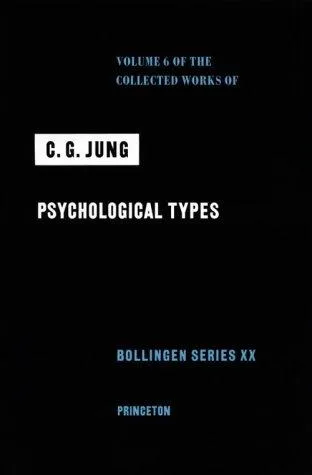
 74
74

Psychologische Typen
Jung's *Psychologische Typen* remains a monumental work, offering a detailed taxonomy of human consciousness that still commands attention. Its strength lies in the sheer depth of its analysis and the introduction of concepts that have become commonplace in psychology. The systematic exploration of introversion and extraversion, coupled with the four functions, provides an unparalleled lens for self-understanding and interpersonal dynamics. However, the density of the prose and the sometimes-opaque philosophical underpinnings can present a significant barrier to entry for the uninitiated. A passage where Jung discusses the 'superior function' in relation to the 'inferior function' exemplifies this complexity, requiring careful study. Despite its challenging nature, the book’s enduring influence on personality theory is undeniable, making it a crucial text for serious students of the psyche.
📝 Description
74
Carl Jung published Psychologische Typen in 1921, detailing his system of psychological types.
Published in 1921, Carl Jung's *Psychologische Typen* lays out a complex system for understanding differences in human personality. Jung moved past simple labels to describe how individuals orient themselves and process information, distinguishing between introversion and extraversion. He also detailed four psychic functions: thinking, feeling, sensation, and intuition. The book systematically maps how consciousness operates, with these concepts influencing later developments in psychology and other fields. Jung's aim was to categorize the varied ways people experience the world, offering a framework for analyzing these differences.
This work is important for anyone studying Jungian psychology, personality theory, or the dynamics of consciousness. It serves as a primary source for understanding the origins of terms like introversion and extraversion. The book emerged from a period of intense theoretical development for Jung, following his break with Freud and his own explorations of the unconscious. It offered a different perspective from the psychoanalytic focus of the time, contributing to a wider discussion in psychological inquiry.
In the context of occult philosophy, *Psychologische Typen* can be seen as an attempt to map the inner psychic world with a systematic, almost alchemical, precision. Jung sought to identify fundamental psychic energies and their interactions, much like earlier esoteric traditions sought to categorize elemental forces or spiritual hierarchies. His typology provides a framework for understanding the diverse ways individuals engage with both the material world and the deeper, often unconscious, currents of the psyche, aligning with an interest in hidden structures of reality and human experience.
💡 Why Read This Book?
• Understand the origin of Introversion and Extraversion: Grasp Jung's original definitions and their nuanced distinctions, directly from the 1921 source, to refine your self-awareness beyond popular interpretations. • Map your psychic functions: Learn to identify your dominant thinking, feeling, sensation, or intuition functions and their interplay, as detailed in Jung's typological system. • Analyze archetypal patterns: Discover how Jung linked his types to broader mythological and symbolic motifs, providing a richer context for understanding individual psychology.
⭐ Reader Reviews
Honest opinions from readers who have explored this book.
❓ Frequently Asked Questions
When was Carl Jung's 'Psychological Types' first published?
Carl Jung's 'Psychologische Typen' was first published in German in 1921. This seminal work laid the groundwork for much of modern personality theory and psychological typology.
What are the main psychological types discussed by Jung?
Jung identified two primary attitudes, introversion and extraversion, and four functions: thinking, feeling, sensation, and intuition. The combination of these creates eight fundamental psychological types.
How does Jung's theory of psychological types differ from modern personality tests?
Jung's original work is more theoretical and philosophical, exploring the dynamics of consciousness. Modern tests often simplify these concepts for broader application, sometimes losing the depth of Jung's original analysis from 1921.
Is 'Psychologische Typen' difficult to read?
The book is known for its academic rigor and dense prose, requiring careful attention. It is considered a complex philosophical and psychological text, not a light read, but rewarding for dedicated study.
What is the concept of the 'inferior function' in Jung's typology?
The inferior function is the least developed and most unconscious psychic function for an individual. Jung suggested that understanding and integrating the inferior function is crucial for psychological wholeness.
Where can I find a reliable translation of 'Psychologische Typen'?
The most widely recognized English translation is the one by H.G. Baynes, published by Princeton University Press. Ensure you are consulting a complete edition of the work first published in 1921.
🔮 Key Themes & Symbolism
Attitudes: Introversion & Extraversion
Jung's seminal distinction between introversion and extraversion is presented not as a simple dichotomy but as fundamental orientations of psychic energy. Extraversion directs energy outward towards the object, while introversion channels it inward. This foundational concept, detailed extensively in the 1921 text, shapes how individuals engage with the external world and their inner landscape, influencing their perception and interaction patterns. Understanding these attitudes is key to deciphering Jung's broader typological system and its implications for consciousness.
The Four Psychic Functions
Jung meticulously outlines the four functions: sensation (perceiving concrete facts), intuition (perceiving possibilities and meanings), thinking (logical reasoning), and feeling (evaluating value). He posits that each individual develops one function as dominant (superior), with another serving as a secondary (auxiliary) support. The remaining two, particularly the 'inferior function,' remain less differentiated and often unconscious, presenting unique challenges and opportunities for psychological development as explored in *Psychologische Typen*.
Typology and Archetypes
Beyond mere categorization, Jung connects his psychological types to deeper, universal patterns of the human psyche – the archetypes. The book suggests that specific types may manifest certain archetypal energies or predispositions. This integration of typology with his broader analytical psychology framework offers a unique esoteric perspective, viewing individual differences as expressions of collective psychic structures and historical mythologies, a concept elaborated upon since its 1921 publication.
Consciousness and the Unconscious
A central theme is the dynamic interplay between conscious attitudes and functions and the less conscious or unconscious aspects of the psyche. Jung's typological model serves as a map for understanding how individuals navigate their conscious experience while being influenced by unconscious complexes and the opposing attitude or function. This exploration is critical for the therapeutic process and understanding the inherent tensions within the human psyche, a core tenet of his work initiated around 1921.
💬 Memorable Quotes
Direct passages from the work, attributed to the author.
“The attitude of the subject is the most general and the most important characteristic of the type.”
— This highlights Jung's emphasis on the fundamental orientation (introverted or extraverted) as the primary determinant of an individual's psychological makeup, influencing all other functions and perceptions.
“Thinking and feeling are of an affective nature.”
— Jung here posits that both thinking and feeling are fundamentally affective processes, though they differ in their mode of operation. Thinking is rational evaluation, while feeling is value-based assessment, both driven by psychic energy.
“Sensation is the function that perceives the presence of facts.”
— This defines the sensation function as grounded in empirical reality and concrete details, focusing on what is directly observable and present in the immediate environment.
“Intuition is the function that perceives possibilities.”
— Intuition, in Jung's view, grasps potential, the unseen connections, and future possibilities, operating beyond the immediately tangible facts perceived by sensation.
“The inferior function is the weakest and most undeveloped function.”
— This statement underscores the concept of the inferior function as the least mastered aspect of the psyche, often serving as a point of vulnerability but also a potential gateway for growth.
🌙 Esoteric Significance
Tradition
Jung's work, including *Psychologische Typen*, draws heavily from Gnostic and Hermetic traditions, particularly in its exploration of the differentiated functions of the psyche and the concept of the unconscious as a distinct field of experience. While not strictly adhering to any single esoteric lineage, Jung synthesized elements from alchemy, astrology, and comparative mythology into a psychological framework. His typology can be seen as a modern alchemical process of differentiating and integrating the soul's various aspects, moving towards a more complete, individuated self, a goal shared with many esoteric paths.
Symbolism
Within *Psychologische Typen*, the four functions (thinking, feeling, sensation, intuition) can be viewed as symbolic representations of fundamental modes of human engagement with reality, akin to the four classical elements or the fourfold structure found in various mystical traditions. The interplay between introversion and extraversion also carries symbolic weight, representing the tension between the inner and outer worlds, the personal and the collective, and the conscious and the unconscious. The concept of the 'inferior function' symbolizes the shadow aspect, the unacknowledged part of the self that requires integration.
Modern Relevance
Contemporary depth psychologists, Jungian analysts, and scholars of consciousness studies continue to rely on *Psychologische Typen* as a foundational text. Its concepts have permeated fields such as literature, art criticism, and comparative religion. Modern personality assessment tools, while often simplified, owe a direct lineage to Jung's 1921 typology. Furthermore, contemporary esoteric practitioners interested in psychological integration and the mapping of the soul's faculties often turn to Jung's framework as a bridge between ancient wisdom and modern psychological understanding.
👥 Who Should Read This Book
• Aspiring Analytical Psychologists: Those beginning their study of Jungian psychology will find this text essential for grasping the core concepts of psychological attitudes and functions that underpin all subsequent theory. • Comparative Religion Scholars: Researchers interested in cross-cultural patterns of belief and behavior can use Jung's typology to analyze archetypal expressions across different mythologies and spiritual traditions. • Self-Exploration Enthusiasts: Individuals seeking a deeper understanding of their own personality and motivations will benefit from Jung's detailed framework for mapping psychic operations beyond superficial traits.
📜 Historical Context
Carl Jung's *Psychologische Typen*, first published in 1921, emerged from a central period in the development of depth psychology. Following his profound 'confrontation with the unconscious' and his separation from Sigmund Freud's psychoanalytic school, Jung sought to articulate a broader, more nuanced understanding of the human psyche. The book was a direct response to what Jung perceived as the limitations of Freudian and Adlerian theories, which he felt were too focused on specific pathologies or motivations. In an era grappling with the aftermath of World War I and rapid societal change, Jung's work offered a framework for understanding individual differences that resonated with a growing interest in subjective experience and the unconscious. The book's reception was significant, sparking intense debate within psychological circles and laying the groundwork for later developments in personality assessment, influencing thinkers far beyond the immediate psychoanalytic community.
📔 Journal Prompts
Your dominant psychic function and its expression.
The challenges presented by your inferior function.
Introversion vs. Extraversion in your daily interactions.
The interplay of thinking and feeling in decision-making.
How sensation and intuition shape your perception of reality.
🗂️ Glossary
Extraversion
A psychological attitude characterized by a focus of psychic energy outward toward the object. Extraverts are typically oriented towards the external world and objective events.
Introversion
A psychological attitude characterized by a focus of psychic energy inward toward the subject. Introverts are typically oriented toward their inner world of thoughts and feelings.
Thinking Function
A rational psychic function that seeks to understand the world through logical analysis and objective reasoning. It aims for truth and intellectual coherence.
Feeling Function
A rational psychic function that evaluates the world based on subjective values and emotional responses. It focuses on harmony, worth, and significance.
Sensation Function
An irrational (perceptual) psychic function that perceives concrete facts and sensory data from the external world. It focuses on 'what is'.
Intuition Function
An irrational (perceptual) psychic function that perceives possibilities, meanings, and future potentials beyond immediate sensory data. It focuses on 'what could be'.
Inferior Function
The least developed and most unconscious of the four psychic functions, often acting as a source of projection and psychological tension, but also potential for integration.
🔮 Readers Also Liked
Browse all →









More by Carl Gustav Jung
All books →
More Free Occult Philosophy Books
View all →