Tesla's Attic
 82
82

Tesla's Attic
Neal Shusterman and Eric Elfman's Tesla's Attic presents a compelling premise: what if Nikola Tesla left behind not just patents, but actively functional, secret devices? The narrative hinges on this 'what if,' propelling a young protagonist into a world of forgotten genius and potential peril. The strength of the novel lies in its imaginative extrapolation from Tesla's actual documented work and the mystique surrounding his later life. However, the pacing occasionally falters in the middle sections as the plot navigates elaborate explanations of the fictionalized inventions, which, while necessary, can feel slightly dense for a younger audience. A particularly memorable sequence involves the protagonist attempting to reactivate a device based on Tesla's principles of resonance, highlighting both the wonder and the inherent risks. The book ultimately offers a spirited adventure that, despite minor narrative stumbles, effectively captures the spirit of scientific exploration and the enduring fascination with Nikola Tesla's legacy.
📝 Description
82
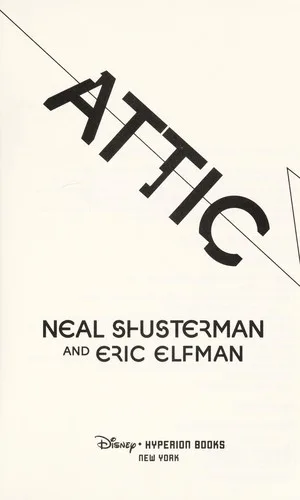
In 2007, Neal Shusterman and Eric Elfman published Tesla's Attic, a young adult novel.
The story follows a boy who finds a hidden collection of Nikola Tesla's inventions. This discovery propels him into an adventure that crosses time and makes him question the nature of genius and what it means to leave a legacy. He works to uncover the secrets within Tesla's abandoned workshop.
The novel is for readers who appreciate speculative fiction that draws on actual history. It particularly suits those interested in inventors and pioneering scientists. Young adults looking for adventure stories with thoughtful elements will find it appealing, as will adults interested in alternate histories and the lasting mystery surrounding figures like Tesla. Fans of mystery and adventure plots will likely find the narrative engaging.
This novel touches on themes often found in esoteric traditions concerning lost knowledge and suppressed inventions. It imagines a scenario where a brilliant mind like Nikola Tesla might have left behind devices with capabilities beyond conventional understanding. The narrative plays with the idea that powerful secrets could be hidden away, waiting for a specific individual to uncover them. This resonates with esoteric concepts of hidden wisdom and the potential for advanced, perhaps even arcane, knowledge to exist outside mainstream scientific acceptance.
💡 Why Read This Book?
• Gain an appreciation for the speculative potential of Nikola Tesla's actual 1890s work on wireless energy transmission, understanding how the book extrapolates from his documented experiments. • Experience a narrative adventure that explores the ethical quandaries of advanced technology, specifically through the lens of the fictional 'death ray' concept mentioned. • Discover the narrative appeal of historical 'what-ifs' by engaging with the book's premise about Tesla's hidden inventions discovered in his later years.
⭐ Reader Reviews
Honest opinions from readers who have explored this book.
❓ Frequently Asked Questions
Is Tesla's Attic based on any real Nikola Tesla inventions?
While the book is fictional, it draws inspiration from Nikola Tesla's documented research and patents, particularly his work in the late 19th and early 20th centuries on wireless communication and energy transmission.
What is the main plot of Tesla's Attic?
The story follows a boy who discovers a secret workshop filled with Nikola Tesla's forgotten inventions and must protect them from those who would misuse them.
Who are the authors of Tesla's Attic?
Tesla's Attic was written by Neal Shusterman and Eric Elfman, first published in 2019.
What age group is Tesla's Attic intended for?
It is primarily a young adult novel, featuring teenage protagonists and themes suitable for readers aged 10 and up.
Does the book explain Tesla's scientific theories?
The book incorporates elements of Tesla's theories, such as resonance and wireless power, but presents them in a fictionalized, accessible manner for a young adult audience.
Where is Tesla's Attic set?
The story begins in a contemporary setting but involves flashbacks and discoveries related to Nikola Tesla's historical period, particularly his activities in New York and Wardenclyffe.
🔮 Key Themes & Symbolism
Hidden Genius and Legacy
The novel centers on the idea that Nikola Tesla, a historical figure known for his brilliance, may have possessed even more revolutionary inventions than publicly known. It explores how genius can remain unrecognized or its creations lost to time, posing questions about what constitutes a lasting legacy and the responsibility that comes with groundbreaking discoveries. The protagonists grapple with the weight of uncovering these potentially world-altering devices.
Scientific Ethics and Responsibility
Tesla's Attic looks at the ethical implications of powerful technologies. When the protagonists find Tesla's inventions, they must decide how to use them, facing the potential for both immense good and catastrophic harm. This theme is particularly relevant concerning devices like Tesla's purported 'death ray,' forcing characters to confront the moral choices inherent in wielding advanced scientific capabilities.
The Mystique of Nikola Tesla
The book taps into the enduring fascination with Nikola Tesla, a real historical inventor whose work was often ahead of his time and whose later life was marked by eccentricity and financial struggles. The narrative uses this mystique to create a fictionalized account of his secret projects, appealing to readers interested in his biography and the persistent myths surrounding his genius and his unfinished work at Wardenclyffe.
💬 Memorable Quotes
Direct passages from the work, attributed to the author.
“It's not just about inventing something new, it's about what you do with it.”
— This concept highlights the book's focus on the ethical dimension of innovation. It suggests that the true measure of an invention, and its creator, lies not merely in its novelty but in its application and the consequences it brings.
“Tesla's attic was a laboratory of the impossible.”
— This descriptive phrase captures the essence of the book's premise, portraying Tesla's hidden workshop as a place where the boundaries of known science were pushed, filled with devices that defied conventional understanding.
“Every invention has a shadow.”
— This evocative statement underscores the duality of technology. It suggests that for every benefit an invention offers, there is a potential drawback or danger, a concept central to the plot's unfolding conflicts.
💡 Key Ideas
Editorial paraphrase of the work's core concepts — not direct quotes.
The world wasn't ready for Tesla's ideas.
This paraphrased sentiment reflects a common historical interpretation of Nikola Tesla's career, suggesting his visionary concepts often outpaced the technological capabilities or societal acceptance of his era, leading to unrealized potential.
Some secrets are buried for a reason.
This line speaks to the theme of dangerous knowledge. It implies that certain discoveries, due to their power or the potential for misuse, might be better left undiscovered or unutilized, posing a moral dilemma for those who unearth them.
🌙 Esoteric Significance
Tradition
While not strictly adhering to a singular esoteric lineage, Tesla's Attic draws heavily from the Hermetic principle of 'As Above, So Below,' applying it to technological innovation. The idea that grand, unseen forces (like electromagnetism) can be harnessed and manifested in tangible devices echoes alchemical and Hermetic pursuits of understanding and manipulating natural laws. The hidden workshop itself serves as a metaphor for the alchemist's laboratory, where hidden potentials are revealed and transformed.
Symbolism
The titular 'attic' functions as a potent symbol of the subconscious or the hidden domains of knowledge, representing Tesla's suppressed or unrealized ideas. Nikola Tesla himself, as a figure associated with electricity and unseen forces, becomes a symbol of the modern magician or scientist-mystic, capable of bending natural laws. The inventions within the attic, particularly those related to resonance and wireless energy, symbolize the potential for interconnectedness and the manipulation of fundamental universal energies.
Modern Relevance
Contemporary interest in Tesla, fueled by figures like Elon Musk who named his company after the inventor, shows a continued fascination with his futuristic thinking. The book's themes of technological ethics and the impact of invention resonate with current debates surrounding artificial intelligence, quantum computing, and the responsible development of powerful new technologies, bridging Tesla's historical context to modern concerns.
👥 Who Should Read This Book
• Young readers aged 10-14 interested in science fiction, adventure, and the historical figure of Nikola Tesla. • Aspiring inventors and science enthusiasts who enjoy narratives exploring ingenuity, problem-solving, and the process of discovery. • Fans of historical mysteries and speculative fiction seeking stories that blend factual elements with imaginative plotlines about technological potential.
📜 Historical Context
Published in 2019, Tesla's Attic emerges from a contemporary fascination with historical figures whose genius was perhaps misunderstood or underappreciated in their time. The early 20th century, the primary setting for Tesla's real-life endeavors, was an era of rapid industrialization and burgeoning electrical technology, marked by intense competition, notably between figures like Thomas Edison and Nikola Tesla. This period saw the widespread adoption of alternating current (AC) power systems, a field where Tesla made central contributions. The novel's premise taps into the speculative fiction genre's interest in alternate histories and 'what-if' scenarios surrounding inventors. While Tesla's work was widely recognized, his later years and certain ambitious projects, like the Wardenclyffe Tower, are often shrouded in myth, providing fertile ground for fictional exploration. The book implicitly engages with the public perception of Tesla as a misunderstood visionary, a narrative that gained traction through biographies and popular science writings throughout the 20th century.
📔 Journal Prompts
The concept of Tesla's 'death ray' and its potential applications.
The symbolic meaning of the hidden attic containing forgotten inventions.
Reflecting on the ethical responsibilities of inventors like Nikola Tesla.
The narrative's portrayal of how the world was (or wasn't) ready for Tesla's ideas.
Character motivations regarding the protection or exploitation of Tesla's legacy.
🗂️ Glossary
Alternating Current (AC)
An electric current that periodically reverses direction, a system largely championed and developed by Nikola Tesla, contrasting with direct current (DC).
Resonance
The phenomenon where an external force or vibrating system drives another system to oscillate with greater amplitude at specific frequencies, a principle Tesla explored extensively.
A colossal experimental wireless communication tower designed by Nikola Tesla in the early 1900s, intended to transmit messages and power wirelessly across the globe, but ultimately unfinished due to funding issues.
Wireless Transmission
The transfer of energy or information without the use of physical wires, a field in which Nikola Tesla conducted groundbreaking experiments and held numerous patents.
Death Ray
A hypothetical directed-energy weapon, often depicted in science fiction, which Tesla himself claimed to have conceptualized, though its existence and feasibility remain debated.
Genius
Exceptional intellectual or creative power or other natural ability, a term frequently applied to Nikola Tesla due to his numerous inventions and innovative concepts.
Legacy
Something left or handed down by a predecessor, referring in this context to Nikola Tesla's inventions, patents, and the lasting impact of his scientific contributions.
🔮 Readers Also Liked
Browse all →







More by Neal Shusterman, Eric Elfman
All books →
More Free Occult Philosophy Books
View all →