The I Ching for Writers
 72
72

The I Ching for Writers
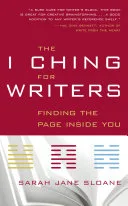
Sarah Jane Sloane's "The I Ching for Writers" presents a refreshingly practical application of a complex divinatory system. Instead of abstract philosophical musings, Sloane grounds the sixty-four hexagrams in the concrete challenges faced by writers – plot holes, character stagnation, and the dreaded blank page. Her background as a writing professor is evident; the interpretations feel less like spiritual decrees and more like seasoned editorial advice, albeit filtered through the ancient lens of the *Book of Changes*. The strength lies in this direct translation of esoteric symbolism into actionable prompts. However, the limitation surfaces in the sheer density of the I Ching itself; readers unfamiliar with its basic structure might find the initial exposition somewhat brief, requiring supplementary reading to fully grasp the hexagram mechanics. A particularly effective section explores Hexagram 4, "Youthful Folly," reframing its traditional meaning of foolishness as a potential catalyst for unconventional narrative breakthroughs, urging writers to embrace 'naive' perspectives. The book succeeds in its ambitious goal of making ancient wisdom accessible to a modern creative audience.
📝 Description
72
Sarah Jane Sloane's 2011 book applies the ancient Chinese I Ching to the writing process.
The I Ching for Writers adapts the ancient Chinese divination system for creative individuals. Writing professor Sarah Jane Sloane translates the sixty-four hexagrams and their associated wisdom into practical advice for authors. The book aims to give guidance, inspiration, and clarity for writers, drawing on over 5,000 years of the I Ching's tradition. Sloane synthesized insights from multiple translations and her own studies for this work.
This book is for writers experiencing creative blocks, seeking motivation, or needing new methods for idea generation. It will interest those who find value in the intersection of esoteric wisdom and practical application, especially those drawn to divination or unconventional problem-solving in creative work. Aspiring and established authors may find its perspective useful.
Originating in the Zhou Dynasty, the I Ching (Book of Changes) is a cornerstone of Chinese philosophy and divination. For millennia, it has offered a systematic way to understand change and cyclical patterns, influencing East Asian thought. Sloane's 2011 adaptation positions this ancient oracle within a modern context, acknowledging the enduring human search for guidance. The book bridges ancient Chinese philosophy with contemporary artistic practice.
💡 Why Read This Book?
• Gain unique perspectives on narrative challenges by applying the I Ching's sixty-four hexagrams, as structured in Sloane's system, to your specific writing projects. • Discover novel methods for overcoming writer's block and generating fresh ideas, drawing directly from the wisdom of the *Book of Changes* as interpreted since its early use. • Access practical, actionable advice derived from Sarah Jane Sloane's synthesis of over fifty translations of the I Ching, offering a structured approach to creative problem-solving.
⭐ Reader Reviews
Honest opinions from readers who have explored this book.
❓ Frequently Asked Questions
Is "The I Ching for Writers" suitable for beginners to the I Ching?
While the book focuses on application for writers, Sarah Jane Sloane provides accessible interpretations of the sixty-four hexagrams, making it suitable for those new to the I Ching who are primarily interested in its creative applications.
What if I'm not a writer but practice divination?
The book offers a unique perspective on applying I Ching hexagrams, which could be valuable for diviners seeking new ways to interpret the readings, particularly in relation to creative processes.
How does Sloane's interpretation differ from traditional I Ching readings?
Sloane's interpretation specifically recasts the hexagrams' meanings as guidance for writers, focusing on narrative structure, character development, and creative motivation rather than general life advice.
What is the historical origin of the I Ching?
The I Ching, or Book of Changes, is one of the oldest Chinese classic texts, with origins tracing back to the Western Zhou dynasty, over 3,000 years ago.
Can this book help with writer's block?
Yes, the book is specifically designed to address common writing challenges, including writer's block, by using the I Ching hexagrams to offer new insights and directions.
Who is the author, Sarah Jane Sloane?
Sarah Jane Sloane is a writing professor who brings her academic expertise and extensive study of the I Ching to create this unique guide for creative individuals.
🔮 Key Themes & Symbolism
Hexagrams as Creative Archetypes
The central theme is the reframing of the I Ching's sixty-four hexagrams not as purely predictive tools, but as archetypal scenarios applicable to the creative process. Each hexagram, with its unique combination of yin and yang lines and associated judgments, is presented as a symbolic representation of different stages, challenges, or opportunities a writer might encounter. Sloane emphasizes how these ancient symbols can mirror the dynamics of plot, character arcs, and thematic development, offering a structured framework for understanding and reading through the complexities of storytelling.
Divination for Inspiration
This work explores the concept of using divination, specifically the I Ching, as a source of creative inspiration rather than solely for fortune-telling. By consulting the hexagrams, writers are encouraged to seek unexpected perspectives, break through mental barriers, and discover novel plot twists or character motivations. The book positions the I Ching as a partner in the creative dialogue, providing prompts and insights that can spark imagination and help overcome the common anxieties associated with producing original work.
The Writer's Journey Metaphor
The I Ching for Writers maps the often-arduous journey of a writer onto the symbolic language of the I Ching. Each hexagram's commentary is interpreted through the lens of the writer's experience, addressing issues like the initial spark of an idea, the challenges of drafting, periods of doubt or revision, and the eventual completion of a project. This metaphorical application allows writers to find resonance with ancient wisdom, feeling less alone in their struggles and empowered by a system that acknowledges the cyclical nature of creative endeavor.
Synthesis of East and West
A key theme is the successful synthesis of Eastern esoteric philosophy, embodied by the I Ching, with Western literary theory and creative writing practices. Sarah Jane Sloane bridges these traditions by demonstrating how the principles of change, balance, and interconnectedness inherent in the I Ching can offer practical solutions to contemporary writing problems. This cross-cultural approach enriches both the understanding of the I Ching and the methods available to modern authors seeking inspiration and guidance.
💬 Memorable Quotes
Direct passages from the work, attributed to the author.
“Each hexagram offers directions and comments about what the future will hold for the writer.”
— This statement captures the book's core premise: transforming the ancient oracle's pronouncements into a forward-looking guide specifically tailored to the author's creative path and project development.
“The ancient oracle system of the I Ching has guided wisdom seekers for over 5,000 years.”
— This highlights the profound historical depth and enduring relevance of the I Ching, positioning Sloane's work as a contemporary interpretation of a venerable tradition aimed at a specific audience.
“Sloane interprets the I Ching from years of study and comparisons of over fifty translations.”
— This emphasizes the author's rigorous scholarship and dedication to synthesizing diverse interpretations, lending credibility to her unique application of the I Ching's wisdom for writers.
“The sixty-four hexagrams offer insights and motivation for contemporary writers.”
— This concisely states the book's primary function: to provide tangible benefits—both directional guidance and encouragement—by leveraging the structured wisdom found within the I Ching's hexagrammatic system.
“The work recasts ancient predictions into suggestions for contemporary writers.”
— This interpretation underscores the book's innovative approach, moving beyond literal divination to offer practical, actionable advice rooted in the symbolic language of the I Ching for creative professionals.
🌙 Esoteric Significance
Tradition
This work fits within the broad Hermetic and Neopagan traditions that seek to reinterpret ancient wisdom systems for modern practitioners. While the I Ching is fundamentally Chinese Taoist philosophy, its systematic structure, symbolic language, and focus on cyclical change align with Hermetic principles of correspondence and the understanding of universal laws. Sloane's approach departs from traditional Taoist interpretations by prioritizing practical application within a Western creative context, making its esoteric significance lie in its cross-cultural synthesis and accessibility.
Symbolism
The primary symbols are the hexagrams themselves, each composed of six lines (yin or yang). These represent fundamental states of being and change, acting as archetypes for situations encountered in life and, in this book, the writing process. The interplay of yin (receptive, passive) and yang (active, assertive) lines within each hexagram symbolizes the dynamic balance and transformation that Sloane applies to narrative elements like character motivation and plot progression.
Modern Relevance
Contemporary thinkers and practitioners in fields like transpersonal psychology, creative coaching, and digital divination increasingly look for accessible yet profound systems to guide personal and creative growth. Sloane's book serves as a precursor to this trend, demonstrating how ancient oracles can be adapted for specific modern needs. It appeals to creators seeking structured yet intuitive methods beyond conventional self-help or craft-based literature, finding parallels in practices that integrate mindfulness and symbolic exploration.
👥 Who Should Read This Book
• Aspiring and established writers seeking unconventional sources of inspiration and narrative solutions, particularly those interested in divination or symbolic systems. • Creative professionals experiencing blocks or seeking fresh perspectives on plot development, character arcs, and thematic exploration through a structured esoteric framework. • Students of comparative religion or philosophy interested in the practical application of ancient Chinese wisdom, like the I Ching, within a Western literary context.
📜 Historical Context
Published in 2011, "The I Ching for Writers" emerged in an era marked by a resurgence of interest in esoteric practices and their application to personal development and creative fields. The I Ching itself, originating in China potentially as early as the Shang Dynasty (c. 1600–1046 BCE) and codified during the Zhou Dynasty, had long been established as a central to Chinese philosophy and divination. Its Western reception, significantly boosted by Richard Wilhelm's translation in the 1920s, introduced Jungian archetypal interpretations and a broader appreciation for its philosophical depth. Sloane's work engages with this lineage, building upon decades of Western engagement with the *Book of Changes*. It arrived in a landscape where practices like journaling and mindfulness were increasingly integrated into creative workflows, offering a mix of ancient Chinese wisdom and contemporary Western writing pedagogy. While competing schools of thought might focus solely on craft techniques or psychological archetypes, Sloane's book sought to bridge these by integrating a systematic, symbolic oracle into the writer's toolkit.
📔 Journal Prompts
The hexagram's commentary on 'Youthful Folly' (Hexagram 4) and its implications for embracing unconventional ideas in your current project.
Reflecting on the concept of 'The Return' (Hexagram 24) as it applies to overcoming creative stagnation.
How the balance of yin and yang lines in a specific hexagram mirrors the dynamic between your protagonist and antagonist.
The guidance offered by Hexagram 1, 'The Creative,' for initiating a new writing endeavor.
Applying the wisdom of the 'Great Anticipation' (Hexagram 34) to managing the expectations around your manuscript's completion.
🗂️ Glossary
I Ching
An ancient Chinese divination text and philosophical classic, also known as the Book of Changes. It comprises 64 hexagrams, each formed by six stacked horizontal lines of two types: unbroken (yang) and broken (yin).
Hexagram
A figure composed of six stacked horizontal lines, representing a specific state or situation. Each of the 64 hexagrams in the I Ching has associated imagery, judgments, and line statements.
Yin
In Taoist philosophy, one of the two fundamental opposing but complementary forces in the natural world. Represented by a broken line (--) in I Ching hexagrams, it embodies qualities like receptivity, passivity, darkness, and femininity.
Yang
The complementary force to Yin, represented by a solid line (—) in I Ching hexagrams. It embodies qualities like activity, assertiveness, light, and masculinity.
Oracle
A person or agency considered to be a source of wise counsel or prophetic predictions inspired by a deity or supernatural source. In this context, the I Ching system serves as the oracle.
Divination
The practice of seeking knowledge of the future or the unknown by supernatural means. The I Ching is a system used for divination, offering insights into present circumstances and potential future developments.
Creative Block
A temporary inability to access one's creative state, often manifesting as a lack of ideas, motivation, or ability to proceed with a project. The book offers I Ching interpretations to overcome this.