Creative Visualization
 72
72

Creative Visualization
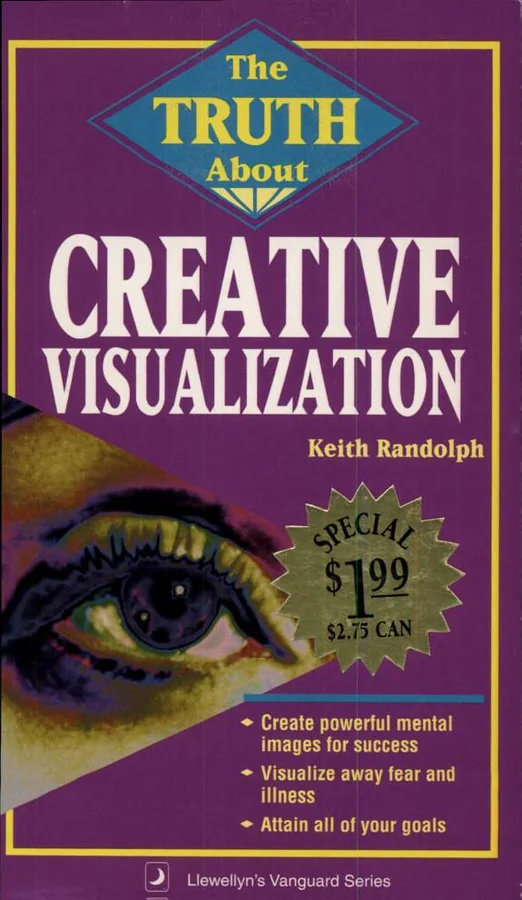
Keith Randolph's *Creative Visualization*, from its 1984 debut, positions the mind as a potent tool for personal alteration, a concept explored by numerous self-help texts. The book’s strength lies in its direct, no-nonsense approach to harnessing mental imagery. Randolph avoids spiritual jargon, opting instead for pragmatic instructions. For instance, the emphasis on consistent, detailed imaginative practice, rather than fleeting hopeful thoughts, offers a tangible path for the reader. However, the work’s limitation is its singular focus, offering little acknowledgment of external systemic factors that also influence outcomes. It posits a near-absolute individual control, which, while empowering, can feel overly simplistic when contrasted with the complexities of socio-economic or political realities. The core assertion that 'no one—except you—can prevent you from attaining your goals' is a bold claim that demands significant self-discipline to enact. Ultimately, *Creative Visualization* serves as a focused manual for mental discipline within a specific framework of self-causation.
📝 Description
72
Keith Randolph's Creative Visualization, published in December 1984, offers techniques to direct mental faculties toward desired outcomes.
This book presents a practical method for individuals to consciously guide their thoughts and imagination to achieve specific goals. Randolph argues that by understanding and applying principles of thought, people can shape their external circumstances. The system described aims to unlock inner mental abilities, positing that personal control is a key factor in success across various life areas.
It is suited for those interested in self-improvement, particularly those looking to manifest personal objectives such as financial gains, career progression, spiritual development, or overall well-being. The book appeals to readers who accept the mind's potential and seek structured approaches to utilize it. Individuals feeling constrained by their current situation may find the emphasis on internal agency particularly resonant.
Randolph's work emerged in 1984, a time of considerable interest in New Age ideas and human potential movements. This period saw a rise in popular books addressing mind-body links, affirmations, and visualization. The book tapped into a cultural fascination with the untapped capacities of the human mind.
Published in 1984, Creative Visualization fits within the broader New Age and human potential movements that gained traction in the late 20th century. These traditions often emphasize the mind's capacity to influence reality, drawing on concepts found in earlier New Thought philosophies and Eastern spiritual practices. The book's focus on visualization techniques and belief systems aligns with a spiritual paradigm that posits internal states directly correlate with external experience, seeking to empower individuals through mental discipline and focused intention.
💡 Why Read This Book?
• Learn the specific 'principles of creative visualization' detailed by Randolph, offering a structured approach to mental projection that distinguishes itself from generalized positive thinking, as presented in his 1984 publication. • Understand how to apply 'techniques revealed' within the book to manifest tangible results in areas like 'material wealth' or 'professional success,' providing actionable steps beyond abstract aspirations. • Gain insight into harnessing 'all of the powers of your mind' through practical exercises, moving beyond theory to cultivate a direct sense of personal agency as described in the original blurb.
⭐ Reader Reviews
Honest opinions from readers who have explored this book.
❓ Frequently Asked Questions
When was Keith Randolph's 'Creative Visualization' first published?
Keith Randolph's seminal work, 'Creative Visualization,' was first published in December 1984, marking its entry into the burgeoning self-help and New Age literature of the era.
What is the central premise of 'Creative Visualization'?
The central premise is that by consciously directing mental power through specific techniques, individuals can achieve virtually anything they desire, influencing personal happiness, success, and well-being.
Does the book offer specific exercises for practice?
Yes, the book reveals simple, practical techniques designed to harness mental powers, focusing on focused thought and vivid imagination as key components of the visualization process.
Who is the intended audience for this book?
The book is aimed at individuals seeking self-improvement and personal growth, particularly those interested in manifesting goals related to wealth, career, health, and spiritual development.
What kind of results can one expect from practicing these techniques?
Practitioners can expect to achieve personal happiness, spiritual development, health improvements, professional success, and material wealth by consistently applying the principles outlined.
What makes this book different from other visualization guides?
Randolph's work focuses on the direct harnessing of mental powers with an emphasis on practical, repeatable techniques, asserting that internal control is the primary factor in goal attainment.
🔮 Key Themes & Symbolism
Mental Power and Manifestation
The core theme is the belief that the human mind possesses inherent powers capable of shaping external reality. Randolph posits that through focused intention and vivid imagery, individuals can directly influence outcomes in their lives. This concept suggests that desires are not merely passive wishes but can be actively 'called forth' by the mind. The work explores how consistent mental projection, akin to directing energy, can lead to the manifestation of goals in areas ranging from personal well-being to material acquisition, positioning the mind as the primary engine of personal creation.
Self-Directed Achievement
This theme centers on the idea of personal agency and the removal of external limitations as the primary barriers to success. Randolph's 'Truth About Creative Visualization' suggests that once an individual understands and applies its principles, their own internal state becomes the decisive factor in goal attainment. The emphasis is on cultivating an internal locus of control, where self-imposed beliefs and mental habits are the only true obstacles. This perspective empowers the reader by placing the responsibility and the means for achieving success squarely within their own mental domain.
Holistic Goal Attainment
Creative Visualization proposes that its techniques are not limited to a single area of life but are universally applicable. The work outlines how the practice can contribute to 'personal happiness, spiritual development, health, professional success, material wealth,' suggesting a holistic approach to self-actualization. By mastering the mind's creative faculty, individuals are encouraged to pursue and achieve comprehensive life fulfillment. This broad applicability underscores the book's assertion of the mind's pervasive influence across all facets of human experience.
💬 Memorable Quotes
Direct passages from the work, attributed to the author.
“Harness all of the powers of your mind to get virtually anything you desire.”
— This statement expresses the book's central promise: that the mind is a latent force, capable of influencing reality to fulfill one's deepest aspirations across all life domains.
“No one—except you—can prevent you from attaining your goals.”
— This emphasizes the principle of radical self-responsibility. It suggests that external circumstances are secondary to internal beliefs and mental discipline in the pursuit and achievement of objectives.
“Personal happiness, spiritual development, health, professional success, material wealth—creative visualization enables you to succeed at anything.”
— This highlights the comprehensive scope of the practice, positioning creative visualization not as a niche tool but as a foundational skill for achieving a well-rounded and successful life.
“Practice the simple techniques revealed in The Truth About Creative Visualization.”
— This points to the actionable nature of Randolph's work, stressing that the effectiveness of the principles lies in their consistent application through specific, learnable methods.
“Employ the principles of creative visualization.”
— This signifies that the book is not just theoretical but offers a set of underlying rules or guidelines that, when understood and used, unlock the potential for desired outcomes.
🌙 Esoteric Significance
Tradition
While not explicitly tied to a single esoteric lineage like Hermeticism or Kabbalah, Randolph's work draws heavily on principles found within Western Esotericism, particularly the mind-power and manifestation traditions influenced by New Thought and Christian Science. It carries the Hermetic axiom 'As above, so below,' suggesting a correspondence between the inner world of thought and the outer world of experience. The book's emphasis on 'creative' power aligns with concepts of divine or cosmic creation, reframed here as accessible to the individual practitioner through focused mental effort.
Symbolism
The primary 'symbol' within the book is the mind itself, envisioned not just as a biological organ but as a potent, generative force. Imagery, as a tool, functions symbolically, representing the desired outcome in a tangible form that the subconscious can engage with. The act of 'visualization' itself can be seen as a symbolic ritual, where the mental picture stands for the future reality. The book implicitly uses the symbol of the 'goal' or 'desire' as a focal point, a beacon that directs the visualized energy towards a specific manifestation.
Modern Relevance
Randolph's concepts resonate strongly with contemporary self-help and manifestation coaching industries. Practices like guided meditation, affirmation techniques, and vision boarding, popular today, owe a debt to the foundational ideas presented in works like *Creative Visualization*. Thinkers and practitioners in fields of positive psychology, neuroscience exploring neuroplasticity, and even quantum manifestation theories often touch upon similar themes of consciousness influencing reality, demonstrating the enduring appeal and adaptability of these core principles.
👥 Who Should Read This Book
• Aspiring individuals seeking practical, actionable techniques for personal goal achievement, particularly those interested in wealth and career advancement, who want a structured mental discipline. • Readers exploring the intersection of psychology and metaphysics who are curious about the power of focused thought and imagination in shaping life experiences. • Self-improvement enthusiasts looking for methods to enhance their self-efficacy and cultivate an internal locus of control, moving beyond passive hope to active mental creation.
📜 Historical Context
Keith Randolph's *Creative Visualization*, published in December 1984, arrived during a period of intense popular engagement with the New Age movement and the broader human potential philosophy. This era saw thinkers like Werner Erhard (EST) and authors such as Shirley MacLaine gaining significant followings, exploring consciousness and personal transformation. Randolph's work fits within this milieu, offering a structured, seemingly secular approach to mind-over-matter principles that echoed earlier self-help gurus like Napoleon Hill, whose *Think and Grow Rich* (1937) also emphasized mental discipline for success. Unlike more overtly spiritual or philosophical texts of the time, Randolph’s work, as suggested by its title, focused on practical application. It emerged in a landscape where disciplines like Transcendental Meditation were also gaining traction, but *Creative Visualization* distinguished itself by framing mental focus as a direct tool for material and personal manifestation, a concept that would be further explored and popularized in subsequent decades.
📔 Journal Prompts
The power of focused intention as described in the book's techniques.
Developing vivid imagery for 'material wealth' goals.
Identifying personal beliefs that may hinder goal attainment.
The role of consistent practice in achieving desired outcomes.
Connecting 'spiritual development' with mental projection methods.
🗂️ Glossary
Creative Visualization
A mental practice involving the focused use of imagination and intention to consciously direct one's thoughts and emotions towards achieving specific desired outcomes in reality.
Powers of the Mind
Refers to the latent capacities of human consciousness, including imagination, will, focus, and belief, which the book posits can be harnessed for practical effect.
Principles of Creative Visualization
The underlying rules or guidelines detailed in the book that govern how to effectively use mental techniques to manifest desires.
Attaining Goals
The process of successfully achieving objectives, whether personal, professional, or material, through the application of specific methods, in this context, creative visualization.
Manifestation
The act or process of bringing something into physical reality through the power of thought, belief, and focused intention, as described in the book's methodology.
Techniques
Specific, practical methods or exercises revealed in the book designed to enable the reader to practice and implement creative visualization effectively.
Locus of Control
The degree to which individuals believe they have control over the outcomes of events in their lives, as opposed to external forces beyond their control.
This book appears in 1 collection
🔮 Readers Also Liked
Browse all →








From the “Visualization” Collection
View all →









More Free Occult Philosophy Books
View all →