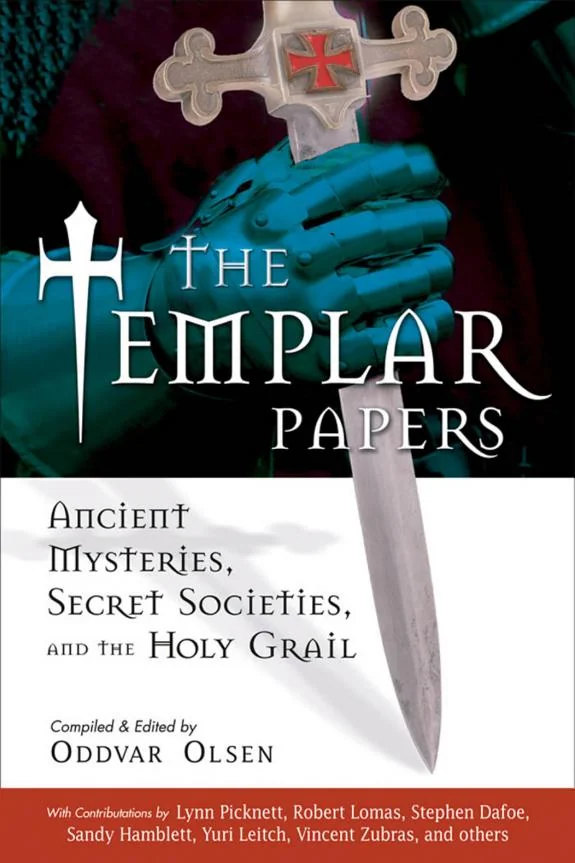
The Templar papers
 74
74

The Templar papers
Oddvar Olsen's "The Templar Papers" approaches the perennial fascination with the Knights Templar not as a straightforward historical chronicle, but as an exploration of their alleged esoteric legacy. The work is strongest when it meticulously details the historical events surrounding the Order's rise and fall, particularly the dramatic trials of 1307. Olsen's hypothesis regarding a continuous stream of Templar-derived secret knowledge, while speculative, is presented with a scholarly tone that distinguishes it from more sensationalist accounts. A limitation lies in the difficulty of verifying some of the more arcane claims, which often rely on interpretations of symbolism and obscure texts rather than concrete documentary evidence. The section discussing the alleged Templar connection to the Holy Grail, while intriguing, leans heavily on thematic parallels rather than direct historical linkage. Ultimately, "The Templar Papers" offers a detailed look at the *idea* of the Templars as keepers of esoteric secrets, rather than definitive proof.
📝 Description
74
Oddvar Olsen's 2010 book examines the historical Knights Templar and their alleged esoteric connections.
Published in 2010, Oddvar Olsen's "The Templar Papers" investigates the historical Knights Templar, with a focus on their purported esoteric links and hidden knowledge. The book follows the order from its beginnings during the Crusades, through its rapid ascent to power, and its eventual downfall in the early 14th century. Olsen analyzes historical records alongside later esoteric interpretations, suggesting that Templar influence persisted long after their official disbandment. The work is for readers interested in the intersection of medieval history and esoteric thought, aiming to clarify the myths and legends surrounding the Knights Templar beyond conventional historical accounts. Those curious about secret societies, Western esotericism, and the historical origins of certain mystical groups will find relevant material within its pages. The book contextualizes the Templars within the 12th and 13th centuries, a period of their significant military and financial dominance across the Holy Land and Europe. It also covers their persecution and dissolution under King Philip IV of France and Pope Clement V in the early 14th century. Olsen's research fits into a tradition of occult and historical inquiry that emerged in the late 19th and 20th centuries, seeking to connect historical organizations with secret systems of knowledge.
The book engages with the lineage of Western esotericism, a tradition that often seeks hidden meanings and spiritual lineages within historical events and organizations. It connects the historical Knights Templar to later occult traditions, suggesting a transmission of secret knowledge. This aligns with a broader esoteric interest in identifying historical roots for mystical practices and secret societies, often tracing them back to medieval military orders or ancient mystery schools. Olsen's work contributes to this ongoing discussion by proposing a veiled role for the Templars in passing down specific, perhaps geometrically informed, understanding.
💡 Why Read This Book?
• Understand the alleged esoteric connections of the Knights Templar, moving beyond basic historical accounts to explore their purported hidden knowledge and symbolism, particularly concerning sacred geometry as discussed in the text. • Gain insight into the historical context of the Crusades and the early 14th-century suppression of the Templars, appreciating the cultural and political climate that shaped the Order's fate. • Explore the concept of secret lineages and how "The Templar Papers" posits the Templars as a potential link in a chain of esoteric transmission, offering a unique perspective on Western esotericism.
⭐ Reader Reviews
Honest opinions from readers who have explored this book.
❓ Frequently Asked Questions
What is the primary focus of Oddvar Olsen's "The Templar Papers"?
The book primarily focuses on the alleged esoteric connections and secret knowledge of the Knights Templar, examining their historical role and potential influence on later secret societies and mystical traditions.
When was "The Templar Papers" first published?
Oddvar Olsen's "The Templar Papers" was first published in 2010.
Does the book present definitive proof of Templar secrets?
The book explores hypotheses and interpretations regarding Templar secrets and symbolism. While it meticulously details historical events, definitive proof of their esoteric knowledge remains a subject of scholarly debate and interpretation.
What historical period does "The Templar Papers" cover?
It covers the historical period of the Crusades, the flourishing of the Knights Templar in the 12th and 13th centuries, and their subsequent suppression in the early 14th century, along with subsequent esoteric interpretations.
Who would benefit most from reading "The Templar Papers"?
Readers interested in medieval history, esoteric traditions, secret societies, and the mythology surrounding the Knights Templar would find this book particularly engaging.
Are there specific esoteric concepts discussed in the book?
Yes, the book discusses concepts such as sacred geometry, the idea of secret lineages, and an esoteric interpretation of "inner chivalry" as potentially related to Templar traditions.
🔮 Key Themes & Symbolism
Templar Esoteric Lineage
The work posits that the Knights Templar were not merely a military order but custodians of a profound esoteric tradition. Olsen traces potential lines of transmission from ancient mystery schools, through the Templars, and into later secret societies. This theme explores the idea that the Order's wealth and influence were secondary to their role as keepers of hidden wisdom, particularly concerning spiritual alchemy and the nature of divine knowledge. The book examines how this alleged lineage continued to influence Western esotericism long after the Order's dissolution in 1312.
Sacred Geometry and Architecture
A significant focus is placed on the supposed use of sacred geometry by the Templars in their construction projects. Olsen suggests that their castles, churches, and commanderies were not only fortresses but also intricate repositories of cosmological and mystical knowledge. This theme explores the symbolic language embedded within their architecture, proposing that certain geometric ratios and layouts encoded teachings on universal principles and the divine order, echoing traditions found in classical antiquity and Hermeticism.
The Suppression and Survival
This theme examines the dramatic events of 1307, when King Philip IV of France initiated the arrest and trial of the Templars, leading to their eventual suppression by Pope Clement V in 1312. Olsen's analysis goes beyond the political motivations, exploring how the Order's esoteric knowledge may have contributed to their downfall or, conversely, how it enabled certain elements to survive and operate in secrecy. The narrative follows the fragmented remnants and the persistent legends that suggest the Templar tradition did not truly die.
Inner Chivalry and Spiritual Quest
Beyond the martial aspects, "The Templar Papers" investigates an "inner chivalry" attributed to the Templars. This concept represents a spiritual path focused on self-mastery, the pursuit of inner truth, and the application of esoteric principles in daily life. It suggests a parallel quest for spiritual enlightenment, akin to Gnostic or Sufi traditions, where the external battles of the Crusades were mirrored by an internal struggle for spiritual perfection and union with the divine.
💬 Memorable Quotes
Direct passages from the work, attributed to the author.
“The architecture of their commanderies often reflected cosmic order.”
— This interpretation suggests that the physical structures built by the Templars were not merely functional but encoded with symbolic representations of universal laws and celestial harmony, aligning with esoteric principles of sacred geometry.
“Their suppression in 1312 did not signify an end, but a transformation.”
— This concept implies that the official dissolution of the Knights Templar was not the true demise of their influence or knowledge, but rather a strategic shift, allowing their esoteric traditions to continue in clandestine forms.
“The quest for the Holy Grail is often linked to their hidden teachings.”
— This highlights a common esoteric interpretation connecting the Templars to the legendary Grail, suggesting that their secret knowledge might have included mystical doctrines or relics related to this powerful symbol of spiritual attainment.
“The Order's initiation rites were reportedly designed to awaken latent spiritual faculties.”
— This suggests that the Templar initiation process was intended to go beyond military training, aiming to unlock a practitioner's innate spiritual potential and grant them access to higher levels of consciousness and esoteric understanding.
💡 Key Ideas
Editorial paraphrase of the work's core concepts — not direct quotes.
Olsen points to the persistence of Templar symbolism in later Rosicrucian orders.
This paraphrase indicates that the author identifies specific symbols and motifs associated with the Templars that appear in the teachings and practices of subsequent esoteric groups, suggesting a historical continuity.
🌙 Esoteric Significance
Tradition
The work aligns with the Western esoteric tradition, particularly drawing from Hermetic, Gnostic, and Rosicrucian currents. It fits within a broader narrative that seeks to uncover a continuous stream of spiritual knowledge passed through select historical groups. Olsen's approach suggests the Templars played a crucial, albeit often hidden, role in this transmission, bridging the gap between medieval chivalry and later occult philosophies that emphasized inner transformation and hidden wisdom.
Symbolism
Key symbols explored include the Double Cross (or Cross Pattée), often interpreted as representing duality, balance, and the union of opposing forces. The Baphomet, a controversial figure associated with later Templar accusations, is examined not as a literal idol but as a complex symbolic representation of esoteric principles, possibly related to Gnostic ideas or Hermetic quaternities. The concept of the 'True Cross' is also analyzed, suggesting it represented not just a relic but a profound mystical attainment or secret knowledge.
Modern Relevance
Contemporary practitioners of Western esotericism, particularly those interested in Masonic degrees, Rosicrucianism, and speculative Templarism, often reference or draw inspiration from interpretations like those found in "The Templar Papers." The book's exploration of sacred geometry and architectural symbolism also finds resonance with modern movements interested in sacred space and geomancy. Thinkers and groups seeking to understand the historical roots of Western mystical traditions find value in Olsen's synthesis of historical events and esoteric lore.
👥 Who Should Read This Book
• Students of Western Esotericism: Those seeking to understand the purported links between medieval military orders and later occult traditions, particularly regarding secret knowledge and symbolic language. • History Enthusiasts with an Occult Interest: Readers fascinated by the Knights Templar who wish to explore speculative theories and esoteric interpretations beyond standard historical narratives. • Comparative Religion Scholars: Individuals interested in how religious and mystical concepts evolve and are reinterpreted across different historical periods and secret societies.
📜 Historical Context
Oddvar Olsen's "The Templar Papers" emerges from a rich milieu of 19th and 20th-century occult and historical speculation concerning the Knights Templar. While the book was published in 2010, its intellectual roots look at the late medieval period, specifically the early 14th century, marked by the dramatic dissolution of the Order in 1312. The work engages with the historical currents of the Crusades and the medieval papacy. Olsen's approach situates itself within a lineage of inquiry that includes authors like Eliphas Lévi and later figures exploring secret societies. The book implicitly contrasts with purely secular historical accounts that dismiss esoteric interpretations, positioning itself against a backdrop of ongoing debate about the Templars' true nature. The reception of such works often involves a division between rigorous historians and those in esoteric circles, with figures like Charles Taze Russell (founder of the Bible Student movement) also engaging with Templar lore.
📔 Journal Prompts
The concept of "inner chivalry" as presented in the book, what does this mean for your personal journey?
Reflect on the architectural symbolism discussed, particularly the sacred geometry attributed to Templar structures.
Consider the historical context of the Templar suppression in 1312. How might secrecy have aided their survival?
How does the idea of a continuous esoteric lineage, potentially involving the Templars, challenge conventional historical views?
Analyze the symbolic representation of Baphomet as discussed by Olsen. What hidden meanings might it convey?
🗂️ Glossary
Sacred Geometry
The study of geometric shapes, proportions, and mathematical relationships found in nature and architecture, believed to hold mystical or divine significance. The book suggests the Templars employed these principles.
Knights Templar
A medieval Catholic military order founded around 1119, known for its role in the Crusades and its eventual suppression in the early 14th century. This book explores their esoteric dimensions.
Esoteric
Relating to or accessible only by a select group of people with a specialized knowledge or interest. In this context, referring to hidden spiritual or mystical teachings.
Lineage
A line of descent or tradition. In esoteric contexts, it refers to the transmission of knowledge or spiritual authority from a teacher to a disciple through a continuous chain.
Inner Chivalry
An interpretation of chivalric ideals focused on spiritual development, self-discipline, and the pursuit of inner truth, rather than solely on martial prowess or external honor.
Baphomet
A symbolic figure historically associated with the Knights Templar, often depicted as an idol. Esoteric interpretations view it as a complex symbol of divine knowledge or occult principles.
Suppression of the Templars
The arrest, trial, and dissolution of the Knights Templar order orchestrated by King Philip IV of France, culminating in Pope Clement V's bull 'Vox in excelso' in 1312.
🔮 Readers Also Liked
Browse all →









More by Oddvar Olsen
All books →

More Free Occult Philosophy Books
View all →