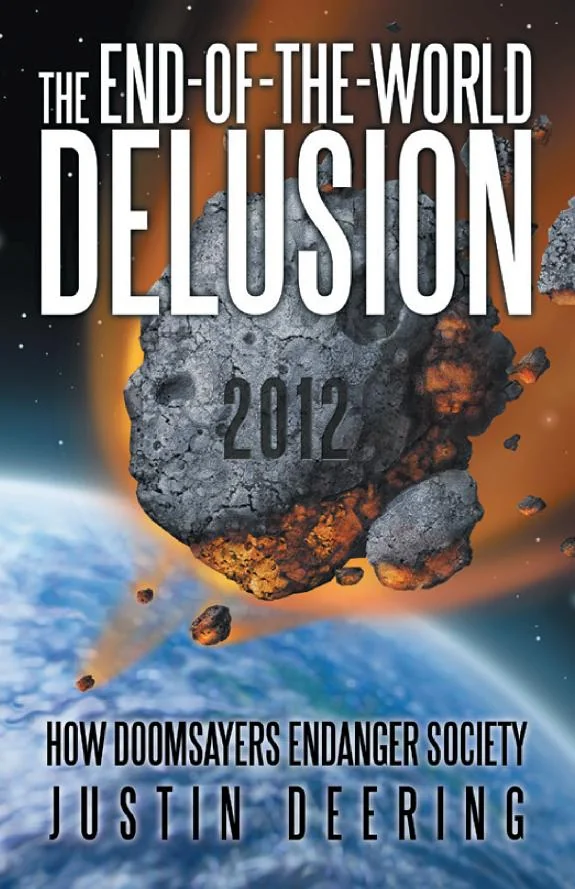
The End-Of-The-World Delusion
 83
83

The End-Of-The-World Delusion
Justin Deering's examination of end-of-the-world beliefs is surprisingly engaging, particularly given the often-morbid subject matter. He avoids sensationalism, instead opting for a rigorously researched historical and cultural analysis. The section detailing the fervent millenarianism surrounding the year 1000 CE, and its surprisingly muted aftermath, stands out as a particularly strong example of his nuanced approach. While the sheer breadth of cultures covered can occasionally feel overwhelming, leading to a rapid pace, Deering’s prose remains consistently clear and accessible. The book’s primary strength lies in its balanced perspective, presenting apocalyptic beliefs not as fringe curiosities but as integral, recurring features of human civilization. It’s a sober, informative exploration of a persistent human preoccupation.
📝 Description
83
Justin Deering's 2018 book examines the history of end-of-the-world beliefs.
The End-of-the-World Delusion traces the evolution of apocalyptic prophecies across different cultures and historical eras. Justin Deering details how these narratives of destruction and final judgment have appeared consistently in human thought. The book covers societal reactions to concepts of ultimate endings, from ancient predictions to contemporary fears.
This study is for those interested in the psychological and social roots of doomsday thinking. It will appeal to readers of comparative religion, cultural history, and belief systems. Anyone wanting to grasp the historical repetition of end-times predictions and their societal effects will find the book informative.
Deering places these narratives within larger historical movements and anxieties. He shows how specific events, religious viewpoints, and cultural changes have encouraged apocalyptic fervor. These beliefs are connected to real societal conditions and the human need for meaning and order when facing uncertainty.
This book engages with traditions that view history through the lens of cyclical destruction and renewal, often tied to prophetic interpretation. It examines how societies construct meaning from perceived cosmic disruptions, a theme present in various esoteric schools that analyze patterns of societal collapse and transformation. The work touches upon the human impulse to find order and divine purpose within chaotic or cataclysmic historical narratives.
💡 Why Read This Book?
• Understand the enduring appeal of apocalyptic narratives by examining their historical roots, such as the specific millenarian anxieties present around the year 1000 CE. • Gain insight into how societal fears and hopes are projected onto future events, as explored through Deering's analysis of various end-of-times predictions. • Learn to critically assess doomsday prophecies by recognizing recurring patterns and cultural contexts, a skill honed by studying examples like Mayan end-of-times predictions.
⭐ Reader Reviews
Honest opinions from readers who have explored this book.
❓ Frequently Asked Questions
What historical periods does 'The End-of-the-World Delusion' cover?
The book spans a vast historical range, from ancient prophecies and early Christian eschatology to medieval millenarianism, and touches upon modern interpretations of end-of-times predictions.
Does the book focus on specific religious traditions?
While it extensively discusses Christian eschatology and the Rapture, Deering also examines end-of-world beliefs within Mayan culture, Zoroastrianism, and other diverse historical and religious contexts.
Is the book's tone academic or accessible?
Justin Deering’s writing is characterized as well-written, thoroughly researched, and very readable, making complex topics accessible to the average reader despite the academic rigor.
What are some key examples of end-of-world beliefs discussed?
The book details Mayan end-of-times predictions, Christian rapture beliefs, and various millenarian movements that have shaped historical perceptions of the world's end.
What is the primary argument of 'The End-of-the-World Delusion'?
The central argument explores the persistent human tendency to construct and believe in narratives of world-ending events, analyzing their psychological, social, and historical drivers.
Who is the author, Justin Deering?
Justin Deering is the author of 'The End-of-the-World Delusion,' first published in 2012, known for making complex historical and philosophical topics accessible.
🔮 Key Themes & Symbolism
Recurring Apocalyptic Frameworks
The work identifies persistent structural elements across diverse end-of-world narratives. These include the reliance on prophecy, the identification of specific signs preceding an apocalypse, and the establishment of cyclical or linear timelines leading to a final event. Deering illustrates how these frameworks provide comfort and order by imposing meaning onto chaotic historical periods or perceived existential threats. The book argues that the human mind is predisposed to seek patterns and ultimate resolutions, making apocalyptic narratives a recurring feature across cultures and epochs.
The Social Function of Doomsday Beliefs
Beyond individual psychology, the book examines the societal roles that end-of-world beliefs have played. These narratives have often served to reinforce social cohesion, justify political or religious authority, and provide a moral compass. By positing a future judgment or transformation, apocalyptic visions can motivate collective action, encourage adherence to group norms, or offer solace in times of extreme hardship and persecution. Deering shows how these beliefs are not merely abstract speculations but have tangible impacts on community formation and behavior.
Cultural Interpretation of Cataclysm
This theme explores how different cultures interpret and represent catastrophic events, both real and imagined. From the ancient Mayan calendar's cyclical view of time and its associated end-of-times predictions to the linear eschatology of Abrahamic religions, Deering highlights the diverse ways humanity conceptualizes finality. The book demonstrates how these interpretations are deeply embedded within specific cultural cosmologies, mythologies, and historical experiences, reflecting unique worldviews and anxieties about existence and the unknown.
The Psychology of Prophecy
Deering explores the psychological mechanisms that contribute to the creation and acceptance of prophecies, particularly those concerning the end of the world. This includes exploring cognitive biases, the human need for certainty, and the allure of charismatic figures who claim prophetic insight. The work examines how individuals and groups find meaning and psychological security in believing they possess knowledge of future events, especially those of ultimate consequence like the Christian Rapture.
💬 Memorable Quotes
Direct passages from the work, attributed to the author.
“Deering offers the reader riveting histories of end-of-world beliefs and covers an extraordinary array of ground.”
— This highlights the author's success in presenting complex historical accounts of apocalyptic thought in an engaging and comprehensive manner, covering a wide spectrum of beliefs.
“The lively narrative makes complex and complicated topics accessible to the average reader.”
— This emphasizes Deering's skill in translating dense historical and theological concepts into understandable prose, broadening the appeal of the subject matter beyond academic circles.
“He certainly pulled me into his book despite my cynical view of the topic.”
— This interpretation suggests the book's compelling research and engaging writing style can overcome reader skepticism towards subjects like end-of-the-world beliefs.
“Deering discusses everything from the Mayan end-of-times predictions, Christian rapture beliefs...”
— This points to the book's broad scope, explicitly mentioning two significant examples of the diverse apocalyptic traditions explored within its pages.
“A well-written, thoroughly researched, and very readable book.”
— This concise assessment underscores the book's dual strengths: academic integrity through thorough research and high readability due to skillful writing.
🌙 Esoteric Significance
Tradition
While not strictly confined to a single esoteric lineage, Deering's work engages with the perennial human fascination for ultimate transformation and final judgment, themes resonant within Gnostic, Manichaean, and certain Kabbalistic traditions. It examines how these eschatological narratives function as frameworks for understanding cosmic cycles and humanity's place within them, often echoing the dualistic struggles between light and darkness found in many mystical systems. The book treats these beliefs as significant cultural and psychological phenomena rather than solely as literal doctrines.
Symbolism
Key symbols explored include the cyclical nature of time, often represented by calendars like the Mayan Long Count, which implies recurring patterns of creation and destruction. The concept of the 'Rapture' serves as a potent symbol of divine intervention and the selective salvation of the faithful, a motif found in various forms across mystical thought. Furthermore, the imagery of judgment and finality represents a universal human confrontation with mortality and the desire for ultimate resolution or cosmic justice.
Modern Relevance
In contemporary esoteric discourse, Deering's analysis remains relevant for understanding the psychological appeal of apocalyptic thinking within various subcultures, including certain New Age movements and survivalist communities. Thinkers exploring the archetype of the Great Dying and subsequent rebirth, or those examining societal anxieties reflected in popular culture and conspiracy theories, can find valuable historical context. The book provides a grounded perspective for dissecting modern prophecies and millennial predictions that continue to surface.
👥 Who Should Read This Book
• Students of comparative religion and mythology seeking to understand the universal appeal and varied expressions of end-of-world narratives across cultures. • Cultural historians and sociologists interested in how societal anxieties and hopes manifest in apocalyptic beliefs and prophecies throughout history. • General readers curious about the psychological underpinnings of doomsday thinking and how beliefs about the world's end have shaped human societies.
📜 Historical Context
Published in 2012, Justin Deering’s *The End-of-the-World Delusion* emerged during a period of renewed interest in apocalyptic themes, fueled partly by calendrical prophecies like the Mayan 2012 phenomenon and ongoing popular fascination with concepts like the Christian Rapture. The intellectual climate was marked by a growing academic engagement with the sociology and psychology of belief systems, moving beyond purely theological analyses. Deering’s work contributed to this by offering a broad, accessible synthesis of historical and cross-cultural end-of-world narratives. It arrived in conversation with scholars like Bernard McGinn, whose extensive work on apocalyptic traditions was already well-established, and other contemporary writers exploring millennialism and societal anxieties. The book’s reception was generally positive for its research and readability, positioning it as a key popular introduction to a complex subject.
📔 Journal Prompts
The historical recurrence of Mayan end-of-times predictions and their modern interpretations.
The concept of the Christian Rapture as a framework for understanding salvation and judgment.
Analyze the social function of apocalyptic narratives in historical contexts.
Compare and contrast the cyclical vs. linear models of time in end-of-world beliefs.
The psychological allure of believing in prophecies concerning the world's end.
🗂️ Glossary
Eschatology
The branch of theology concerned with the final events of history, or the ultimate destiny of humanity. It typically involves beliefs about the end of the world, judgment, and the afterlife.
Millenarianism
A belief that a period of one thousand years (a millennium) of peace and happiness will occur on Earth, often following a cataclysmic event or divine intervention.
Apocalypticism
Belief in or advocacy of an imminent, radical, and total transformation of society, often involving divine intervention and the destruction of the existing order.
Prophecy
A prediction of future events, often attributed to divine inspiration or supernatural insight, particularly concerning future events of cosmic or historical significance.
Rapture
In some Christian eschatologies, the belief that faithful believers will be caught up to meet Christ in the air at the end of times, often preceding a period of tribulation.
Cosmology
The understanding of the origin, evolution, and eventual fate of the universe, often incorporating philosophical or religious beliefs about the nature of reality.
Hermeneutics
The theory and methodology of interpretation, especially the interpretation of biblical texts, literary works, or other forms of communication.
This book appears in 1 collection
🔮 Readers Also Liked
Browse all →









From the “Apocalyptic Literature” Collection
View all →


More Free Occult Philosophy Books
View all →