The Secret King
 81
81

The Secret King
The Secret King offers a much-needed corrective to the lurid fantasies that often surround Nazi occultism. Moynihan and Flowers methodically dismantle the more outlandish claims, focusing instead on the documented, albeit still deeply unsettling, esoteric activities within the SS under Himmler. Their analysis of Karl-Maria Wiligut’s influence, presented as the "Secret King," is particularly compelling, tracing the origins of his ideas and their adoption by the regime's inner circle. While the prose can sometimes lean towards academic dryness, the research is meticulous, particularly in its engagement with runic traditions. A limitation, however, is the inherent difficulty in definitively separating genuine esoteric practice from ideological appropriation or later myth-making, a challenge the authors acknowledge but cannot entirely resolve. The section discussing the Wewelsburg castle's intended esoteric function, for instance, highlights this ambiguity effectively. This book serves as an essential, if grim, primer for understanding the real, rather than imagined, occult dimensions of the Third Reich.
📝 Description
81
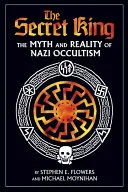
Published in 2007, The Secret King scrutinizes Nazi occultism and SS connections to rune magic.
This volume examines the historical and esoteric dimensions of Nazi occultism, with a specific focus on the SS and its alleged connections to rune magic. It moves beyond sensationalized accounts to offer a more grounded look at the rituals and beliefs that influenced figures such as Heinrich Himmler. The authors work to separate myth from reality concerning the SS's esoteric pursuits.
Scholars of esotericism and historians of the Third Reich will find this book particularly relevant. It addresses readers seeking a critical examination of Nazi occult narratives, moving past popular portrayals to consider documented influences and practices. Those with prior knowledge of runology or occult history will appreciate the depth of research presented.
The book emerges from a tradition of occult historical research that seeks to understand the material basis of esoteric beliefs and practices, particularly their intersection with political movements. It addresses the historical claims surrounding figures like Karl-Maria Wiligut, whose purported role within the SS has become a subject of mythologized historical narrative. The work situates itself within ongoing debates about the extent and nature of occult influences on Nazi ideology.
💡 Why Read This Book?
• Understand the documented esoteric rituals of Heinrich Himmler's SS, moving beyond sensationalist myths that often obscure historical fact. • Gain insight into the specific influence of rune magician Karl-Maria Wiligut, the "Secret King," and his impact on the SS's ideological framework. • Appreciate the rigorous historical and esoteric analysis presented, which separates documented practices from speculative theories regarding Nazi occultism.
⭐ Reader Reviews
Honest opinions from readers who have explored this book.
❓ Frequently Asked Questions
What is the primary focus of 'The Secret King' concerning Nazi occultism?
The book's primary focus is to debunk popular myths surrounding Nazi occultism and present the actual esoteric rituals and influences within Heinrich Himmler's SS, particularly those related to rune magician Karl-Maria Wiligut.
Who was Karl-Maria Wiligut and what was his connection to the SS?
Karl-Maria Wiligut was a purported rune magician who claimed to be the "Secret King of Germany." He significantly influenced Heinrich Himmler and the SS's esoteric agenda, contributing to their interest in ancient Germanic traditions and occult practices.
Does the book present evidence of widespread Nazi use of occult practices?
The work presents evidence of specific esoteric rituals and influences within the SS under Himmler, particularly linked to figures like Wiligut, rather than claiming widespread occult practice across the entire Nazi regime.
What is the significance of Stephen E. Flowers's background to this book?
Stephen E. Flowers, PhD, is a noted scholar in runology and occult history. His expertise, often under the pen name Edred Thorsson, lends significant academic weight to the book's exploration of runic traditions and their alleged use by the SS.
How does 'The Secret King' differ from sensationalist accounts of Nazi occultism?
It distinguishes itself by offering a critical, research-based examination, aiming to present documented facts and influences rather than speculative or fictionalized accounts often found in popular media.
When was 'The Secret King' first published?
The book 'The Secret King' was first published on September 1, 2007.
🔮 Key Themes & Symbolism
SS Esoteric Agenda
The work meticulously examines the documented esoteric interests and purported ritualistic activities within Heinrich Himmler's SS. It moves beyond mere speculation to explore how figures like Karl-Maria Wiligut influenced the SS's adoption of Germanic paganism and runic symbolism. The focus is on the SS's self-conscious attempt to forge an occult identity, believing it would grant them power and legitimacy, particularly in their pursuit of a 'new order' based on perceived ancient traditions.
Rune Magic and Wiligut
Central to the book is the role of Karl-Maria Wiligut, the self-proclaimed "Secret King of Germany." The authors detail his claims and how his interpretations of runic lore were integrated into the SS's ideological framework. This theme explores the specific runes Wiligut championed and their supposed magical properties, as well as how these ancient symbols were reinterpreted and weaponized within a modern totalitarian context.
Debunking Occult Myths
A significant objective of 'The Secret King' is to critically assess and dismantle the more outlandish and sensational myths that have proliferated around Nazi occultism since World War II. By grounding the discussion in historical evidence and scholarly analysis, the book aims to provide a clearer picture of the actual esoteric practices and beliefs, distinguishing them from later fictionalizations and conspiracy theories that have often overshadowed factual inquiry.
Wewelsburg Castle's Role
The book explores the historical and esoteric significance attributed to Wewelsburg Castle. Under Himmler's direction, the castle was intended to become a central ideological and ceremonial site for the SS. This theme studies the architectural modifications and the symbolic meaning invested in the castle, aligning it with notions of Arthurian legend and ancient Germanic power centers, and its supposed role in SS rituals.
💬 Memorable Quotes
Direct passages from the work, attributed to the author.
“The SS was an organization that sought to establish a new pagan order in Europe.”
— This statement highlights the core ideological drive of the SS, suggesting their ambition extended beyond political control to a spiritual and cultural reordering based on reconstructed ancient Germanic beliefs.
“Karl-Maria Wiligut's visions were a key source for the SS's esoteric doctrines.”
— This points to Wiligut's central role as a visionary figure whose interpretations of mythology and runic lore provided the intellectual and spiritual foundation for the SS's occult interests.
“Runic symbols were not merely decorative but were imbued with perceived magical power.”
— This emphasizes the functional aspect of runes within the SS's esoteric framework, indicating they were utilized for their supposed magical efficacy in rituals and as symbols of power.
“The search for a Germanic past was tied to the justification of a future empire.”
— This suggests that the SS's fascination with ancient history and mythology was not purely academic but served a political purpose: to legitimize their expansionist ambitions and racial ideology.
“Distinguishing historical fact from myth surrounding Nazi occultism remains a challenge.”
— This acknowledges the inherent difficulty in separating documented practices from the extensive mythology that has developed, underscoring the need for critical analysis.
🌙 Esoteric Significance
Tradition
This work engages with the esoteric tradition of Germanic Neopaganism and Armanism, a complex occult current that sought to revive and reinterpret ancient Germanic beliefs. It situates itself within the broader context of Ariosophy and Völkisch movements prevalent in early 20th-century Germany. Unlike more generalized Hermetic or Theosophical traditions, this lineage focuses specifically on Germanic mythology, runes, and perceived racial purity, aiming to establish a spiritual basis for a renewed, racially defined European order.
Symbolism
Key symbols explored include the runes, particularly those Wiligut claimed held specific magical potency, such as the Sowilo (sun) and Algiz (protection). The Wolfsangel, a symbol adopted by the SS, is also examined for its debated historical and occult associations. Wewelsburg Castle itself functions as a potent symbol, intended to be a nexus of power for the SS, embodying their aspirations for a new Germanic spiritual order rooted in mythic landscapes.
Modern Relevance
Contemporary practitioners of Germanic Neopaganism, particularly those interested in historical reconstructions and the more esoteric interpretations of runes, engage with the research presented in 'The Secret King.' Scholars studying the evolution of occult movements, the history of the Third Reich, and the phenomenon of extremist ideology also draw upon its analysis. It serves as a crucial case study for understanding how esoteric beliefs can be appropriated and weaponized for political and ideological ends.
👥 Who Should Read This Book
• Researchers of Third Reich history and the SS: Gain a critical understanding of the documented esoteric practices and influences that shaped the organization's ideology. • Students of esoteric traditions: Explore the specific branch of Germanic occultism and runic magic as interpreted and utilized by a state apparatus. • Readers interested in debunking popular myths: Benefit from a fact-based examination that separates sensationalism from historical reality concerning Nazi occultism.
📜 Historical Context
Published in 2007, 'The Secret King' emerged during a sustained period of public and academic interest in the occult dimensions of the Third Reich. The work directly confronts the sensationalism surrounding figures like Heinrich Himmler and the SS, particularly the mythologized role of Karl-Maria Wiligut as the "Secret King." This era saw continued debate, fueled by authors like Nicholas Goodrick-Clarke, who had previously explored the connections between esoteric movements and Nazism. Moynihan and Flowers aimed to provide a more rigorous, albeit grim, account by focusing on documented esoteric rituals and influences, challenging the more fantastic claims often found in popular literature and conspiracy theories. Their work sought to clarify the specific, documented esoteric pursuits of the SS leadership, distinguishing them from broader, less substantiated occult narratives.
📔 Journal Prompts
The SS's adoption of rune magic, as detailed in the text.
Karl-Maria Wiligut's claimed role as the 'Secret King' and its implications.
The symbolic significance of Wewelsburg Castle within the SS's esoteric vision.
The process of distinguishing historical fact from myth in Nazi occultism.
The perceived connection between Germanic paganism and the SS's ideology.
🗂️ Glossary
Ariosophy
An esoteric doctrine combining elements of Theosophy with Germanic paganism and racial theories, influential in early 20th-century Austria and Germany.
Armanism
A specific branch of Ariosophy focusing on ancient Germanic mythology and runic lore, promoted by figures like Guido von List.
Runes
Letters of the runic alphabets, historically used by Germanic peoples, which were later imbued with esoteric and magical significance in occult traditions.
Völkisch movement
A broad cultural and political movement in Germany that emphasized a romanticized view of a pre-industrial, agrarian, and racially pure German folk (Volk).
Wewelsburg
A castle in Westphalia, Germany, which Heinrich Himmler intended to be the ideological center and training ground for the SS.
SS (Schutzstaffel)
A major paramilitary organization under Adolf Hitler and the Nazi Party in Nazi Germany, responsible for security, intelligence, and implementing racial policies.
Heinrich Himmler
Reichsführer-SS of Nazi Germany, and one of the most powerful men in the Third Reich. He was a key architect of the Holocaust and had a strong interest in the occult.