Magie
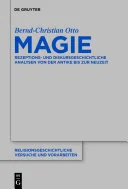
 83
83

Magie
Bernd-Christian Otto’s "Magie" attempts a formidable task: charting the multifaceted understanding of magic across two millennia. The book’s signal achievement lies in its rigorous historical survey, moving beyond anachronistic assumptions to present magic as a concept deeply entwined with evolving intellectual and religious landscapes. Otto’s meticulous attention to diverse sources—from ancient philosophers to early modern humanists like Johannes Trithemius—offers a crucial corrective to reductive popular notions. However, the sheer scope sometimes leads to a density that can be challenging for the uninitiated. A more focused exploration of the material from, say, the 17th century, specifically detailing the reception of Cornelius Agrippa's works, would have provided even sharper analytical purchase. Nevertheless, "Magie" serves as an indispensable scholarly resource for grasping the historical consciousness surrounding this potent term.
📝 Description
83
Bernd-Christian Otto's "Magie" traces the concept of magic from antiquity to the present day.
This book examines the historical evolution of the concept of magic, moving beyond simplistic definitions. Otto traces how figures from ancient poets like Homer and philosophers such as Plato, to theological writers in Jewish, Christian, and Islamic traditions, and later Renaissance humanists and Enlightenment thinkers, all engaged with the idea of magic. The work also considers individuals who identified as magicians from Late Antiquity through to modern times, aiming to capture the wide range of perspectives on the subject.
The inquiry begins with ancient thinkers and progresses through significant periods like the early modern era, where figures such as Agrippa von Nettesheim debated its nature. It shows how magic was understood during the Enlightenment, often in contrast to growing rationalism, and its reemergence in the Romantic era. Otto emphasizes that the discussion of magic is not solely academic but also includes the personal and experiential accounts of self-identified practitioners across centuries. The central argument is that the definition and understanding of "magic" have always been fluid and varied depending on theological, philosophical, and cultural contexts.
This work situates the study of magic within a long intellectual tradition that spans religious, philosophical, and cultural history. It acknowledges magic not just as a historical phenomenon but as a concept that has been actively debated, defined, and experienced by individuals across diverse eras and belief systems. By examining its presence from antiquity through to contemporary self-identified practitioners, the book connects to ongoing scholarly and popular interest in the history of esoteric thought and practice.
💡 Why Read This Book?
• Gain a nuanced understanding of how the concept of 'magic' has been defined and debated by scholars and practitioners from antiquity to the present day, moving beyond simplistic categorizations. • Trace the evolution of magical thought through specific historical periods, such as the Enlightenment's critical examination of occult phenomena and the Romantic era's renewed interest. • Appreciate the historical diversity of self-identified practitioners, recognizing that the understanding and practice of magic have varied significantly across different cultural and intellectual epochs.
⭐ Reader Reviews
Honest opinions from readers who have explored this book.
❓ Frequently Asked Questions
What historical periods does Bernd-Christian Otto's "Magie" cover?
The book spans a vast historical range, from ancient poets and philosophers through Jewish, Christian, and Muslim authors, early modern humanists, Enlightenment thinkers, Romantics, and self-identified practitioners from Late Antiquity to the present day.
Who originally explored the question of 'What is magic?' before Otto?
The question of 'What is magic?' occupied religious scholars for centuries, but Otto traces its roots back to ancient poets, philosophers, and theological writers across major Abrahamic religions.
Does "Magie" focus only on academic definitions of magic?
No, Otto's work specifically includes individuals who have self-identified as 'magicians' from Late Antiquity to contemporary times, reflecting both academic discourse and personal experience.
What is the primary aim of "Magie"?
The book's primary aim is to provide a coherent and comprehensive presentation of the diverse opinions and understandings of magic throughout history, acknowledging its varied interpretations.
What intellectual movements are discussed in relation to magic?
Otto examines how magic was understood by various intellectual currents, including Renaissance humanism, the Enlightenment's rationalism, and Romanticism's more mystical inclinations.
Is "Magie" suitable for beginners in esoteric studies?
While comprehensive, the book offers a scholarly approach that can be highly beneficial for beginners seeking a rigorous historical foundation, provided they are prepared for an academic exploration.
🔮 Key Themes & Symbolism
Conceptual Evolution of Magic
The work meticulously tracks how the very definition and perception of 'magic' have transformed across epochs. Otto demonstrates that magic was not a static concept but one that shifted dramatically depending on the prevailing theological, philosophical, and scientific paradigms. From its association with divine power in antiquity to its later categorization as superstition or a precursor to science, the book illustrates this dynamic evolution through analyses of key texts and thinkers from different eras.
Magic and Religious Discourse
A significant aspect explored is the complex relationship between magic and established religious traditions. Otto examines how Jewish, Christian, and Muslim authors throughout history engaged with, debated, and sometimes codified or condemned practices and beliefs associated with magic. This section highlights the historical tension and overlap between religious orthodoxy and what was deemed magical, revealing how notions of the sacred and the supernatural were constantly negotiated.
Self-Perception of Practitioners
Beyond academic and theological perspectives, "Magie" gives voice to those who actively identified as practitioners of magic. The book surveys individuals from Late Antiquity to the present day who understood themselves and their activities through the lens of magic. This focus provides a crucial experiential dimension, showing how the concept was lived and enacted, often in dialogue with, or in opposition to, dominant cultural and intellectual frameworks.
Magic in Intellectual History
Otto situates the study of magic within broader intellectual currents, including Renaissance humanism, the Enlightenment, and Romanticism. The book analyzes how thinkers within these movements approached magic, whether as a subject of scholarly inquiry, a philosophical concept, a tool for understanding nature, or a manifestation of the irrational. This contextualization reveals magic's role in the development of Western thought and science.
💬 Memorable Quotes
Direct passages from the work, attributed to the author.
“The question 'What is magic?' has occupied not only religious scholars of the last two centuries but also ancient poets and philosophers.”
— This highlights the enduring nature of the inquiry into magic, positioning it as a fundamental question that transcends specific academic disciplines and historical periods.
“Jewish, Christian, and Muslim authors have long engaged with the concept of magic.”
— This points to the cross-cultural and interfaith dimensions of magic, emphasizing its presence and discussion within the core intellectual traditions of Abrahamic religions.
“From Late Antiquity to the present, individuals have understood themselves as 'magicians'.”
— This underscores the continuity of magical practice and self-identification, suggesting that the phenomenon is not merely a historical artifact but a persistent aspect of human experience.
“Early modern humanists and Enlightenment thinkers approached magic from diverse perspectives.”
— This indicates the work's exploration of how magic was viewed during key shifts in Western thought, from humanist scholarship to the rise of rationalism.
“Otto provides a coherent presentation of approximately 25 different perspectives on magic.”
— This suggests the book's structure and aim: to synthesize a wide array of viewpoints into a cohesive, albeit complex, overview of the topic.
🌙 Esoteric Significance
Tradition
While not explicitly belonging to a single esoteric lineage, "Magie" engages deeply with the historical roots of many Western esoteric traditions. It examines how concepts often associated with Hermeticism, Neoplatonism, and various forms of folk magic were perceived and discussed across different eras. The work fits within the broader scholarly tradition of analyzing the historical development of magical thought, providing context for practitioners seeking to understand the intellectual lineage of their practices.
Symbolism
The book likely explores symbols by examining how various historical actors interpreted them. For instance, the concept of the 'magus' itself functions as a symbol of hidden knowledge or powerful agency, evolving from Zoroastrian priests to Renaissance occultists. Symbols associated with alchemy, astrology, or ceremonial magic, though not detailed here, would be implicitly analyzed through the historical discourse surrounding their use and meaning.
Modern Relevance
Contemporary scholars of religion and history of ideas continue to draw upon foundational works that map the historical terrain of magic. Practitioners in modern occult movements, particularly those interested in Western Esoteric Traditions, benefit from Otto's work by gaining a deeper historical context for their practices. Thinkers exploring the relationship between belief, rationality, and ritual in the modern world find resonance in Otto's analysis of how magic has been defined and contested across centuries.
👥 Who Should Read This Book
• Academic researchers in religious studies, history of ideas, and cultural history seeking a comprehensive overview of the concept of magic across diverse historical periods. • Students of Western Esoteric Traditions looking for a scholarly grounding in the historical evolution of magical thought and practice, from antiquity to the modern era. • Intellectual historians interested in how concepts like magic were debated, defined, and redefined by key figures during the Renaissance, Enlightenment, and Romantic periods.
📜 Historical Context
Published in 2011, Bernd-Christian Otto's "Magie" emerged in an academic climate increasingly interested in the history of magic, occultism, and esotericism, moving beyond earlier, often dismissive, scholarship. The work revisits debates that occupied scholars like Lynn Thorndike and Frances Yates, who had previously charted the history of magic and its intellectual connections. Otto's approach, however, aims for a broader synthesis, encompassing theological writings from figures like Augustine of Hippo in Late Antiquity, the philosophical inquiries of Plato, and the complex reception of Hermeticism during the Renaissance. He specifically addresses the divergent views presented by Enlightenment rationalists who often sought to debunk magic, contrasting them with the Romantic fascination with the occult. The book's significance lies in its attempt to bridge the gap between academic study and the self-understanding of practitioners, offering a more integrated narrative than many predecessors.
📔 Journal Prompts
The historical trajectory of the concept 'magic' from antiquity to the present.
The varying definitions of magic proposed by Jewish, Christian, and Muslim authors.
The self-perception of individuals identifying as 'magicians' across different centuries.
The influence of intellectual movements like Humanism and the Enlightenment on views of magic.
The distinction between academic discourse and personal understanding of magic explored in the text.
🗂️ Glossary
Late Antiquity
The historical period roughly spanning from the 3rd to the 6th century CE, bridging the classical era and the Middle Ages, characterized by significant religious and intellectual shifts.
Renaissance Humanism
An intellectual movement in Europe from the 14th to the 17th century that focused on classical texts and emphasized human potential and achievement, often engaging with ancient philosophies.
Enlightenment
An 18th-century European intellectual and cultural movement emphasizing reason, individualism, skepticism, and science, often critical of traditional authority and superstition.
Romanticism
An artistic, literary, and intellectual movement originating in Europe toward the end of the 18th century, characterized by emphasis on emotion, individualism, and glorification of the past and nature.
Religious Scholars
Academics who study the history, beliefs, practices, and social aspects of religions, often employing historical, anthropological, or sociological methods.
Self-identified Magicians
Individuals who consciously adopt the label 'magician' to describe their practices, beliefs, or identity, as distinct from external academic or religious classifications.
Esoteric
Relating to or accessible only by a relatively small number of people with a specialized knowledge or interest; often pertaining to mystical or occult subjects.
This book appears in 1 collection
🔮 Readers Also Liked
Browse all →








From the “Western Esotericism” Collection
View all →








More Free Occult Philosophy Books
View all →