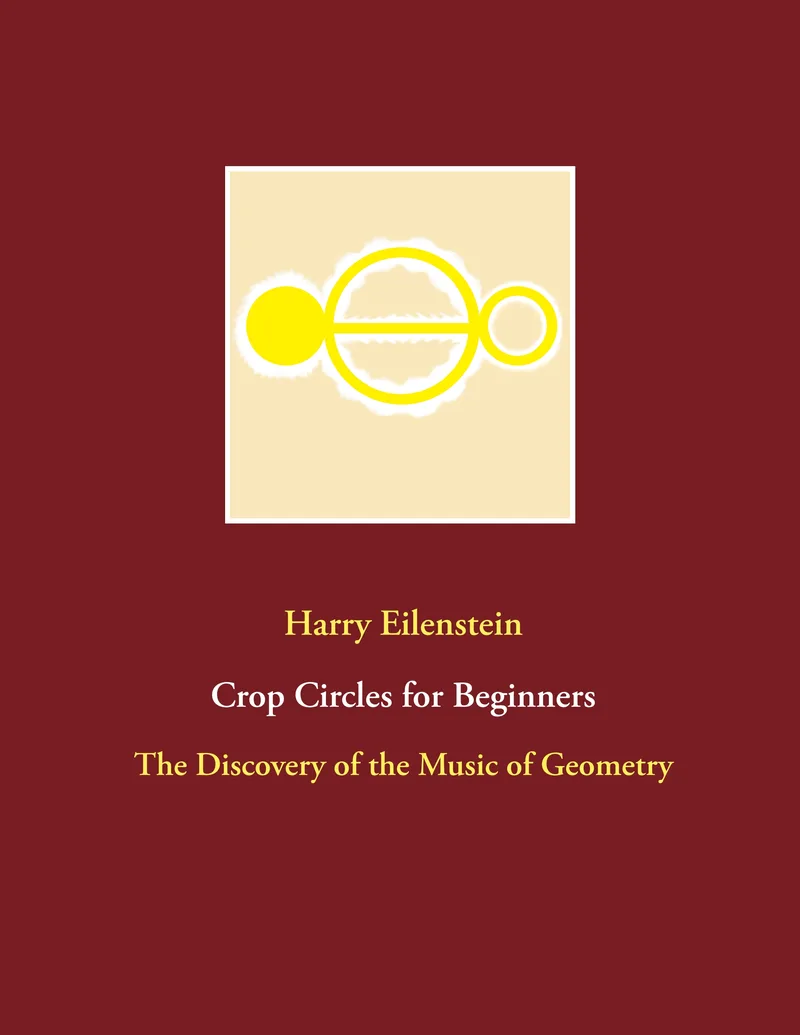
Crop Circles for Beginners
 84
84

Crop Circles for Beginners
Harry Eilenstein’s Crop Circles for Beginners tackles a subject often mired in sensationalism with a commendable focus on documentation and open inquiry. The strength of this work lies in its systematic presentation of the phenomenon’s scope, particularly its geographical clustering around significant prehistoric sites like Stonehenge. Eilenstein rightly points out the dual nature of crop circles – those clearly made by humans and those that defy such easy categorization. This ambiguity is the book's most compelling aspect. However, the work sometimes struggles to move beyond a cataloging of events, leaving the reader wanting a deeper dive into the theoretical frameworks that attempt to explain the unexplainable. A passage detailing the geometric precision of certain formations, contrasting them with known human capabilities, effectively illustrates this point. Ultimately, the book serves as a solid, fact-based introduction for the uninitiated, but seasoned investigators may find it a bit too introductory.
📝 Description
84
Harry Eilenstein's 'Crop Circles for Beginners' catalogued over 10,000 formations worldwide since 1985.
Published in 2012, Harry Eilenstein's 'Crop Circles for Beginners' provides an entry point into the study of geometric patterns appearing in agricultural fields. The book documents the global spread of these formations, noting their significant presence in southern England, often near ancient sites like Stonehenge. Eilenstein details the sheer volume of crop circles, with estimates suggesting over 10,000 have appeared globally since their increased visibility around 1985. The text aims to be a starting point for those curious about unexplained aerial phenomena and related mysteries.
The book addresses the dual nature of crop circle origins, acknowledging formations clearly made by humans alongside those whose creation remains unexplained by conventional means. It prompts consideration of various hypotheses, including influences beyond ordinary human activity, encouraging a broader perspective on their potential purpose and source. This work is geared towards individuals new to researching crop circles, aiming to inform them about the history and scope of this modern phenomenon.
This book fits within traditions that examine anomalies and unexplained phenomena as potential indicators of broader cosmic or terrestrial forces. It touches upon areas where science meets mystery, inviting contemplation of possibilities often outside mainstream scientific discourse. The focus on unexplained patterns in nature and their potential connection to ancient sites aligns with esoteric interests in geomancy, earth energies, and the possibility of non-human intelligence interacting with our world. It encourages a mindset open to interpretations that transcend ordinary material explanations.
💡 Why Read This Book?
• Understand the global prevalence and historical emergence of crop circles, learning about their significant clustering near ancient sites in southern England since the mid-1980s. • Grasp the fundamental debate surrounding crop circle origins, distinguishing between human-made formations and those exhibiting characteristics that challenge conventional explanations. • Explore the initial research questions Eilenstein poses, encouraging a beginner's perspective on unexplained aerial phenomena and their potential connection to Earth energies.
⭐ Reader Reviews
Honest opinions from readers who have explored this book.
❓ Frequently Asked Questions
When did crop circles become a widely recognized phenomenon?
Crop circles gained significant public awareness starting around 1985. Since then, an estimated 10,000 have appeared globally, with a notable concentration in southern England.
Where are most crop circles found?
While crop circles have been documented in over 50 countries, a substantial majority are found in southern England, particularly in the vicinity of prehistoric monuments like Stonehenge and Silbury Hill.
Are all crop circles made by humans?
The book highlights that while some crop circles can be definitively attributed to human creation, others present characteristics that make a human origin difficult to prove, leading to ongoing debate.
What is the primary focus of Crop Circles for Beginners?
This book serves as an introductory guide, presenting the phenomenon's history, geographical distribution, and the central questions surrounding its origins without making definitive claims.
Who is the author of Crop Circles for Beginners?
The author is Harry Eilenstein, and the book was first published on May 5, 2021.
What kind of evidence does the book present regarding crop circles?
It presents evidence by cataloging appearances, geographical data, and contrasting formations that are clearly man-made with those that appear to defy simple human explanation.
🔮 Key Themes & Symbolism
The Dual Nature of Creation
Eilenstein’s work grapples with the undeniable fact that crop circles present a dichotomy of origin. The book meticulously documents formations that are clearly the product of human artistry and ingenuity, often appearing overnight in agricultural fields. Yet, it equally confronts the phenomenon of circles exhibiting geometric complexity, scale, and precision that challenge conventional explanations of human capability. This tension between the mundane and the mysterious forms the core of the book’s exploration, urging readers to consider what lies beyond simple human agency when observing these formations, particularly those found near ancient sites.
Geographical Significance and Ancient Sites
A central theme is the striking correlation between crop circle appearances and regions of significant historical and mystical importance. The book emphasizes the prevalence of these formations in southern England, specifically around Neolithic and Bronze Age monuments like Stonehenge, Woodhenge, and Silbury Hill. This geographical clustering is not presented as mere coincidence but as a potential clue. Eilenstein prompts readers to consider whether these ancient sites, often associated with Earth energies or ceremonial practices, might act as focal points or attractors for the crop circle phenomenon, suggesting a connection between ancient wisdom and modern mysteries.
The Beginner's Research Imperative
Designed for neophytes, the book champions a spirit of empirical observation and open-minded inquiry. It refrains from presenting definitive answers, instead focusing on establishing the factual basis of the phenomenon: its global reach since the mid-1980s, the sheer volume of documented circles, and the persistent questions they raise. The work encourages readers to approach the subject with critical yet receptive minds, to observe the evidence, and to formulate their own hypotheses. It serves as a foundational text, equipping newcomers with the basic knowledge to engage with more complex theories and discussions.
Challenging Conventional Perceptions
Crop Circles for Beginners challenges readers to expand their understanding of reality and possibility. By presenting instances where the origin of a crop circle is not easily explained by human intervention, the book implicitly questions established paradigms. It encourages a contemplation of non-human intelligence, advanced technologies, or even subtle terrestrial forces that might be at play. The work acts as a gentle nudge away from skepticism towards a more curious and exploratory stance regarding phenomena that lie outside the current scientific mainstream.
💬 Memorable Quotes
Direct passages from the work, attributed to the author.
“Some of them can be proved to have been made by humans, but others just as certainly have not been made by humans.”
— This statement captures the central enigma of crop circles explored in the book. It acknowledges the verifiable human element while pointing directly to formations that defy easy explanation, setting the stage for deeper inquiry into the unknown.
“In the meantime, about 10,000 crop circles have appeared in more than 50 countries.”
— This statistic underscores the global scale and ubiquity of the phenomenon. It grounds the discussion in empirical observation, highlighting that crop circles are not isolated incidents but a widespread occurrence worthy of serious consideration.
“well over half of them come from southern England in the area of Stonehenge, Woodhenge, Silbury Hill, White Horse and other prehistoric monuments.”
— This highlights a crucial geographical pattern. The concentration near ancient sites suggests a potential connection or resonance between these locations and the appearance of crop circles, prompting questions about earth energies or historical significance.
“this is not the starting situation one would wish for as a researcher.”
— This candid remark from the author reveals the inherent difficulty in studying crop circles. The ambiguity of their origins presents a challenging, yet compelling, starting point for anyone seeking to understand this phenomenon.
“Since about 1985, crop circles have become a more well-known phenomenon.”
— This sets the temporal framework for the modern crop circle era. It pinpoints the approximate time when these intricate patterns began to gain significant public attention and documentation.
🌙 Esoteric Significance
Tradition
This work, while presented as introductory, touches upon themes resonant with earth mysteries and subtle energy research, often found within Neo-Paganism, geomancy, and certain branches of New Age thought. It departs from more structured esoteric traditions like Hermeticism or Kabbalism by focusing on a phenomenon that is relatively recent and empirically observed, rather than rooted in ancient texts or codified practices. Its significance lies in bridging the gap between empirical observation of a modern anomaly and an intuitive, open-minded approach that aligns with a worldview receptive to non-conventional forces and intelligences.
Symbolism
The crop circle itself is the primary symbol, representing a form of communication or manifestation that transcends conventional human understanding. Its geometric precision can be seen as echoing sacred geometry found in ancient traditions, suggesting a universal language of form. The book implicitly links these formations to the energy of the land, particularly near ancient sites like Stonehenge, symbolizing a potential interface between terrestrial energies, cosmic influences, and consciousness.
Modern Relevance
Contemporary thinkers and practitioners in fields like geomancy, dowsing, and earth energy research continue to explore the significance of crop circles. The work’s emphasis on observing patterns and considering non-human intelligence speaks to modern UAP research and the growing interest in consciousness studies. For those exploring the intersection of technology, nature, and consciousness, Eilenstein’s foundational approach provides a starting point for understanding a phenomenon that challenges established scientific and philosophical boundaries.
👥 Who Should Read This Book
• Beginning students of crop circle phenomena: Individuals new to the subject will gain a structured overview of the history, global distribution, and core questions surrounding these formations. • Enthusiasts of unexplained mysteries: Those fascinated by UAP, ancient anomalies, and earth energies will find a factual, yet open-minded, introduction to a compelling modern enigma. • Researchers of historical geography: Individuals interested in the intersection of ancient sites and anomalous events will appreciate the book's focus on the clustering of crop circles near prehistoric monuments.
📜 Historical Context
Harry Eilenstein’s Crop Circles for Beginners emerges in a cultural landscape shaped by the explosion of interest in unexplained aerial phenomena (UAP) and ancient mysteries since the late 20th century. The mid-1980s marked a surge in crop circle reports, moving them from localized curiosities to a global spectacle. This period saw a burgeoning interest in fringe topics, fueled by accessible media and a growing distrust of official narratives. While Eilenstein focuses on the empirical, his work implicitly engages with the broader context of ufology and ancient astronaut theories that were gaining traction through authors like Erich von Däniken. The book’s emphasis on the geographical clustering near prehistoric sites like Stonehenge places it within a lineage of research that seeks connections between ancient megaliths and anomalous phenomena, a perspective often explored by alternative historians and researchers who challenged mainstream archaeology's explanations.
📔 Journal Prompts
The concentration of crop circles near Stonehenge, as noted by Eilenstein, invites contemplation.
Reflecting on the dual nature of crop circle origins presented in the book.
The researcher's challenge in understanding phenomena like crop circles.
Considering the implications of formations not provably made by humans.
The initial appearance of crop circles around 1985 and its significance.
🗂️ Glossary
Crop Circle
A large geometric pattern or design created by flattening crops such as wheat, barley, or corn, typically in agricultural fields. Their origins are often debated.
Prehistoric Monuments
Ancient structures built by humans before recorded history, such as Stonehenge, often associated with astronomical observation, ritual, or mystery.
Southern England
A geographical region in the southern part of England, notably recognized for its high density of crop circle formations and ancient megalithic sites.
Phenomenon
An observable fact or event, especially one whose cause or explanation is in question or not immediately apparent.
Human-Made
Created or produced by human beings, as opposed to natural processes or non-human intelligences.
Stonehenge
A prehistoric monument in Wiltshire, England, consisting of a ring of standing stones, significant for its age and enigmatic purpose.
Woodhenge
A Neolithic monument in Wiltshire, England, consisting of concentric wooden posts, believed to have served a ceremonial purpose.