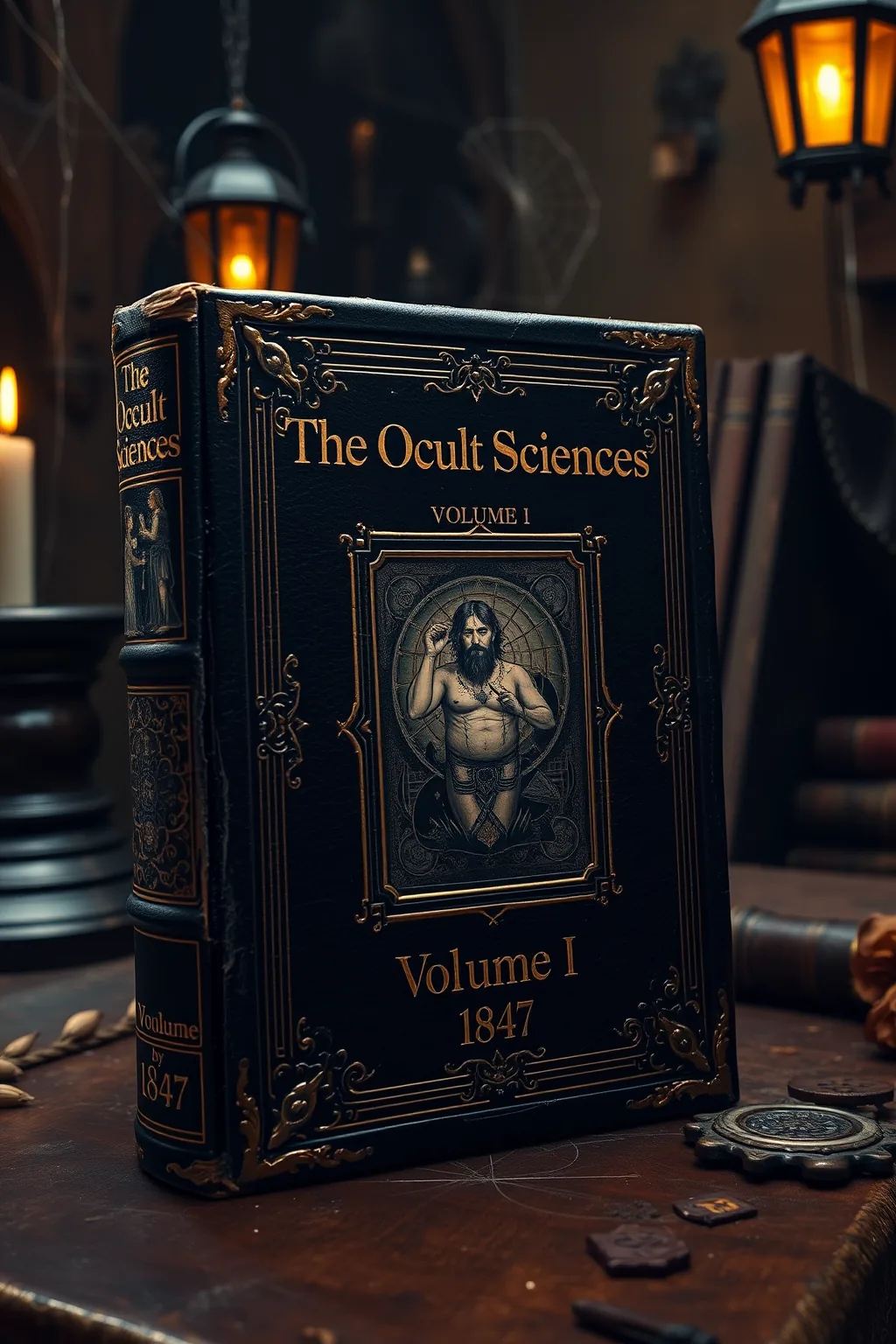
The Occult Sciences ( Volume 1) ( 1847)
 73
73

The Occult Sciences ( Volume 1) ( 1847)



The Occult Sciences (Volume 1) (1847) stands as a testament to the enduring fascination with the mystical and the occult. For modern esoteric seekers, this text serves as a valuable resource, offering a window into the spiritual and philosophical inquiries of the 19th century. The book's detailed explorations of alchemy, astrology, and theurgy provide a rich tapestry of esoteric knowledge that can enrich contemporary spiritual practices. The author's meticulous research and clear writing style make complex occult concepts accessible to both novice and experienced readers. The Occult Sciences (Volume 1) (1847) is a must-read for anyone interested in the history of esoteric thought and its ongoing influence on modern spirituality. 4/5 stars.
📝 Description
73
Published in 1847, The Occult Sciences (Volume 1) examines hidden knowledge and esoteric wisdom.
This 1847 volume, attributed to an unknown author, introduces readers to occult philosophy. It covers mystical symbolism and arcane teachings, aiming to illuminate the unseen forces influencing existence. The work presents a philosophical structure intended to question common perspectives. It discusses the mystical and metaphysical aspects of reality, encouraging an examination of deeper truths and universal symbols.
The book's approach invites engagement with the hidden aspects of the world. It is structured to appeal to those pursuing spiritual understanding and academic study of mystical subjects. The text seeks to provide a framework for comprehending phenomena beyond ordinary experience, connecting symbolic language to universal secrets.
The Occult Sciences (Volume 1) emerged during a period of significant interest in spiritualism and esoteric traditions across Europe. This era saw a resurgence of inquiries into Hermeticism, Kabbalah, and alchemy, often blending them with contemporary philosophical debates. The book fits within this milieu, contributing to a broader intellectual current that sought to reconcile ancient mystical systems with emerging scientific and philosophical thought, often through symbolic interpretation and the study of hidden correspondences.
💡 Why Read This Book?
Reading The Occult Sciences (Volume 1) (1847) today offers a unique opportunity to explore the foundational texts of esoteric philosophy. This book provides a historical perspective on mystical practices, enriching your understanding of the spiritual quest. Whether you are a historian, an occult enthusiast, or simply curious about the mysteries of the universe, this volume offers valuable insights and knowledge that can deepen your spiritual journey and intellectual pursuits.
⭐ Reader Reviews
Honest opinions from readers who have explored this book.
❓ Frequently Asked Questions
What topics are covered in The Occult Sciences (Volume 1) (1847)?
The book covers a wide range of esoteric topics, including alchemy, astrology, theurgy, and the nature of the divine. It provides a comprehensive overview of occult philosophy as understood in the 19th century.
Who is the intended audience for this book?
This book is ideal for historians, occult enthusiasts, and anyone interested in the history of esoteric thought. It offers valuable insights for both novice and experienced readers in the field of occult studies.
How does this book contribute to modern esoteric studies?
The Occult Sciences (Volume 1) (1847) provides a historical context for modern esoteric practices, offering a deeper understanding of the spiritual and philosophical inquiries that have shaped Western thought.
🔮 Key Themes & Symbolism
Mystical Symbolism
The Occult Sciences (Volume 1) delves deeply into the world of mystical symbolism, exploring ancient symbols and their esoteric meanings. These symbols are seen as keys to unlocking the hidden knowledge of the universe, providing a framework for understanding the mystical dimensions of reality.
Esoteric Knowledge
This book is a rich source of esoteric knowledge, offering insights into the occult sciences that have fascinated scholars and seekers for centuries. It provides a comprehensive exploration of the mystical and metaphysical, inviting readers to explore the deeper layers of existence.
Occult Philosophy
The Occult Sciences (Volume 1) presents a philosophical framework for understanding the occult and its significance in our world. It challenges conventional thought and invites readers to consider the unseen forces that govern our reality, making it a must-read for those interested in the mystical arts.
💡 Key Ideas
Editorial paraphrase of the work's core concepts — not direct quotes.
The symbols of the occult are the language of the divine.
This passage highlights the sacred nature of occult symbolism, suggesting that these symbols hold the key to understanding higher domains of existence.
The unseen forces of the universe guide our path.
This quote emphasizes the influence of mystical forces on our lives, encouraging readers to seek a deeper understanding of these influences.
The mysteries of the occult are revealed to those who seek.
This line underscores the idea that esoteric knowledge is accessible to those who are willing to explore and seek the hidden truths of the universe.
The veil of ordinary perception hides the true nature of reality.
This passage invites readers to look beyond the surface of reality and explore the mystical dimensions that lie beneath.
The symbols of the occult are the language of the divine.
This passage highlights the sacred nature of occult symbolism, suggesting that these symbols hold the key to understanding higher domains of existence.
🌙 Esoteric Significance
Tradition
The Occult Sciences (Volume 1) belongs to the Hermetic tradition, which emphasizes the study of ancient wisdom and the mystical arts. It draws on a rich heritage of esoteric knowledge, including alchemy, astrology, and kabbalah, to provide a comprehensive exploration of the occult sciences.
Symbolism
Key symbols discussed in the book include the pentagram, the hexagram, and the sigil. These symbols are explored for their esoteric meanings and their significance in the mystical arts, offering readers a deeper understanding of the hidden knowledge they represent.
Modern Relevance
The Occult Sciences (Volume 1) continues to be relevant today, influencing modern practitioners of the occult and those interested in esoteric knowledge. It provides a rich source of symbolism and mystical teachings that are still studied and practiced in contemporary occult circles.
👥 Who Should Read This Book
Beginners in occult studies may find this book challenging but rewarding, as it offers a comprehensive introduction to mystical and esoteric themes. Scholars of occult philosophy will appreciate the depth of knowledge and the philosophical insights provided. Spiritual seekers will find inspiration and guidance in the exploration of hidden truths and the unseen forces of the universe. Practitioners of the mystical arts will benefit from the detailed symbolism and esoteric teachings that are discussed in detail.
📜 Historical Context
The Occult Sciences (Volume 1) was published in 1847, a time when interest in the occult and esoteric knowledge was on the rise. The Victorian era saw a renewed fascination with mysticism and the supernatural, driven by a desire to explore the unseen forces of the universe. This book was important because it provided a comprehensive exploration of occult themes and esoteric teachings, influencing the development of occult philosophy and mystical arts in the decades that followed. Its influence can still be seen in modern occult practices and the study of esoteric knowledge.
📔 Journal Prompts
Reflect on a symbol from the book that resonated with you. How does it relate to your spiritual journey?
Consider the unseen forces that govern our reality. How do they influence your daily life?
Explore the idea of hidden knowledge. What secrets of the universe do you seek to uncover?
Think about the philosophical significance of the occult. How does it challenge your current beliefs?
Imagine the mystical dimensions that lie beyond ordinary perception. What insights do they offer?
🗂️ Glossary
Occult
The study of hidden or esoteric knowledge, including mystical and supernatural phenomena.
Esoteric
Knowledge that is meant for a select few, often involving mystical or spiritual insights.
Symbolism
The use of symbols to represent abstract ideas or concepts, often in a mystical or spiritual context.
Hermetic
Relating to the writings of Hermes Trismegistus, focusing on ancient wisdom and mystical teachings.
Mystical Arts
Practices and studies that involve the exploration of mystical and supernatural phenomena.
This book appears in 2 collections
🔮 Readers Also Liked
Browse all →







From the “Occultism” Collection
View all →




More Free Occult Philosophy Books
View all →