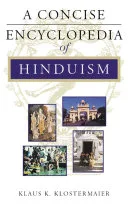
A Concise Encyclopedia of Hinduism
 75
75

A Concise Encyclopedia of Hinduism
Klaus K. Klostermaier's encyclopedia is a commendable undertaking, providing a much-needed structured reference for the vast subject of Hinduism. Its strength lies in its systematic organization and the author's evident deep familiarity with the material, evident in the clear explanations of complex philosophical schools like Advaita Vedanta. The coverage of figures from Manu to Gandhi is particularly useful, situating the religion within its historical and social evolution. However, the sheer scope means some entries, while accurate, can feel concise to the point of brevity, leaving the reader wanting more depth on specific topics. For instance, the discussion of Tantric traditions, while present, could benefit from more extensive exploration to fully convey their esoteric significance. Nevertheless, as a foundational reference, it offers a reliable and accessible entry point into the study of Hinduism.
📝 Description
75
Klaus K. Klostermaier's A Concise Encyclopedia of Hinduism was first published in 2014.
This encyclopedia offers a systematic overview of Hindu beliefs and practices, moving beyond simple historical accounts to address the living dimensions of the tradition. It details major philosophical systems, significant figures from antiquity to the present day, and important geographical locations central to the faith. The work is designed for students of religion, scholars, and anyone seeking a structured understanding of Hinduism, benefiting both newcomers and those with prior knowledge needing clarification on specific concepts or historical contexts. Its comprehensive nature also supports comparative religious studies and an interest in the diverse expressions of this influential faith.
Published in 2014, Klostermaier's work builds upon a long tradition of Indological scholarship. It synthesizes modern scholarship with classical textual traditions, aiming for a balanced, descriptive approach to a religion that has continuously evolved since its early Vedic roots. The encyclopedia includes detailed entries on core Hindu concepts like Dharma, Karma, Samsara, and Moksha, alongside various paths to liberation. It also explores the Hindu pantheon, the significance of ritual and pilgrimage, and philosophical schools such as Vedanta and Yoga. The organized presentation illuminates the intellectual and devotional aspects of Hinduism as a developing spiritual phenomenon.
As an encyclopedia of Hinduism, this work situates itself within the broad field of religious studies, specifically focusing on a major world religion with deep philosophical and spiritual traditions. It acknowledges the continuous evolution of Hindu thought from its Vedic origins, touching upon concepts like liberation (marga) and various schools of philosophy. While not exclusively esoteric, its detailed examination of concepts such as Karma, Samsara, and different paths to Moksha aligns with the exploration of spiritual and philosophical systems found in many esoteric traditions.
💡 Why Read This Book?
• Gain clarity on the concept of Dharma, understanding its multifaceted role in Hindu ethics and social order, as detailed in the encyclopedia's comprehensive sections. • Explore the historical trajectory of Hindu thought from its Vedic origins to modern interpretations, referencing key figures like Gandhi and the evolution of philosophical schools discussed within the text. • Demystify specific practices and locations, such as the significance of Ramesvaram, by accessing clear, encyclopedic entries that illuminate their place within the broader Hindu tradition.
⭐ Reader Reviews
Honest opinions from readers who have explored this book.
❓ Frequently Asked Questions
What is the primary focus of A Concise Encyclopedia of Hinduism?
The book focuses on providing a systematic and accessible overview of Hinduism, covering its theoretical and practical aspects, major philosophical systems, key figures, and significant locations from classical to contemporary times.
Who is the author, Klaus K. Klostermaier, and what is his expertise?
Klaus K. Klostermaier was a scholar with extensive knowledge of Hinduism and its texts. His work is characterized by a deep understanding of the religion's theoretical and practical dimensions, aiming for a comprehensive and living portrayal.
When was A Concise Encyclopedia of Hinduism first published?
The book was first published on October 1, 2014, making it a relatively recent synthesis of scholarship on the subject.
Does the encyclopedia cover modern aspects of Hinduism as well as ancient ones?
Yes, the work explicitly aims to cover Hinduism from classical to contemporary periods, including figures like Gandhi and modern expressions of the faith, ensuring a comprehensive view.
What kind of reader would benefit most from this book?
Students of religion, scholars, and general readers seeking a structured and comprehensive understanding of Hinduism's history, philosophy, and practices will find this encyclopedia highly beneficial.
What is the advantage of this encyclopedia over other books on Hinduism?
Its advantage lies in its systematic, accessible, and comprehensive approach, presenting Hinduism as a living faith with detailed entries on concepts, figures, and locations, suitable for both beginners and advanced students.
🔮 Key Themes & Symbolism
Living Tradition
The encyclopedia emphasizes Hinduism not as a static historical artifact but as a dynamic, living faith. Klostermaier highlights how ancient texts and philosophies continue to inform daily practices, rituals, and spiritual aspirations for millions. This approach distinguishes it from purely academic surveys, focusing on the enduring relevance of Hindu traditions and their ability to adapt and thrive across millennia, from Vedic hymns to contemporary expressions.
Systematic Philosophical Frameworks
A core strength is its detailed exposition of the major philosophical schools (darshanas) within Hinduism. It systematically breaks down complex ideas such as Karma, Samsara, and Moksha, offering accessible explanations of concepts like Maya and the nature of Brahman. This systematic approach aids in understanding the intellectual architecture that underpins diverse Hindu practices and beliefs, providing a clear map of its intricate theological landscape.
Interconnectedness of Practice and Theory
Klostermaier effectively demonstrates the inseparable link between Hindu theory and practice. From the philosophical underpinnings of Yoga to the devotional significance of pilgrimage sites like Ramesvaram, the encyclopedia illustrates how abstract concepts are embodied in concrete rituals, social structures, and personal spiritual journeys. This holistic view captures the essence of Hinduism as a path of life rather than solely a system of belief.
Historical and Geographical Scope
The work spans a vast historical and geographical continuum. It traces the evolution of Hindu thought from early Vedic periods through medieval developments to modern reformers and thinkers like Gandhi. By integrating geographical references, from the Himalayas to Ramesvaram, it underscores the diverse regional manifestations and the sacred geography that shapes Hindu identity and devotion across the Indian subcontinent.
💬 Memorable Quotes
Direct passages from the work, attributed to the author.
“Hinduism is not a monolithic religion but a family of religions.”
— This statement underscores the immense diversity within Hinduism, challenging simplistic categorizations. It suggests that understanding requires appreciating the multitude of traditions, philosophies, and practices that fall under the Hindu umbrella, rather than seeking a single, unifying doctrine.
“The goal of Hindu life is Moksha, liberation from the cycle of birth and death.”
— This concisely defines the ultimate spiritual aspiration in many Hindu traditions. It frames the entirety of Hindu practice and philosophy as a means to achieve this state of release, highlighting the soteriological focus of the religion.
“Dharma is a complex concept encompassing duty, righteousness, law, and cosmic order.”
— This highlights the many-sided nature of Dharma, a central tenet. It signifies that Dharma is not a simple set of rules but a dynamic principle that guides ethical conduct, social responsibility, and the very structure of the universe in Hindu thought.
“The concept of Karma dictates that actions have consequences, shaping present and future lives.”
— This explains the principle of cause and effect as understood in Hinduism. It emphasizes the moral accountability of individuals and the continuous influence of past actions on one's current existence and future rebirths.
“The Upanishads are foundational texts exploring the nature of reality and the self.”
— This points to the philosophical depth of the Upanishads, a key part of the Vedic canon. It signifies their importance in articulating core Hindu metaphysical concepts, particularly concerning Brahman (ultimate reality) and Atman (the self).
🌙 Esoteric Significance
Tradition
While not explicitly aligned with a single Western esoteric lineage, Klostermaier's work provides foundational knowledge crucial for understanding many traditions that draw upon Hindu cosmology and philosophy. Its detailed exploration of concepts like Karma, Samsara, and the various yogic paths offers essential context for those studying or practicing systems influenced by Hindu thought, such as Theosophy or certain branches of modern occultism seeking to integrate Eastern metaphysics.
Symbolism
The encyclopedia illuminates numerous symbols central to Hindu esotericism. For instance, the Om symbol (Aum) is explored for its representation of the ultimate reality and the sound of creation. The lotus flower is discussed as a symbol of purity, spiritual awakening, and divine beauty, often associated with deities like Lakshmi and Brahma. The serpent (Naga) is presented not just as a creature but as a symbol of cosmic energy, Kundalini, and cyclical time.
Modern Relevance
Contemporary practitioners of Yoga, meditation, and mindfulness often draw implicitly or explicitly on the philosophical and practical frameworks detailed in Klostermaier's work. Thinkers and spiritual teachers seeking to bridge Eastern and Western thought, or those exploring comparative spirituality, utilize such encyclopedic resources to ground their discussions. The work remains relevant for understanding the roots of many New Age and self-help philosophies that have assimilated elements of Hindu cosmology and psychology.
👥 Who Should Read This Book
['• Students of Comparative Religion: Those undertaking academic study will find a reliable, structured reference for understanding Hindu doctrines, history, and diverse practices.', '• Spiritual Seekers Exploring Eastern Traditions: Individuals drawn to Yoga, meditation, or Eastern philosophies will gain a foundational understanding of the context from which these practices arise.', '• Researchers of Indian History and Culture: Scholars and enthusiasts interested in the broader cultural and intellectual history of India will benefit from the detailed entries on key figures, texts, and geographical sites.']
📜 Historical Context
Published in 2014, Klaus K. Klostermaier's *A Concise Encyclopedia of Hinduism* emerged within a range of burgeoning global interest in Eastern religions, yet also amidst ongoing academic debates about the nature and categorization of Hinduism itself. The work builds upon a rich tradition of Indological scholarship, tracing back to figures like Sir Edwin Arnold and later Max Müller, who introduced Indian texts to the West. Klostermaier's approach, however, aims for a more contemporary, comprehensive, and less colonial-era perspective than some earlier works. It engages with scholarship that emerged particularly in the latter half of the 20th century, seeking to present Hinduism as a complex, evolving tradition rather than a static entity. While it does not explicitly engage in polemics with competing schools of thought like Abrahamic religions, its descriptive and inclusive methodology implicitly addresses reductionist or orientalist interpretations by providing a detailed, internally coherent account of Hindu beliefs and practices.
📔 Journal Prompts
The concept of Dharma as explored in the encyclopedia.
The significance of the Om (Aum) symbol.
Reflecting on the paths to Moksha as described.
The role of figures like Gandhi in modern Hindu discourse.
The spiritual geography, such as Ramesvaram, within Hinduism.
🗂️ Glossary
Dharma
A central concept in Hinduism, encompassing duty, righteousness, ethics, law, and the cosmic order. It guides individual conduct and societal structure.
Karma
The principle of cause and effect, where actions (karma) lead to consequences that influence an individual's present and future lives through reincarnation.
Samsara
The continuous cycle of birth, death, and rebirth (reincarnation) that individuals are bound to until they achieve liberation.
Moksha
Liberation or release from the cycle of Samsara. It is the ultimate spiritual goal in many Hindu traditions, signifying union with the divine or cessation of suffering.
Brahman
The ultimate, unchanging reality or supreme cosmic spirit in Hinduism. It is considered the source and sustainer of all existence.
Atman
The individual soul or self, often considered to be identical with Brahman in some Hindu philosophies, particularly Advaita Vedanta.
Upanishads
Ancient Sanskrit texts forming the concluding part of the Vedas, containing philosophical discussions on the nature of reality, Brahman, and Atman.