Places of Enchantment
 78
78

Places of Enchantment
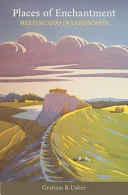
Graham Usher's "Places of Enchantment" offers a compelling argument for the immanence of the sacred within the terrestrial and urban realms. Usher sidesteps the common pitfall of romanticizing nature by grounding his observations in tangible experiences, such as tracing the spiritual resonance of the New York skyline, a surprising but effective counterpoint to the expected wilderness settings. The work’s strength lies in its direct, unpretentious prose, which allows the reader to approach the subject without academic or theological barriers. However, the book occasionally feels like it's surveying a vast territory without fully excavating the deeper psychological underpinnings of these encounters. A more detailed exploration of the psychological mechanisms behind perceived divinity in a landscape, perhaps referencing Jungian archetypes or phenomenological approaches, would have added significant weight. Despite this, "Places of Enchantment" succeeds as an accessible invitation to reconsider our relationship with place and spirit.
📝 Description
78
Graham Usher's 2012 book, 'Places of Enchantment,' examines how people connect spiritually with their surroundings.
Graham Usher's "Places of Enchantment" (2012) investigates the deep spiritual connections people form with both natural and constructed environments. The book moves beyond mere appreciation to consider how places, whether vast wildernesses or cityscapes, can act as channels for experiencing the divine. It speaks to those who seek a more meaningful relationship with the sacred in their daily lives, especially individuals who find traditional religious frameworks insufficient but still desire spiritual fulfillment. It also appeals to those interested in the phenomenology of religious experience outside established doctrines. Usher's work is situated within a tradition of nature mysticism and landscape theology, drawing from Romanticism and Transcendentalism. However, it also engages with modern post-secular thought, updating ideas about nature experiences for the contemporary era.
Usher's work arises from a lineage of nature mysticism and landscape theology, with roots in Romanticism and Transcendentalism. It specifically engages with contemporary post-secular sensibilities. Unlike earlier nature writing focused on preservation, Usher's 2012 book reinterprets how spiritual experiences in nature are understood in a modern context. It connects these ideas to the concept of 'thin places,' locations where the sacred feels accessible.
💡 Why Read This Book?
• Understand how specific landscapes, from the Californian Sierra Nevada to the New York skyline, can serve as spiritual anchors, offering a tangible connection to the divine beyond traditional religious frameworks. • Gain insight into the concept of 'thin places,' exploring why certain locations feel imbued with a sacred presence, a phenomenon Usher meticulously examines. • Re-evaluate your personal encounters with nature and urban environments, learning to recognize and cultivate the spiritual benefits derived from direct engagement with the world around you.
⭐ Reader Reviews
Honest opinions from readers who have explored this book.
❓ Frequently Asked Questions
What is the core argument of Graham Usher's 'Places of Enchantment' regarding spirituality and landscape?
The book's central thesis is that spiritual encounters with the divine are not confined to religious institutions but can be profoundly experienced in diverse landscapes, both natural and urban, from mountains to city skylines.
When was 'Places of Enchantment' first published and by whom?
'Places of Enchantment' was first published on October 18, 2012, by Graham Usher.
What kind of environments does Usher explore in the book?
Usher explores a wide array of environments, including mountains, forests, rivers, deserts, gardens, seas, skies, redwood forests in the Sierra Nevada, and even the New York skyline.
Who is Graham Usher, the author of 'Places of Enchantment'?
Graham Usher is the author of 'Places of Enchantment,' a work exploring spiritual experiences within various landscapes. His first publication date for this title is noted as October 18, 2012.
Does the book discuss finding God in urban settings?
Yes, the book specifically mentions encounters with the divine in urban settings, notably referencing the 'jagged New York skyline' as a site of spiritual significance.
What philosophical tradition does 'Places of Enchantment' draw upon?
While not strictly adhering to one, the book engages with traditions of nature mysticism and landscape theology, exploring how individuals find spiritual benefits outside of conventional church settings.
🔮 Key Themes & Symbolism
Nature as Divine Conduit
Usher posits that natural landscapes like the Californian Sierra Nevada's giant Redwoods or ancient Scottish wilds are not mere backdrops but active participants in spiritual experience. The work argues that elements such as mountains, forests, rivers, and seas can serve as direct channels for encountering the divine, offering solace and spiritual growth to those disconnected from traditional religious structures. This perspective elevates the natural world to a sacred text, readable by all who engage with it mindfully.
The Sacred in the Urban
A distinctive aspect of "Places of Enchantment" is its examination of spirituality within urban environments. Usher challenges the notion that sacredness is exclusive to pristine nature by exploring how even the 'jagged New York skyline' can evoke profound spiritual responses. This suggests that the human capacity for encountering the divine is adaptable, finding expression in both the grandeur of natural vistas and the complex geometries of human-made cityscapes.
Post-Secular Spirituality
The book speaks directly to a contemporary audience who may have left traditional religious affiliations but retain a deep yearning for spiritual connection. Usher validates these experiences, demonstrating that the spiritual benefits sought in climbing a mountain or walking in nature are real and accessible. The work provides a framework for understanding these personal encounters as legitimate forms of spiritual engagement in a secularizing world.
Phenomenology of Sacred Space
Usher explores the 'how' and 'why' of experiencing the divine in specific places. This involves exploring the subjective, felt sense of encountering something greater than oneself within a particular landscape. The book examines the qualities of these 'places of enchantment' that facilitate such experiences, moving beyond abstract theology to the lived, embodied reality of spiritual connection.
💬 Memorable Quotes
Direct passages from the work, attributed to the author.
“How and why do we encounter God in land, forest, river, mountain, desert, garden, sea and sky?”
— This central question frames Usher's exploration. It signifies the book's intent to move beyond mere description of sacred sites to an inquiry into the mechanisms and reasons behind our spiritual perceptions of the environment.
“From the giant Redwoods of the Californian Sierra Nevada to the jagged New York skyline.”
— This juxtaposition, drawn from the original blurb, illustrates the book's broad scope. It demonstrates Usher's interest in finding the sacred not only in remote wilderness but also within the heart of urban landscapes, challenging conventional notions of where spiritual encounters can occur.
“There is a great and honourable tradition of finding God in landscapes.”
— This opening statement sets the historical and philosophical stage for Usher's work. It acknowledges a long-standing, respected lineage of connecting divinity with the natural world, providing a foundation for his contemporary exploration.
“The wilds of the ancient Scottish”
— This snippet, from the original blurb, suggests the book examines primal, ancient landscapes. It implies an exploration of places imbued with deep history and potent natural forces, likely connecting these to profound spiritual or even archetypal experiences.
💡 Key Ideas
Editorial paraphrase of the work's core concepts — not direct quotes.
Many who have given up on church appreciate the spiritual benefits they gain from climbing a mountain or walking in nature.
This paraphrased concept highlights the book's core appeal: validating spiritual experiences outside of organized religion. It speaks to individuals seeking connection and meaning in the natural world, acknowledging the profound psychological and spiritual nourishment derived from such encounters.
🌙 Esoteric Significance
Tradition
Usher's work engages with the broad tradition of nature mysticism and landscape theology, a lineage that touches upon Hermetic principles of correspondence and the divine immanence found in various esoteric paths. While not explicitly Kabbalistic or Gnostic, it carries the Hermetic idea that 'As Above, So Below,' applying it to the terrestrial plane where the divine can be perceived directly in creation. It represents a modern, accessible interpretation of finding the sacred within the manifest world.
Symbolism
The book utilizes potent natural symbols such as mountains, representing aspiration, spiritual ascent, and divine proximity; rivers, symbolizing flow, life, and transformation; and forests, embodying mystery, the subconscious, and primal connection. The urban skyline, conversely, symbolizes human endeavor, collective consciousness, and the potential for the divine to manifest even within complex, constructed environments.
Modern Relevance
Contemporary thinkers and practitioners interested in eco-spirituality, place-based activism, and phenomenological approaches to religion find resonance in Usher's work. His exploration of 'thin places' and the spiritual efficacy of landscapes aligns with modern interests in mindfulness, deep ecology, and the therapeutic benefits of connecting with nature, making it relevant to current discussions on well-being and planetary consciousness.
👥 Who Should Read This Book
• Individuals disillusioned with traditional religious dogma seeking to reconnect with the sacred in their daily lives, particularly those who find solace and spiritual fulfillment in natural or urban environments. • Students of comparative religion and spirituality looking to understand contemporary expressions of nature mysticism and landscape theology beyond historical or academic texts. • Anyone curious about the psychological and spiritual impact of place, seeking to deepen their personal connection to the world around them and explore the concept of 'thin places'.
📜 Historical Context
Graham Usher's "Places of Enchantment," published in 2012, arrived during a period of significant re-engagement with spirituality outside of traditional religious institutions. While the Romantic movement of the late 18th and 19th centuries, with figures like Wordsworth and Thoreau, championed nature as a source of spiritual insight, Usher's work speaks to a 21st-century context. His exploration of finding the divine in landscapes, including urban settings like the New York skyline, distinguishes it from earlier nature writing that often focused solely on wilderness. In an era marked by the rise of comparative religion studies and a growing interest in mindfulness and earth-centered spirituality, Usher's book offered a grounded, accessible perspective. It provided a counterpoint to more academic or esoteric explorations of sacred geography, resonating with individuals seeking personal meaning in their immediate surroundings.
📔 Journal Prompts
Reflect on the 'honourable tradition of finding God in landscapes' and how it applies to your own experiences.
Consider specific natural or urban settings you find spiritually resonant; what qualities do they share with Usher's examples?
Analyze the 'how and why' behind your own encounters with the divine in land, forest, or sky.
Explore the spiritual benefits you gain from engaging with specific environments, mirroring the experiences described.
Evaluate the concept of 'thin places' in relation to locations you have visited or inhabit.
🗂️ Glossary
Thin Places
Locations where the boundary between the earthly and the divine, or the mundane and the sacred, feels unusually permeable. These are places that evoke a profound sense of spiritual presence or connection.
Landscape Theology
An approach to theology and spirituality that emphasizes the divine revelation and spiritual experience found within the natural world and specific geographical locations.
Nature Mysticism
A spiritual practice or belief system focused on achieving direct, intuitive experience of the divine through immersion in and contemplation of the natural world.
Immanence
The belief that the divine is present within the material world and all of creation, as opposed to being transcendent and entirely separate from it.
Spiritual Benefits
The positive psychological, emotional, and existential outcomes derived from spiritual practices or experiences, such as increased peace, meaning, and connection.
Secularizing World
Refers to societies or cultures where religious belief and practice are declining in influence and importance, leading to a greater emphasis on non-religious or worldly concerns.
Phenomenology
A philosophical approach that focuses on the study of conscious experience as experienced from the first-person point of view, often applied here to understand spiritual encounters with place.
This book appears in 1 collection
🔮 Readers Also Liked
Browse all →









From the “Enchantment” Collection
View all →








More Free Sacred Texts & Gnosticism Books
View all →