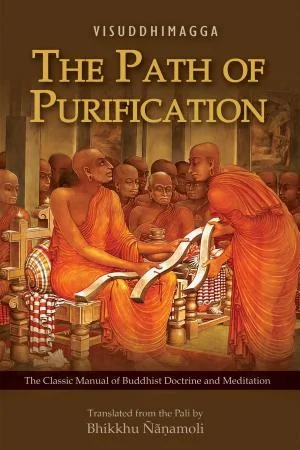
The Path of Purification
 79
79

The Path of Purification
Buddhaghosa’s Visuddhimagga, presented here as The Path of Purification, remains an unparalleled systematization of the Buddha’s teachings. Its strength lies in its exhaustive detail and its logical, step-by-step exposition of the path to liberation, particularly its practical instructions for meditation. The "Abhidhamma method" it employs is both its greatest asset and, for some readers, its most formidable challenge. The sheer volume of analytical classifications can be dense, demanding sustained concentration. A passage detailing the stages of insight (vipassanā) vividly illustrates its methodical nature, guiding the practitioner through increasingly refined levels of awareness. While its authority within Theravada is undisputed, its highly technical approach may require significant prior grounding for those new to Buddhist philosophy. It is an essential, albeit demanding, text for serious practitioners and scholars.
📝 Description
79
Buddhaghosa's Path of Purification, published in English in 1991, organizes Buddhist doctrine.
Authored by Buddhaghosa, The Path of Purification systematically explains the Buddha's teachings found in the Pali Tipiṭaka. It is not a simple summary but an interpretive manual that uses the Abhidhamma method to create a unified understanding of the entire collection of early Buddhist scriptures. The book guides serious students of Theravada Buddhism toward mental purification and a deep grasp of Buddhist doctrine. It is also useful for scholars of comparative religion and philosophers interested in systematic approaches to Buddhist thought.
The text details a path to liberation through ethical conduct (sila), mental concentration (samadhi), and wisdom (panna). It gives thorough instructions for developing mindfulness and gaining insight into impermanence, suffering, and not-self, leading to the cessation of suffering. The Abhidhamma method, a key element, offers a detailed analysis of phenomena through the classification of mental and material elements. This systematic approach aims to clarify the nature of reality.
Composed in the 5th century CE, Buddhaghosa's Visuddhimagga consolidated Buddhist teachings during a period of systematization. It functioned as a comprehensive manual, synthesizing scriptural exegesis and meditation practices. The work became a central non-canonical text in Theravada Buddhism, shaping monastic education for over a thousand years. Its methodical approach to understanding reality and achieving liberation aligns with various traditions that seek direct experiential knowledge beyond scripture alone.
💡 Why Read This Book?
• Gain a systematic, Abhidhamma-based framework for understanding Buddhist doctrine, as detailed in the sections on mental states and phenomena, offering a unique analytical lens not found in simpler sutta compilations. • Acquire practical, step-by-step instructions for cultivating concentration (samadhi) and insight (vipassanā), providing a rigorous meditative regimen grounded in the Pali Tipiṭaka. • Understand the historical development of Theravada Buddhism by engaging with a text that has served as the primary interpretive authority since the 5th century CE, shaping monastic practice for over a millennium.
⭐ Reader Reviews
Honest opinions from readers who have explored this book.
❓ Frequently Asked Questions
What is the "Abhidhamma method" mentioned in The Path of Purification?
The "Abhidhamma method" is a systematic, analytical approach to understanding reality used in Theravada Buddhism. It involves classifying mental and material phenomena into their ultimate constituents to foster insight and detachment, as detailed throughout Buddhaghosa's work.
Is The Path of Purification a primary Buddhist scripture?
No, The Path of Purification (Visuddhimagga) is considered a foundational non-canonical text within Theravada Buddhism, not a direct scripture from the Buddha like the Pali Tipiṭaka. However, it is the principal interpretive authority for the Tipiṭaka.
Who was Buddhaghosa and when did he live?
Buddhaghosa was a 5th-century CE Indian Buddhist scholar and commentator, renowned for writing the Visuddhimagga. He is credited with systematizing and clarifying the teachings of the Buddha for subsequent generations.
What are the main stages of the path described in the book?
The book systematically outlines the path through the three trainings: virtue (sila), concentration (samadhi), and wisdom (panna). It provides detailed instructions for developing each of these stages to achieve purification of mind.
What is the significance of 'purification of mind' in this text?
Purification of mind refers to the process of cleansing the mind of defilements (kilesas) through ethical conduct, meditative concentration, and the development of wisdom. The text provides a comprehensive guide to achieving this state, leading to liberation.
Is this book suitable for beginners in Buddhism?
While valuable, The Path of Purification is a highly systematic and detailed text. Beginners might benefit from introductory materials first, as Buddhaghosa's Abhidhamma method can be dense. However, dedicated beginners can certainly engage with its practical sections.
🔮 Key Themes & Symbolism
The Threefold Training
The text structures the entire path to enlightenment around the three fundamental trainings: sila (ethical conduct), samadhi (mental concentration), and panna (wisdom). Buddhaghosa meticulously details how each stage supports and leads into the next, illustrating that ethical living provides the foundation for deep meditative states, which in turn cultivate the penetrative insight necessary for liberation. This tripartite structure is not merely theoretical but forms the backbone of the practical instructions offered for spiritual development.
Abhidhamma Method of Analysis
A central pillar of the work is its application of the Abhidhamma method. This involves a rigorous, analytical breakdown of reality into its constituent elements – mental states (cetasikas), material phenomena (rupas), and consciousness (vinnana). By dissecting experience in this way, the text aims to dismantle illusory notions of a permanent self and foster direct insight into the impermanent, unsatisfactory, and selfless nature of all phenomena, moving beyond conceptual understanding to experiential realization.
Stages of Purification
The book is organized around the seven stages of purification, progressing from purification of virtue to the ultimate purification of wisdom and liberation. Each stage represents a deepening level of practice and understanding. This systematic progression offers a clear roadmap for practitioners, detailing the specific insights and meditative attainments expected at each level, culminating in the cessation of suffering (Nibbana).
Mindfulness and Insight Meditation
Central to the practical guidance are detailed instructions on developing mindfulness (sati) and insight (vipassanā) meditation. Buddhaghosa elaborates on various meditation objects and techniques, emphasizing the importance of sustained attention and clear comprehension of reality as it is. The goal is to cultivate a mind that sees phenomena directly, without the distortions of craving, aversion, and delusion.
💬 Memorable Quotes
Direct passages from the work, attributed to the author.
“The path of purification is the path of understanding the nature of things.”
— This expresses the core aim of the Visuddhimagga: to provide a structured method not just for ethical living or calm concentration, but for developing wisdom that penetrates the true nature of existence, leading to liberation.
“Freedom from suffering arises from the cessation of craving, which is achieved through wisdom.”
— This highlights the causal link between understanding reality (wisdom) and the ultimate goal of Buddhism (cessation of suffering). It emphasizes that true freedom is not an external attainment but an internal transformation driven by insight.
“The mind, when concentrated, sees reality clearly.”
— This statement underscores the crucial role of meditative concentration (samadhi) as a prerequisite for useful insights (vipassanā). A stable, focused mind is presented as the necessary instrument for perceiving the true characteristics of phenomena.
“Virtue is the foundation upon which concentration and wisdom are built.”
— This emphasizes the interconnectedness of the Threefold Training. Buddhaghosa argues that ethical conduct (sila) is not an end in itself but the essential groundwork that enables the development of higher meditative and wisdom faculties.
“Understanding the aggregates (khandhas) leads to the dissolution of the illusion of self.”
— This points to a key analytical practice within the Abhidhamma method. By examining the five aggregates of experience, one can see that they are impermanent and devoid of an independent self, thereby undermining the root cause of suffering.
🌙 Esoteric Significance
Tradition
The Path of Purification is a cornerstone text within the Theravada Buddhist tradition, which, while often viewed as orthodox, possesses profound esoteric dimensions related to the direct realization of ultimate reality. Its esoteric aspect lies not in hidden symbolism or mystical initiations common in Western esotericism, but in the rigorous, systematic path it lays out for the direct experiential understanding and transcendence of conditioned existence, leading to liberation (Nibbana).
Symbolism
While less reliant on overt symbolism than some esoteric traditions, the text uses concepts like the 'seven stages of purification' as a symbolic map of spiritual progression. The 'heartwood' metaphor, representing the core teachings and practice, signifies the essential substance of the Buddha's path. Furthermore, the detailed analysis of consciousness and material form can be seen as a symbolic deconstruction of perceived reality, revealing its interdependent and impermanent nature.
Modern Relevance
Contemporary Buddhist practitioners, particularly those within the Theravada lineage, continue to rely heavily on Buddhaghosa's work for guidance in meditation and doctrinal study. Western Buddhist scholars and meditation teachers often reference the Visuddhimagga for its systematic approach to insight meditation (vipassanā). Its analytical rigor also appeals to those interested in the philosophical underpinnings of contemplative practices, bridging Buddhist thought with contemporary psychology and philosophy of mind.
👥 Who Should Read This Book
['• Dedicated students of Theravada Buddhism seeking a comprehensive, systematic guide to the path of liberation, moving beyond introductory concepts to deep doctrinal and practical engagement.', '• Comparative religion scholars and philosophers interested in the intellectual history and systematic thought of major world religions, particularly Buddhist Abhidhamma.', '• Meditative practitioners aiming for useful insights and mental purification, who desire a detailed, step-by-step regimen grounded in ancient scriptural interpretation.']
📜 Historical Context
Buddhaghosa's Visuddhimagga, composed around the 5th century CE, emerged as a monumental synthesis of Theravada Buddhist doctrine and practice. It was written during a period when Buddhism, having spread widely across Asia, underwent significant systematization. The text consolidated the teachings found in the Pali Tipiṭaka, providing an authoritative interpretive framework that became central to Theravada monastic education. Its creation addressed a need for a comprehensive manual that could guide practitioners through the complexities of the path to liberation. While Mahayana Buddhism was developing its own vast philosophical systems in parallel, Buddhaghosa's work offered a rigorous, Abhidhamma-centric approach that solidified the canonical and practical authority of the Theravada tradition for centuries, influencing scholarship and meditation practice across Southeast Asia.
📔 Journal Prompts
The Abhidhamma method of analyzing phenomena: How can this detailed classification clarify your perception of impermanence?
Reflecting on the seven stages of purification: Which stage presents the greatest challenge to your current understanding or practice?
The role of sila (virtue) as the foundation: How does ethical conduct directly support the development of samadhi (concentration)?
Understanding the aggregates (khandhas): How does recognizing their composite nature challenge the notion of a permanent self?
The practice of vipassanā (insight): What are the immediate obstacles to clear seeing, and how does the text suggest overcoming them?
🗂️ Glossary
Pali Tipiṭaka
The canon of scriptures in the Theravada Buddhist tradition, considered the earliest recorded teachings of the Buddha. It is divided into three 'baskets': the Vinaya Pitaka (monastic discipline), the Sutta Pitaka (discourses), and the Abhidhamma Pitaka (higher doctrine).
Abhidhamma Method
A sophisticated analytical system within Theravada Buddhism that dissects reality into ultimate constituents of consciousness and matter. It provides a framework for understanding the nature of existence through detailed classification and analysis, aiming to foster direct insight.
Sila
The first of the Threefold Training; ethical conduct. It encompasses moral precepts and the cultivation of wholesome actions, speech, and thoughts, forming the foundation for mental development.
Samadhi
The second of the Threefold Training; mental concentration or meditative absorption. It refers to the stabilization of the mind through focused attention, leading to states of deep calm and clarity.
Panna
The third of the Threefold Training; wisdom or insight. It is the direct understanding of the true nature of reality, particularly the characteristics of impermanence, suffering, and not-self, leading to liberation.
Vipassanā
Insight meditation. A practice focused on developing clear comprehension of the true nature of phenomena as they arise and pass away, based on the principles of the Abhidhamma.
Nibbana
The ultimate goal of Buddhist practice; the cessation of suffering and the cycle of rebirth. It is often described as liberation, release, or the unconditioned state.
This book appears in 1 collection
🔮 Readers Also Liked
Browse all →








From the “Meditation” Collection
View all →


![CIA Reading Room cia-rdp75-00149r000200590003-6: PROTECTING [PRIVACY AND FREEDOM]](/img/thumb/cia-reading-room-cia-rdp75-00149r000200590003-6-protecting-privacy-and-freedom-cia-reading-room.webp)



More Free Sacred Texts & Gnosticism Books
View all →